IAO 2000, Теория — Задача 5. Groups A and B. 3.
Theoretical round. Problems to solve
Source editions and printed discrepancies
The English questions are retained with their original group/number titles and routes. The official Russian keys and missing Olympia signal graph are supplied from the proceedings. Printed source wording and repeated words are retained. The Moon key prints a sign-inconsistent intermediate eccentricity equation; it is preserved along with the subsequent positive formula. The star-size key prints “больше” despite its absorption argument; the calendar key repeats “начинающихся с”; the quasar key prints R=c/H in its final numerical line. These source readings are not silently corrected.
Условие
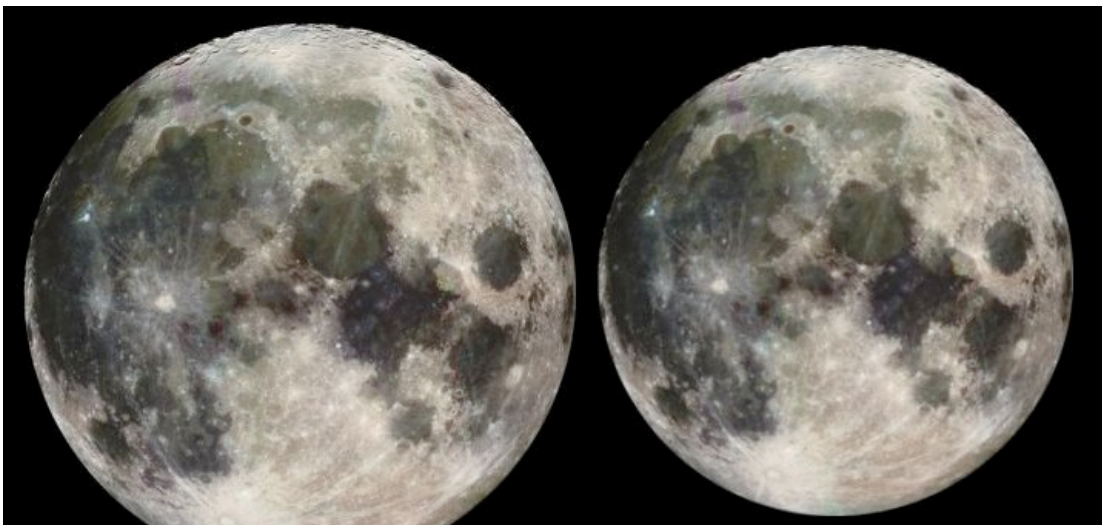
There are two photos of the Moon taken by the same camera mounted on the same telescope (the telescope is placed on the Earth). The first photo has been made while the Moon was near its perigee and the second one – near the apogee. Find from these data the value of the Moon's orbit eccentricity. Estimate the minimal period between the moments at which these two photos could be taken.
Решение
Диаметр изображений Луны () на каждом снимке пропорционален ее угловому размеру, видимому с Земли: , где — диаметр Луны и — расстояние до неё. постоянно, а зависит от положения Луны:
для апогея;
для перигея.
Поэтому, если известны диаметры изображений Луны для перигея () и апогея (), можно написать:
И:
Представленные два фотоснимка были сделаны в моменты около положений перигея и апогея (а не точно в эти моменты), поэтому и ; и вместо «=» в предыдущей формуле мы должны написать «»:
Измеряя размеры изображений можно найти , .
Принимая во внимание, что орбита Луны более-менее постоянна в пространстве, потребуется около полугода для изменения ситуации «полная Луна в перигее» на «полная Луна в апогее».
Оригинал в Архива: theo.pdf · допълнителни данни: proceedings_2.PDF