IAO 2010, Практически тур, Групи α и β — Задача 7. Cataclysmic variable
Practical round. Problems 6 and 7 · 16 октомври 2010 г.
Внимание: Бележка към темата
В дневника към задача 6 има 425 записа: между №159 и №161 е отпечатано №150, а №239 и №240 липсват. Номерата и неследващите по време записи са запазени. В официалния отговор към задача 7 са запазени и отпечатаните числови несъответствия: Mg_min = 5.825 (1.23) и ε = (0.058−0.056)/0.056 = 0.028.
Бележка
Translation of your solution of practical round is not proposed. The only formulae, graphs, numerical values, standard defined symbols of objects (like ♎, α UMa, M31, ), etc. but not words and explanations (in any language including English) will be taken into account. Units (kg, pc, nm...) should be written in Latin or Cyrillic.
Условие
Photometric data of the cataclysmic variable HS 2332+3905 of WZ-Sge type are given. Magnitude of the variable was changing with the orbital period during the observations.
Objects of this type consist of white dwarf with a late-type secondary.
Table 1 consist of:
1st column – Julian date (JD),
2nd column – relative magnitude of the variable (Mg),
3rd column – phase of the orbital period (Phasa).
7.1.
What is the year of the observations? (January 1st, 2000 corresponds to )
7.2.
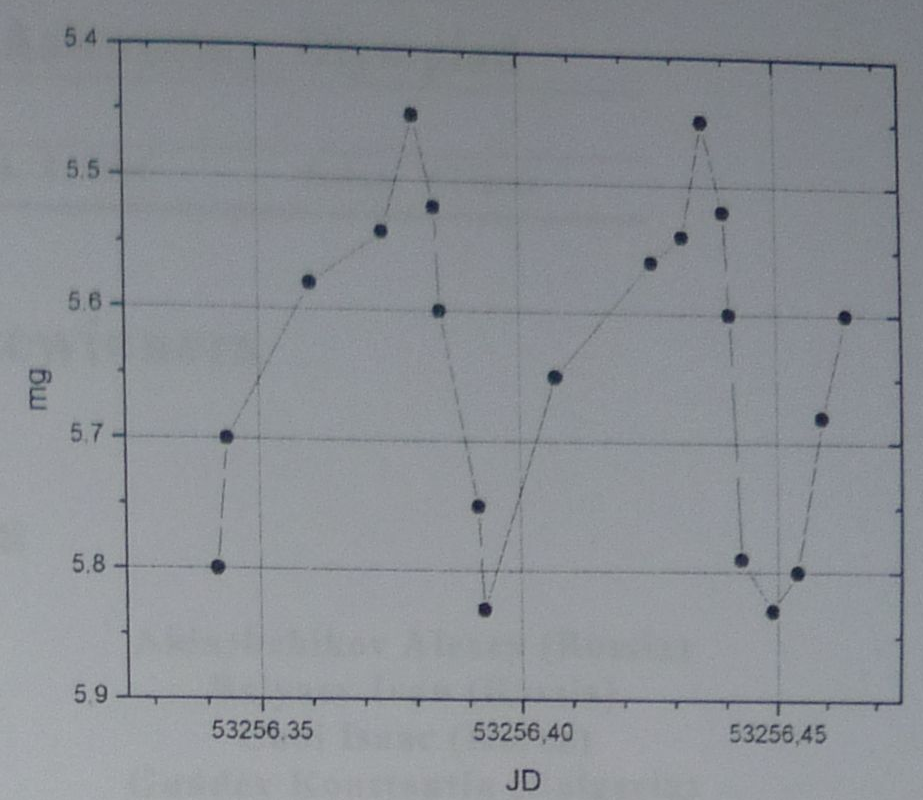
With the data of the table 1, plot a graph brightness vs. time (“x” axis – time; “y” axis – the magnitude of the system that equals to sum of relative magnitude of the system and magnitude of the comparison star ). Brightness should increase upward on the vertical axis.
7.3.
From the graph you should find the times corresponding to the maximum and minimum brightness of the system and also corresponding magnitudes of the system at these times. Write these data in the table 2.
Table 2 consist of:
1st column – JD corresponding to maximum brightness (),
2nd column – magnitude in maximum brightness (),
3rd column – JD corresponding to minimum brightness (),
4th column – magnitude in minimum brightness ().
7.4.
Find the orbital period () of the system using the graphical plot.
7.5.
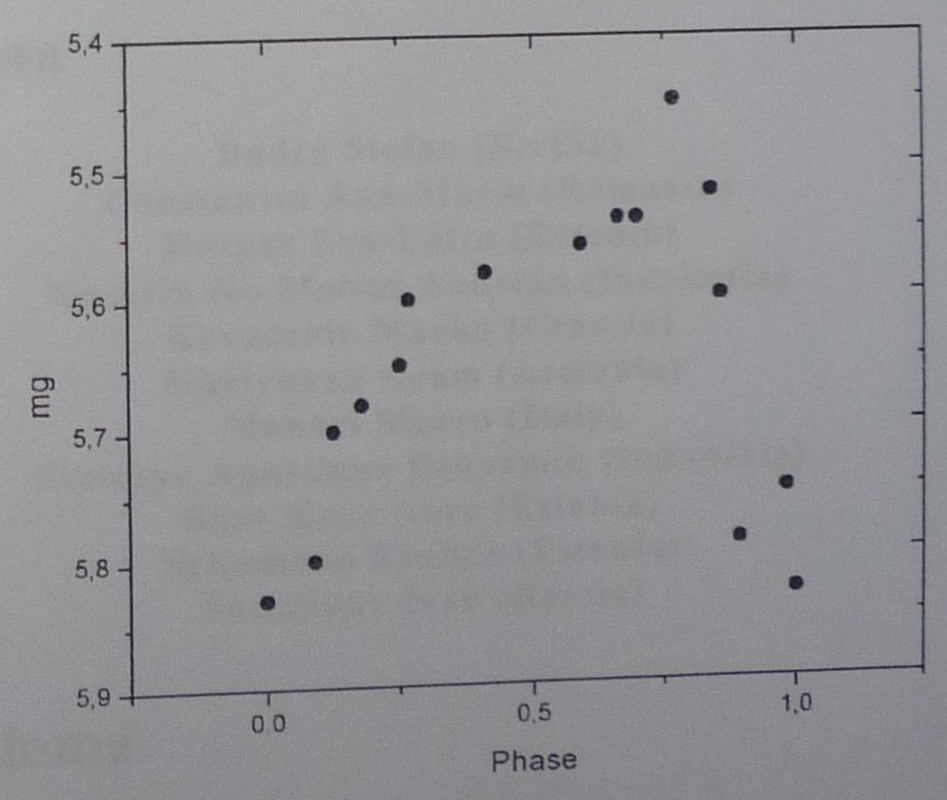
Using the ephemeris , find the phases of orbital period corresponding to the magnitudes that you have found. Write these data in the table 1, plot a phase diagram (“x” axis – phases from 0 to 1; “y” axis – magnitudes).
– Julian date (1st column in the table);
– Julian date corresponds to the minimum of brightness, the phase is “0”;
– orbital period, that you have found by the graph;
– number, that consists of integer part and fractional part Phase;
– number of the cycle;
Phasa – phase, values from 0 to 1, (e. g.: 0.1, 0.2, and etc., 1 – the complete period).
One of the features of such types of systems is sudden increase in brightness of 6–8 magnitudes (called superoutburst) after which during the attenuation of the superoutburst one can observe superhumps (variations of brightness with a frequency close to orbital period).
7.6.
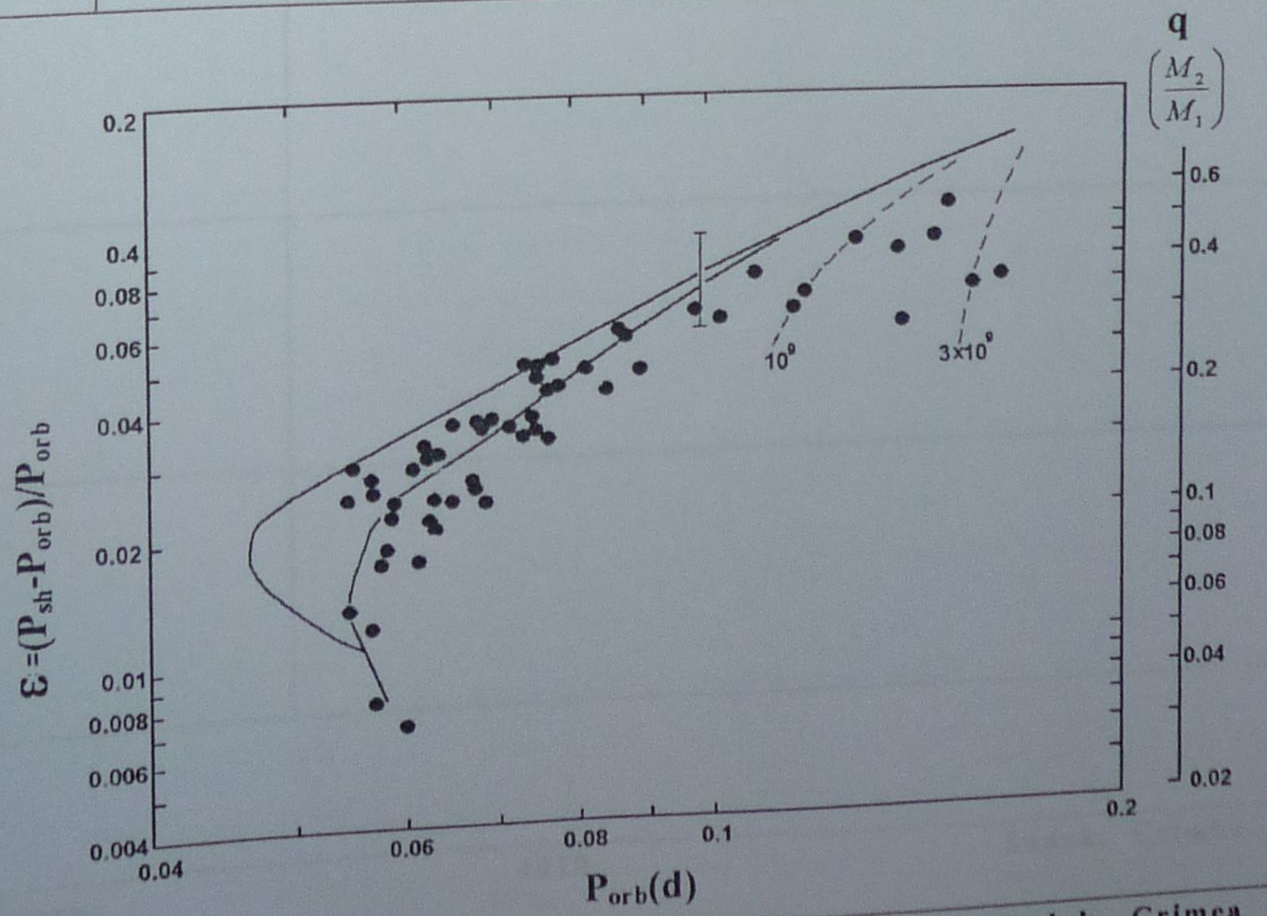
On investigation of the system superoutburst and superhumps were observed. It was found that the period of these superhumps is 2.3 minutes larger than the orbital period. Using the figure 1, the orbital period (that you have found) and the period of superhumps, find the ratio of masses of the components.
Table 1
| JD 2400000 + … | Mg | Phasa |
|---|---|---|
| 53256,337 | 0 | |
| 53256,342 | 1,2 | |
| 53256,344 | 1,1 | |
| 53256,36 | 0,98 | |
| 53256,374 | 0,94 | |
| 53256,38 | 0,85 | |
| 53256,384 | 0,92 | |
| 53256,385 | 1 | |
| 53256,392 | 1,15 | |
| 53256,393 | 1,23 | |
| 53256,407 | 1,05 | |
| 53256,426 | 0,96 | |
| 53256,432 | 0,94 | |
| 53256,436 | 0,85 | |
| 53256,44 | 0,92 | |
| 53256,441 | 1 | |
| 53256,443 | 1,19 | |
| 53256,449 | 1,23 | |
| 53256,454 | 1,2 | |
| 53256,459 | 1,08 | |
| 53256,464 | 1 |
Table 2
Figure 1
Решение
7.1.
2004
7.2.
Mg system = Mg comparison () + Mg relative (2nd column in Table 1.)
7.3.
| 53256.38 | 5.45 (0.85) | 53256.393 | 5.825 (1.23) |
| 53256.436 | 5.45 (0.85) | 53256.449 | 5.825 (1.23) |
7.4.
7.5.
| JD 2400000 + … | Mg | Phasa |
|---|---|---|
| 53256,337 | 0 | |
| 53256,342 | 1,2 | 0,08929 |
| 53256,344 | 1,1 | 0,125 |
| 53256,36 | 0,98 | 0,41071 |
| 53256,374 | 0,94 | 0,66071 |
| 53256,38 | 0,85 | 0,76786 |
| 53256,384 | 0,92 | 0,83929 |
| 53256,385 | 1 | 0,85714 |
| 53256,392 | 1,15 | 0,98214 |
| 53256,393 | 1,23 | 1 |
| 53256,407 | 1,05 | 0,25 |
| 53256,426 | 0,96 | 0,58929 |
| 53256,432 | 0,94 | 0,69643 |
| 53256,436 | 0,85 | 0,76786 |
| 53256,44 | 0,92 | 0,83929 |
| 53256,441 | 1 | 0,85714 |
| 53256,443 | 1,19 | 0,89286 |
| 53256,449 | 1,23 | 0 |
| 53256,454 | 1,2 | 0,08929 |
| 53256,459 | 1,08 | 0,17857 |
| 53256,464 | 1 | 0,26786 |
7.6.
,
.
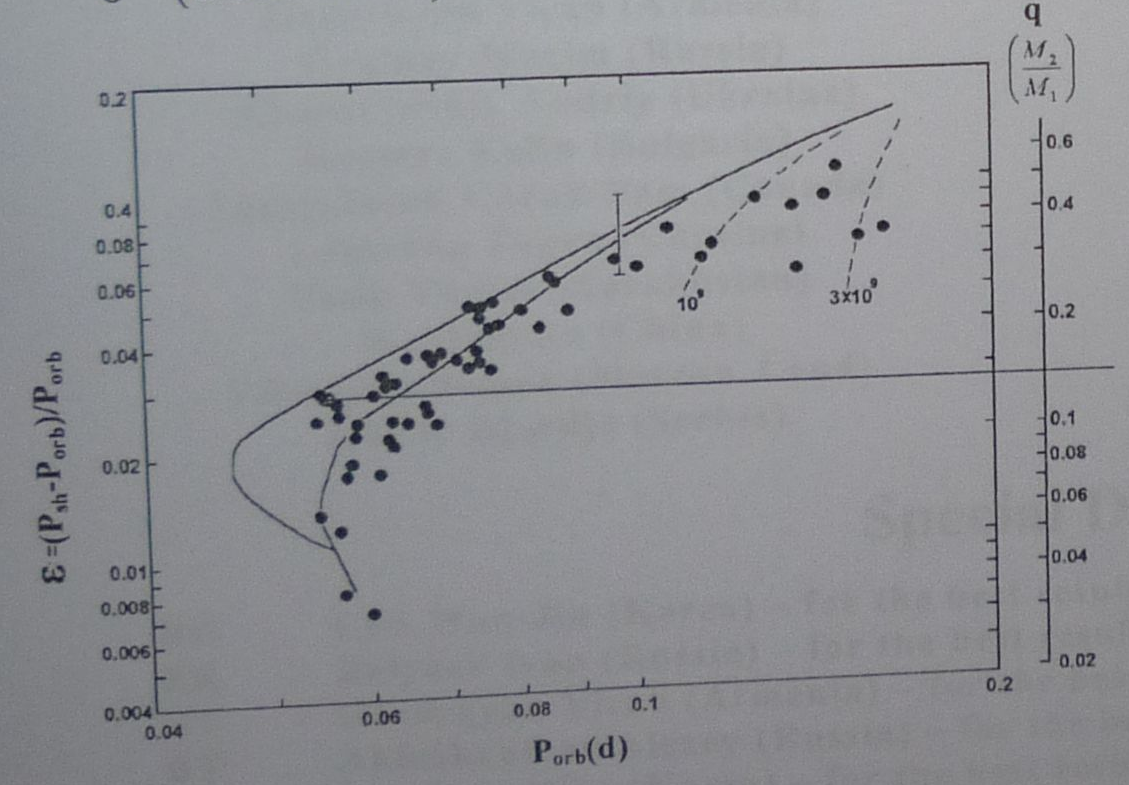
Ratio of masses of the components:
.
Оригинал в Архива: pract1.jpg · официални решения: practsol1.jpg · допълнителни данни: pract2.jpg · допълнителни данни: pract3.jpg · допълнителни данни: pract4.jpg · допълнителни данни: pract5.jpg · допълнителни данни: pract6.jpg · допълнителни данни: pract7.jpg · допълнителни данни: pract8.jpg · допълнителни данни: pract9.jpg · допълнителни данни: pract10.jpg · допълнителни данни: practsol2.jpg · допълнителни данни: practsol3.jpg