IAO 2017, Теория, α+β — α-2. Extraterrestrial summit.
XXII International Astronomy Olympiad — Theoretical round, α and β · 27 октомври 2017 г. · 8 т.
Read once more before you start your work
General note. Maybe not all problems have correct questions. Some questions (maybe the main question of the problem, maybe one of the subquestions) may make no real sense. In this case you have to write in your answer (in English or Russian): «impossible situation – ситуация невозможна». Of course, this answer has to be explained numerically or logically.
Data from the tables (Planetary data, stars, constants, etc.) may be used for solving every problem.
The answers «Да-Yes» or «Нет-No» have to be written in English or Russian.
Do not forget that in clean copy you should write solutions only on even (left) pages. The odd (right) pages will be used by your team leader to translate solutions into English and also to emphasize your thoughts in solutions.
| EVEN PAGE / ЧЁТНАЯ СТРАНИЦА | ODD PAGE / НЕЧЁТНАЯ СТРАНИЦА |
|---|---|
| Текст решения. Text of solution. Текст решения. Text of solution. Текст решения. Text of solution. | × |
Ещё раз прочитайте перед началом работы
Общее замечание. Не исключено, что не во всех задачах вопросы поставлены корректно. Некоторые вопросы (возможно, главный вопрос задачи, возможно – подвопрос) могут не иметь смысла. В этом случае следует написать в ответе (по-русски или по-английски): «ситуация невозможна – impossible situation». Естественно, ответ должен быть подкреплён вычислениями или логическими рассуждениями.
Данные из таблиц (Солнечная система, звёзды, константы) могут быть использованы в любой задаче.
Ответы «Да-Yes» или «Нет-No» должны быть написаны по-русски или по-английски.
Не забудьте, что в чистовике вы должны писать решения только на чётных (левых) страницах. Нечётные (правые) страницы предназначены для того, чтобы руководитель вашей команды перевёл решения на английский язык и подчеркнул основные мысли решения.
Некоторые константы и формулы / Some constants and formulae
| Величина / Quantity | Значение |
|---|---|
| Скорость света в вакууме, c (м/с) / Speed of light in vacuum | 299 792 458 |
| Гравитационная постоянная, G (Н·м²/кг²) / Constant of gravitation | 6.674·10⁻¹¹ |
| Солнечная постоянная, A (Вт/м²) / Solar constant | 1367 |
| Параметр Хаббла, H₀ (км/с/МПк) / Hubble parameter, mean; range | 68; 50–100 |
| Постоянная Планка, h (Дж·с) / Planck constant | 6.626·10⁻³⁴ |
| Заряд электрона, e (Кл) / Charge of electron | 1.602·10⁻¹⁹ |
| Масса электрона, mₑ (кг) / Mass of electron | 9.109·10⁻³¹ |
| Соотношение масс протона и электрона / Proton-to-electron mass ratio | 1836.15 |
| Постоянная Фарадея, F (Кл/моль) / Faraday constant | 96 485 |
| Магнитная постоянная, μ₀ (Гн/м) / Magnetic constant | 1.257·10⁻⁶ |
| Универсальная газовая постоянная, R (Дж/моль/К) / Universal gas constant | 8.314 |
| Постоянная Больцмана, k (Дж/К) / Boltzmann constant | 1.381·10⁻²³ |
| Постоянная Стефана-Больцмана, σ (Вт/м²/К⁴) / Stefan-Boltzmann constant | 5.670·10⁻⁸ |
| Константа смещения Вина, b (м·К) / Wien’s displacement constant | 0.002897 |
| Лабораторная длина волны Hα (Å) / Laboratory wavelength | 6562.81 |
| Длина тропического года, T (сут) / Tropical year length | 365.242199 |
| Длина сидерического года, T (сут) / Sidereal year length | 365.25636 |
| Длина аномалистического года, T (сут) / Anomalistic year length | 365.259636 |
| Период обращения узлов лунной орбиты (лет) / Nodal period of lunar orbit | -18.6 |
| Стандартная атмосфера (Па) / Standard atmosphere | 101 325 |
| Ослабление видимого света слоем 1 атмосферы (минимально) / Visible light extinction in zenith | 19%, 0.23ᵐ |
| Высота однородной атмосферы (м) / Height of homogeneous atmosphere | 7991 |
| Показатель преломления воды при 20°C, n / Refractive index of water | 1.334 |
| Момент инерции шара / Moment of inertia of a solid ball | I=²⁄₅MR² |
| Момент инерции сферы / Moment of inertia of sphere | I=²⁄₃MR² |
| Объём шара / Volume of a ball | V=⁴⁄₃πR³ |
| Площадь сферы / Area of sphere | S=4πR² |
| π | 3.14159265 |
| e | 2.71828183 |
| Золотое сечение, φ / Golden ratio | 1.61803399 |
Данные о некоторых звёздах / Data of some stars
| Звезда / Star | Designation | R.A. | DEC | p | Mag. | Temperature | Mass |
|---|---|---|---|---|---|---|---|
| Солнце / Sun | ☉ | 0ʰ–24ʰ | −23°26′–+23°26′ | 8″.794 | −26ᵐ.74 | 5777 K | 1 M☉ |
| Бетельгейзе / Betelgeuse | α Ori | 05ʰ55ᵐ10ˢ | 07°24′25″ | 0″.005 | 0ᵐ.5 | 3590 K | 11.6 M☉ |
| Вега / Vega | α Lyr | 18ʰ36ᵐ56ˢ | 38°47′01″ | 0″.130 | 0ᵐ.03 | 9600 K | 2.14 M☉ |
| Наос / Naos | ζ Pup | 08ʰ03ᵐ35ˢ | −40°00′12″ | 0″.003 | 2ᵐ.21 | 42000 K | 40 M☉ |
| Толиман / Toliman (Rigel Kent) | α Cen A | 14ʰ39ᵐ36ˢ | −60°50′07″ | 0″.747 | −0ᵐ.01 | 5810 K | 1.11 M☉ |
| Толиман / Toliman (Rigel Kent) | α Cen B | 14ʰ39ᵐ36ˢ | −60°50′07″ | 0″.747 | 1ᵐ.33 | 5260 K | 0.93 M☉ |
| Проксима Центавра / Proxima Centauri | V645 Cen, α Cen C | 14ʰ29ᵐ43ˢ | −62°40′46″ | 0″.769 | 11ᵐ.06 | 3040 K | 0.123 M☉ |
| Координаты / Coordinates | WHO Observatory | Xinglong Observatory |
|---|---|---|
| φ (N / с.ш.) | 37°32′ | 40°24′ |
| λ (E / в.д.) | 122°03′ | 117°35′ |
| Часовой пояс / Timezone | UT+08 | UT+08 |
Theoretical round. Sketches for solutions
Note. The given sketches are not full; the team leaders have to give more detailed explanations to students. But the correct solutions in the students’ papers (enough for 8 pts) may be shorter.
Note. Jury members should evaluate the student’s solutions in essence, and not by looking on formal existence the mentioned sentences or formulae. The formal presence of the mentioned positions in the text is not necessary to give the respective points. Points should be done if the following steps de facto using these positions.
Theoretical round. Basic criteria. For work of Jury
Note. Jury members should elaborate more detailed criteria, and also create criteria for other correct ways of the student’s solutions.
Source limitations
The original PDF and its embedded scans clip the opening text on solution pages 2, 4 and 6. Ellipses mark these unrecoverable passages; complete surviving derivations, answers and grading rows are retained. The double-star solution refers to a figure that is absent from the supplied packet.
Printed discrepancies
The answer key uses 1.34ᵐ for α Centauri B while its data table gives 1.33ᵐ. The summit key invokes brown dwarfs despite the stated A–M main-sequence restriction, and calls an isosceles triangle equilateral. Its printed sin β/2 expressions are preserved. The mirror key says losing K% on transmission despite the statement saying transmitting K%. The eclipse key prints V₃ = V₂ − V_E and L_NS for the along-track width, while nearby prose uses Vφ and L_WE; these are not silently changed. The printed β-2 grading allocations and subtotals are retained.
Условие
Extraterrestrial Bear and Extraterrestrial Penguin living in different planetary systems of our Galaxy, came to a summit organized at the Intercivilizational Space Station (ISS) somewhere in the depths of space, where no one star is visible brighter than . However, it appeared that both stars, from which planetary systems the Bear and the Penguin came, are visible with the naked eye at the summit (assume the sensitivity of the retina of these extraterrestrial animals to be the same as of humans), and the angular distance between them is equal to .
2.1.
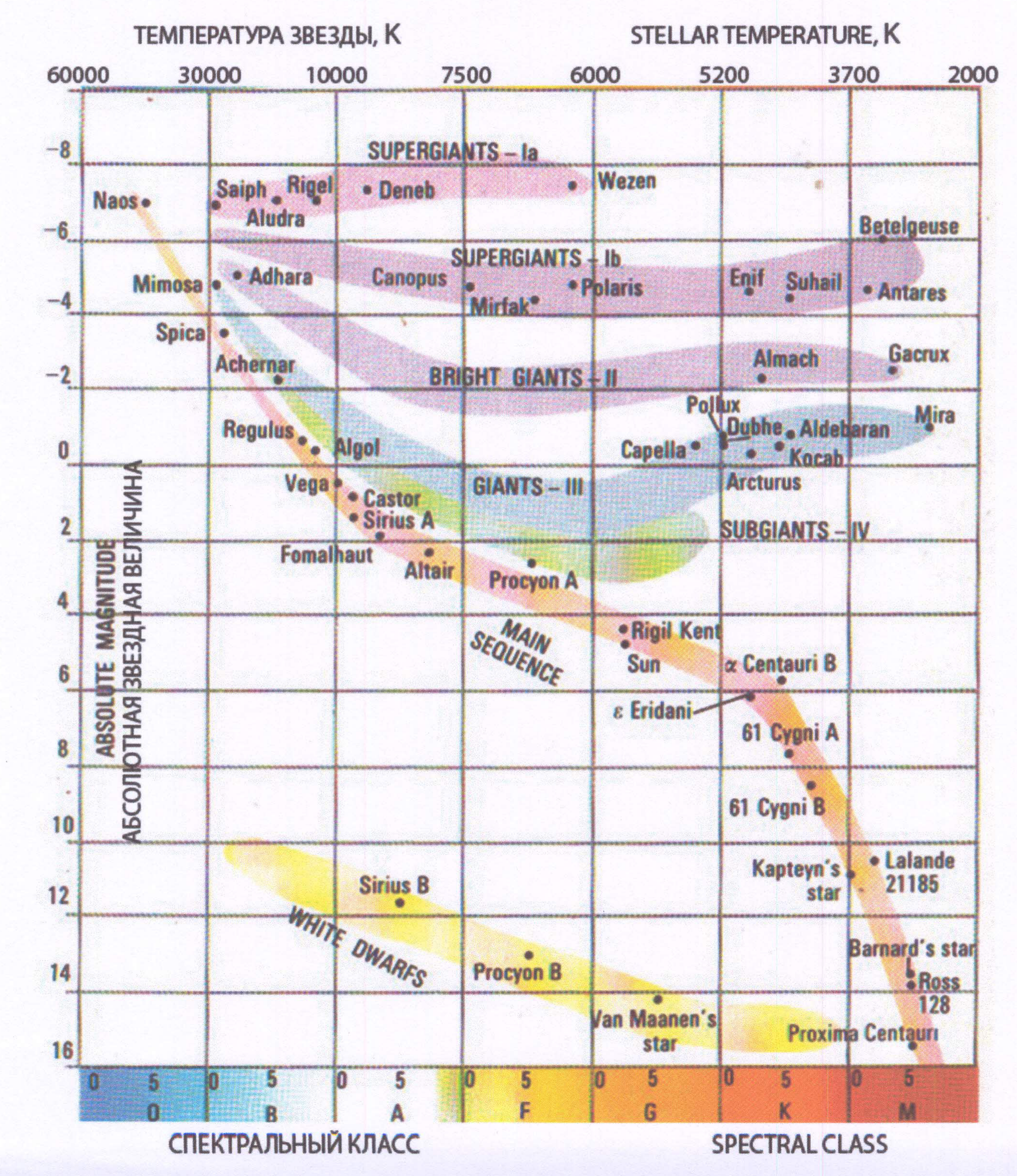
Find the possible minimum and maximum linear distance between the native stars of the Bear and the Penguin. Consider the planetary systems are possible near the stars of spectral classes from A to M of main sequence.
2.2.
Include an artistic picture with an image of the Extraterrestrial Bear and Extraterrestrial Penguin (and possibly other extraterrestrial animals) on the ISS.
Решение
The minimum distance between native stars of Bear and Penguin will be in the case when the distances between these stars and the venue of the summit also will be minimum. At the minimum possible distance that satisfies the conditions of the problem may be brown dwarfs with apparent magnitude of , and absolute one of . Accordingly, the distance to a brown dwarf anyway
The distance between two such stars can be found, having considered the equilateral triangle, length of base equal to
(more precise value here does not make sense).
Answer: about 0,005 pc or 1000 a.u.
To find the maximum distance between the stars we have to consider several options, which, however, will be calculated using the maximum distance from the summit to the stars of Penguin or a Bear. In order that the star was as far as possible, observer must see it as a faint object (star of ), and it should have high luminosity (the star of the class A0 with an absolute visible magnitude of about ). Then, using the formula for the absolute magnitude will get:
Now consider two options for a possible maximum distance:
- We have two different stars: a brown dwarf and a main sequence star of spectral class A. The first one is on minimum possible distance, the second – on highest possible distance. The distance between them is calculated in this case by theorem of cosines:
If you take the r for a brown dwarf (the value of which we found earlier), due to the small values of r compared to R in the formula it can be neglected. And then the distance between stars would actually be equal to the distance from the summit to the star of spectral class A0.
- If we have two stars of the main sequence of spectral class A, then the distance between them is given by the same theorem of cosines, but in a slightly simplified form:
We get an isosceles triangle while the third side will be less than the first two (), this formula will not give the maximum distance. However, when our triangle to turn into an equilateral () and the angle at the apex will continue to increase (), the distance between the stars will also increase, which cannot be said about the first the case.
From the task we have the angle , so the second of the options considered, we are not automatically perfect. Accordingly, the maximum distance between the stars is approximately 130 pc (more precisely to say here does not make sense).
Answer: about 130 pc.
Basic criteria
| Basic criteria | Points |
|---|---|
| Minimum distance, including | 3 |
| Understanding brown dwarf stars, 16ᵐ abs, 1ᵐ apparent | 1 |
| Formula and result ~0.01 pc till the stars | 0.5 |
| Geometry and calculation distance between the stars | 1 |
| Correct number of significant digits (not more than 2) | 0.5 |
| Maximum distance, including | 4 |
| Understanding A0 star, 0.5ᵐ abs, 6ᵐ apparent | 1 |
| Formula and result ~130 pc till A0 stars | 0.5 |
| Analysis for two A0 stars | 0.5 |
| Analysis for brown dwarf and A0 star | 0.5 |
| Issue to take into account brown dwarf and A0 star | 0.5 |
| Geometry and calculation distance between the stars | 0.5 |
| Correct number of significant digits (not more than 2) | 0.5 |
| Picture of animals | 1 |
Оригинал в Архива: theo.pdf · официални решения: theosol.pdf · допълнителни данни: instructions.pdf · допълнителни данни: data.pdf · допълнителни данни: hrd.pdf