iGeo 2016, Теренна работа, упражнение 1 — Задача 1. Sustainability and liveability – Wangjing Huayuandongqu Community
Field Work Exercise 1 – Test Booklet · 12 т.
Условие
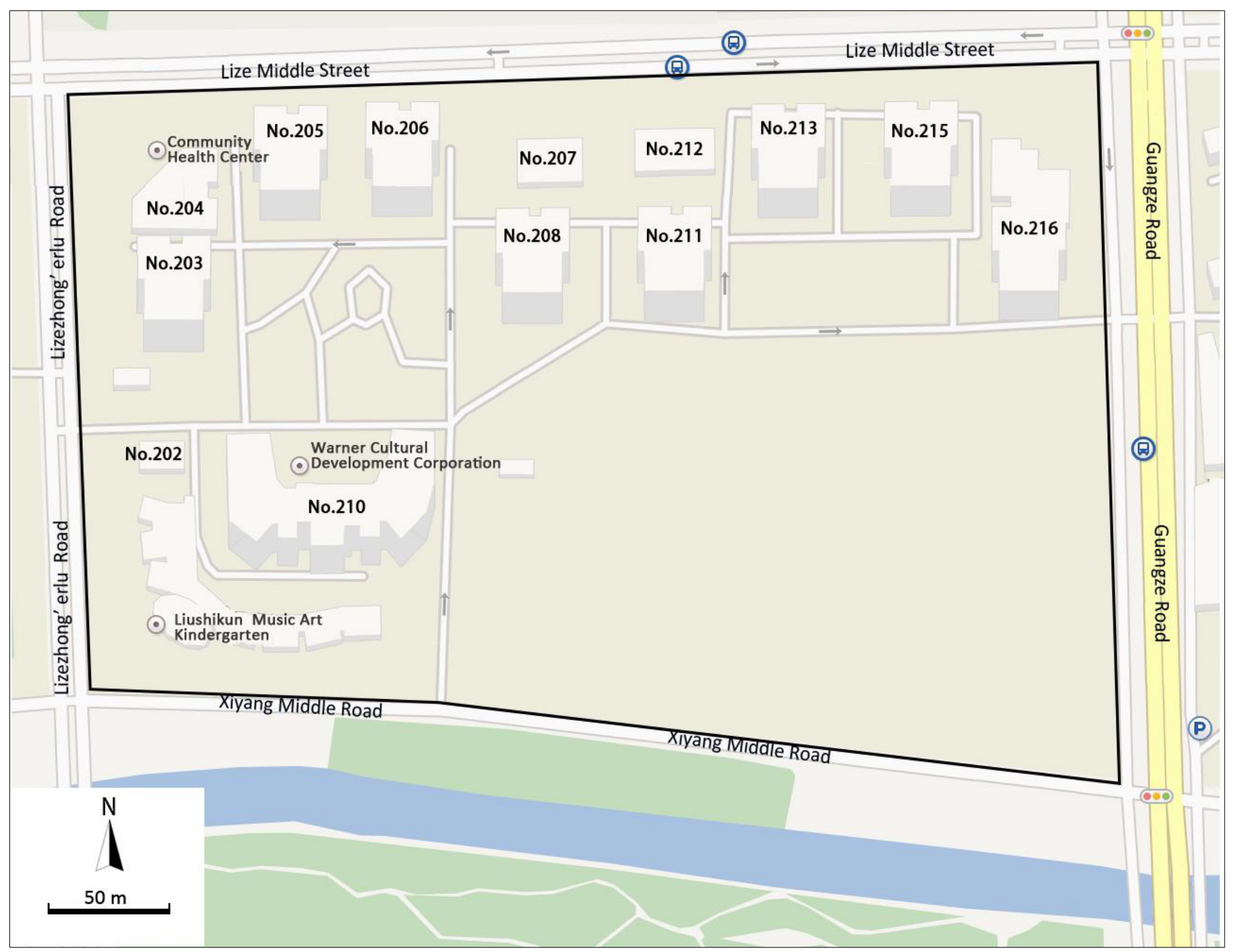
- Identify and annotate on a separate worksheet version of the map (Fig. 1) provided:
i. 6 features that affect the urban sustainability of the community in a positive or negative way and explain for each feature how it affects sustainability. [6 т.]
ii. 6 features that affect liveability in the community in a positive or negative way and explain for each feature how it affects liveability. [6 т.]
Решение
Task 1: Sustainability and liveability in the Wangjing Huayuandongqu Community [12 marks]
- Identify and annotate on a separate worksheet version of the map (Fig. 1) provided:
- 6 features that affect the urban sustainability of the community in a positive or negative way and explain for each feature how it affects sustainability
- 6 features that affect liveability in the community in a positive or negative way and explain for each feature how it affects liveability
Award 1 mark for each feature mentioned. A mark is only awarded if the answer explains how the feature/factor affects sustainability or liveability and if its location is clearly indicated on the worksheet map.
Examples of possible answers referring to sustainability:
- High rise buildings are more energy efficient than low rise single standing houses since they have less outer surface exposed to the elements; [+]
- High rise residential housing creates a high population density which lowers distances traveled which in turn lowers energy consumption for traffic; [+]
- Many buildings are made of concrete which absorbs and stores heat and cold which leads to a higher demand for energy for heating and cooling; [-]
- Many apartments in the high rise buildings have private aircon-units: decentralized cooling (and heating) systems are less energy efficient than centralized systems; [-]
- Shops and public service facilities nearby the residential buildings: reduces the need for transport, which lowers use of transport and CO2-emissions; [+]
- Public transport facilities nearby: public transport uses less energy than private cars; [+]
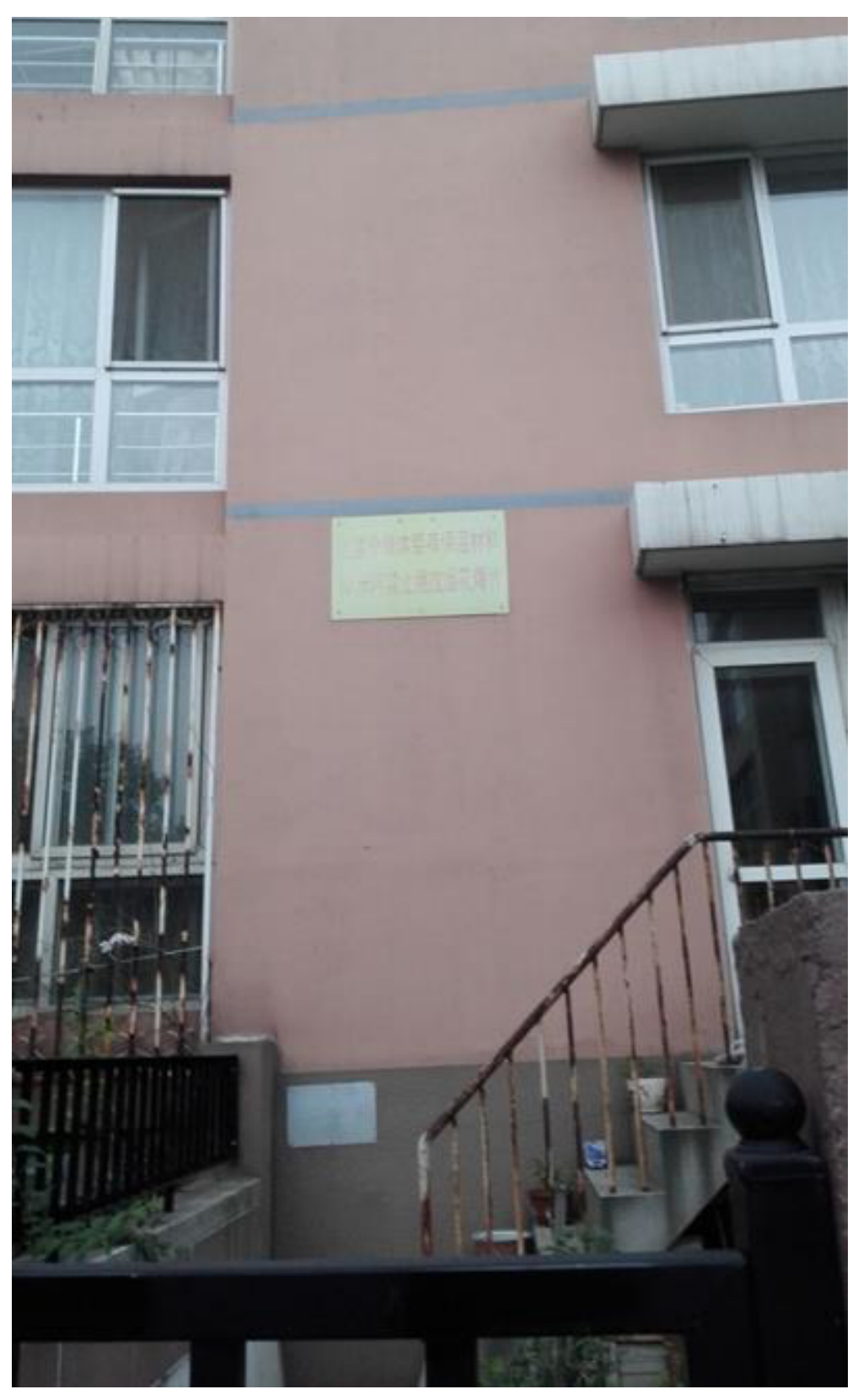
- Some buildings have walls with thermal insulation material which reduces energy use for heating and cooling; [+] NB: All of the buildings in the community are covered with thermal insulation materials. There is a sign on the wall of building no. 210 written in Chinese: “This building is covered with thermal insulation materials. No fireworks setting off around 50m.”
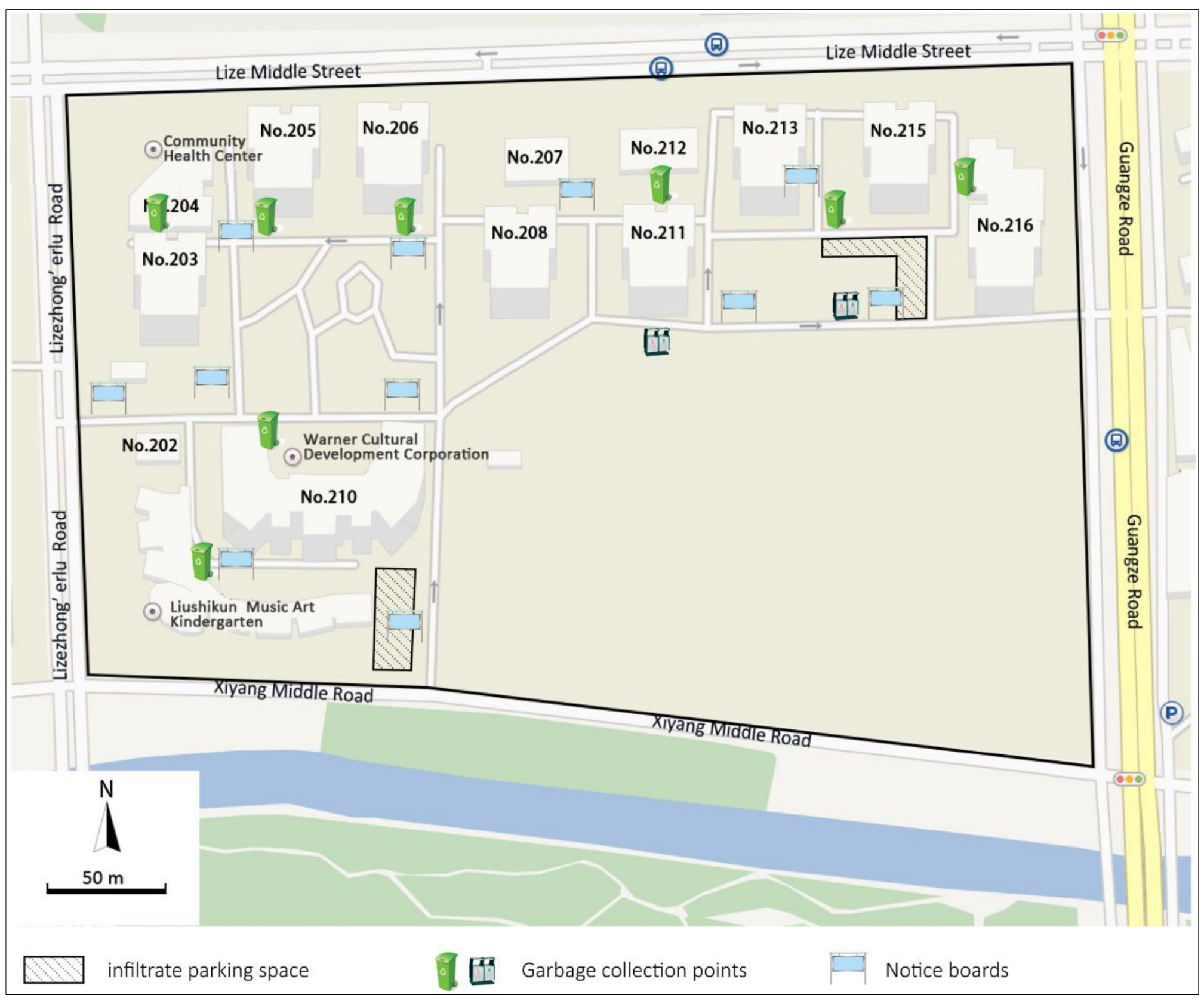
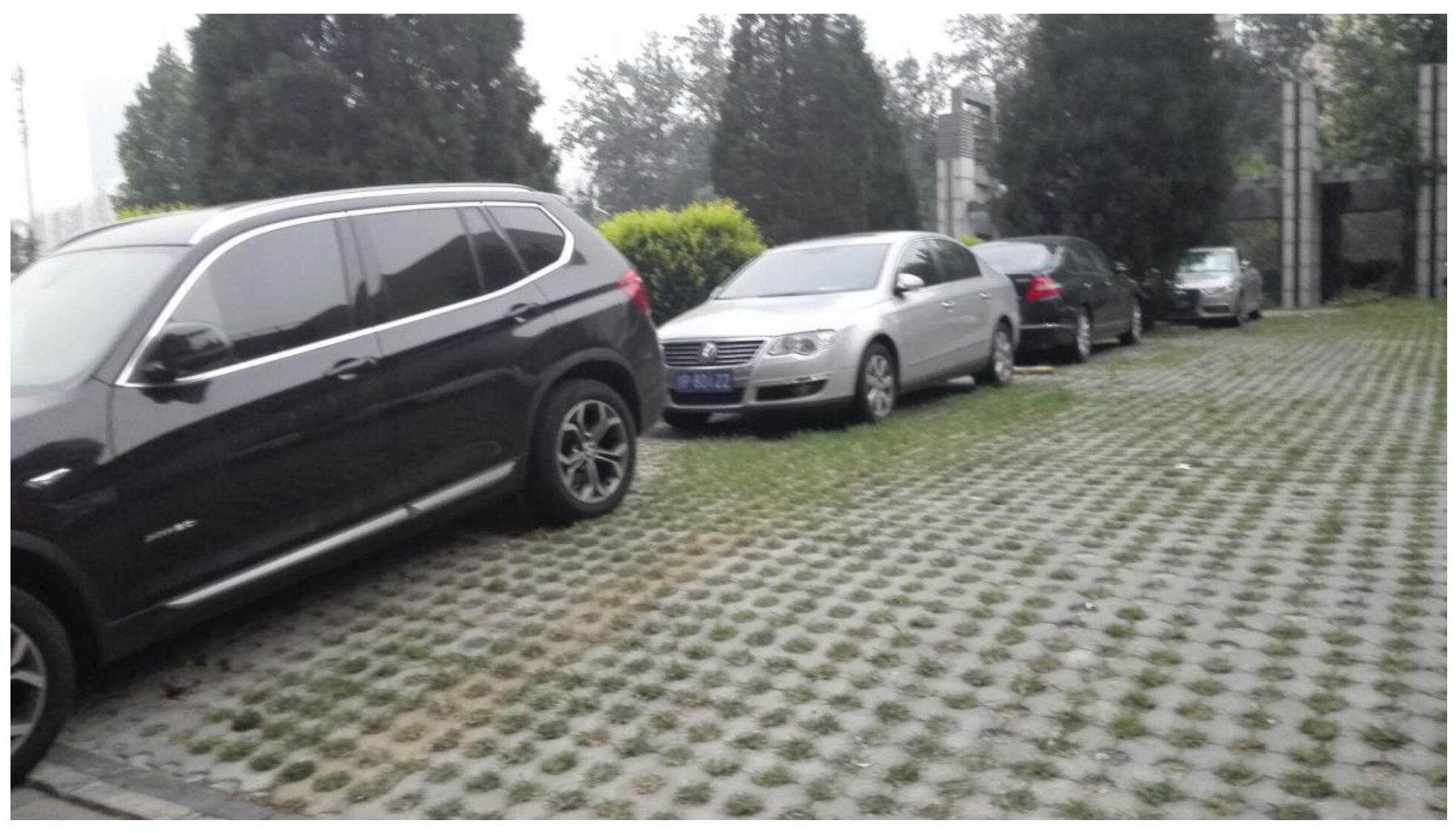
Participants could detect the insulation material by knocking on the walls. - Parking space with permeable pavement which allows rainwater infiltration (See picture below. Locations are indicated on the map below: Fig. 1)
- Many hard (concrete/asphalt) surfaces which absorb energy and add to the heat island effect of the city; [-]
- Green areas have hardly any trees and shrubs which could slow down the through-flow of water in the area. [-]
- Waste management: garbage is not separated to make processing and reuse of resources possible; [-]
- Lack of trees also causes a more distinct heat island effect in the cities in the summer time; [-]
- Trees improve the city’s microclimate and also diminishes air pollution as trees filter the small particles; [+]
- …
Examples of possible answers referring to liveability:
- Convenience stores, repair shops, community health service centers, kindergartens and other public service facilities nearby which saves time; [+]
- Some green park like areas are suited for recreation [+]
- Some spots are suited for sports activities, some have facilities/fitness equipment [+]
- Green space: trees purify the air and supply space for recreation; [+]
- Dog excreta collection bins
- Garbage collection points: locations clearly visible. [+] (see locations on Fig. 1 above)
- Traffic circle at intersection: it slows down traffic and prevents traffic jams. [+]
- Underground parking lot with ventilation facilities: nearby & agreeable; [+]
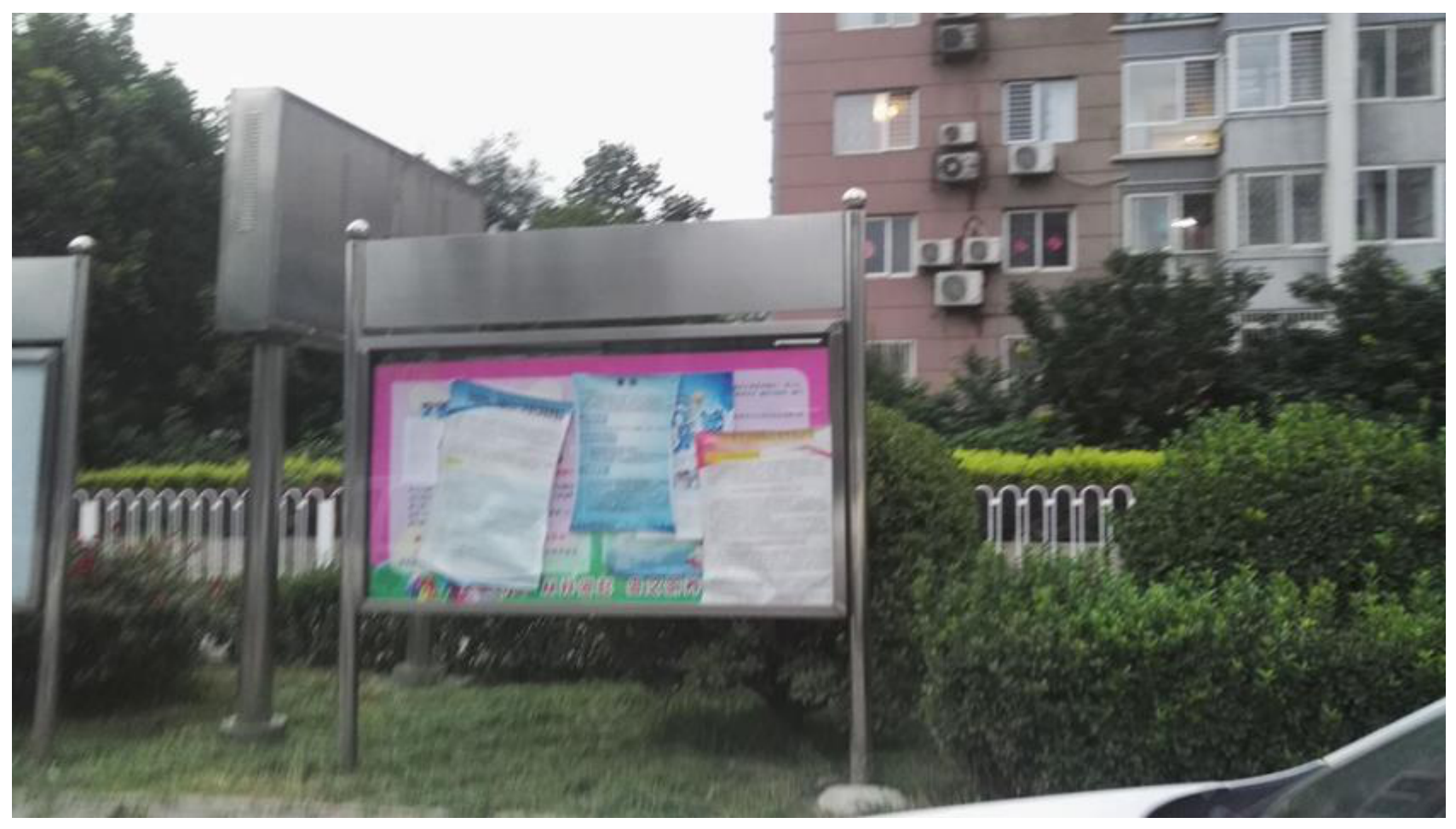
- Notice boards at the intersection providing rules of conduct and information about permitted recreational use of the area. [+](See photo below; locations are indicated on Fig. 1 above)
- Disordered parking, some vehicles block the fire brigade access [-]
- Vacant lot: empty green space creates a feeling of space in a densely built area. [+] However: the vacant lot is fenced so it can’t be used for recreational purposes. [-]
- …
- …
Оригинал в Архива: 2016FW1test.pdf · официални решения: 2016FW1marking.pdf