iGeo 2016, Теренна работа, упражнение 1 — Задача 3. Traffic junction and subway station
Field Work Exercise 1 – Test Booklet · 11 т.
Условие
- Observe the flow of traffic at the junction using the tally worksheet provided as a guide (Table 2).
i. Based on your traffic count, what are the 3 main categories of users of the traffic junction? Provide evidence from Table 2 to support your answer. [2 т.]
ii. Which groups of road users are prioritised in the design of this traffic junction? Why do you say so? Write your answer in the box at the bottom of Table 2. [3 т.]
iii. Locate and annotate on a separate worksheet version of the map (Fig.3) provided, where bottlenecks in traffic flow are occurring / might occur and explain why they might occur there. [6 т.]
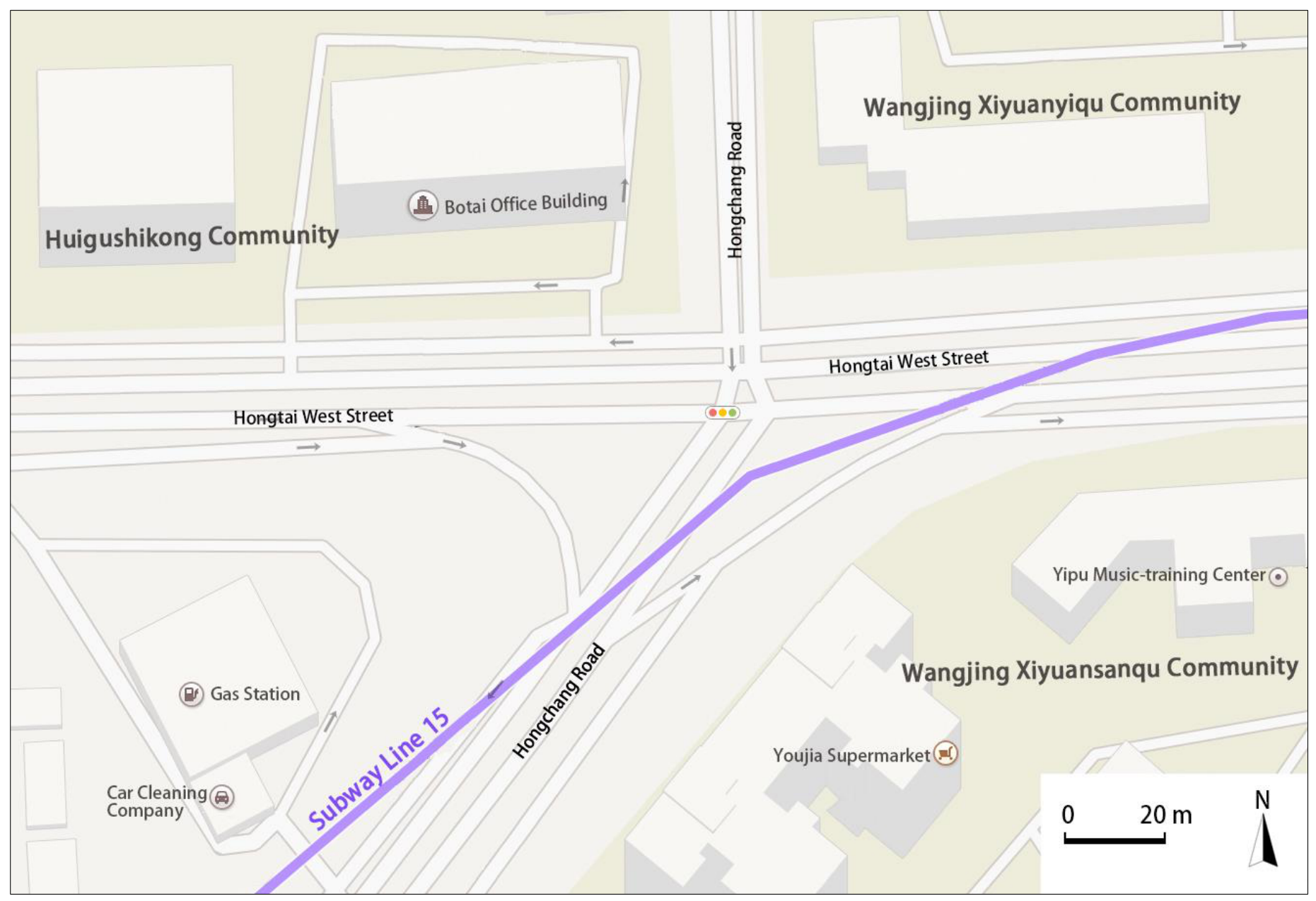
Table 2:
| Type of traffic (vehicular/ pedestrian) | Numbers counted in a 5 minute period | Time | Other relevant observations |
|---|---|---|---|
| Buses | |||
| Trucks | |||
| Cars | |||
| Motorcycles/ Scooters | |||
| Bicycles | |||
| Pedestrians | |||
| Others |
Which groups of road users are prioritised in the design of this traffic junction? Why do you say so?
Решение
Task 3: Traffic at the Hongchang Road – Hongtai West Street intersection / subway station [11 marks]
- Observe the flow of traffic at the junction using the tally sheet provided as a guide (Table 2).
i. Based on your traffic count, what are the 3 main categories of users of the traffic junction? Provide evidence from Table 2 to support your answer. [2m]
ii. Which groups of road users are prioritised in the design of this traffic junction? Why do you say so? Write your answer in Table 2. [3m]
iii. Locate and annotate on a separate worksheet version of the map provided (Fig. 3), where bottlenecks in traffic flow are occurring / might occur and explain why there. [6m]
Marking scheme:
i. Award 1 mark for each correctly identified category which is supported by evidence from Table 2. [3m]
ii. Award 1 mark for any road user identified and supported by evidence. Award up to 2 marks for supporting evidence. [3m]
iii. NB: Please go to the traffic intersection and identify on the map where bottlenecks are occurring, and why these bottlenecks are occurring there. (Basically there are few traffic jams at this intersection according to both of our field observation and data survey, even when it is weekday morning and evening rush hours)
Table 2: Traffic Count at Junction within a 5 minute period
| Type of traffic (vehicular/ pedestrian) | Numbers counted in a 5 minute period ¹ | Time | Other relevant observations |
|---|---|---|---|
| Buses | 10;11;12;12 | There are many passengers in buses; there are no electric buses on this section of the road. | |
| Trucks | 2;4;3;6 | Small vans are dominant. | |
| Cars | 81;76;102;150 | The number of vehicles is huge but proportion of the taxi is small | |
| Motorcycles/ Scooters | 25;17;41;15 | There is few motorcycles, but electric cars are in the majority, which are mainly used for the delivery of takeout | |
| Bicycles | 10;5;14;8 | People riding bicycles is mainly the older | |
| Pedestrians | 48;59;47;30 | The young people is dominant | |
| Others |
Which groups of road users are prioritised in the design of this traffic junction? Why do you say so?
Motorised vehicles, mainly private cars.
- Most of the available space (lanes) are designated for motorized vehicles.
- Adjustment/programming of the traffic lights: when the pedestrians cross the road, the length of time of green light is short; when the cars cross the junction, the length of time of green light is much longer.
- There are no separate bus lanes for buses.
- …
- …
¹ From four students’ answers
Оригинал в Архива: 2016FW1test.pdf · официални решения: 2016FW1marking.pdf