IOAA 2008, Наблюдения — Задача 2. PART II: Using Telescope and CCD
The 2nd International Olympiad on Astronomy and Astrophysics, Bandung, Indonesia. Thursday, August 21, 2008. Practical Competition: Observations · 21 август 2008 г. · 100 т.
Внимание: Бележка към темата
The official CCD examples leave the limiting-magnitude answer lines blank. Printed scoring and coordinate discrepancies are retained; the M23 identification table is recovered from the original Word table beneath an overlapping naked-eye chart.
Условие
Instructions:
- Part II consists of four steps: distributions of problem sheets in examination room, using telescope and CCD observations on the observing ground (20 minutes), print images and return to the examination room to answer questions (10 minutes). Bell ring will indicate the beginning and the end of each step. Works completed after the allocated time will not be considered.
- All participants will be guided by assistants to go to the observing ground until return to the examination room. Assistants will collect the answer sheets from your table.
- Never forget to fill in the boxes at the top of each answer sheet with your country and your student codes. Otherwise, it will be ignored.
PROBLEM
Participants have to identify as many stars as possible in the field of a celestial photograph using the telescope and CCD provided by the committee. Participants have to choose one out of the five recommended regions in the sky listed below. Then, point the telescope to the direction of the selected sky region. Take three photographs with different exposure times and record the images of the sky by the CCD camera. Save the observational data. Transfer the data to the printing facilities to print out the result. Ask the technical assistant for a help. Choose the best prints-out and use the image to identify the stars in the field of observations. The following procedures are,
1. Choose only one out of the following five recommended regions to the directions of (marked by the following bright clusters):
i. M7 ( , )
ii. M8 ( , )
iii. M20 ( , )
iv. M21 ( , )
v. M23 ( , )
You may not change your choice.
2. Type in your country code, your student code, and your choice of region into the answer page provided in the computer.
3. Point the telescope to the chosen cluster by using telescope controller. If necessary you may move the telescope slightly to get the best position in the frame of the CCD by checking the display of CCDops software.
4. Display the region in The Sky map software provided in the computer, to confirm that the telescope is pointed to the selected object in the sky. You may change field of view of the sky chart.
5. You may invert the background images into white color, as in the chart mode. Copy and paste the sky chart from The Sky into the answer page. Use “Ctrl c” and “Ctrl v” buttons from the keyboard, respectively.
6. Type the equatorial coordinates of the centre of that object in the answer page as indicated in The Sky.
7. Take three photographs of the chosen object by using the attached CCD camera and CCDops software, with various exposure times.
Choose exposure time in the range between 1 and 120 seconds. Image is automatically subtracted with dark frame with the same exposure time.
8. You must invert the background images into white color. Copy and paste images from CCDops into the answer page. Use “Ctrl c” and “Ctrl v” buttons from the keyboard, respectively.
9. Save your answer page into hard disk in a Microsoft Word file format.
10. Print your answer page which consists of the photographs and the corresponding sky chart.
11. Go to the identification room and bring with you the prints-out of the sky chart and the photographs.
Ask some help from technical assistant, if necessary.
12. Choose the best out of the three printed images and identify as many objects as possible on it.
13. Use the assigned computer and The Sky software to identify objects. Type your identification to your answer page.
14. Type on the answer page the names (or catalogue number), RA, Dec, and magnitude of each identified star and put the sequential number on the photograph.
Make sure that you list the stars on the answer page following the same order and number as on the photograph.
15. Estimate the limiting magnitude of the photograph you choose, empirically.
Решение
Внимание: Непълно решение
The official example identification sheets leave all five limiting-magnitude answer lines blank; no numerical values are supplied.
Marking scheme:
| Student who has the highest number of stars identified () = | 60% |
| Other students who get stars = | |
| Estimation of the limiting magnitude = | 0 – 20% |
| Good image quality (unsaturated, not under expose) | 20% |
( mag : full mark, mag half mark, mag : 0)
TOTAL MARK = 100
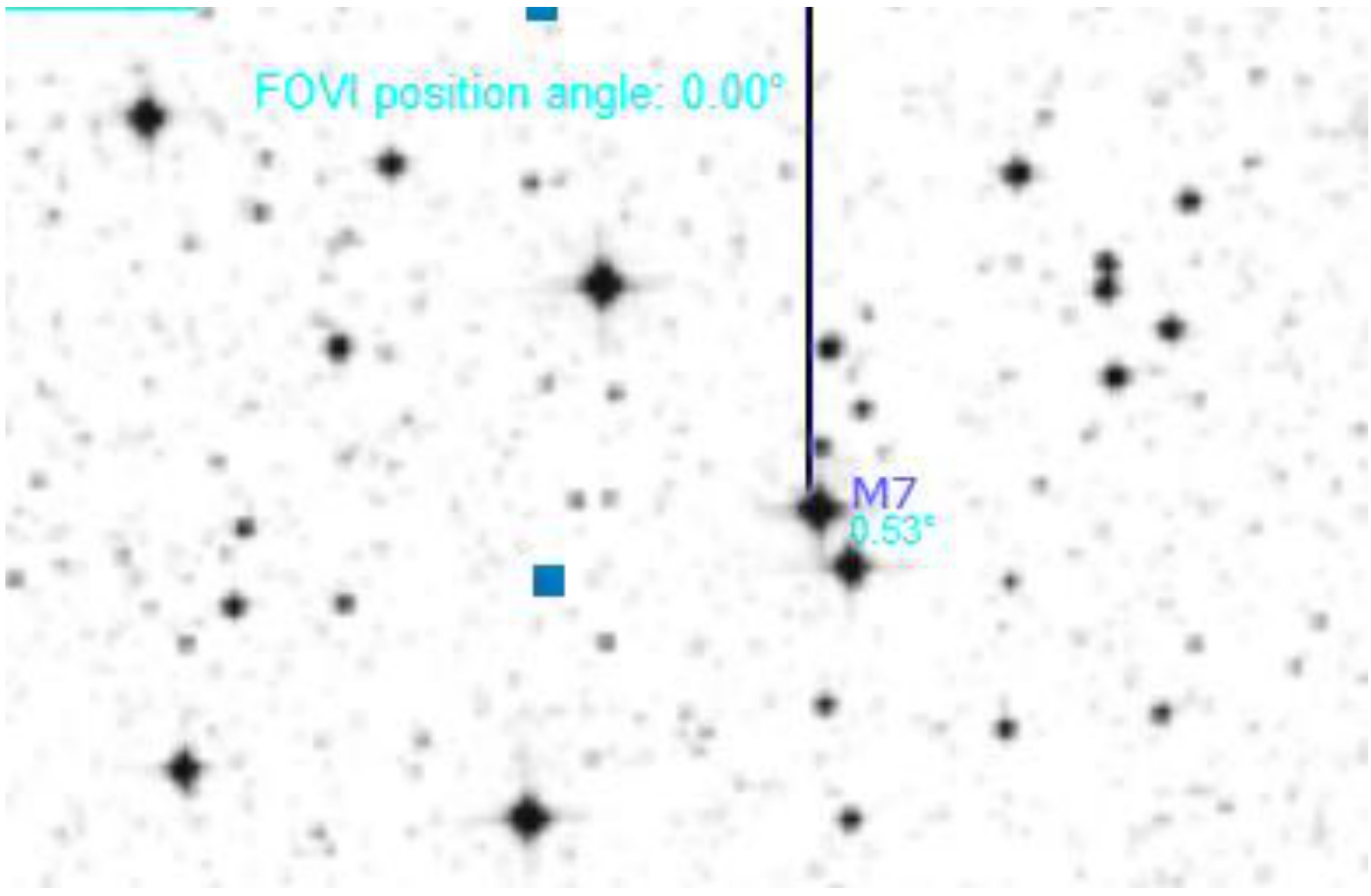
M7
Answer Page — Sky chart Image
Selected region: M7 (α=17ʰ53.ᵐ3, δ= −34°46.′2)
Central equatorial coordinates: α=17ʰ54ᵐ22.3ˢ, δ= −34°47′15″
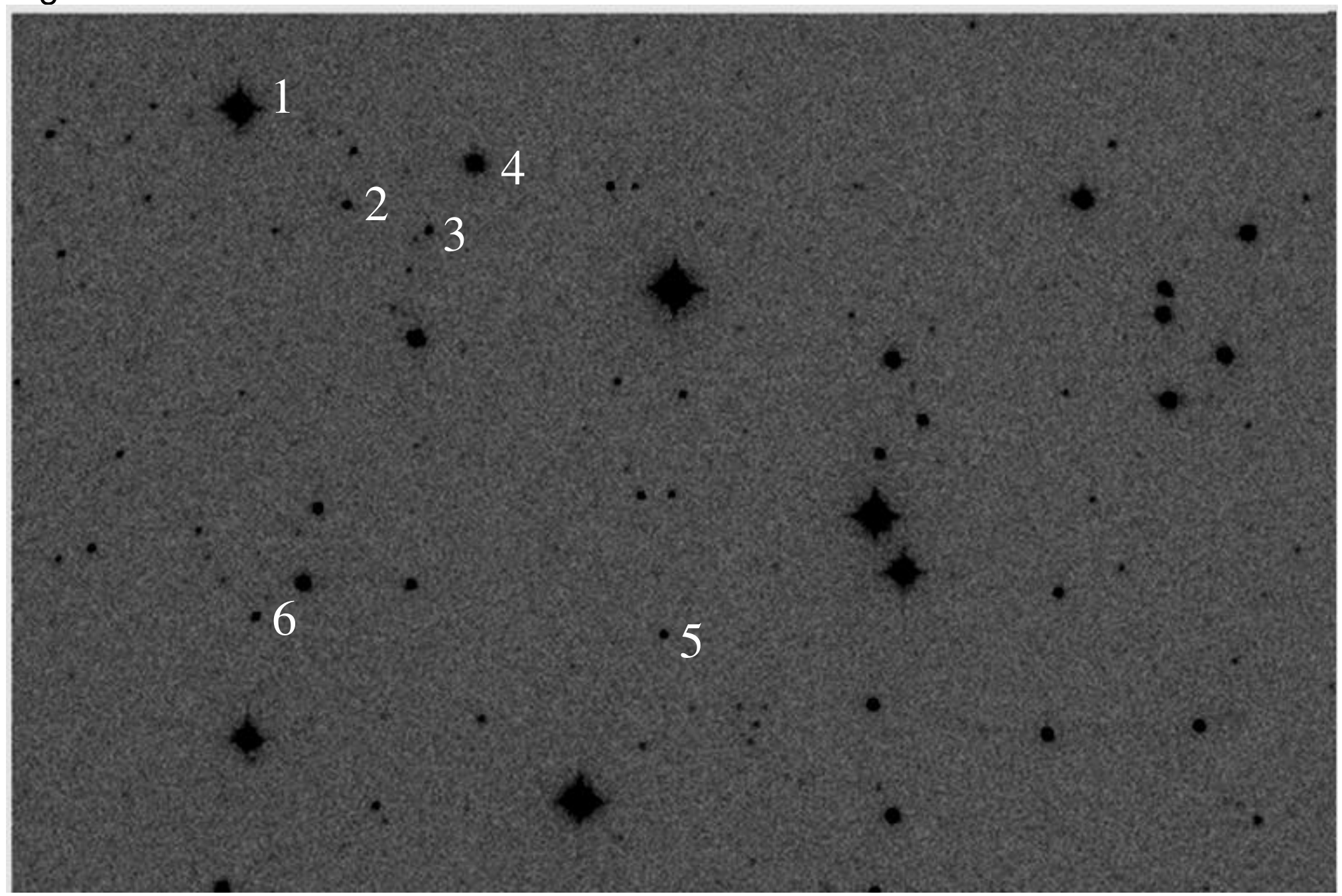
Answer Page — Identification
| Number | Names or Catalogue number | R.A. | Declination | Magnitude |
|---|---|---|---|---|
| 1 | SAO 209436 | 17h 54m 14.380s | −34°43′39.535″ | 6.88 |
| 2 | GSC 7386:494 | 17h 54m 09s | −34°44′31″ | 11.6 |
| 3 | GSC 7386:601 | 17h 54m 06s | −34°44′44″ | 12.2 |
| 4 | GSC 7386:561 | 17h 54m 04s | −34°44′06″ | 8.5 |
| 5 | GSC 7386:15 | 17h 53m 55s | −34°48′20″ | 11.9 |
| 6 | GSC 7386:40 | 17h 54m 13s | −34°48′18″ | 11.8 |
Limiting magnitude of the photograph is ………………………………………
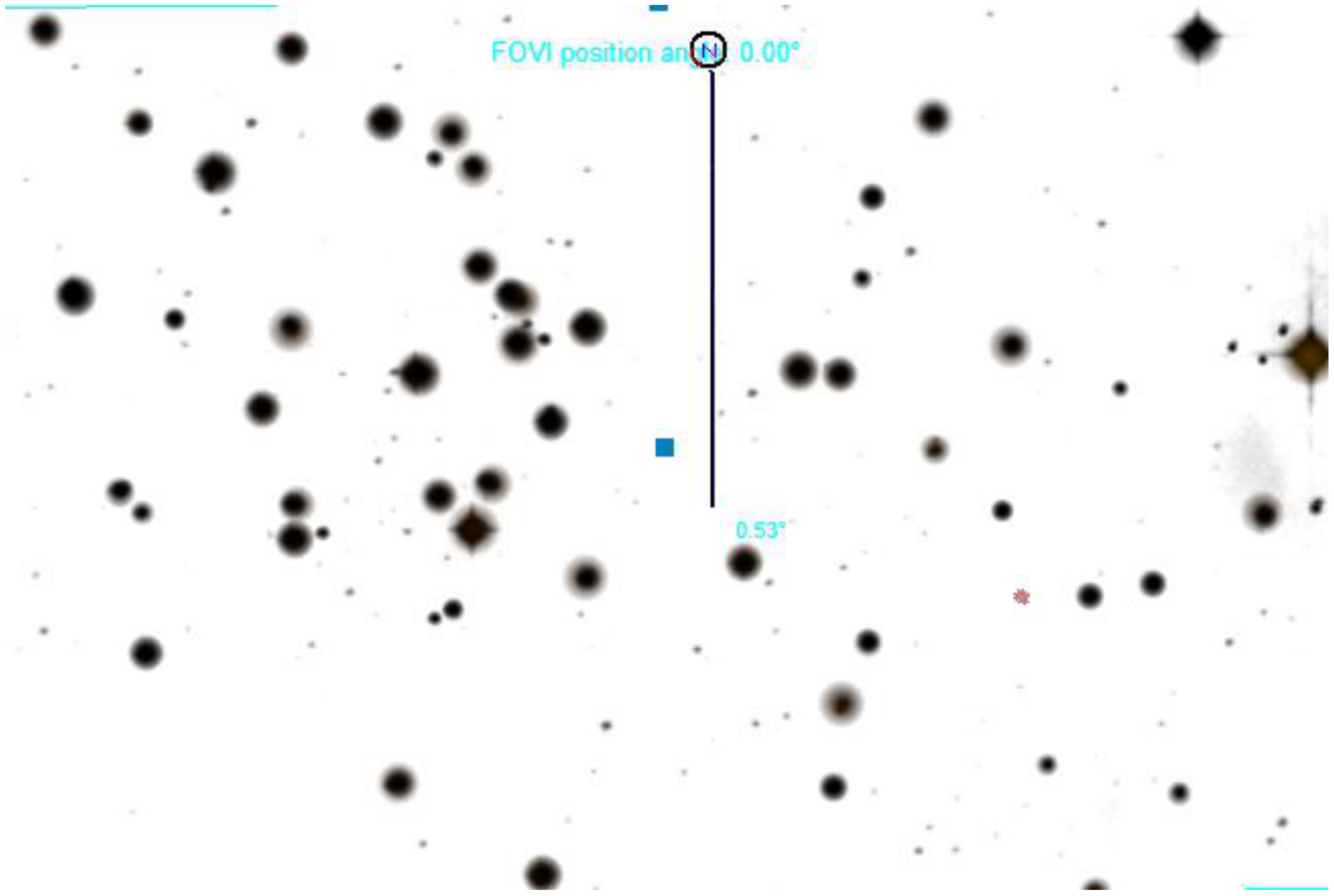
M8
Answer Page — Sky chart Image
Selected region: M8 (α=18ʰ04.ᵐ2, δ= −24°22.′1)
Central equatorial coordinates: α=18ʰ04ᵐ51ˢ.2; δ=−24°23′04″
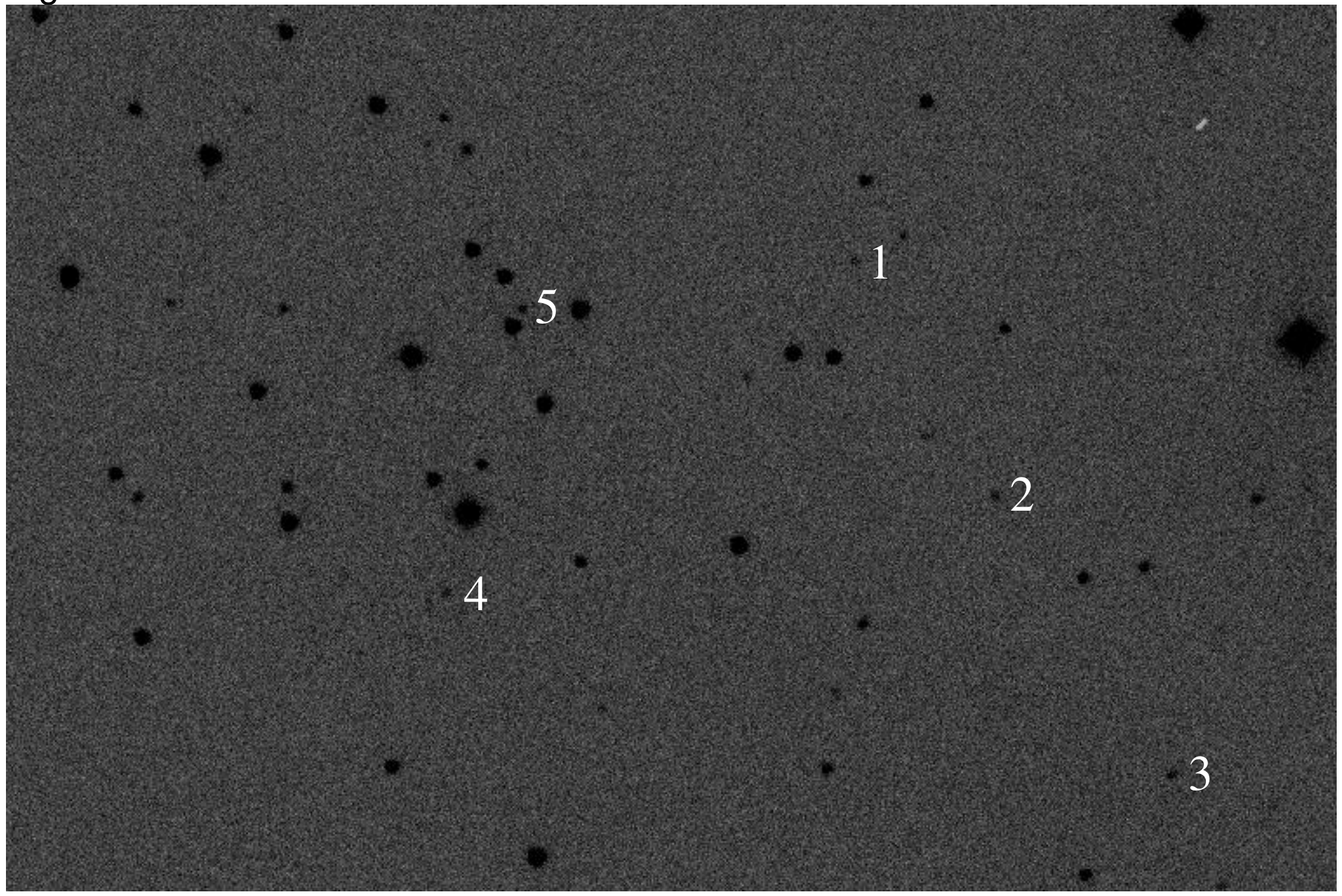
Answer Page — Identification
| Number | Names or Catalogue number | R.A. | Declination | Magnitude |
|---|---|---|---|---|
| 1 | GSC 6842:1751 | 18h 04m 10s | −24°20′53″ | 12.5 |
| 2 | GSC 6846:166 | 18h 04m 05s | −24°23′01″ | 12.1 |
| 3 | GSC 6846:211 | 18h 03m 58s | −24°25′35″ | 12.0 |
| 4 | GSC 6846:718 | 18h 04m 27s | −24°23′52″ | 12.4 |
| 5 | GSC 6842:1578 | 18h 04m 23s | −24°21′25″ | 13.4 |
Limiting magnitude of the photograph is ………………………………………
M20
Answer Page — Sky chart Image
Selected region: M20 (α=18ʰ02.ᵐ4, δ= −22°58.′7)
Central equatorial coordinates: α=18ʰ02ᵐ56ˢ.7, δ=−23°01′56″
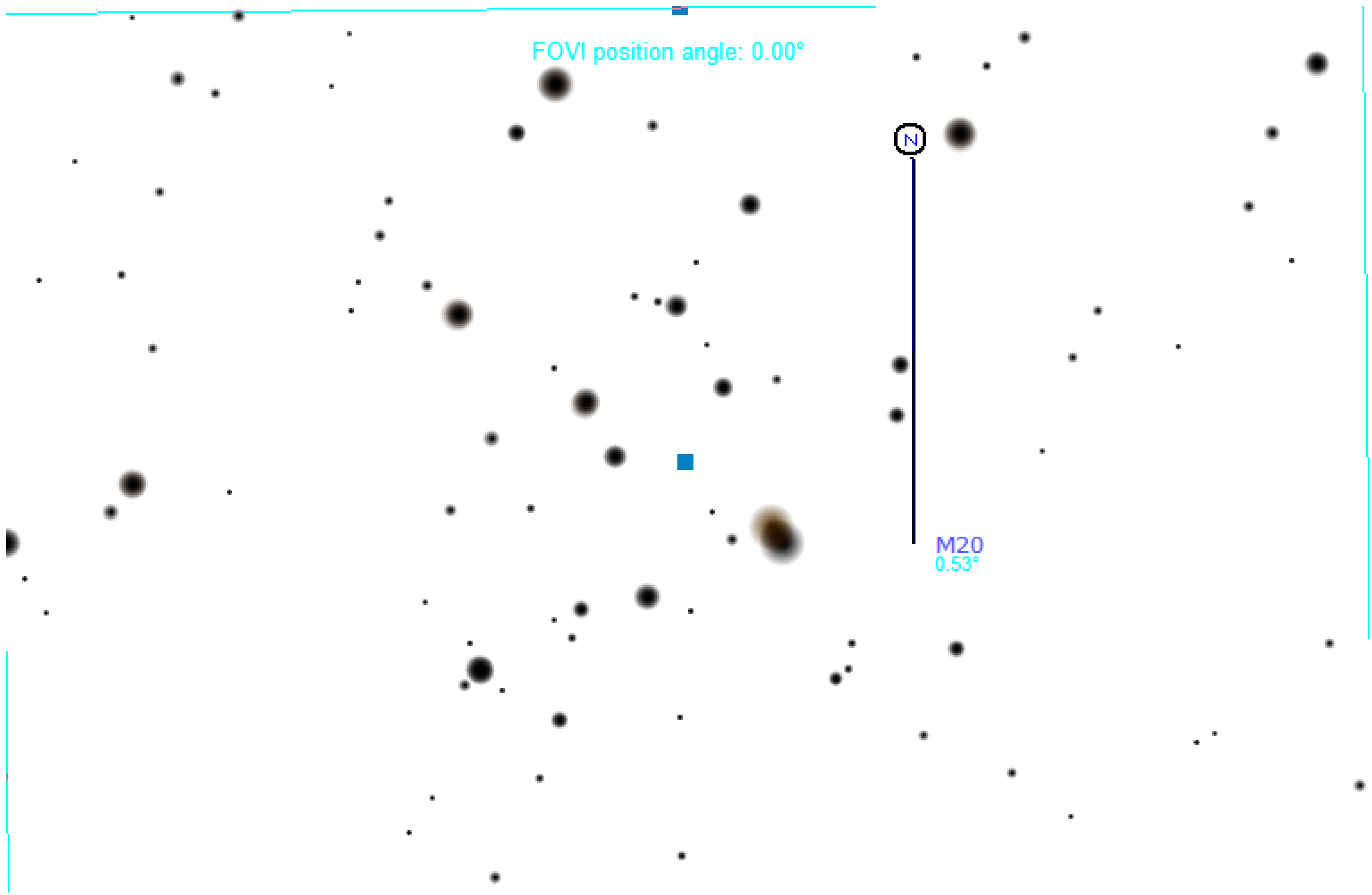
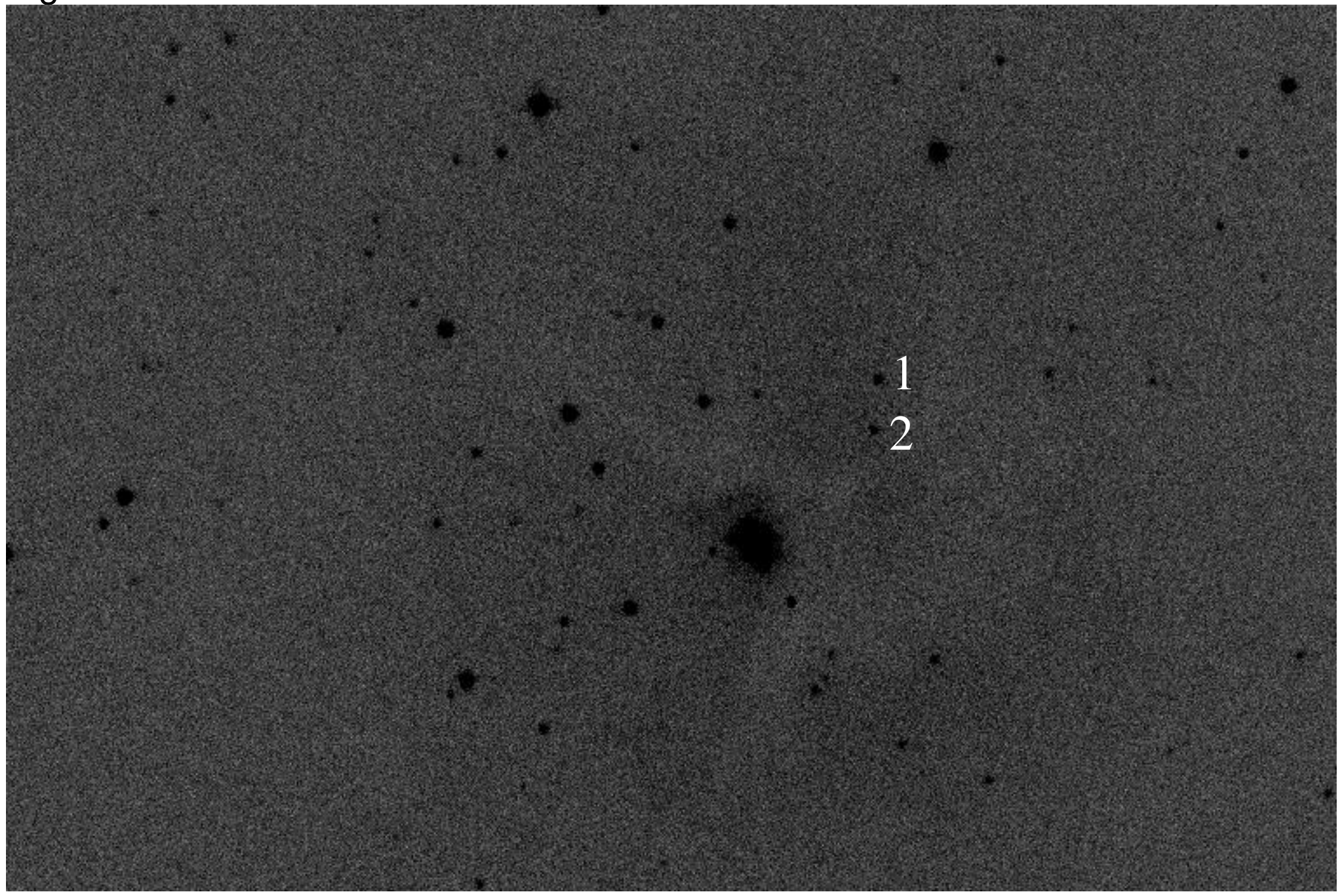
Answer Page — Identification
| Number | Names or Catalogue number | R.A. | Declination | Magnitude |
|---|---|---|---|---|
| 1 | GSC 6842:631 | 18h 02m 18s | −23°00′25″ | 12.4 |
| 2 | GSC 6842:240 | 18h 02m 19s | −23°00′52″ | 12.8 |
Limiting magnitude of the photograph is ………………………………………
M21
Answer Page — Sky chart Image
Selected region: M21 (α=18ʰ04.ᵐ2, δ= −22°29.′5)
Central equatorial coordinates: α=18ʰ04ᵐ46ˢ.3, δ=−22°29′27″
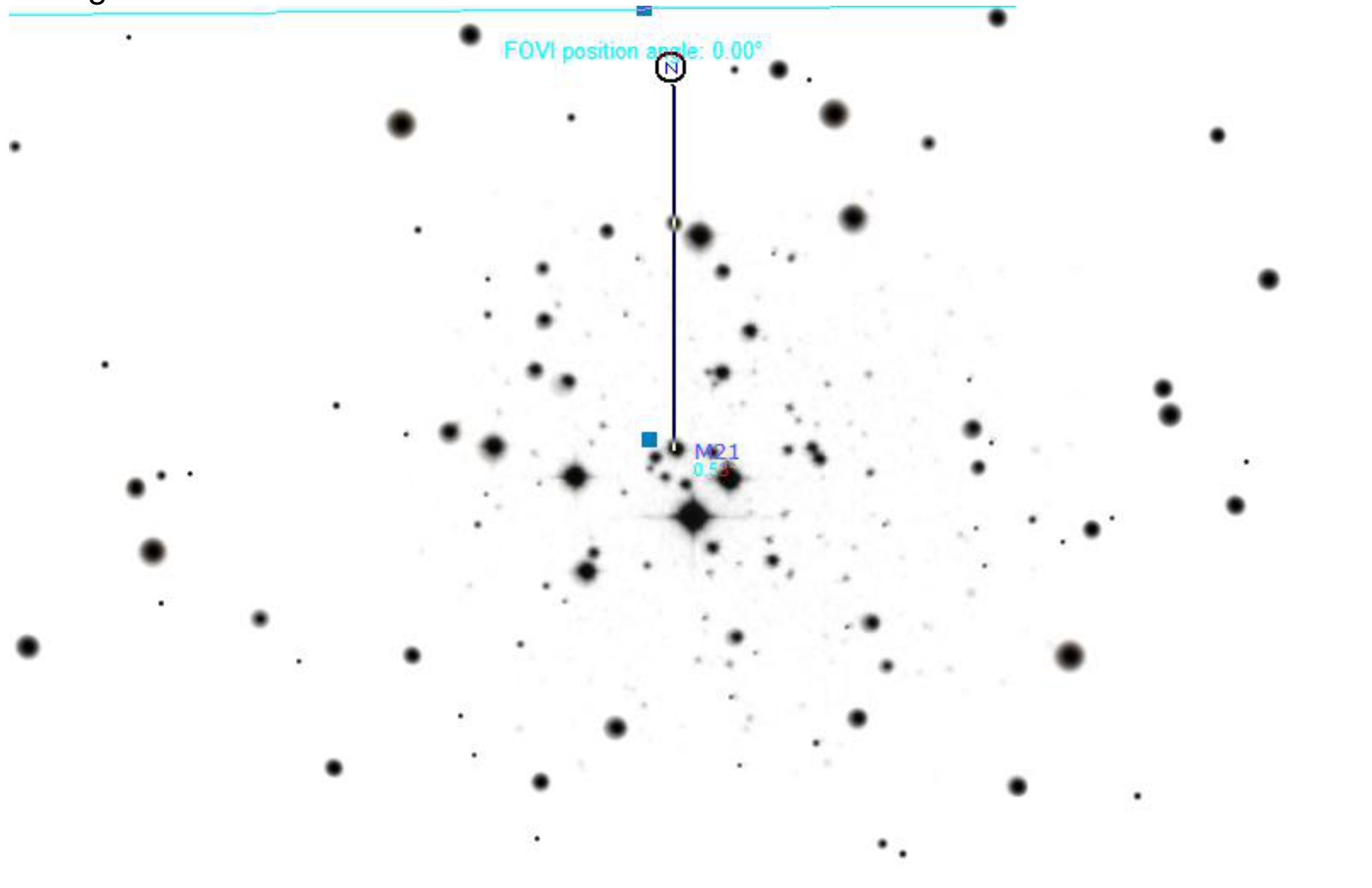
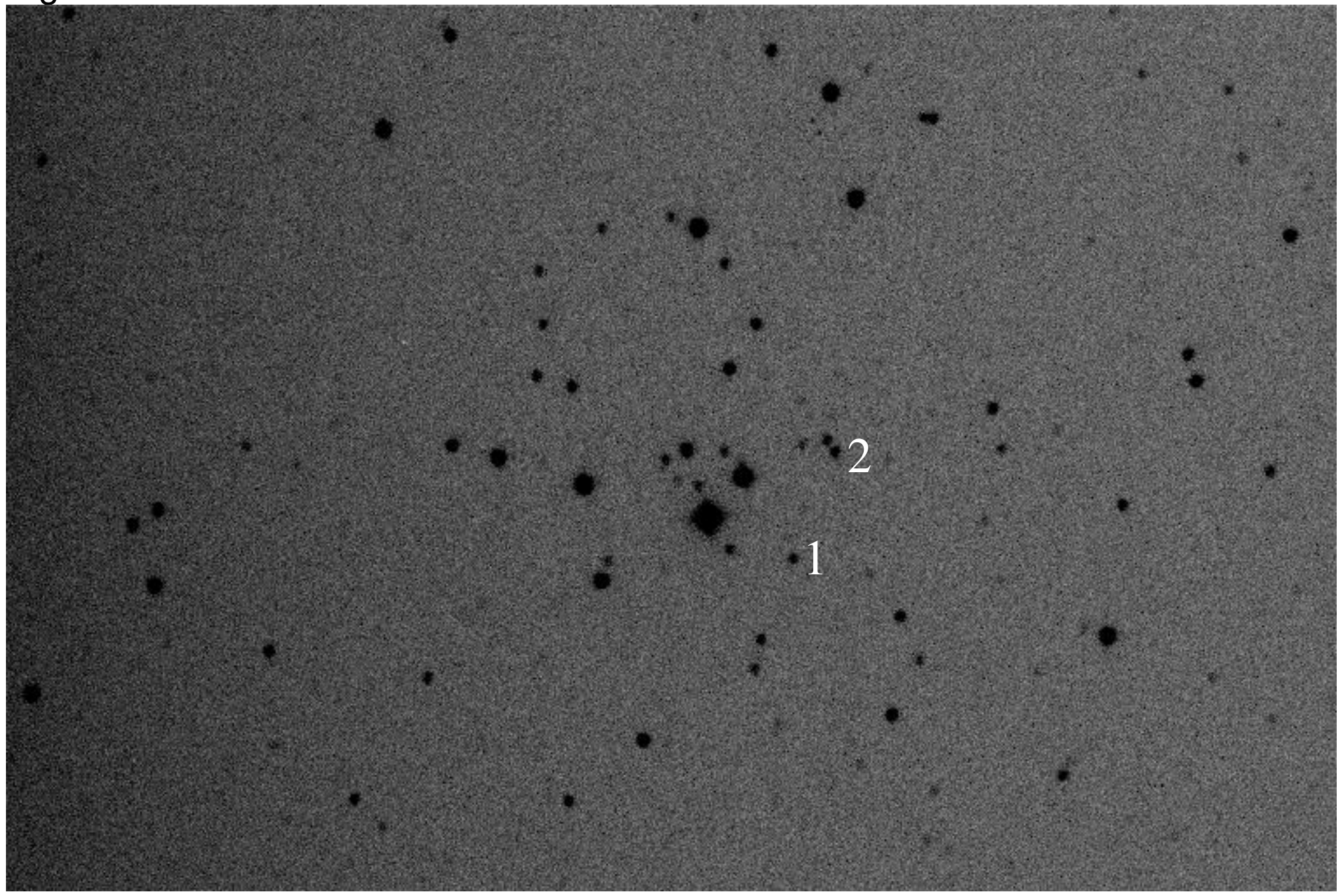
Answer Page — Identification
| Number | Names or Catalogue number | R.A. | Declination | Magnitude |
|---|---|---|---|---|
| 1 | GSC 6842:985 | 18h 04m 09s | −22°30′28″ | 12.9 |
| 2 | GSC 6263:306 | 18h 04m 01s | −22°29′36″ | 13.1 |
Limiting magnitude of the photograph is ………………………………………
M23
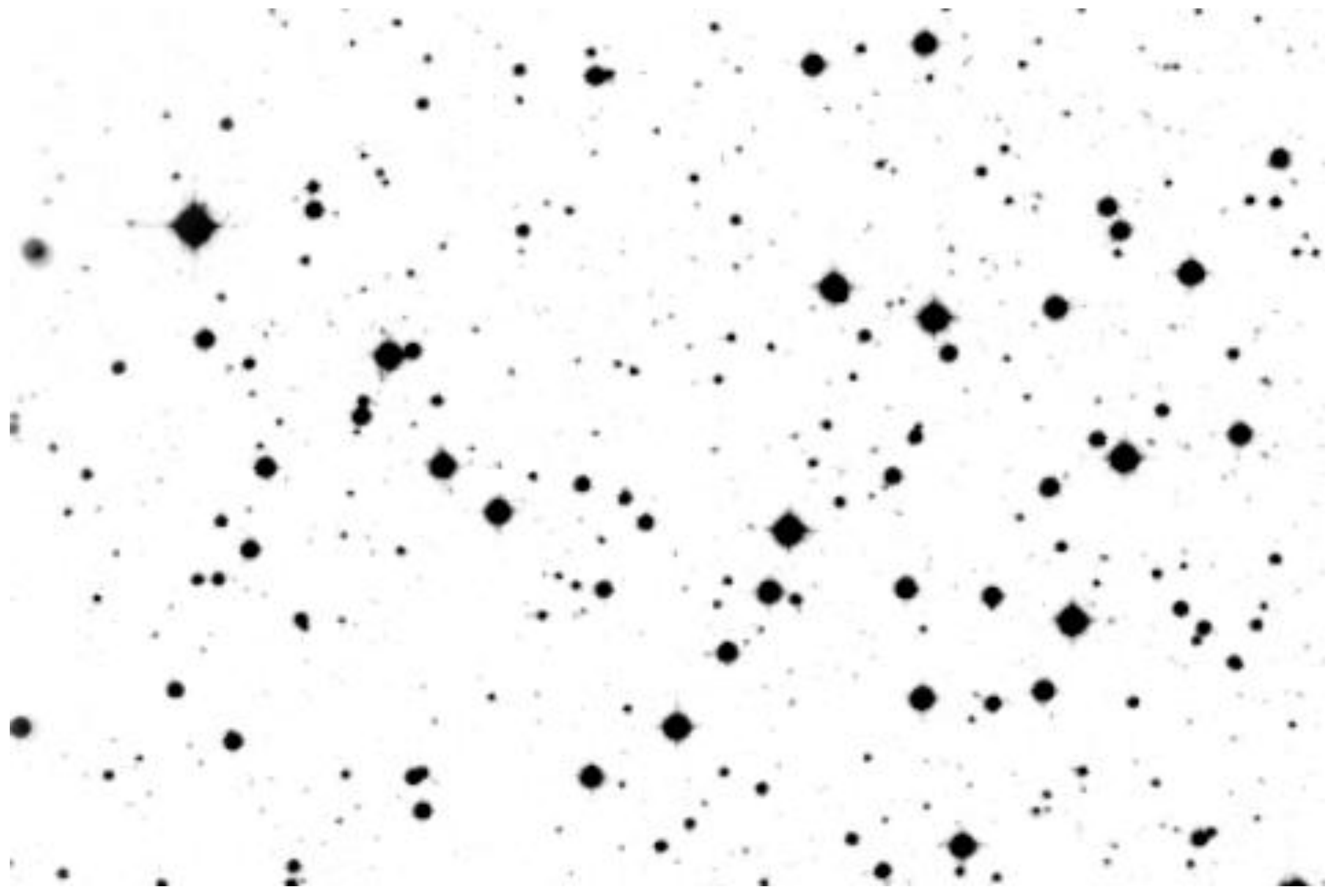
Answer Page — Sky chart Image
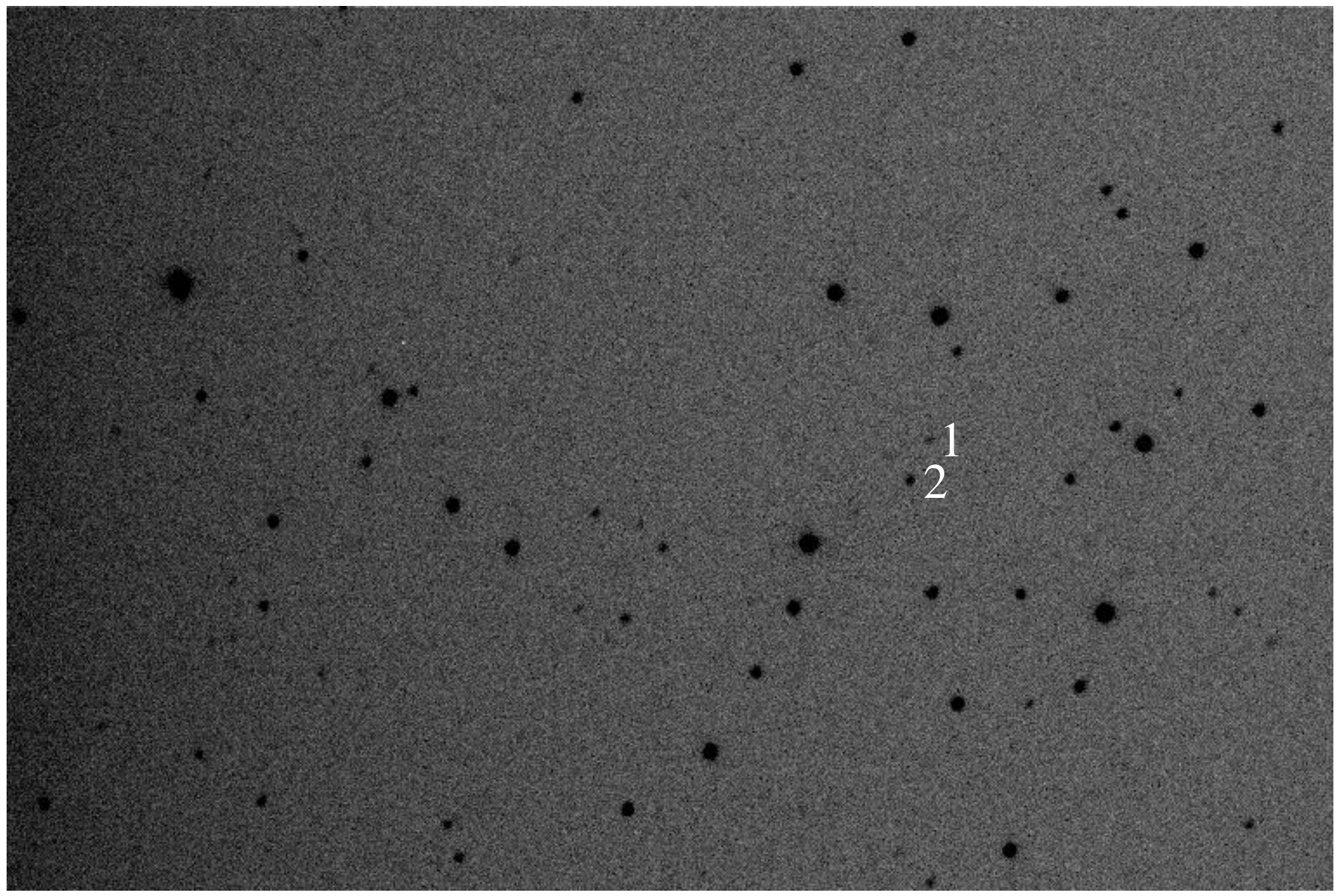
Selected region: M23 (α=17ʰ57.ᵐ0, δ= −18°59.′4)
Central equatorial coordinates: α=17ʰ57ᵐ32ˢ.1, δ=−19°01′08″
Answer Page — Identification
| Number | Names or Catalogue number | R.A. | Declination | Magnitude |
|---|---|---|---|---|
| 1 | GSC 6258:809 | 17h 56m 58s | −18°58′21″ | 13.2 |
| 2 | GSC 6258:825 | 17h 56m 59s | −18°58′43″ | 12.5 |
Limiting magnitude of the photograph is ………………………………………
Оригинал в Архива: 2008_Observation.pdf · официални решения: nakedeye_sol.doc · допълнителни данни: ccd_sol.doc