The final key has blank pages 6 and 14 and broken maps on page 15. Eagles A2 (delay derivation and Fig. 4), C1–C2 final formulas, and Antipod a), marking scheme and maps are recovered from the archived preliminary key (original pages 7–8, 14 and 24–25). Antipod a) in that key uses latitude 43° although both questions give 44°; its printed answer is retained as an alternate-edition answer. Other printed numerical discrepancies are preserved.
Indications
1. The problems were elaborated concerning two aspects:
a. To cover merely all the subjects from the syllabus;
b. The average time for solving the items is about 15 minutes per a short problem;
2. In your folder you will find out the following:
a. Answer sheets
b. Draft sheets
c. The envelope with the subjects in English and the translated version of them in your mother tongue;
3. The solutions of the problems will be written down only on the answer sheets you receive on your desk. PLEASE WRITE ONLY ON THE PRINTED SIDE OF THE PAPER SHEET. DON’T USE THE REVERSE SIDE. The evaluator will not take into account what is written on the reverse of the answer sheet.
4. The draft sheets is for your own use to try calculation, write some numbers etc. BEWARE: These papers are not taken into account in evaluation, at the end of the test they will be collected separately . Everything you consider as part of the solutions have to be written on the answer sheets.
5. Each problem have to be started on a new distinct answer sheet.
6. On each answer sheet please fill in the designated boxes as follows:
a. In PROBLEM NO. box write down only the number of the problem: i.e. 1 to 12 for short problems, 13 to 14 for long problems. Each sheet containing the solutions of a certain problem, should have in the box the number of the problem;
b. In Student ID – fill in your ID you will find on your envelope, consisted of 3 letters and 2 digits.
c. In page no. box you will fill in the number of page, starting from 1. We advise you to fill this boxes after you finish the test
7. We don’t understand your language, but the mathematic language is universal, so use as more relationships as you think that your solution will be better understand by the evaluator. If you want to explain in words we kindly ask you to use short English propositions.
8. Use the pen you find out on the desk. It is advisable to use a pencil for the sketches.
9. At the end of the test:
a. Don’t forget to put in order your papers;
b. Put the answer sheets in the folder 1. Please verify that all the pages contain your ID, correct numbering of the problems and all pages are in the right order and numbered. This is an advantage of ease of understanding your solutions.
c. Verify with the assistant the correct number of answer sheets used fill in this number on the cover of the folder and sign.
d. Put the draft papers in the designated folder, Put the test papers back in the envelope.
e. Go to swim
GOOD LUCK !
Note on marking
ALL THE CORRECT SOLUTIONS WHICH ARE DIFFERENT FROM THE AUTHOR’S SOLUTION WILL BE EVALUATED AND MARKED ACORDINGLY TO THE MARKING SCHEME.
Условие
The 8th IOAA organizers plan to send to the antipode (the point on the Earth’s surface diametrically opposite to the launch position) the official flag using a ballistic projectile. The projectile will be launched from Romania, and the rotation of the Earth will be neglected.
a) Calculate the coordinates of the target-point if the launch-point coordinates are: φRomania=44∘North; λRomania=30∘Est.
b) Determine the magnitude of the velocity and the launch angle, with respect to the horizon at launch site, in order that the projectile should hit the target.
c) Calculate the velocity of the projectile when it hits the target.
d) Calculate the minimum velocity of the projectile on its trajectory.
e) Calculate the flying –time of the projectile, from the launch to the impact. You may use the value of the gravitational acceleration at Earth surface as g0=9.81ms−2; the Earth radius R=6370km.
f) Will it be possible that the projectile will be seen by the naked eye when it is at the maximum distance from the Earth. You will use the following values: The Moon albedo αM=0.12; The Moon radius RM=1738Km; the Earth –Moon distance rEM=385000km; the apparent magnitude of the full moon mM=−12.7m. You assume that the projectile is perfectly metallic sphere with radius rprojectile=400x10−3m and with perfectly reflective surface.
Отговори
b)v0=23g0R,α=30∘
Official solution: α = 30° and v0 = 2√(g0R/3).
c)vAntipod=v0
d)vmin=32g0R⋅3+33−3
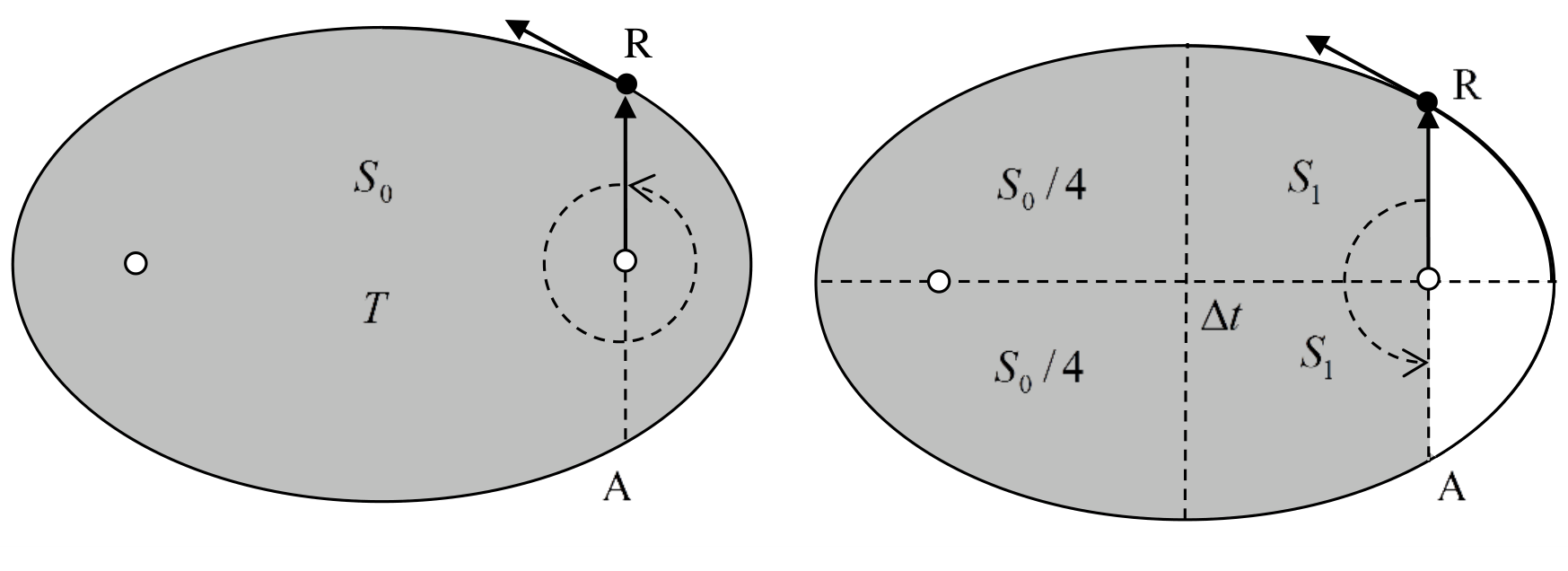
e)Δt=(21+πaeb+πarcsine)⋅T,T=R2πg0a3
The official solution stops at the formula; no numerical value is printed.
f) No: m_proiectil = 10,7^m > mmax ≈ 6^m, so the projectile is not visible at apogee.
The official solution uses rPL = 384400 km (the statement gives 385000 km) and writes 23,4^m = 12,7^m + m_proiectil although mL = −12,7^m.
Решение
Внимание: Непълно решение
The final key omits part a). The recovered preliminary key uses latitude 43° although both question editions give 44°; no matching 44° worked answer is supplied.
Archived preliminary marking scheme
Part
Points
a)
10
b)
10
c)
10
d)
10
e)
10
f)
10
a) — archived preliminary key
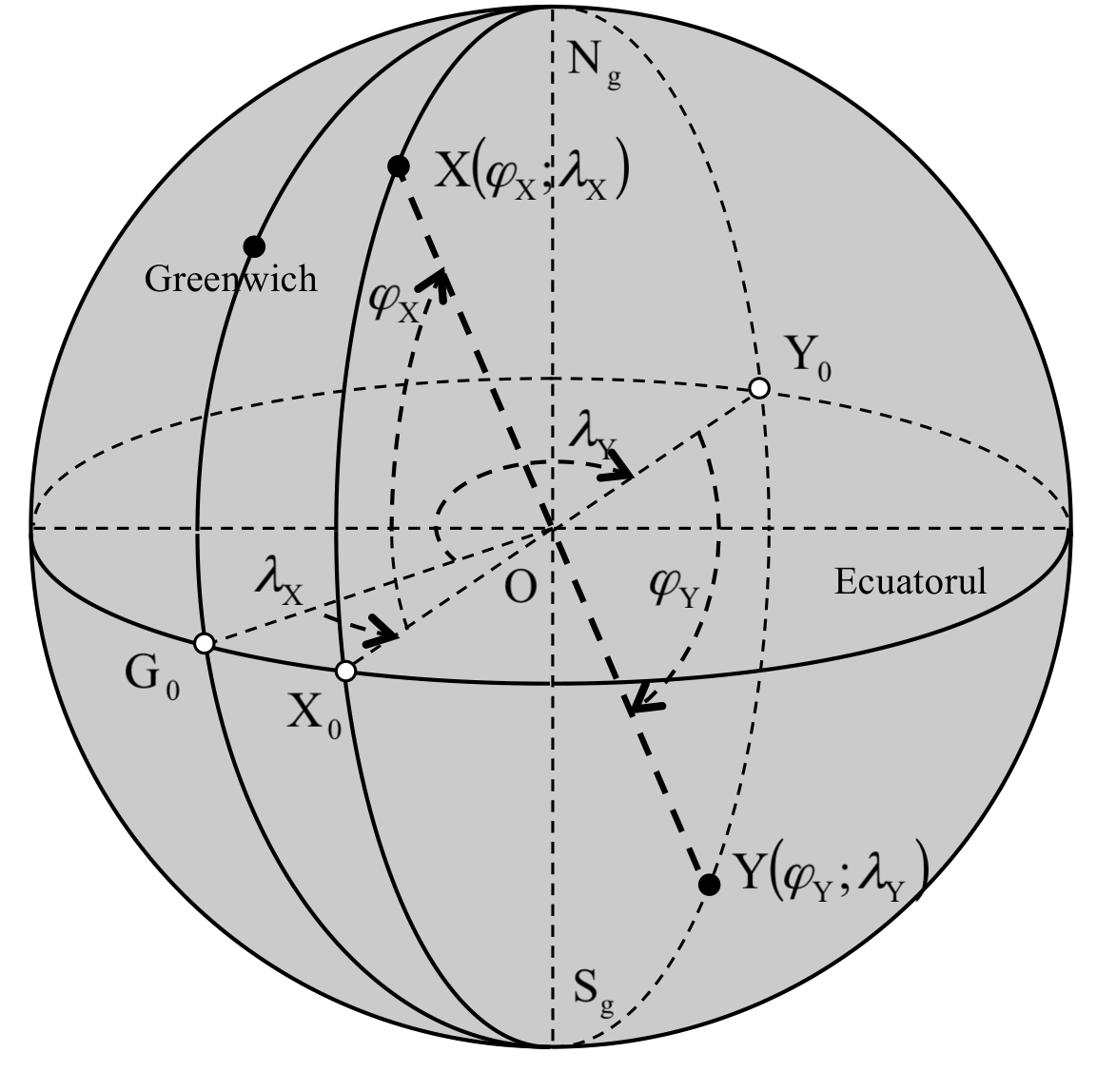
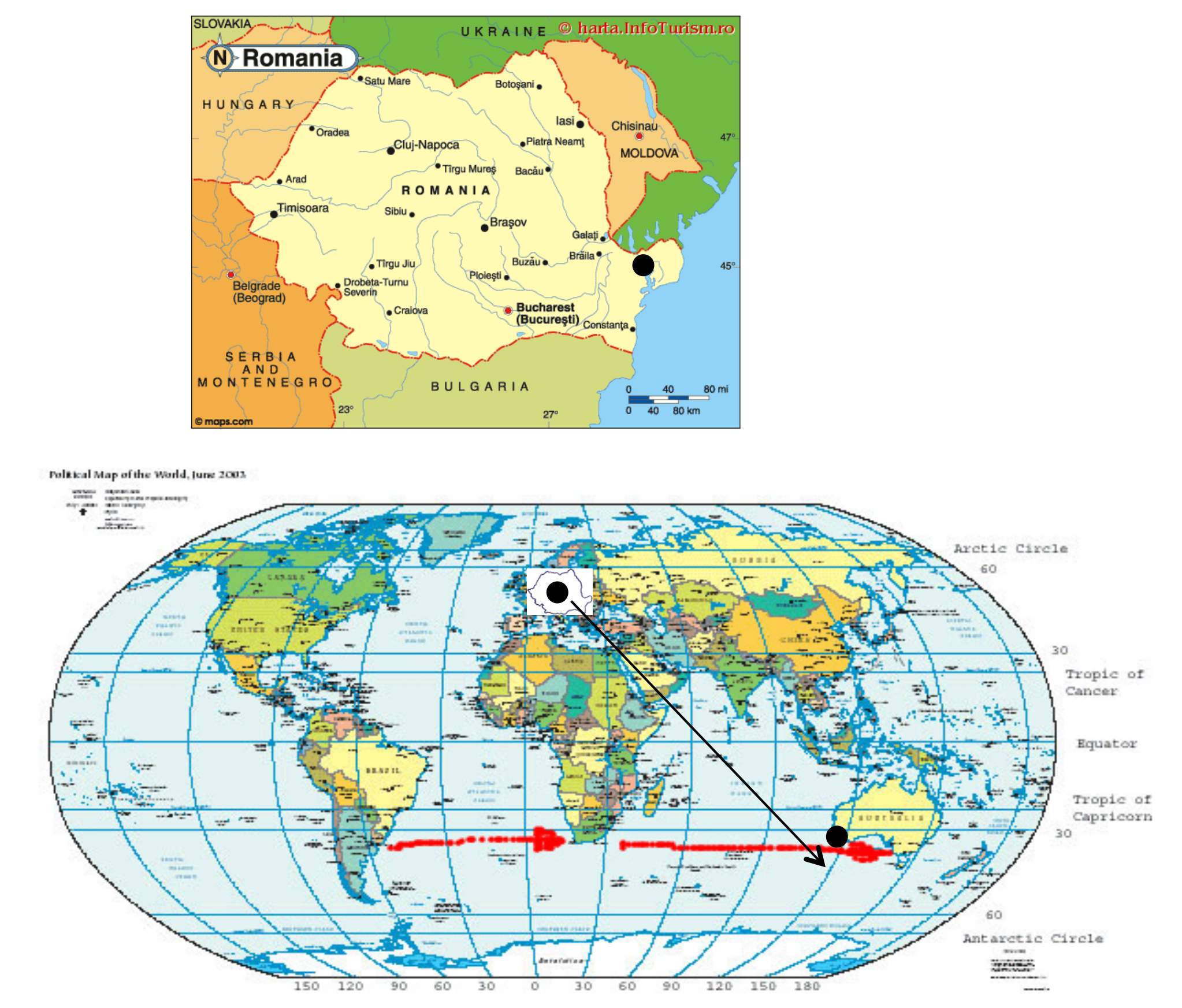
The two places are represented in the figure.
Fig.
φY=φY,Sud=φX,Nord=φX;
λY,Vest+λX,Eest=180∘;λY+λX=180∘.
φRomania=43∘Nord;λRomania=30∘Est,
The landing point is
φAntipod=43∘Sud;λAntipod=150∘Vest,
Somewhere South EEst from Tasmania (South from Australia).
b)
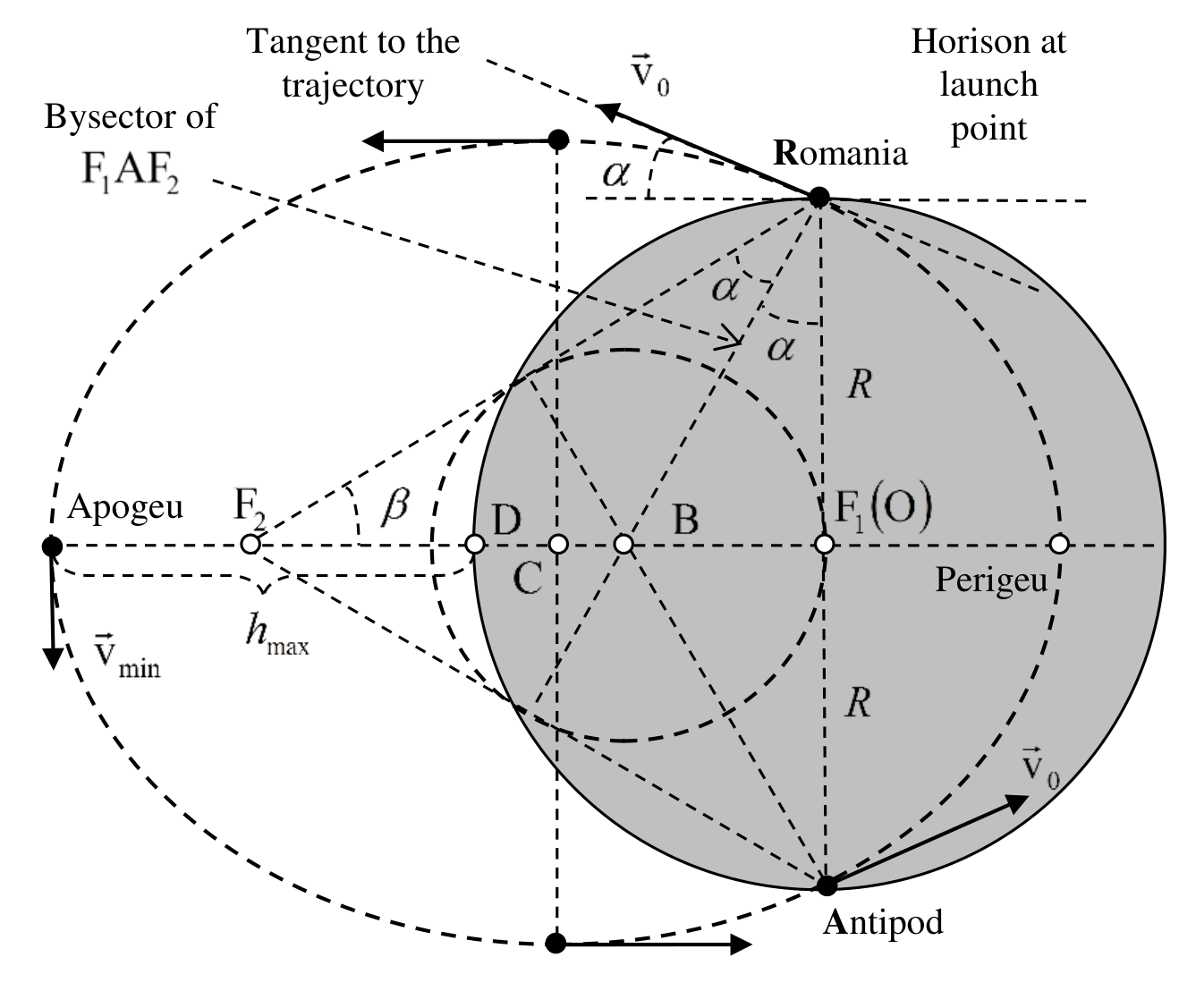
The schetch of the trajectory
In order to hit the point the trajectory of the missile has to be an elypse with the Earth center in the center of the Earth. Se știe că:
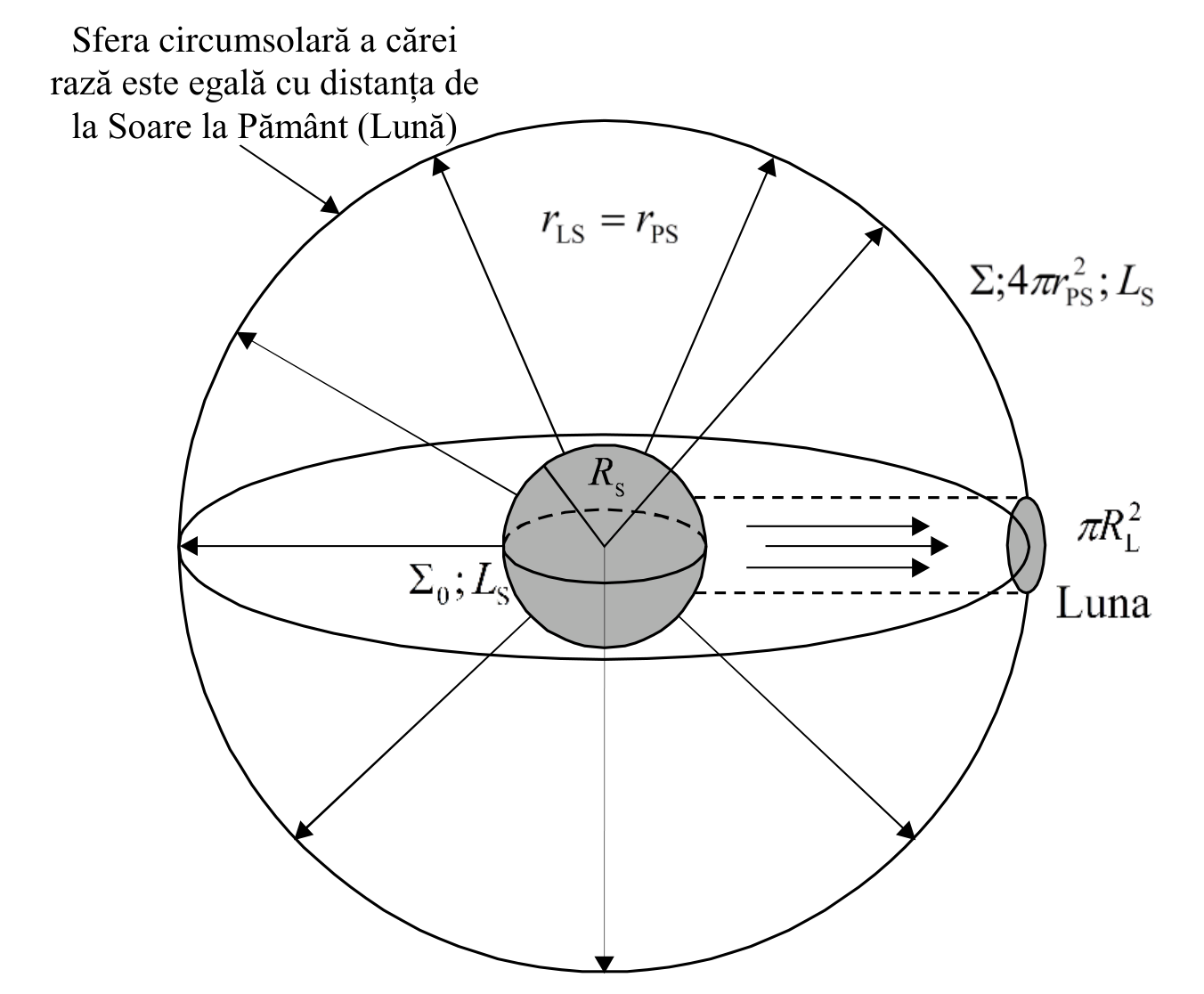
În expresia anterioară s-a avut în vedere faptul că densitatea fluxului energetic al proiectilului la observator rezultă din distribuirea prin suprafața sferei cu raza rP,proiectil.
Utilizând formula lui Pogson, vom compara magnitudinea aparentă vizuală a Lunii Pline cu magnitudinea aparentă vizuală a proiectilului balistic: