IOAA 2021 — Задача 1. Hodograph (15 points).
Автор: Olympiads XYZ · транскрипция на официалните материали
Проверена срещу оригинала на 13.9.2026 от същия модел, който я е транскрибирал (без независима проверка)
Theory — Q12 Hodograph (International Olympiad on Astronomy and Astrophysics, 14, 2021) — English (Official) · 15 т.
Внимание: Бележка към темата
Solutions document not provided in the archive for this paper; answers are derived, not transcribed from an official solutions file.
Условие
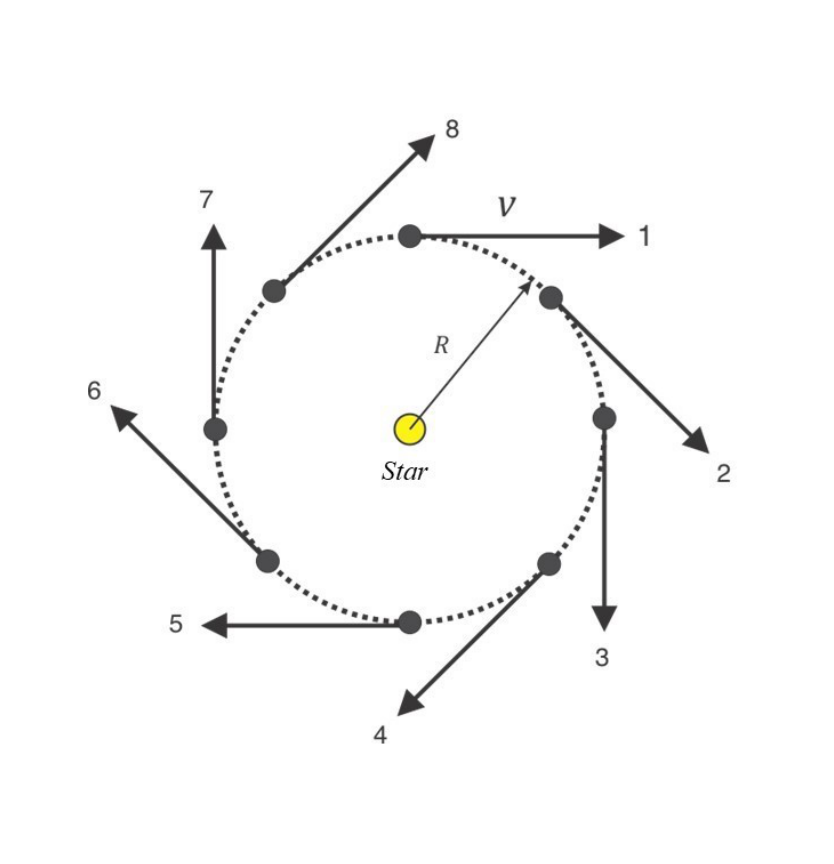
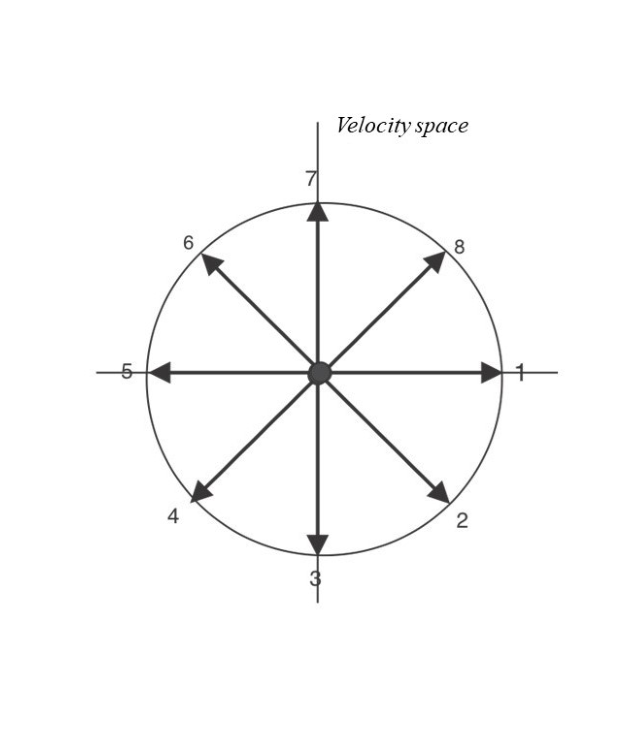
In curvilinear motion of a planet around a star, the direction of the velocity vector changes continuously. This can be represented by a so-called "trajectory in velocity space" and is obtained as follows: for each point on the spatial trajectory, the corresponding velocity vector is drawn so that its starting point is at the origin of the velocity space, and its magnitude and direction is the same as the velocity vector at that point. The tip of this variable velocity vector generates a curve in velocity space. (The name 'hodograph' was given to this curve by Hamilton in 1846.)
As an example, see figures 1 and 2 below. For a circular orbit (Figure 1), the magnitude of the velocity is constant and therefore, the hodograph (Figure 2) of the velocity vector for Keplerian circular motion is also a circle, the center of which is located at the origin of the velocity space. The radius of this circle is equal to the constant magnitude of the circular velocity.
12.1 Write an expression for the radius of the hodograph in Fig. 2, as a function of the mass of the star, and the radius of the circular orbit of the planet's motion. [1 т.]
12.2 For a planet in a Keplerian trajectory, write the expression for centripetal acceleration vector () and the magnitude of angular momentum (). For any Keplerian trajectory, it is true that
Where is a constant for each type of Keplerian trajectory. Find the expression for the constant as a function of the masses and of the star and the planet, respectively, and the angular momentum, .
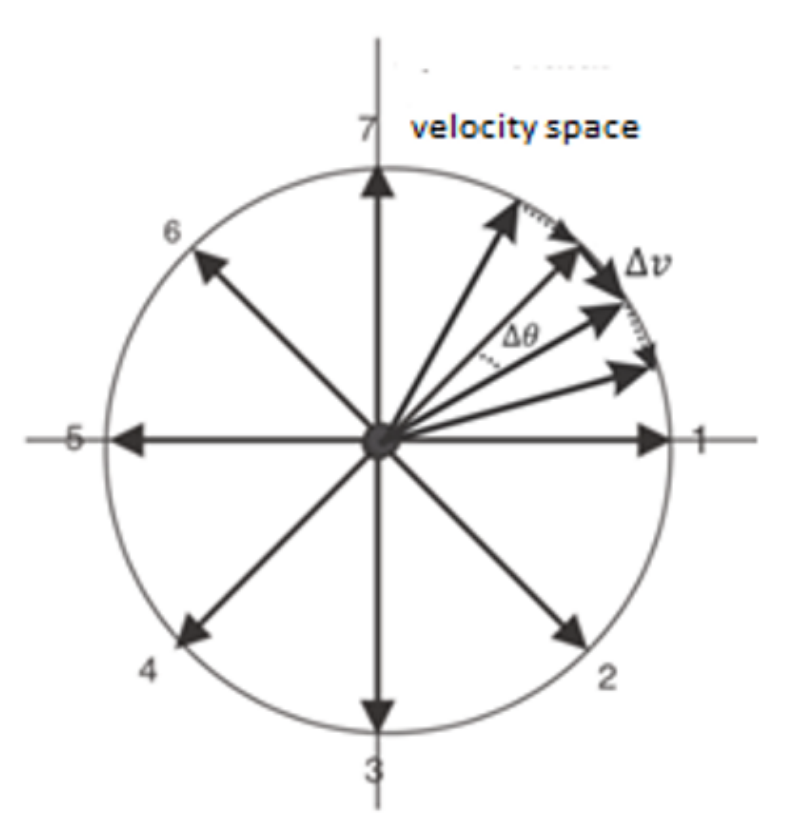
(Eq.1) allows us to conclude that for any Keplerian trajectory, the hodograph ( as a function of ) is a circle, but except for circular motion, the centre of the hodograph does not coincide with the star. It is not necessary to prove this result, you may simply accept it as a given. For the hodograph of uniform circular motion, the compliance with (eq.1) is completely obvious, as evidenced in Fig. 3 [4 т.]
12.3 Determine the expression of the constant for the hodograph of circular planetary motion. [2 т.]
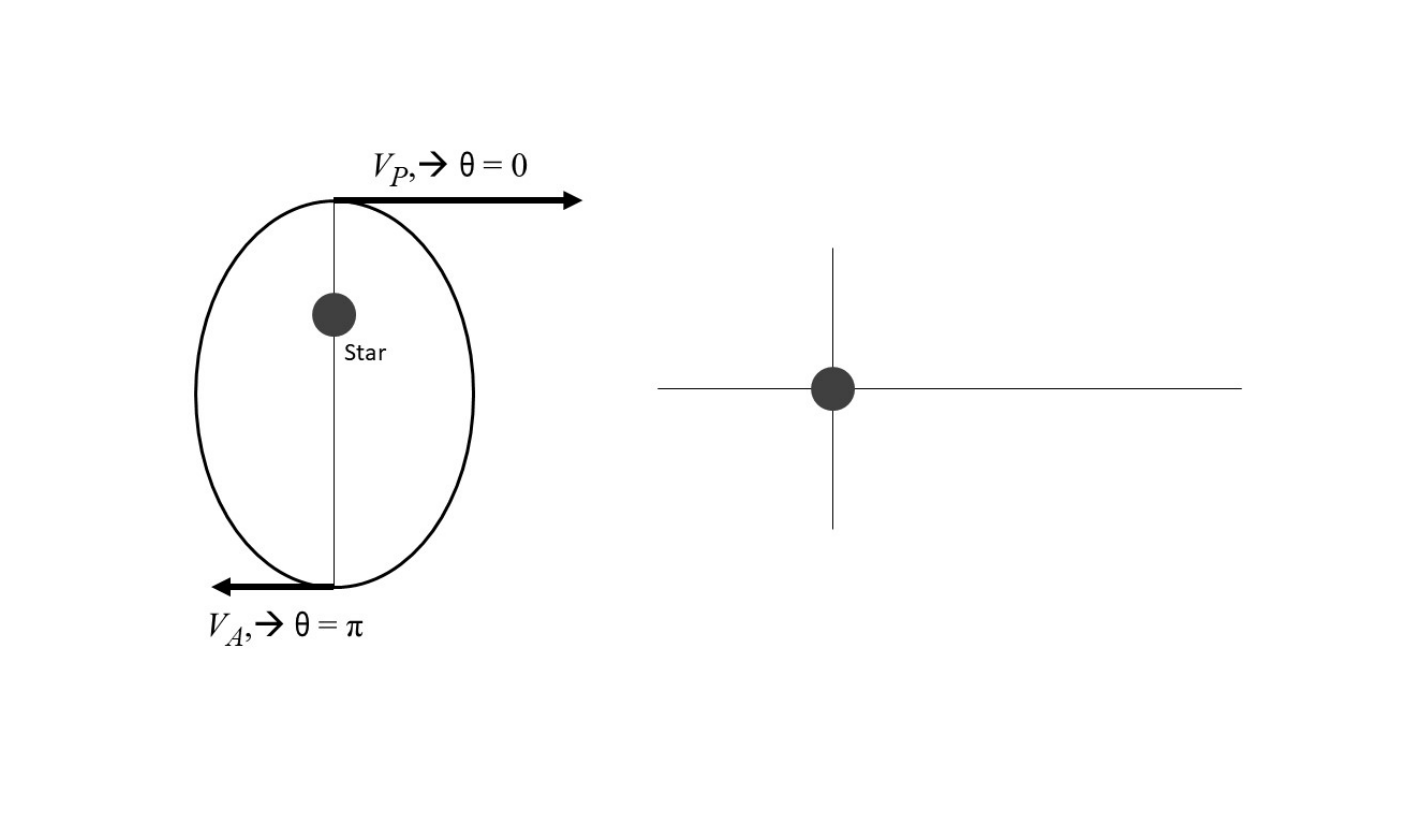
12.4 Given that the hodograph of the Keplerian elliptical motion is a circle, determine the radius of this hodograph and the distance between the center of the hodograph and the position of the star, as a function of the velocities at periastrom and apoastrom. Draw a rough sketch of the hodograph in the answer sheet as per the schematic shown in Fig. 4. The black circle is the star. [4 т.]
12.5 Similarly, for the parabolic Keplerian trajectory, determine the radius of the corresponding hodograph and the distance from the center of that hodograph circle to the star. Express the radius as a function of the velocity at periastrom. Draw a rough sketch of the hodograph circle in the answer sheet. [4 т.]
Отговори
Покажи отговорите
Решение
Внимание: Непълно решение
No solutions document was provided in the archive for this paper.
Оригинал в Архива: TQ-12-Q.pdf