IOM 2016, Експеримент — Задача 2. Synthesis of hydrazones
The 1st Metropolises Olympiad. Chemistry. Practical task on Analytical Chemistry; Practical task on Organic Chemistry · 6 септември 2016 г. · 20 т.
General Directions
- safety rules follow ones adopted at the International Chemistry Olympiad, no eating or drinking in the lab.
- violating safety rules you get one warning only; offend again: you are disqualified.
- the exam includes two parts. One student in each team starts with the Organic chemistry task, whereas the other with the Analytical chemistry task.
- time 2 h 15 min to complete each part, 15 min break in between. 30 min warning before the end of each part. You will be guided to the break area and back to the lab.
- when entering the lab search for the table with your student code.
- your student code get sure this is present on every page.
- answers only in the answer boxes in the booklet, nothing else will be graded. Relevant calculations have to be shown.
- use only the pen, pencil and calculator provided.
- more chemicals needed? Ask your lab assistant. No penalty for this with an exception of the hereunder.
- questions concerning safety, apparatus, chemicals, toilet break: ask your lab assistant.
- chemical waste carefully pour in the sink at your working place.
- official English version available on request for clarification only. Ask your lab assistant.
- after the stop signal put your booklet aside and leave it at your working table.
- You must stop your work immediately after the stop signal has been given. A 5 min delay will result in zero points for the current task.
During the Practical exam some of the glassware and plastics are expected to be used several times. Clean it carefully.
Specific directions for the Analytical chemistry task
- problem and answers booklet for the Analytical chemistry task 8 pages (incl. cover sheet and Periodic table of elements)
Reagents
| Reagent | Quantity | Placed in | Labeled |
|---|---|---|---|
| On each working place | |||
| Sample (a mixture of glucose and sucrose) | To be determined | 50 mL Volumetric flask | Sample and your student code |
| Hydrochloric acid, 2 M | 15 mL | 30 mL Amber glass vial with ground joint cap | HCl 2 M |
| Sodium thiosulfate, 0.1 M | 100 mL | 125 mL Plastic bottle with screw cap | |
| Sodium hydroxide solution, 2 M | 15 mL | 30 mL Amber glass drop bottle | NaOH 2 M |
| Sodium hydroxide solution, 0.1 M | 125 mL | 125 mL Plastic bottles with screw cap | NaOH 0.1 M |
| Starch (0.5-1%) | 10 mL | 30 mL Amber glass drop bottle | Starch |
| Distilled water | 500 mL | 500 mL wash bottle | - |
| On the table of common use | |||
| Iodine (0.05 M solution in , 2.4% KI) | 1 L (to be shared by 4 students) | Volumetric flask and burette | |
| Methyl Red | 10 mL (to be shared by 4 students) | 30 mL Amber glass drop bottle | Methyl red |
| Sodium hydroxide solution, 0.1 M | 125 mL | 125 mL Plastic bottles with screw cap | NaOH 0.1 M |
Labware and equipment
| Item | Quantity |
|---|---|
| On each working place | |
| Laboratory stand with burette clamp | 1 |
| 50 mL beaker | 1 |
| 25 mL cylinder | 1 |
| 100 mL beaker | 1 |
| 5 mL pipette | 2 |
| 20 mL Bulb (Mohr) pipette | 1 |
| Pipette filler | 1 |
| 25 mL burette | 1 |
| Glass funnel | 1 |
| 100 mL Erlenmeyer (conical flat-bottom) flask | 2 |
| 50 mL Volumetric flask | 2 |
| Gloves | 1 pair |
Specific directions for the Organic chemistry task
The Organic chemistry booklet repeats the General Directions of page 2 and adds:
- problem and answers booklet for the Organic chemistry task 8 pages (incl. cover sheet and Periodic table of elements)
- each extra Portion of the aldehyde or 2,4-dinitrophenylhydrazine: a penalty of 1point out of 40.
List of Chemicals
| Reagent | Quantity | Placed in | Labeled |
|---|---|---|---|
| On each working place | |||
| 2,4-Dinitrophenylhydrazine | 200 mg each, 2 vials | small amber glass vial | 2,4-DNPH |
| Sulfuric acid, concentrated | 1 mL each, 2 bottles | plastic bottle with screw cap | |
| Aldehyde solution, 1 mmol in ethanol | 4 mL each, 2 bottles | 30 mL plastic bottle with screw cap | Aldehyde 1 and Aldehyde2 |
| Ethanol | 30 mL | large amber glass vial | Ethanol |
| Distilled water | 500 mL | 500 mL wash bottle | - |
Labware and equipment (Organic chemistry task)
| Item | Quantity |
|---|---|
| On each working place | |
| Glass weighing bottle labeled “Product 1 and your student code” | 1 |
| Glass weighing bottle labeled “Product 2 and your student code” | 1 |
| Lab stand with a clamp and ring | 1 |
| 50 or 100 mL beaker | 2 |
| Magnetic stirrer | 1 |
| Stirring bar | 2 |
| Glass filter | 2 |
| Adapter | 1 |
| 250 mL round bottom flask | 1 |
| Water-jet pump | 1 |
| 2 mL pipette | 2 |
| 5 mL pipette | 2 |
| Pipette filler | 1 |
| Spatula | 1 |
| 25 mL measuring cylinder | 1 |
| Filter paper | 3 |
| Glass rod | 1 |
| Tweezers | 1 |
| pH indicator papers | 1 |
| Balances | 1 |
| On the tables for the common use | |
| Filter paper | |
| Gloves |
Условие
| Question | 1 | 2 | 3 | 4 | 5 | Total |
|---|---|---|---|---|---|---|
| Techn. points | 50 | 12 | 6 | 6 | 6 | 80 |
Aldehydes and ketones are among most commonly used organic compounds. Application of these substances often requires easy methods of their identification. Hydrazones are produced as a result of hydrazine interaction with aldehydes or ketones under appropriate conditions. Due to well characterized properties and distinctive appearance, hydrazones are often used for such identification.
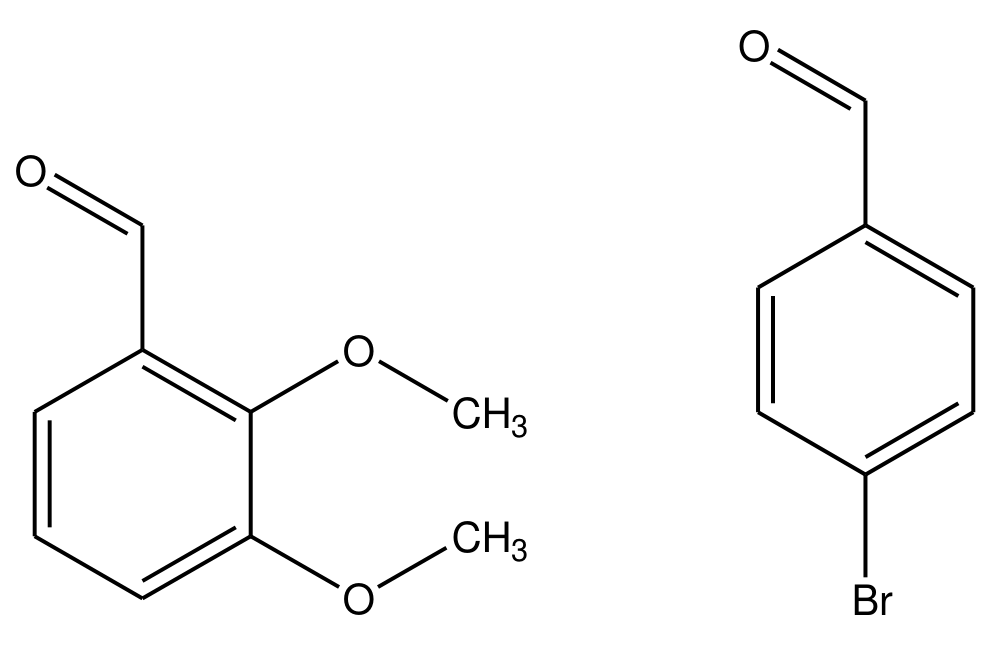
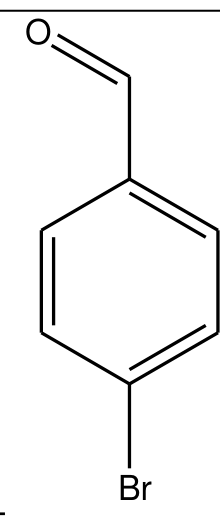
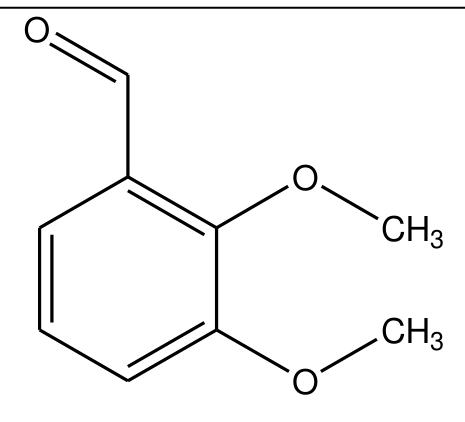
In this task you will have to identify two substituted benzaldehydes (shown below) by studying the products of their reactions with 2,4-dinitrophenylhydrazine.
Procedure
A. Preparation of 2,4-dinitrophenylhydrazones
Attention! Do not try to carry out two syntheses simultaneously!
Equip the 50 (or 100) mL beaker with the magnetic bar. Fix the beaker on the stirrer using the metal ring attached to the stand. Place the content of on a vial labeled “2,4-DNPH” into the beaker and start stirring carefully. Only in the presence of your lab assistant, carefully pour the concentrated sulfuric acid (1 mL) from one plastic bottle with screw cap onto the solid. Using pipettes add 1.6 mL of water and 4 mL of ethanol to the reaction mixture. Then using a pipette add slowly the whole solution of one of the aldehydes (you can start with any of the aldehydes!). Bright precipitate starts forming at once. Continue stirring for 10 min, then add 10 mL of water and stir for another 3 min.
B. Product separation and purification
Assemble the filtering apparatus: fix the found-bottom flask to the stand, attach the vacuum hose to the adapter, place the latter into the flask, and apply the glass filter to the adaptor. Transfer the reaction product together with the stirring bar onto the filter. Turn on the water-jet pump and filter out the precipitate. Put a little amount of water in the beaker and transfer the leftover product onto the filter. Wash the solid on the filter 3 times with 20 mL water portions mixing the suspension the with glass rod. Then wash the solid three times with 5 mL portions of ethanol. Dry out the solid on the filter with working water-jet pump, loosening and squeezing the product with the glass rod from time to time. (Once you have arranged vacuum drying of the first product, you can start synthesizing the second one – see Section C). After ca. 20-40 min carefully transfer the dried powder into the pre-weighed weighing bottle labeled with the same product number as the aldehyde sample for the final drying in the air (do not close the weighing bottle!). Put the weighing bottle with the product in a safe place (e.g. on the shelf).
Always remove the vacuum hose from the adaptor before turning off the water-jet pump!
Keep the water-jet pump turned off when not using it.
As soon as your product seems dry, remove the stirring bar with tweezers and weigh the product. Fill in Table 1.
Note: The products you have synthesized will be further re-examined by the lab staff.
C. Synthesis, separation and purification of the second product
Move the clamp with the filtering apparatus aside and continue drying the first product. Meanwhile, put the magnetic stirrer on the stand base and repeat the above synthetic and purification procedures with the other starting aldehyde. When finished, fill in the second column of Table 1.
1. Table 1. Weighing results.
| Weighing bottle 1 | Weighing bottle 2 |
|---|---|
| Mass of empty weighing bottle ______ mg | Mass of empty weighing bottle ______ mg |
| Mass of weighing bottle with the product__________ mg | Mass of weighing bottle with the product__________ mg |
| Mass of product __________________ mg | Mass of product __________________ mg |
[50 т.]
2. Write down the structures of 2,4-dinitrophenylhydrazine and the products. [12 т.]
A hydrazone color is mainly dependent on the substituents present in the benzene ring. The electron-donor groups are responsible for the wavelength of maximum absorption closer to the red range of the spectrum, whereas the electron-acceptor ones do not produce strong effect.
3. Based on the above information, assign numbers 1 or 2 to appropriate aldehydes. Calculate the percent yields of both hydrazones.
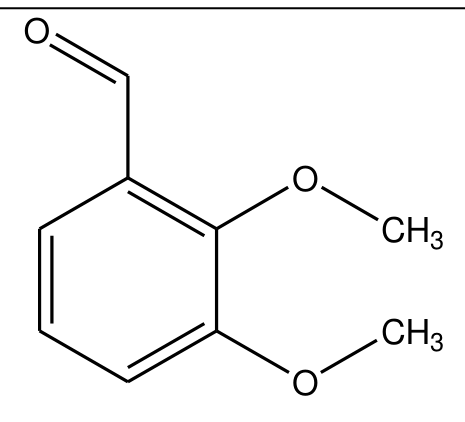
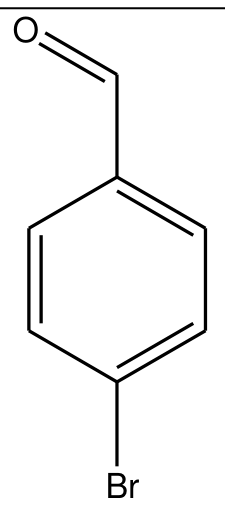
Number:________
Yield calculation:
Number:_____________
Yield calculation:
Yield Number 1 _________________ %
Yield Number 2 _________________ % [6 т.]
The scheme of 2,4-DNHP synthesis is given below.
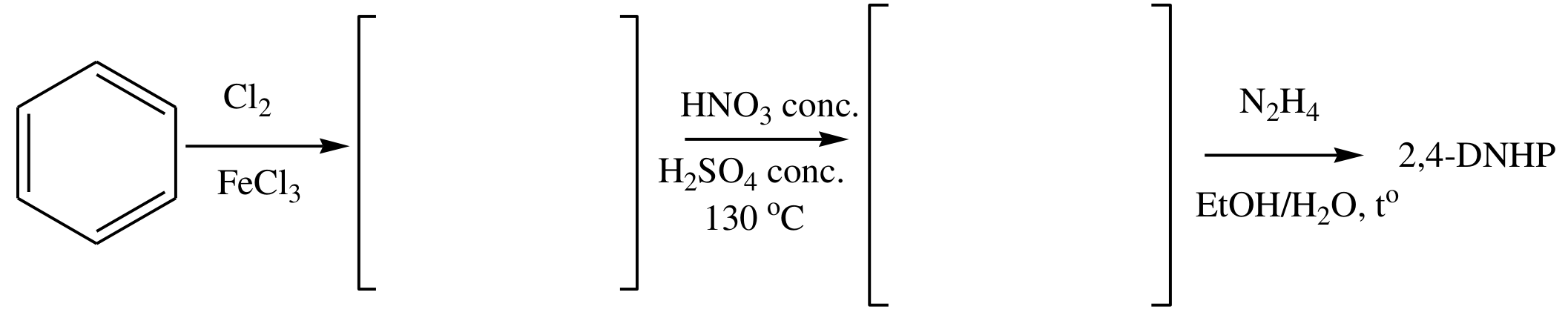
4. Draw the structures of the intermediates. [6 т.]
5. Choose the mechanism of the latter reaction from the variants given below (tick the appropriate box)
- ☐ Aromatic nucleophylic substition
- ☐ Nucleophylic substitution SN
- ☐ Nucleophylic substitution SN
- ☐ Free radical reaction
- ☐ Electrophylic substitution in aromatic ring [6 т.]
| Replacement or extra chemicals | Lab assistant signature | Penalty |
|---|---|---|
| ______________________ | _____________________ | __________ |
| ______________________ | _____________________ | __________ |
| ______________________ | _____________________ | __________ |
| ______________________ | _____________________ | __________ |
| ______________________ | _____________________ | __________ |
Отговори
- 3. 1 — 2,3-dimethoxybenzaldehyde; 2 — 4-bromobenzaldehyde
- 4. Chlorobenzene; 1-chloro-2,4-dinitrobenzene
- 5. Aromatic nucleophilic substitution
Решение
1.
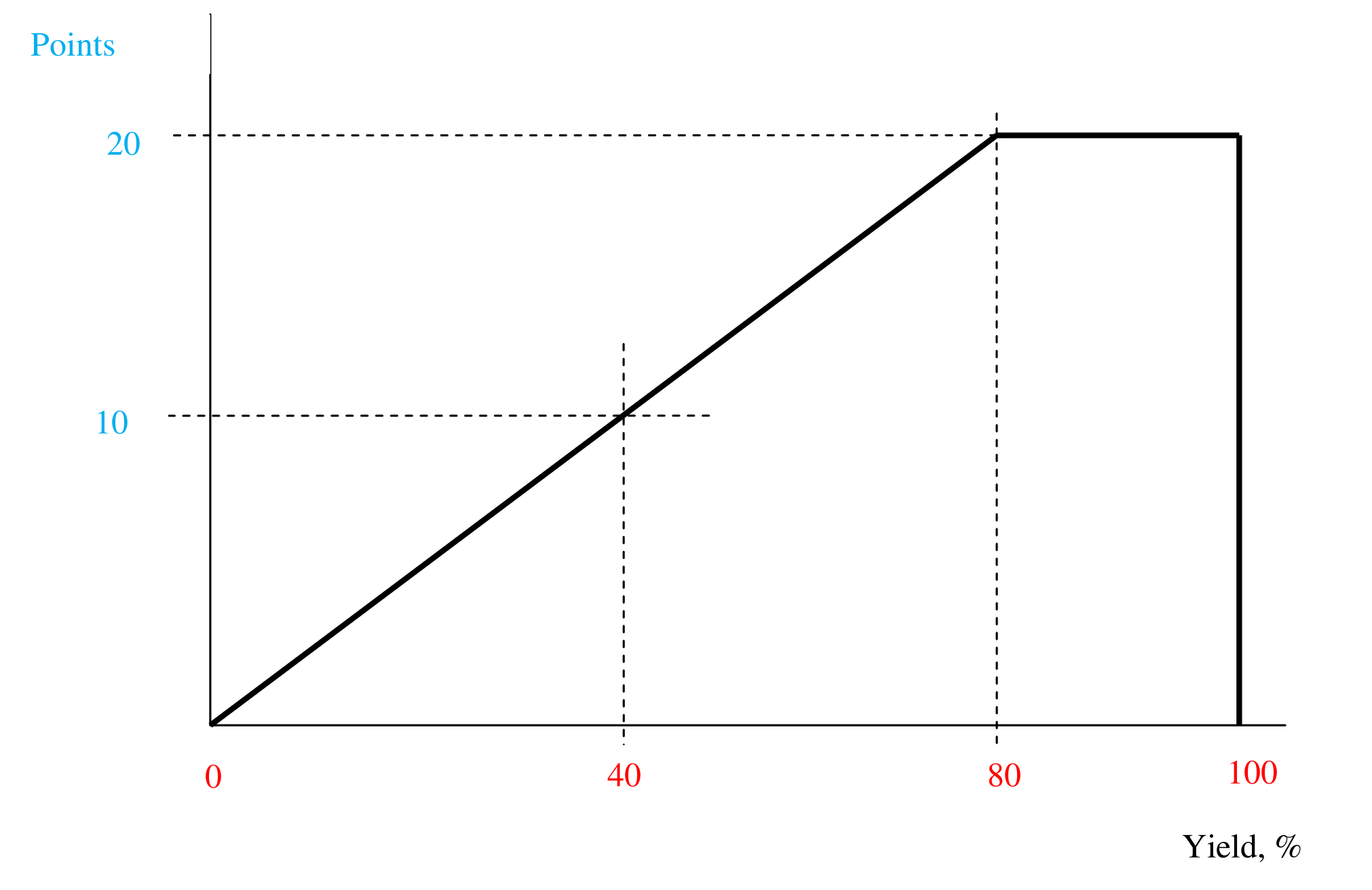
Grade (G): Y – the reaction yield if
if
if
Y – the reaction yield calculated from the mass measured by the Organizers after the product drying to constant mass
| Points for drying, Product 1 | Points for drying, Product 2 |
|---|---|
| 5p if | 5p if |
| 4p if | 4p if |
| 3p if | 3p if |
| 2p if | 2p if |
| 1p if | 1p if |
| 0p if or negative | 0p if or negative |
2.
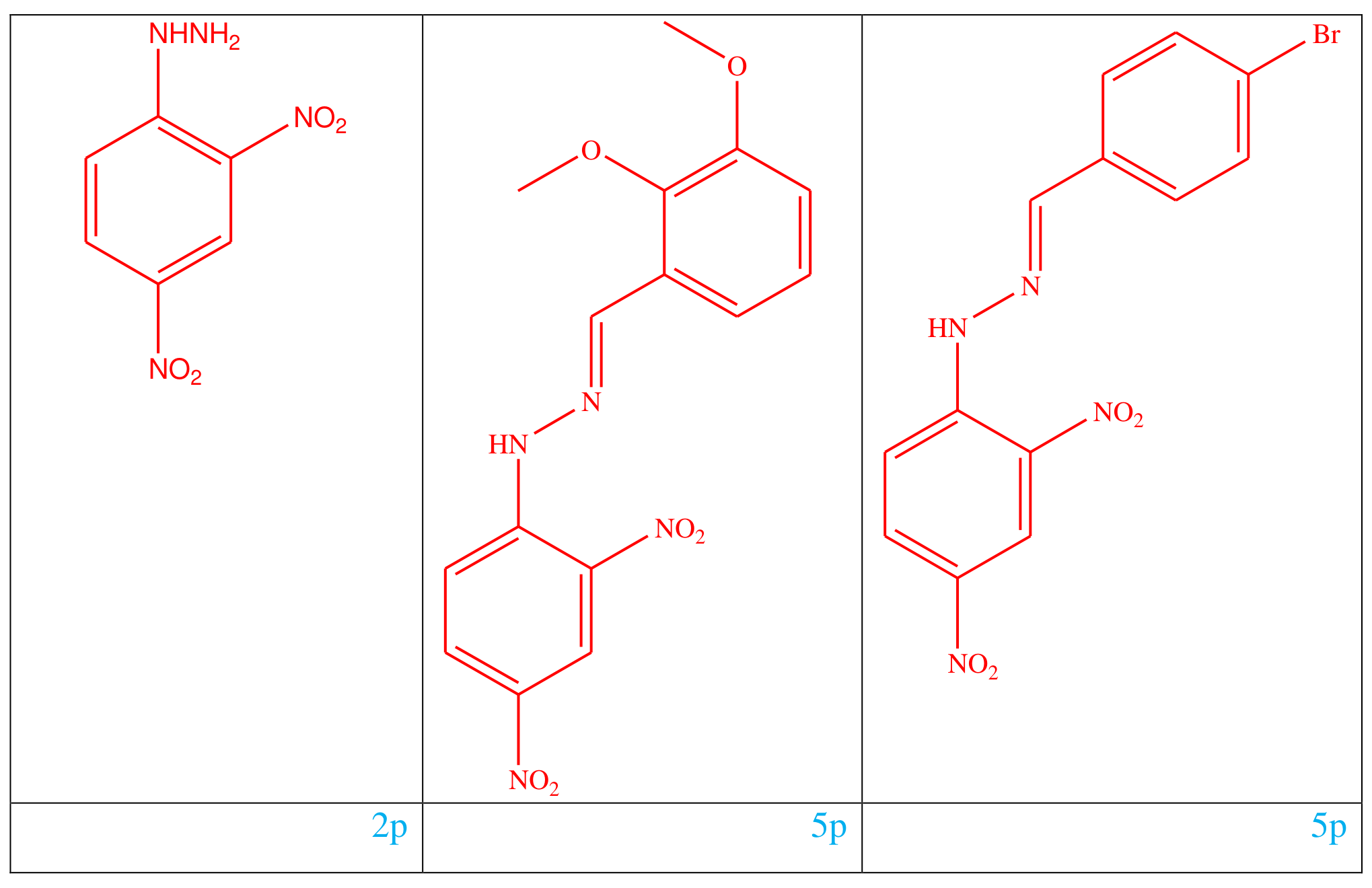
2p · 5p · 5p
3.
Number: 1
Yield calculation:
Y=Mass of the Product/346 mg/mmol =
Number: 2 4p
Yield calculation:
Y=Mass of the Product/365 mg/mmol =
Yield Number 1 _________________ % 1p — 0p if any mistake
Yield Number 2 _________________ % 1p — 0p if any mistake
4.
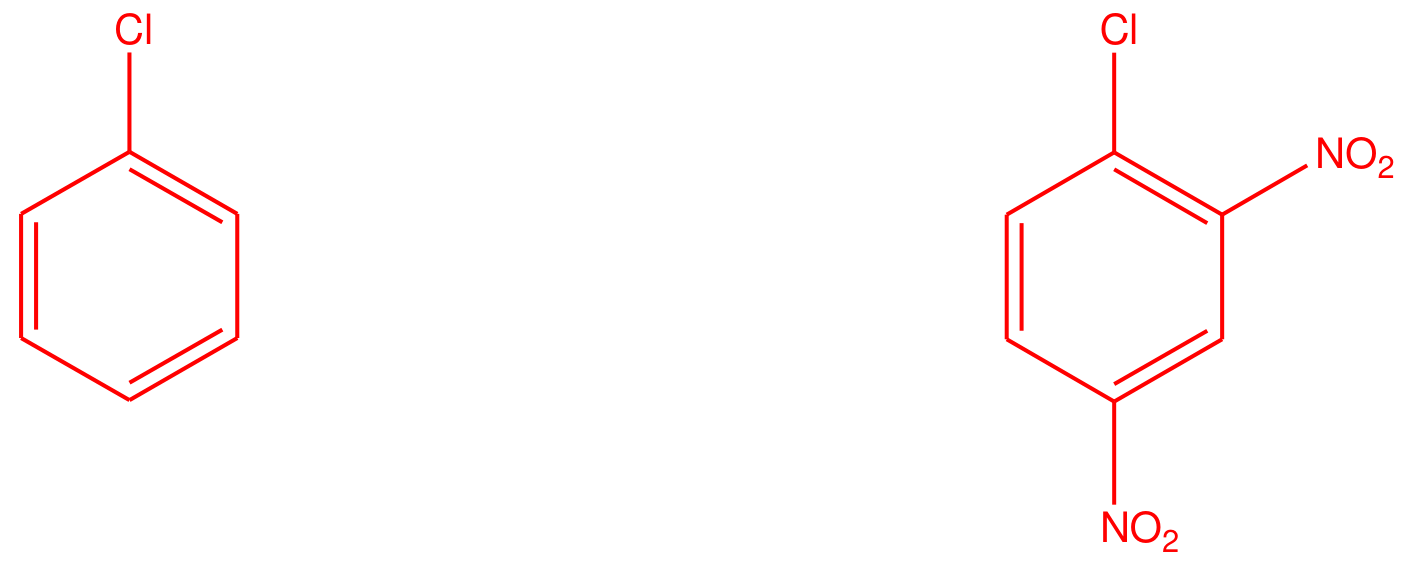
3p · 3p
5.
- ☒ Aromatic nucleophylic substition
- ☐ Nucleophylic substitution SN
- ☐ Nucleophylic substitution SN
- ☐ Free radical reaction
- ☐ Electrophylic substitution in aromatic ring
6p
Оригинал в Архива: Problems.pdf · официални решения: Solutions.pdf