IOM 2017, Експеримент — Задача 2. Pinacol–pinacolone rearrangement
The 2nd Olympiad of Metropolises. Chemistry. Practical Problems · 5 септември 2017 г. · 20 т.
General directions
- Lab safety: follow the general rules accepted in chemistry labs; no eating or drinking in the lab.
- Violation of lab safety rules: you get one warning only; offend again: you are disqualified.
- The exam includes two tasks: on Analytical and Organic chemistry. You can start your work with any task. 15 min for reading the set before you start to work.
- Time: 4 h 30 min to complete all the tasks. 30 min warning before the end.
- When entering the lab search for the table with your Student code.
- Your student code: get sure this is present on every page.
- Answers: only in the answer boxes in the booklet, nothing else will be graded. Relevant calculations have to be shown when asked for.
- Use only the pen and calculator provided.
- More chemicals needed? Ask your lab assistant. No penalty for this.
- Questions concerning safety, apparatus, chemicals, toilet break: ask your lab assistant.
- Chemical waste carefully pour in the sink at your working place.
- Official English version: available on request for clarification only. Ask your lab assistant.
- After the stop signal: put your booklet aside and leave it at your working place.
- You must stop your work immediately after the stop signal has been given. A 5 min delay will result in zero points for the current task.
- During the Practical exam, some items of the glassware are expected to be used several times. Clean these carefully.
- Booklet with the tasks on Organic and Analytical chemistry and answer boxes: 15 pages (incl. the cover sheet and Periodic table of elements).
Reagents
| Reagent | Quantity | Placed in | Labeled |
|---|---|---|---|
| Task 1 | |||
| On each workplace | |||
| Water sample containing / mixture | 90 mL | 120 mL container | Sample |
| Solid | 3.16 g | 50 mL volumetric flask | |
| Sulfuric acid 3M | 200 mL | Two 100-mL red-capped containers | |
| solution | 50 mL | 120 mL container | |
| Reinhardt-Zimmermann solution | 40 mL | 60 mL container | R-C mixture |
| Phenylanthranilic acid, 0.1% solution | 4 mL | Dropper | Indicator |
| Granulated zinc | 2 granules | 150 mL beaker | None |
| On the table of common use | |||
| Hydrochloric acid (1:1 v/v) | 100 mL (to be shared by 7 students) | 120 mL containers of common use | HCl (1:1) |
| Task 2 | |||
| On each working place | |||
| Pinacol | 15 g | Pear-shaped round bottom flask, 100 mL | None |
| Sulfuric acid, 25% solution | 70 mL | Plastic container, 100 mL | 25% |
| Methylene chloride | 20 mL | Plastic container, 100 mL | |
| Calcium chloride | 2 g | Plastic container, 100 mL |
Glassware and equipment
| Item | Quantity |
|---|---|
| Task 1 | |
| On each working place | |
| Wash bottle with distilled water | 1 |
| Laboratory stand with burette clamp | 1 |
| 25 mL beaker | 1 |
| 60 mL container (without cap) | 1 |
| 150 mL heat-proof beaker (with zinc) | 1 |
| Watch glass | 1 |
| 25 mL cylinder | 1 |
| 10 mL cylinder | 1 |
| 5 mL bulb (Mohr) pipette | 1 |
| 10 mL pipette | 1 |
| 25 mL burette | 1 |
| Plastic funnel | 1 |
| 200 mL Erlenmeyer (conical flat-bottom) flask | 2 |
| 50 mL volumetric flask | 2 |
| 100 mL volumetric flask | 1 |
| Task 2 | |
| On each working place | |
| Laboratory stand (blue) | 2 |
| Flask clamp | 1 |
| Condenser clamp | 1 |
| Ring for separation funnel | 1 |
| Hot-plate magnetic stirrer | 1 |
| Magnetic stir-bar | 2 |
| White flask support | 1 |
| Adjustable lab jack lift support | 1 |
| Wurtz adapter | 2 |
| Thermometer | 1 |
| Condenser | 2 |
| Foil (a piece) | 1 |
| Joint clips | 3 |
| Pear-shaped round-bottom flask, 100 mL (with the substance) | 1 |
| Pear-shaped round-bottom flask, 100 mL (empty) | 1 |
| Pear-shaped round-bottom flask (receiver), 50 mL (empty) | 3 |
| Pear-shaped round-bottom flask (receiver), 50 mL (with your Student code) with a stopper | 1 |
| Chemical funnel | 1 |
| Separatary funnel | 1 |
| Glass beaker, 250 mL | 1 |
| Plastic beaker, 150 mL | 1 |
| Vigreux fractionating column | 1 |
| Glass bend adapter | 1 |
| Distilling receiver cow | 1 |
| Teflon sleeve for 14/23 ground tapered joints | 20 |
| Filter paper | 2 |
| Glass ground joint stopper | 4 |
| Pasteur pipette | 2 |
| On the table of common use | |
| Foil | |
| Refractometer Refracto 30GS | |
| Problems 1 and 2 | |
| On each working place | |
| Rubber finger protectors for handling hot items | 1 pair |
| Pipette filler | 1 |
| On the table of common use | |
| Kitchen paper roll | |
| Filter paper | |
| Gloves (choose your size) |
Условие
| Question | 1.1 | 2.1 | 2.2 | 2.3 | 2.4 | Total |
|---|---|---|---|---|---|---|
| Points | 40 | 4 | 2 | 3 | 1 | 50 |
| Result |
Various skeletal rearrangements are used up-to-date in fine organic synthesis, pinacol-pinacolone rearrangement being among the most popular ones due to numerous benefits when applied for preparation of highly efficient drugs.
Pinacol-pinacolone rearrangement was mentioned for the first time in 1859-1860, when W.R. Fittig reported about acetone interaction with potassium followed by the pre-product reaction with sulfuric acid. Still, he failed to identify the products properly, since rearrangements were unknown by that time. Only 1873, A.M. Butlerov postulated the mechanism and determined the reaction products based on his theory of chemical structure. Thus, this rearrangement was the first one the chemists faced with ever. In this task, you are expected to carry out the classical variant of the reaction:
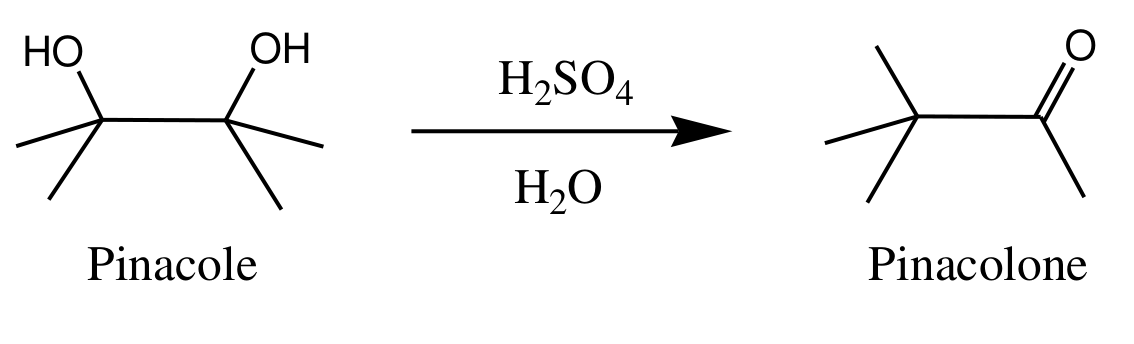
Pinacolone synthesis
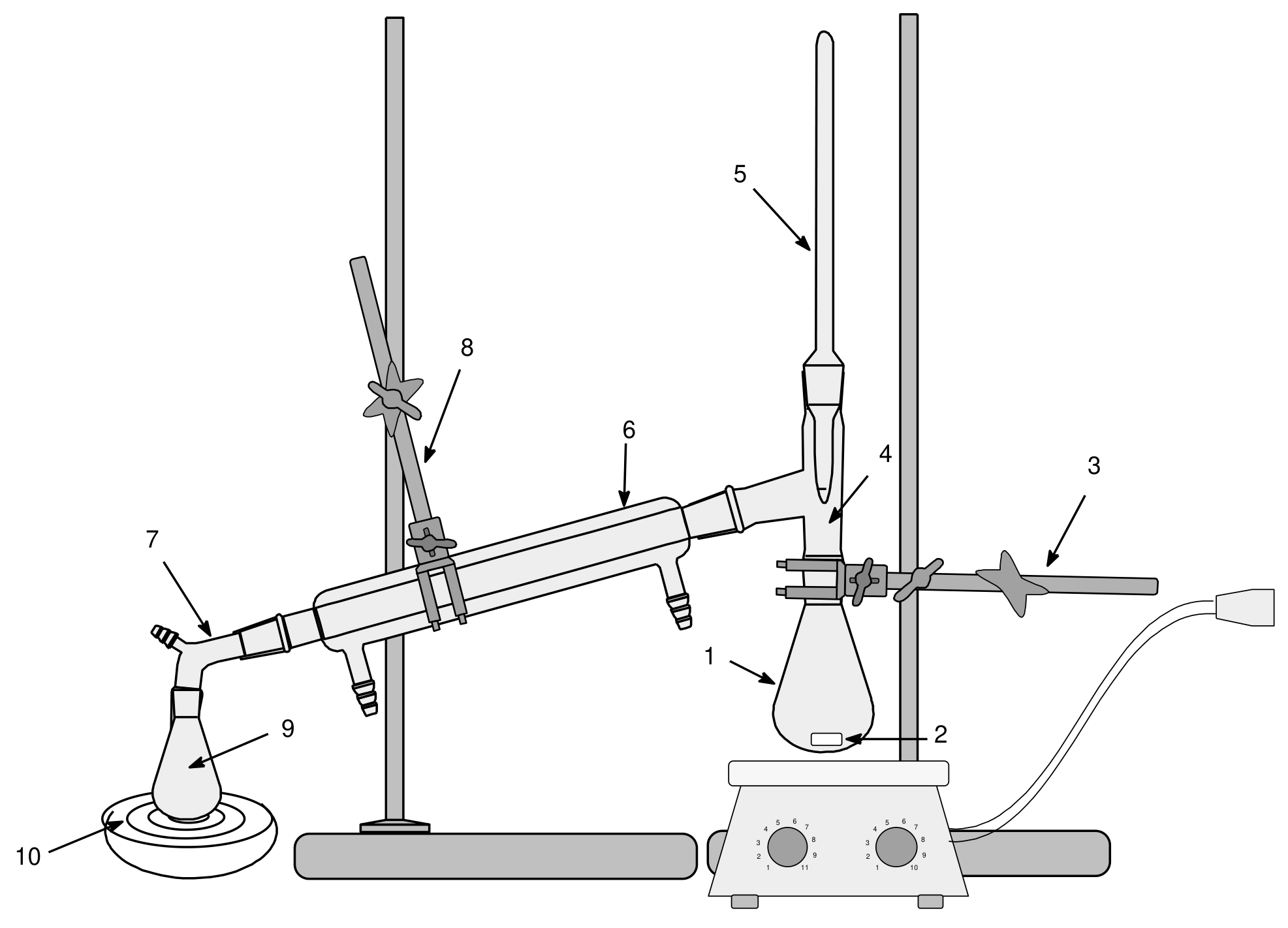
Set up the apparatus as shown in fig. 1. All joints must be supplied with Teflon sleeves. Place the magnetic stir-bar (2) in the pear-shaped round bottom flask (1) containing 15 g of pinacol. Fix the flask (1) in the stand clamp (3) at 1-2 mm over the magnetic stirrer plate (important: the flask bottom part must not touch the plate). Pour 70 mL of 25 % sulfuric acid solution into the flask (1) through the chemical funnel. Rinse the funnel with water in the sink and take aside. Attach the Wurtz adapter (4) to the flask, insert the thermometer (5) in the adapter. Equip the descending condenser (6) with water hoses, attach the lower hose to the water tap, and put the upper hose in the sink. Attach the glass bend adapter (7) to the condenser; fix the joint with clips. Fasten the condenser in the stand clamp (8), attach it to the Wurtz adapter (4), and fix the joint with clips. Attach the 50 mL pear-shaped receiver flask (9) to the glass bend adapter (7), fix the joint with clips. Put the white support (10) under the flask (9). Turn the tap to provide for slow water flow in the condenser. Wrap the flask (1) and Wurtz adapter (4) with 3-4 layers of foil up to the condenser ground tapered joint, leaving a small hole to look after the reaction mixture. Switch on stirring at «2» and heating at «6». Wait until the thermometer readings are within the 95-102 C range, and then continue heating for approximately another 20 min. While heating, you are expected to carry out the other task or complete the theoretical parts.
Note. If you experience difficulties in reading the thermometer, seek for help from your lab assistant.
Switch off heating and stirring. Use the rubber finger protectors (take care: hot!) to remove the foil. Take the magnetic stirrer aside. In 3-5 min., disconnect the receiver flask (9) containing a two-phase liquid and stopper the flask. Turn off the tap, disconnect the hose from the tap, pour water out of the condenser (6) and separate the hoses. Disconnect the condenser (6) and glass bend adapter (7) and deliver these to your lab assistant.
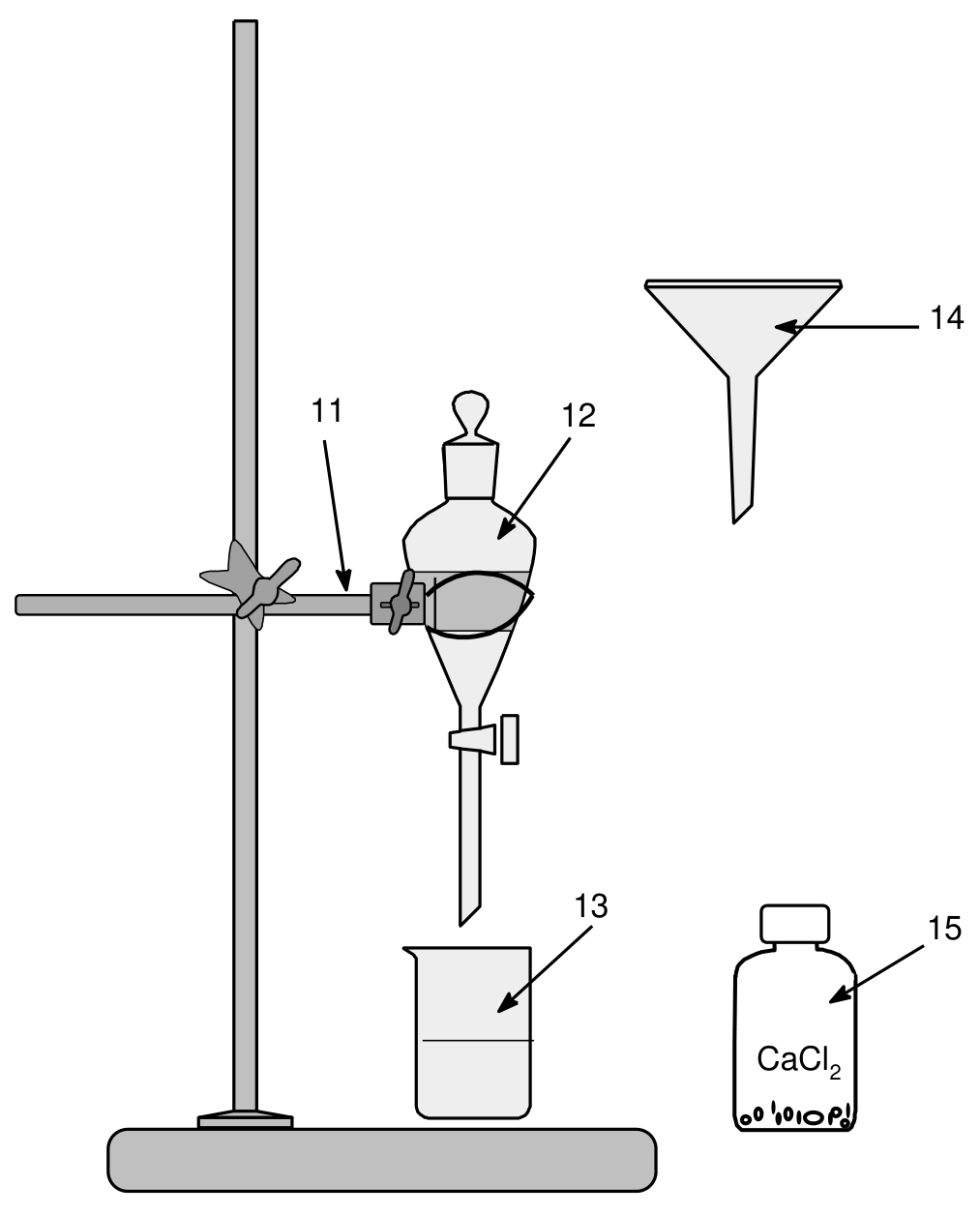
Separation of the reaction system
On the stand, change the clamp (8) by the ring (11) (fig. 2), and place the separatory funnel (12) into it. Make sure that the funnel valve is closed. Place the glass beaker (13) under the funnel (12). Transfer the two-phase liquid from the receiver (9) into the separatory funnel (12) using the chemical funnel (14), then wipe the chemical funnel (14) dry with napkin. Pour out the lower aqueous phase into the beaker (13), and the upper organic phase into the plastic container labeled (15). Stopper the container, gently mix the contents, and put aside for 10-15 min. Deliver the separatory funnel (12) to your lab assistant. Wipe the thermometer (5) with a napkin and put aside.
Using the rubber finger protectors (take care: hot!) disconnect the Wurtz adapter (4) from the flask (1). Deliver the Wurtz adapter (4) and the flask (1) to your lab assistant.
Weigh the 150 mL plastic beaker (16) containing the empty 50 mL receiver flask (17) labeled with your Student code and the labeled stopper. Write down the mass value into Table 1.
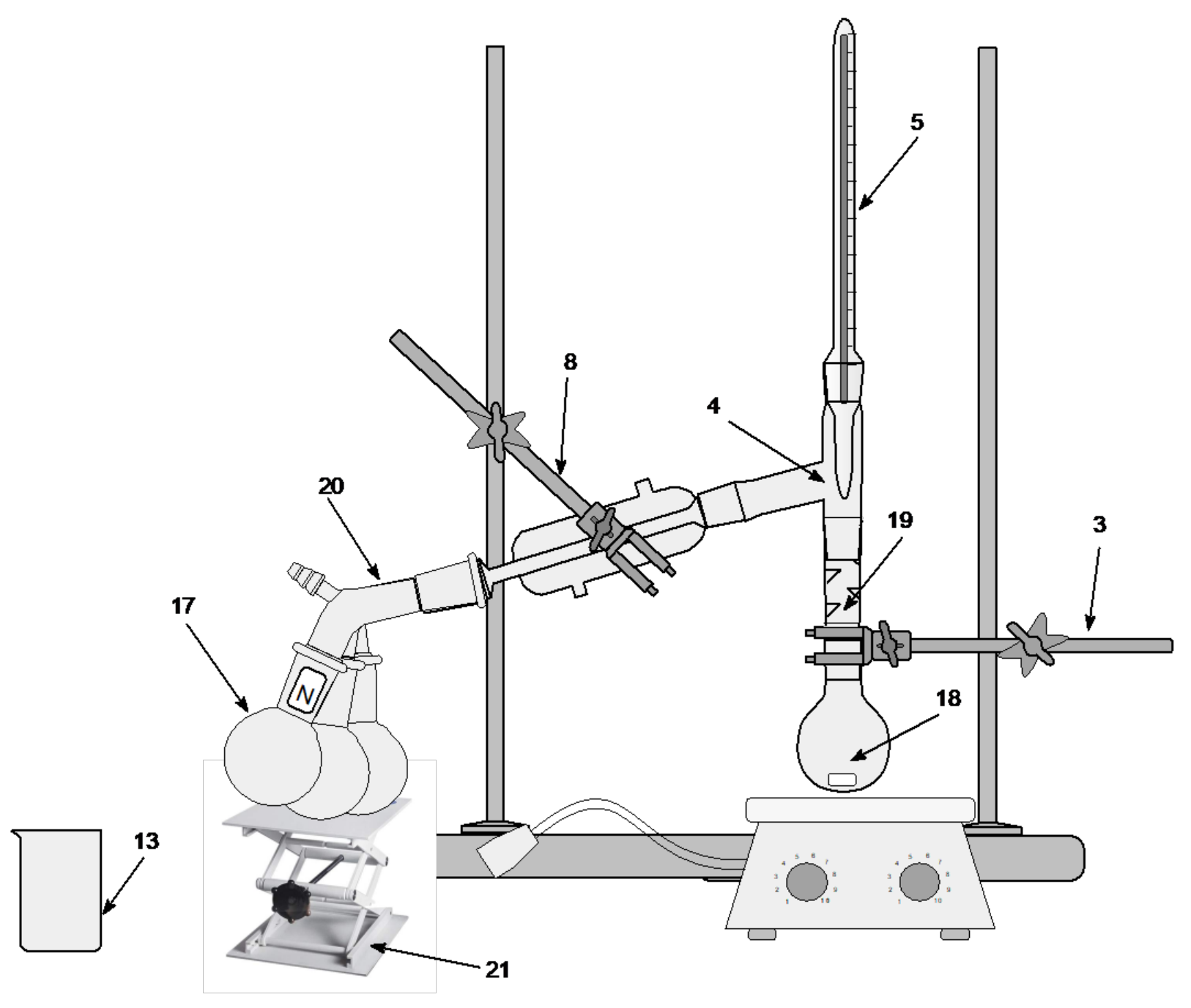
Purification of the product
Set up the apparatus as shown in fig. 3. All joints must be supplied with Teflon sleeves. Attach the weighed receiver flask (17) to the distilling receiver cow (20), fix the joint with clips. Bring the magnetic stirrer to the former place under the clamp (3). Place the clean magnetic stir-bar into the clean 100 mL pear-shaped round bottom flask (18), fix the flask in the stand clamp (3) over the magnetic stirrer platform. Insert the funnel (14) into the flask; equip the funnel with the paper filter. Port out the contents of the 100 mL container (15) into the funnel. Add ca. 10 mL of into the container (15) with the residual amount of . Stopper the container, gently mix and then also transfer the contents into the funnel (14). Deliver the funnel (14) with the paper filter to your lab assistant.
Attach the Vigreux fractionating column (19) and the clean Wurtz adapter (4) to the flask (18), and connect the thermometer (5) to the Wurtz adapter (4). Change the ring (11) by the clamp (8). Equip the clean condenser (6) with water hoses, attach the lower hose to the water tap, and put the upper hose in the sink. Fasten the condenser in the stand clamp (8), attach it to the Wurtz adapter (4), and fix the joint with clips. Attach the distilling receiver cow (20) with three receiver flasks to the lower ground tapered joint of the condenser. Fix the distilling receiver cow joint with clips. Rotate the distilling receiver cow so that the receiver flask with your Student code (17) is positioned upwards. Adjust the lab jack lift support (21) so that it supports the receiver flasks in the proper position. If needed, you can use the white support (10). Turn the tap to provide for slow water flow in the condenser.
Tightly wrap the Vigreux fractionating column (19), Wurtz adapter (4) up to the condenser ground tapered joint and the flask with the mixture (18) with 2-4 layers of foil, leaving a small hole to look after the reaction mixture. Switch on stirring at «2» and heating at «4». Distill methylene chloride (boiling temp. of 42 ºC) into an unlabeled receiver flask. Switch over the heating to «6» when the temperature raise up to 60 ºC. Distil the residue into the receiver flask with your Student code, collecting the fraction within 97-107 ºC range. Once only ca. 1 mL of the substance is left in the flask (18), turn off heating and stirring and use the rubber finger protectors (take care: hot!) to remove the foil. Take the magnetic stirrer aside.
Disconnect the receiver flask with your Student code (17) form the distillation receiver cow, remove the Teflon sleeve, and apply the labeled stopper to the receiver flask. Weigh the latter in the 150 mL plastic beaker (16). Calculate the mass and yield of the product. Measure its refractive index by using the Refractometer (see the directions below).
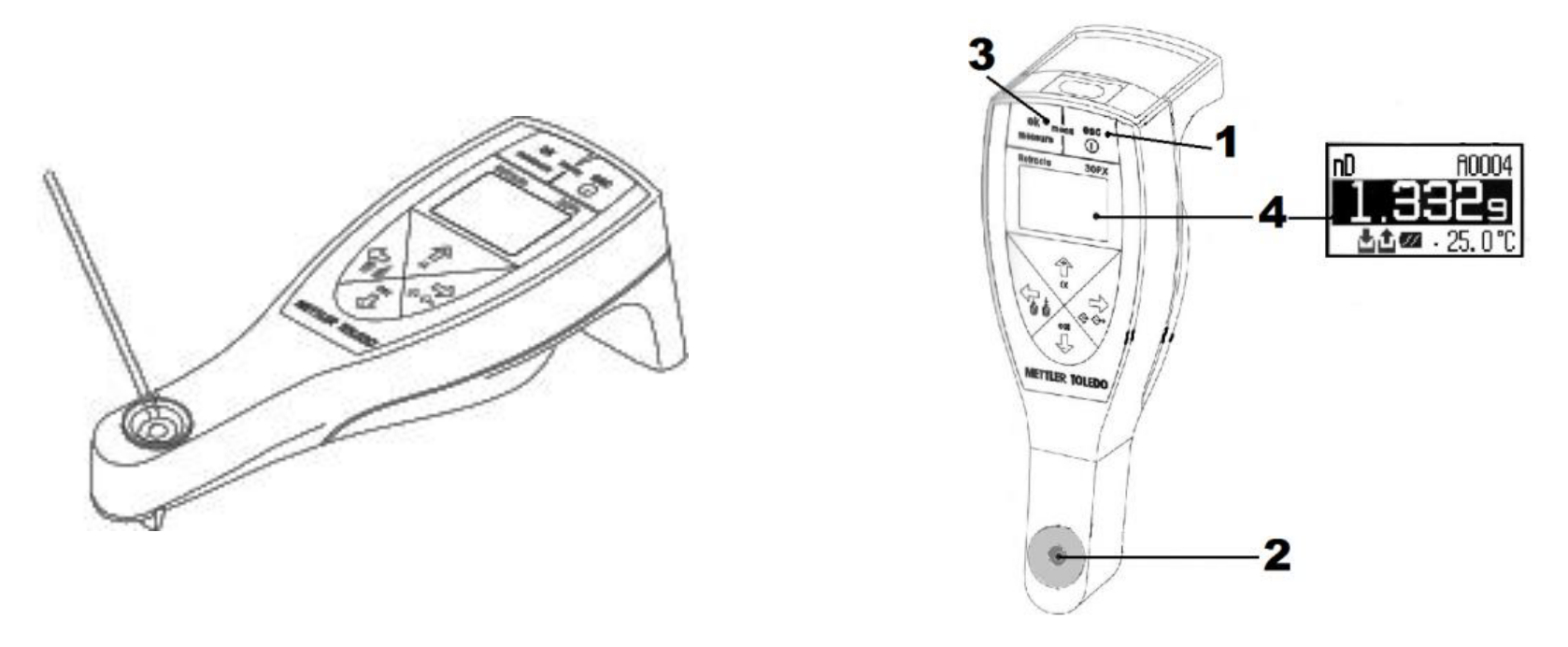
1.1. Write down the results in Table 1. [40 т.]
Leave the closed receiver flask with the product in the beaker on your working place.Table 1. Results record.
| Mass of the empty flask (17) with the stopper (in the beaker), g | Mass of the flask (17) with the product and stopper (in the beaker), g | Mass of the product, g | Yield, % | Refractive index |
|---|---|---|---|---|
Directions on using Refractometer REFRACTO 30GS
- To switch Refracto 30GS on, press and hold “ESC” button (1) until the display appears. The instrument is ready for operation. It switches off automatically if not operated for 10 min.
- Clean the cell (2) with a napkin wetted with the solvent from the washing bottle labeled “cleaning solvent”. Dry the cell with another napkin.
- Make sure the sample to be measured has reached ambient temperature and is homogeneous.
- Apply 10 drops of the sample onto the measuring cell (2) using the Pasteur pipette.
- To start the measurement press and hold the ok button (3) until the beep.
- Take the value of the refraction index from the display (4) and write it down in Table 1.
- Collect the sample from the cell (2) using the Pasteur pipette and put it back into your flask.
- Clean up the cell with a napkin wetted with the solvent from the washing bottle labeled “cleaning solvent”. Dry the cell with another napkin.
2. Answer the theoretical questions.
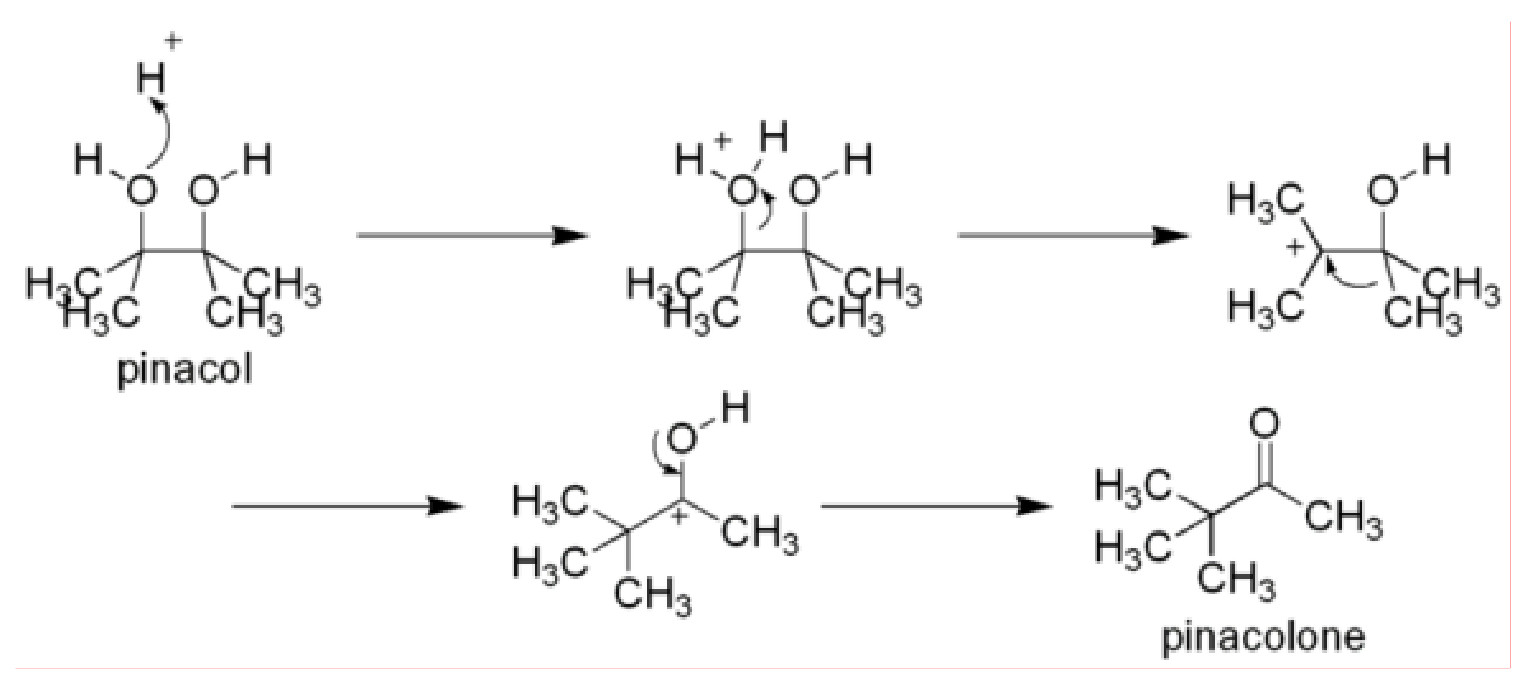
2.1. Write down the mechanism of the pinacol-pinacolone rearrangement: [4 т.]
2.2. What is the role of sulfuric acid in the process? Tick the correct answer(s).
- ☐ An electrophile
- ☐ A Lewis base
- ☐ A proton donor
- ☐ A catalyst of interphase transfer
- ☐ A sulfating agent
- ☐ An oxidizer [2 т.]
2.3. Complete the scheme of pinacol preparation. Draw the missing substances and balance the scheme with coefficients. [3 т.]

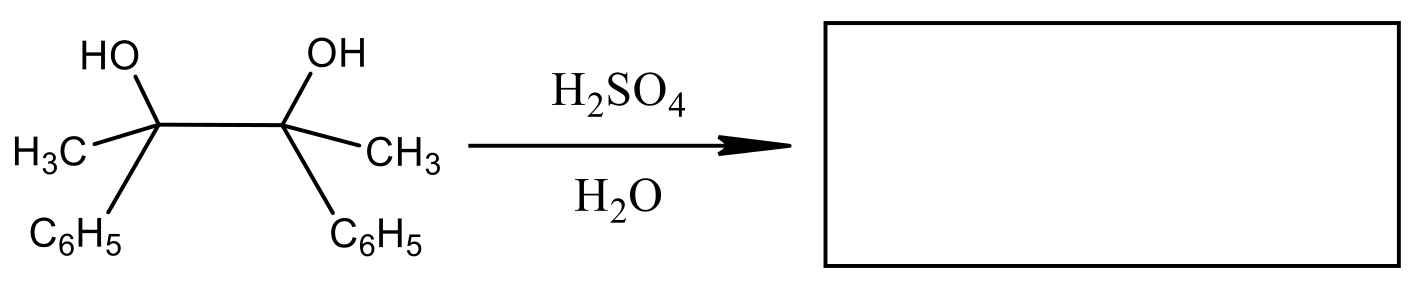
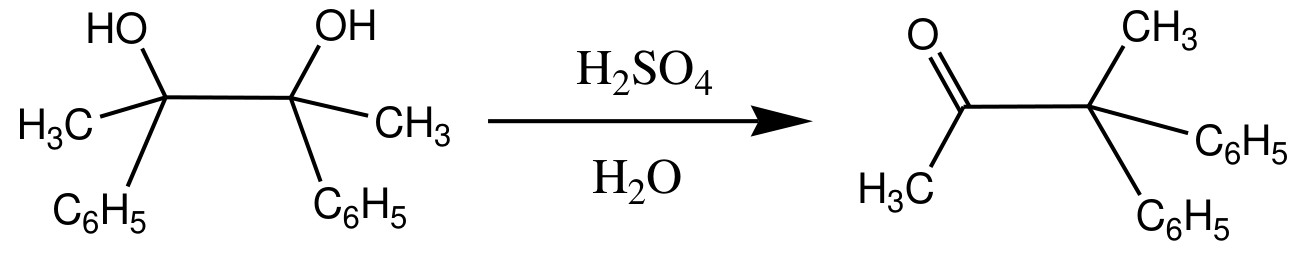
2.4. What is the product of the hereunder reaction? Draw its structure. [1 т.]
Отговори
- 2. Answer the theoretical questions., 2.2. An electrophile; A proton donor
Решение
1.1. Synthesis
The grading scheme takes into account two values re-measured by the Jury: mass of the product (m, g) and its refraction index (). A correcting factor based on the latter is applied to a student’s points obtained for the yield.
| Parameter | M.V. | A | B | y | z | Max grade |
|---|---|---|---|---|---|---|
| Mass | 7.7 g | 6 g | 8.2 g | 0 g | 10 g | 36 points |
| 1.3960 | 1.3955 | 1.3965 | 1,3333 | 1.4240 | 1 |
If , then Grade = Maxgrade
If , then Grade = 0, If , then Grade = 0
If , then Grade = Max grade × (Value – y)/(A – y)
If , then Grade = Max grade × (z – Value)/(z – B)
Values are the results re-measured by the lab assistants.
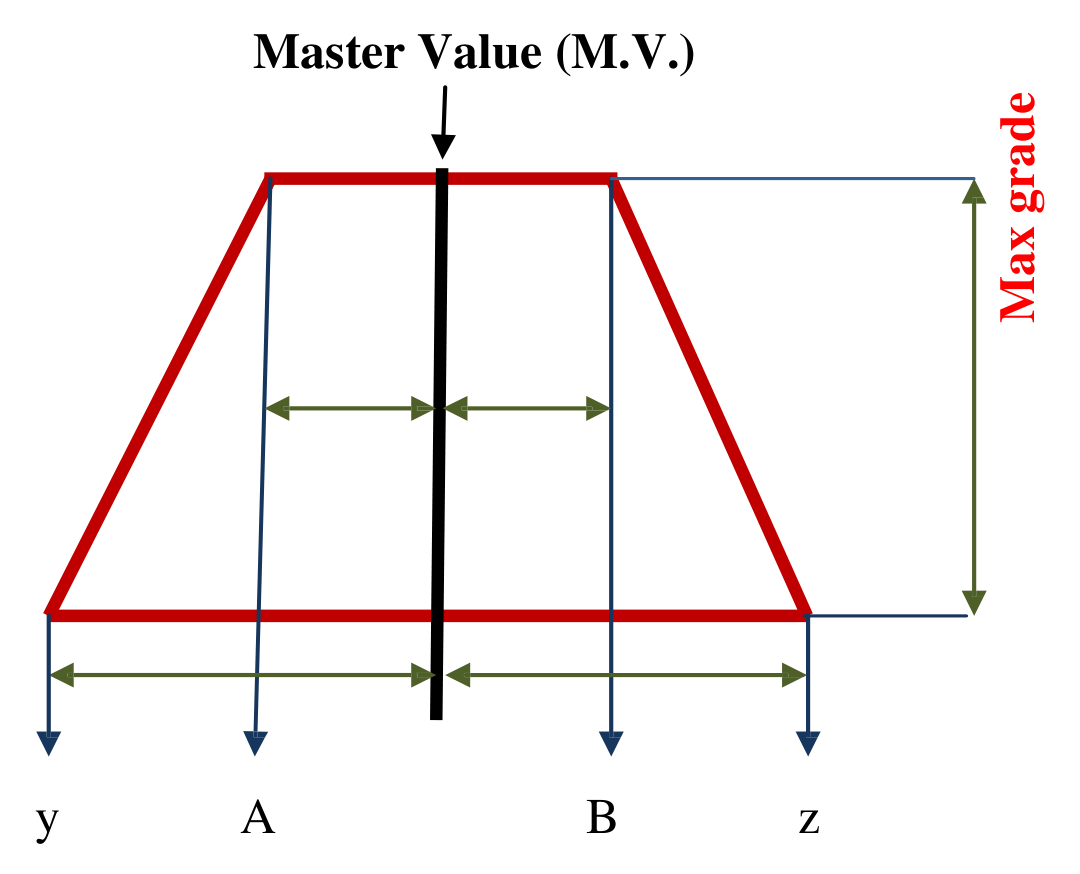
Students result = Grade of mass * Correcting factor ()
Weighing skills: 2 points if a student’s result differs from the re-weighed value not more than by 0.2%.
Correct calculation of yield: 2 point.
2.1. Mechanism of the pinacol-pinacolone rearrangement: see the scheme.
2.2.
- ☒ An electrophile
- ☐ A Lewis base
- ☒ A proton donor
- ☐ A catalyst of interphase transfer
- ☐ A sulfating agent
- ☐ An oxidizer
2.3. See the scheme of pinacol preparation.
2.4. See the scheme with the product.

Оригинал в Архива: Problems.pdf · официални решения: Solutions.pdf