IOM 2018, Експеримент — Задача 2. Task 2. Rhodochromium chloride analysis (20 marks).
The 3rd Metropolises Olympiad. Chemistry. Practical exam · 4 септември 2018 г. · 50 т.
General directions
- Lab safety: follow the general rules accepted in chemistry labs; no eating or drinking in the lab.
- Violation of lab safety rules: you get one warning only; offend again: you are disqualified.
- The exam includes two tasks: on Analytical and Inorganic chemistry. You can start your work with any task. 15 min for reading the set before you start to work.
- Time: 4 h 30 min to complete all the tasks. 30 min warning before the end.
- When entering the lab search for the table with your Student code.
- Your student code: get sure this is present on every page.
- Answers: only in the answer boxes in the booklet, nothing else will be graded. Relevant calculations have to be shown when asked for.
- Use only the calculator provided.
- More chemicals needed? Ask your lab assistant. No penalty for this.
- Questions concerning safety, apparatus, chemicals, toilet break: ask your lab assistant.
- Chemical waste carefully pour in the sink at your working place.
- Official English version: available on request for clarification only. Ask your lab assistant.
- After the stop signal: put your booklet aside and leave it at your working place.
- You must stop your work immediately after the stop signal has been given. A 2 min delay will result in zero points for the current task.
- During the Practical exam, some items of the glassware are expected to be used several times. Clean these carefully.
- Booklet with the tasks on Inorganic and Analytical chemistry and answer boxes: 14 pages (incl. the cover sheet and Periodic table of elements).
Reagents
| Reagent | Quantity | Placed in | Label |
|---|---|---|---|
| Task 1, at every workplace | |||
| Potassium dichromate | 10 g | Bottle with blue cap, 50 mL | |
| Hydrochloric acid, concentrated | 47 mL | Bottle with blue cap, 50 mL | HCl |
| Ethanol | 11 mL | Bottle with blue cap, 50 mL | 11 ml |
| 20 mL | Bottle with blue cap, 50 mL | 20 ml | |
| Zink, granules | 175 g | Bottle with blue cap, 50 mL | Zn |
| Ammonia aqueous solution | 250 mL | Bottle with blue cap, 250 mL | aq |
| Ammonium chloride | 72 g | Bottle with blue cap, 250 mL | |
| Task 2 | |||
| At every workplace | |||
| Weighted sample of the complex | To be determined | Beaker, 25 mL | STUDENT CODE |
| Standard solution of cerium(IV) sulfate | 50 mL | Bottle with blue cap, 50 mL | 0.0094 M |
| Hydrogen peroxide, 0.1% | 50 mL | Bottle with blue cap, 50 mL | |
| Sulfuric acid, 2 M | 100 mL | Bottle with blue cap, 100 mL | |
| Mohr’s salt solution | 100 mL | Bottle with blue cap, 250 mL | Mohr’s salt |
| Potassium hydroxide, 0.1 M | 50 mL | Bottle with blue cap, 50 mL | KOH |
| Sodium hydroxide, standard solution | 100 mL | Bottle with blue cap, 100 mL | NaOH 0.0119 M |
| Per two participants | |||
| Phenylanthranilic acid | 20 mL | Dropper | PAA |
| Phenolphthalein | 20 mL | Dropper | Phenolphthalein |
| Manganese dioxide (), suspension | 40 mL | Dropper | |
| On the table of common use | |||
| Formaldehyde (20%) | 250 mL | Bottle with blue cap, 250 mL | HCHO (20%) |
Glassware and equipment
| Item | Quantity |
|---|---|
| Tasks 1 and 2 | |
| At every workplace | |
| Support stand with two clamps, ring and burette clamp | 1 |
| Magnetic stirrer with heating | 1 |
| Wash-bottle with distilled water | 1 |
| Permanent marker | 1 |
| Goggles | 1 |
| On the table of common use | |
| Gloves (choose the appropriate size) | |
| Paper towels | |
| Task 1 | |
| At every workplace | |
| Reflux condenser | 1 |
| Crystallizing dish | 1 |
| Separatory funnel | 1 |
| Adaptor for separatory funnel | 1 |
| Petry dish with your Student code | 1 |
| Glass rod | 1 |
| Spoon-spatula | 1 |
| Round-bottom flask, 500 mL | 1 |
| Funnel, 100 mm with your Student code | 1 |
| Funnel, 75 mm | 1 |
| Beakers, 600 mL with numbers and your Student code | 3 (I, II, III) |
| Tube with charcoal | 1 |
| Piece of foil | 1 |
| Filter paper | 2 |
| On the table of common use | |
| Adaptor with Bunsen valve | |
| Squeezers | |
| Balances | |
| Under the fume hood of common use | |
| Support stand with rings for filtration | |
| Air blower with glass tubes for the solution bubbling | |
| Task 2, at every workplace | |
| Burette, 25 mL | 1 |
| Volumetric flask, 100 mL | 1 |
| Glass funnel, 36 mm (for filling the burette) | 1 |
| Beaker, 25 mL (under the burette and for formaldehyde) | 1 |
| Erlenmeyer flask (conical, flat-bottom), 250 mL | 2 |
| Graduated pipette, 10 mL | 2 |
| Cylinder, 10 mL | 2 |
| Cylinder, 50 mL | 1 |
| Red pipette filler (3-way bulb) | 1 |
| Watch glass | 2 |
| Fingertips to handle hot glassware and foil | 3 |
Условие
| Question | a | b | c | d | e | f | g | h | i | Total |
|---|---|---|---|---|---|---|---|---|---|---|
| Points | 5 | 22 | 12 | 1 | 3 | 1 | 2 | 3 | 1 | 50 |
| Result |
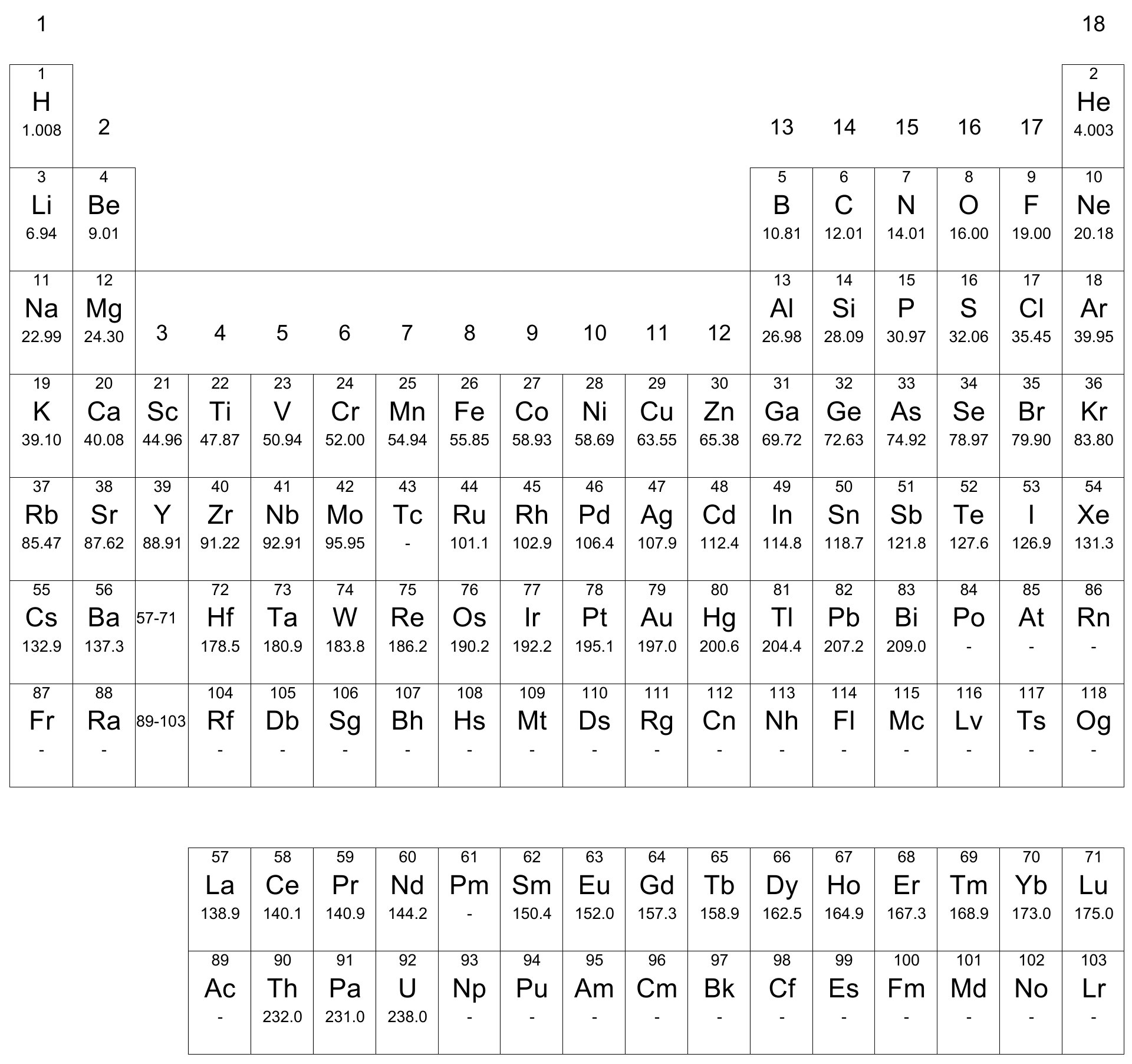
In this task you are expected to determine the chromium and ammonia content in rhodochromium chloride by titrimetric method. The sample of rhodochromium chloride for analysis was synthesized for you in advance in order to avoid interference between your titration results with those of the inorganic part (task 1). Ask your lab assistant for your sample of rhodochromium chloride. Transfer it quantitatively from the 25-mL beaker labeled with your student code into the 100-mL graduated flask and dissolve in distilled water in the presence of your lab assistant. Make sure the sample is dissolved completely. Bring up to the mark with distilled water and mix thoroughly.
Standardization of ammonium iron (II) sulphate (Mohr's Salt) with cerium (IV) sulfate
Fill the burette with the Mohr’s salt solution using the funnel. Transfer with the 10-mL volumetric pipette a 5.0 mL aliquot of the cerium sulfate solution into the conical flask. Add with the cylinder 10 mL of 2M solution and 3 drops of indicator – phenylanthranilic acid. Wait till the reddish-brown color of solution appears. Titrate the prepared mixture with the Mohr’s salt solution swirling the flask constantly. Repeat the titration until the coverage of results (the number of titrations is not graded).
Note: you are provided with dry and clean burettes and pipettes. Do not spend the solutions for rinsing the glassware.
a. Write down the volumes of Mohr’s salt solution used for titration of the standard cerium (IV) sulfate solution:
| Titration number | , mL | , mL | , mL |
|---|---|---|---|
| 1 | |||
| 2 | |||
| 3 | |||
| Your accepted volume, , mL: |
[5 т.]
Determination of chromium content in rhodochromium chloride
Pipette a 10.0 mL aliquot of the prepared solution with another 10-mL volumetric pipette into the conical flask. Add 10 mL of 0.1M KOH, cover the flask with the watch glass and heat it on the hot-plate until the discoloration of the mixture and appearance of flocculent precipitate (adjust the left regulator of the hot-plate to «4»). Avoid excessive boiling. Remove the conical flask from the hot-plate. Attention! Take off the gloves and use the fingertips! Rinse the watch glass with distilled water.
Add with the cylinder 10 mL of 0.1% to the warm solution in the conical flask. Swirl the flask, cover it with the watch glass and continue heating (adjust the hot-plate regulator to «5»). Bring the mixture to boiling, keep heating for other 5 min and then remove the conical flask from the hot-plate. Attention! Use the fingertips! Rinse the drops from the watch glass with distilled water into the flask. Add 5-10 drops of suspension (shake the suspension in the dropper before use). If the color of the solution did not turn into light-grey and there is no precipitate formed at the bottom of the flask, add a few more drops of suspension. Wait for 2-3 min swirling the flask from time to time. Add with the cylinder 10 mL of 2M solution and 3-4 drops of phenylanthranilic acid. Swirl the flask and wait till the reddish-brown color of solution appears (~ 1-2 min). Titrate the mixture with the Mohr’s salt solution constantly swirling the flask until the color changes to grey-yellow. Repeat the titration as necessary.
b. Write down the volumes of the Mohr’s salt solution used for titration:
| Titration number | , mL | , mL | , mL |
|---|---|---|---|
| 1 | |||
| 2 | |||
| 3 | |||
| Your accepted volume, , mL: |
[22 т.]
Determination of ammonium in rhodochromium chloride
The formaldehyde method is among the most precise ones used for determination of ammonia salts. The ammonium cation reacts with formaldehyde with the formation of weak base – hexamethylentetramine (urotropin, ) and strong acid. The acid is then determined by direct titration with standard sodium hydroxide in the presence of phenolphthalein. The admixture of formic acid in the formaldehyde is excluded by preliminary titration of formaldehyde solution with standard sodium hydroxide solution.
Thoroughly wash the burette with distilled water and rinse with standard NaOH solution. Then fill the burette with the same NaOH solution. Pipette a 10.0 mL aliquot of the rhodochromium chloride solution into the conical flask. Add with the cylinder 10 mL of distilled water, cover the flask with the watch glass and heat it on the hot-plate until discoloration of the mixture and appearance of flocculent precipitate (adjust the left regulator of the hot-plate to «4»). Avoid excessive boiling. Remove the conical flask from the hot-plate. Cool the conical flask to room temperature.
Pour 5 mL of 20% formaldehyde from the 250-mL bottle on the table of common use into clean 25-mL beaker and add 2-3 drops of phenolphthalein indicator. Add dropwise the NaOH solution from the burette to the mixture in the beaker until the first indication of the light pink color appears.
Add the neutralized formaldehyde solution into the conical flask cooled down to room temperature and add 2-3 drops of phenolphthalein indicator. Swirl the flask and leave for 2-3 min. Titrate the mixture with the standard NaOH solution. Repeat the titration as necessary.
c. Write down the volumes of the sodium hydroxide solution used for titration:
| Titration number | , mL | , mL | , mL |
|---|---|---|---|
| 1 | |||
| 2 | |||
| 3 | |||
| Your accepted volume, , mL: |
[12 т.]
d. Write down the reaction equation occurring upon heating of the complex solution (you have defined the formula in task 1) with potassium hydroxide: [1 т.]
e. Write down the reaction equations behind chromium determination occurring upon: 1) addition of hydrogen peroxide to the solution obtained after the decomposition of the complex, 2) heating of the mixture, 3) addition of sulfuric acid: [3 т.]
f. Write down the reaction equation occurring upon standardization of the Mohr’s salt by cerium (IV) sulphate solution. Calculate the concentration of the Mohr’s salt (mol/L) from the titration results:
= ____ mol/L [1 т.]
g. Write down the reaction occurring upon titration of the product of reaction 3 in question e with Mohr’s salt. Calculate the concentration of chromium (mol/L):
= ____ mol/L [2 т.]
h. Write down the reactions of: 1) decomposition of rhodochromium chloride in a neutral medium, 2) interaction of ammonium salt with formaldehyde. Calculate the concentration of ammonium cation in mol/ L in the solution of rhodochromium chloride according to the formaldehyde method:
= ____ mol/L [3 т.]
i. Determine the ratio of ammonia and chromium in the given sample and the mass of the sample:
Cr : = __ : __
= ____ g [1 т.]
Отговори
f. 0.0102 mol/L
Master value of the official grading scheme for the Mohr’s salt solution used at the olympiad: C(Fe2+) = 0.01020 mol/L.
i. Cr : NH3 = 1 : 5
Решение
| Question | a | b | c | d | e | f | g | h | i | Total |
|---|---|---|---|---|---|---|---|---|---|---|
| Points | 5 | 22 | 12 | 1 | 3 | 1 | 2 | 3 | 1 | 50 |
| Result |
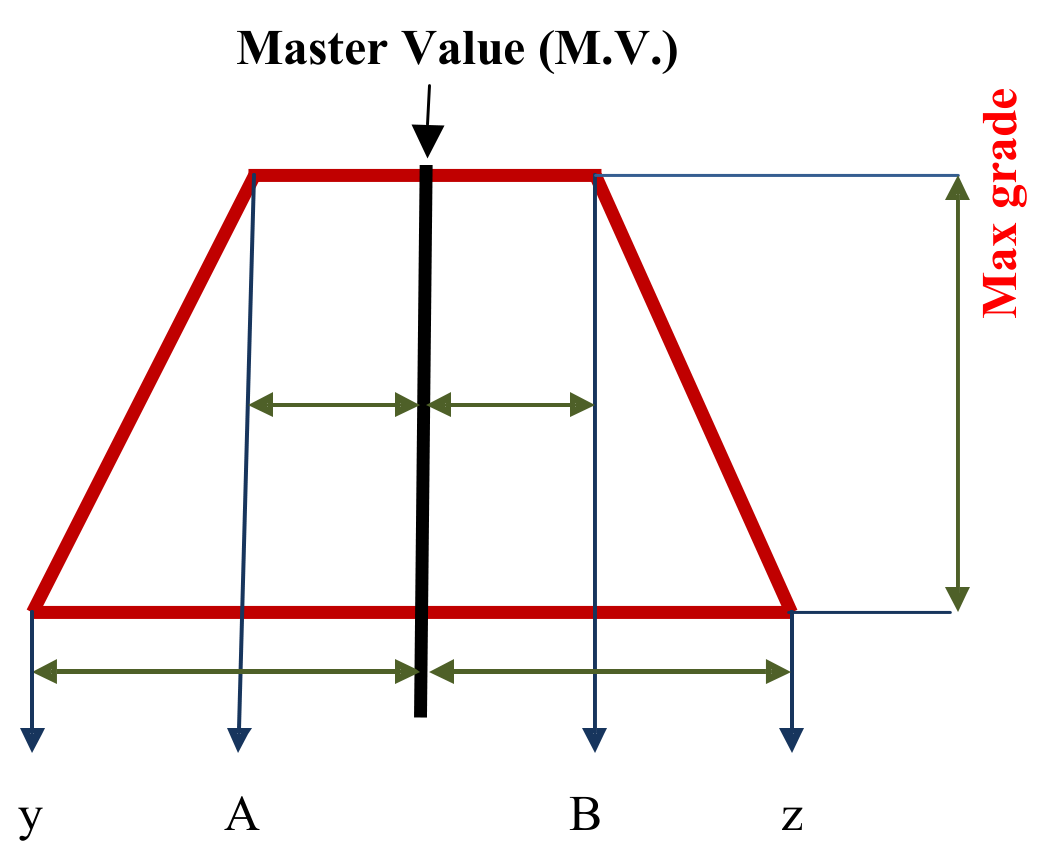
| Question | M.V., mL | A, mL | B, mL | y, mL | z, mL | Max grade |
|---|---|---|---|---|---|---|
| 1.1 | See on a separate sheet | M.V.-0.1 | M.V.+0.1 | M.V.-1.0 | M.V.+1.0 | 5 points |
| 1.2. | See on a separate sheet | 0.96*M.V. | 1.03*M.V. | 0.825*M.V. | 1.04*M.V. | 22 points |
| 1.3 | See on a separate sheet | M.V.-0.5 | M.V.+0.5 | M.V.-1.0 | M.V.+1.0 | 12 points |
If A Value B, then Grade = Maxgrade
If Value y, then Grade = 0, If Value z, then Grade = 0
If y Value A, then Grade = Max grade × (Value – y)/(A – y)
If B Value z, then Grade = Max grade × (z – Value)/(z – B)
Value is the result reported by the student.
d. Write down the reaction equation occurring upon heating of the complex solution (you have defined the formula in task 1) with potassium hydroxide:
(1 point)
e. Write down the reaction equations behind chromium determination occurring upon: 1) addition of hydrogen peroxide to the solution obtained after the decomposition of the complex, 2) heating of the mixture, 3) addition of sulfuric acid:
- (1 point)
- (1 point)
- (1 point)
f. Write down the reaction equation occurring upon standardization of the Mohr’s salt by cerium (IV) sulphate solution. Calculate the concentration of the Mohr’s salt (mol/L) from the titration results:
(0.25 point)
(0.75 point)
mol/L
g. Write down the reaction occurring upon titration of the product of reaction 3 in question e with Mohr’s salt. Calculate the concentration of chromium (mol/L):
(1 point)
(0.75 point)
mol/L
h. Write down the reactions of: 1) decomposition of rhodochromium chloride in a neutral medium, 2) interaction of ammonium salt with formaldehyde. Calculate the concentration of ammonium cation in mol/ L in the solution of rhodochromium chloride according to the formaldehyde method:
- (1 point)
- (1 point)
(1 point)
mol/L
i. Determine the ratio of ammonia and chromium in the given sample and the mass of the sample:
(0.5 point)
(0.5 point)
g
Оригинал в Архива: Problems.pdf · официални решения: Solutions.pdf