IPhO 1988, Теория и експеримент — Задача 2. THEORY 2 Maxwell´s Wheel
19th International Physics Olympiad - 1988 Bad Ischl / Austria
Условие
Introduction
A cylindrical wheel of uniform density, having the mass kg, the radius m and the thickness m is suspended by means of two light strings of the same length from the ceiling. Each string is wound around the axle of the wheel. Like the strings, the mass of the axle is negligible. When the wheel is turned manually, the strings are wound up until the centre of mass is raised 1,0 m above the floor. If the wheel is allowed to move downward vertically under the pulling force of the gravity, the strings are unwound to the full length of the strings and the wheel reaches the lowest point. The strings then begin to wound in the opposite sense resulting in the wheel being raised upwards.
Analyze and answer the following questions, assuming that the strings are in vertical position and the points where the strings touch the axle are directly below their respective suspending points (see fig. 19.5).
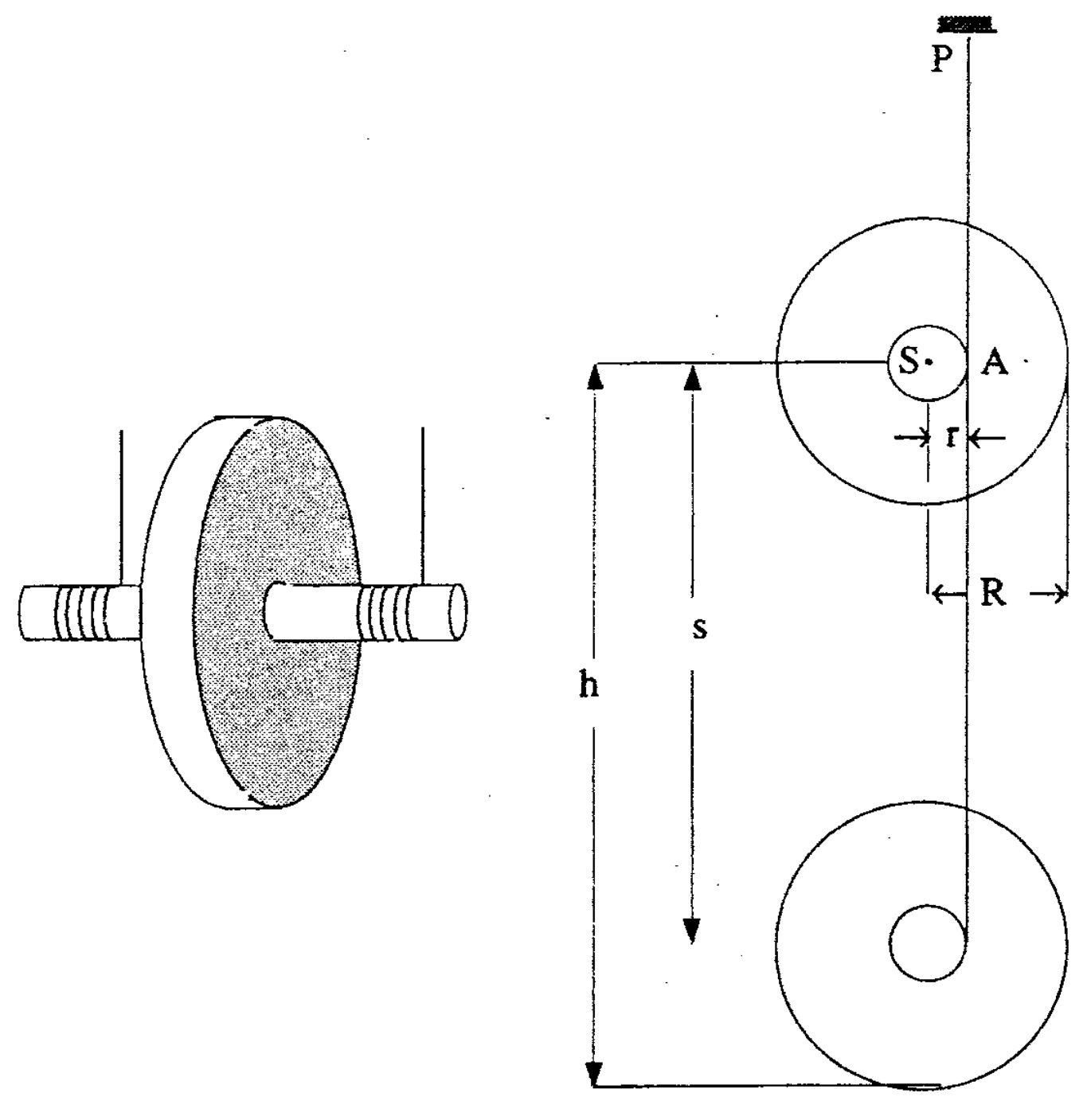
2.1 Determine the angular speed of the wheel when the centre of mass of the wheel covers the vertical distance s.
2.2 Determine the kinetic energy of the linear motion of the centre of mass after the wheel travels a distance s = 0,50 m, and calculate the ratio between and the energy in any other form in this problem up to this point.
Radius of the axle = 0,0030 m
2.3 Determine the tension in the string while the wheel is moving downward.
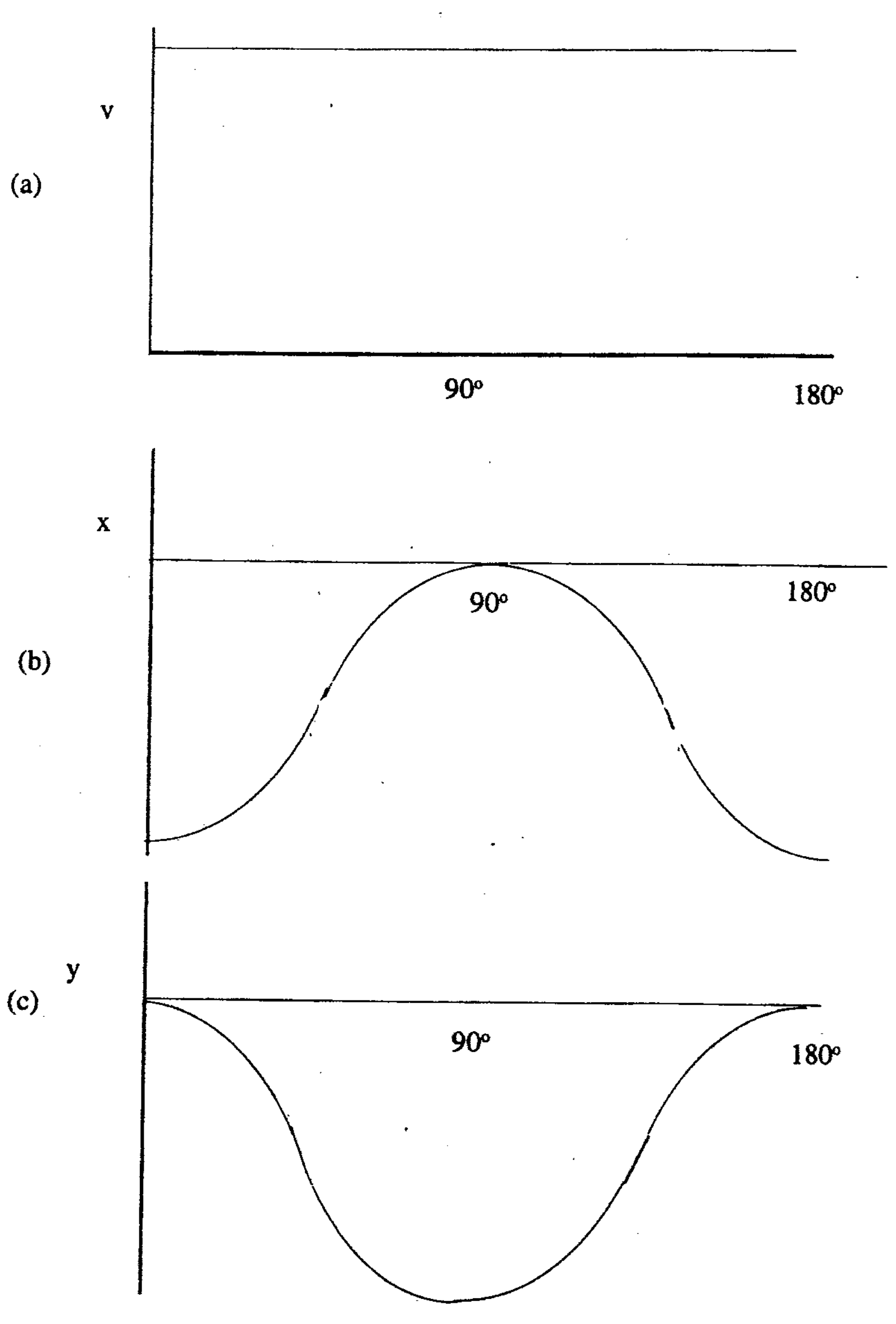
2.4 Calculate the angular speed as a function of the angle when the strings begin to unwind themselves in opposite sense as depicted in fig. 19.6.
Sketch a graph of variables which describe the motion (in cartesian system which suits the problem) and also the speed of the centre of mass as a function of .
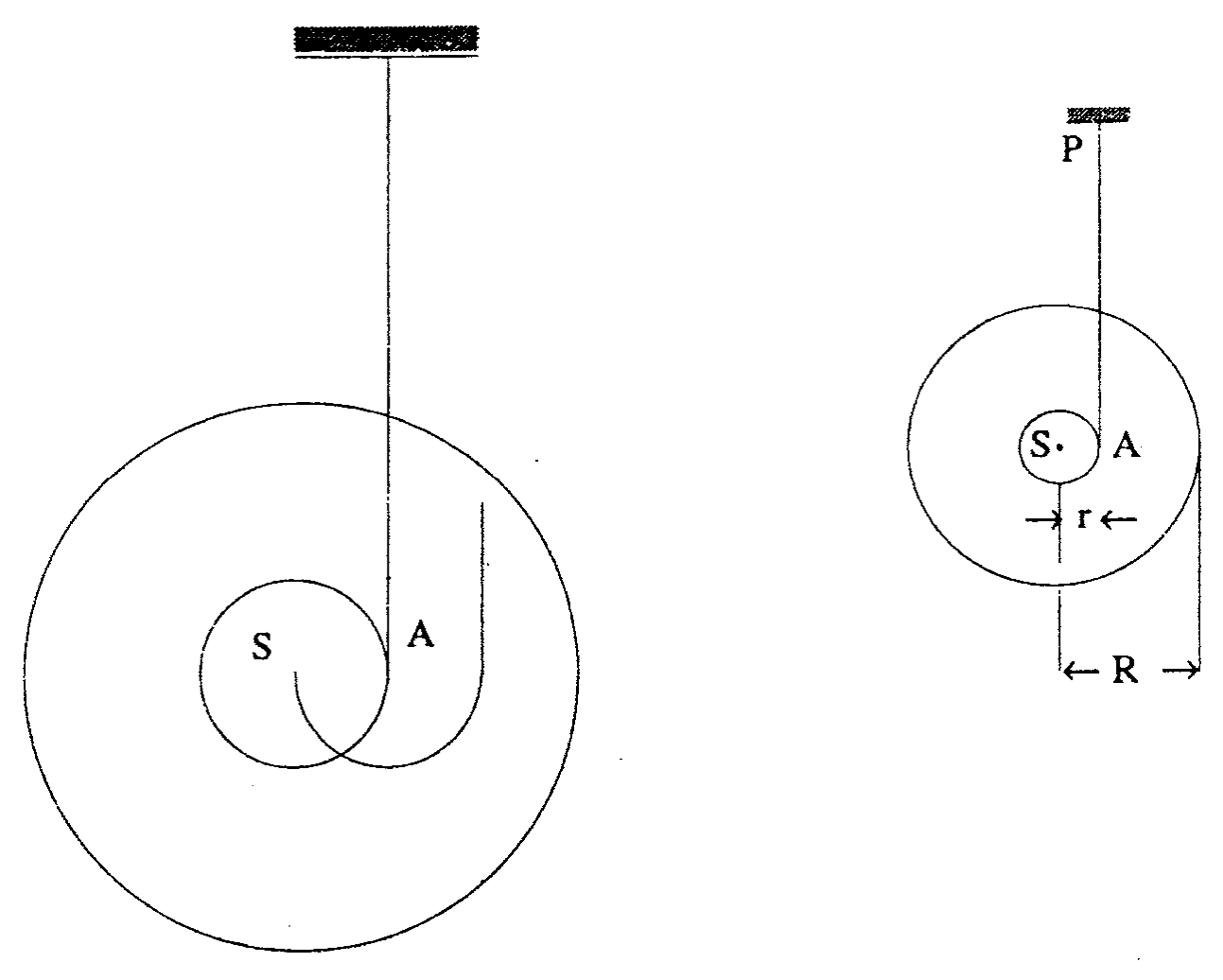
2.5 If the string can withstand a maximum tension N, find the maximum length of the string which may be unwound without breaking by the wheel.
Отговори
2.1
For s = 0,50 m the official solution gives .
2.2 0.00513
Official solution: J, J, J, ratio .
2.3 1.96 N
Tension in each string, N.
2.4
As printed in the official solution; x = r.sin Φ-r, y = r.cos Φ-r (graphs in fig. 19.8 and fig. 19.9).
2.5 1.24 m
Решение
2.1
conservation of energy: (1)
where is the angular speed of the wheel and is the moment of inertia about the axis through A.
Note: If we would take the moment of inertia about S instead of A we would have
where v is the speed of the centre of mass along the vertical.
This equation is the same as the above one in meanings since
and
From (1) we get
substitute
Putting in numbers we get
2.2
Kinetic energy of linear motion of the centre of mass of the wheel is
Potential energy of the wheel
Rotational kinetic energy of the wheel
2.3
Let be the tension in each string.
Torque which causes the rotation is given by
where is the angular acceleration
The equation of the motion of the wheel is
Substituting and we get
Thus for the tension in each string we get
2.4
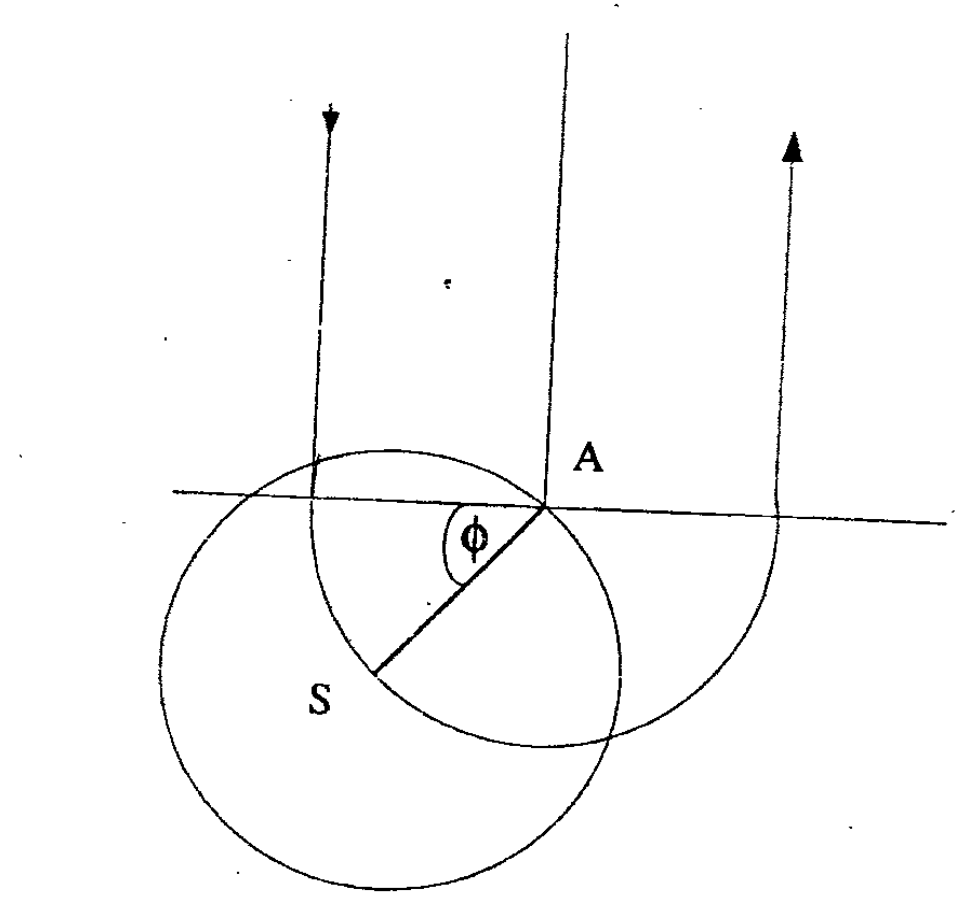
After the whole length of the strings is completely unwound, the wheel continues to rotate about A (which is at rest for some interval to be discussed). Let be the angular speed of the centre of mass about the axis through A. The equation of the rotational motion of the wheel about A may be written as ,
where is the torque about A, is the moment of inertia about the axis A and is the angular acceleration about the axis through A.
Hence
and
Multiplied with gives:
or
this gives
[C = arbitrary constant]
If [s = H] than is
That gives and therefore
Putting these results into the equation above one gets
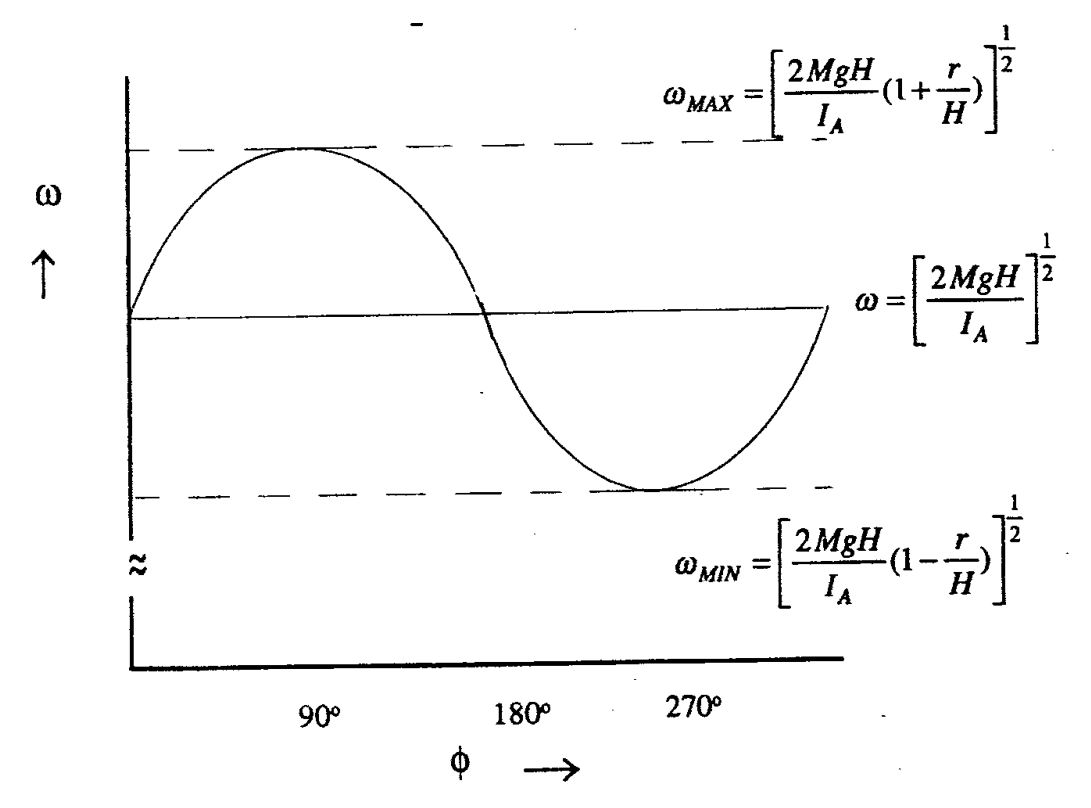
For we get:
and
Component of the displacement
along x-axis is x = r.sin -r
along y-axis is y = r.cos -r
2.5
Maximum tension in each string occurs
The equation of the motion is
Putting in T = 20 N and (where s is the maximum length of the strings supporting the wheel without breaking) and the numbers one gets:
This gives: s = 1,24 m
The maximum length of the strings which support maximum tension without breaking is
.
Оригинал в Архива: ipho88.pdf