IPhO 1988, Теория и експеримент — Задача 5. EXPERIMENT 2: Electron Tube
19th International Physics Olympiad - 1988 Bad Ischl / Austria
Условие
Introduction
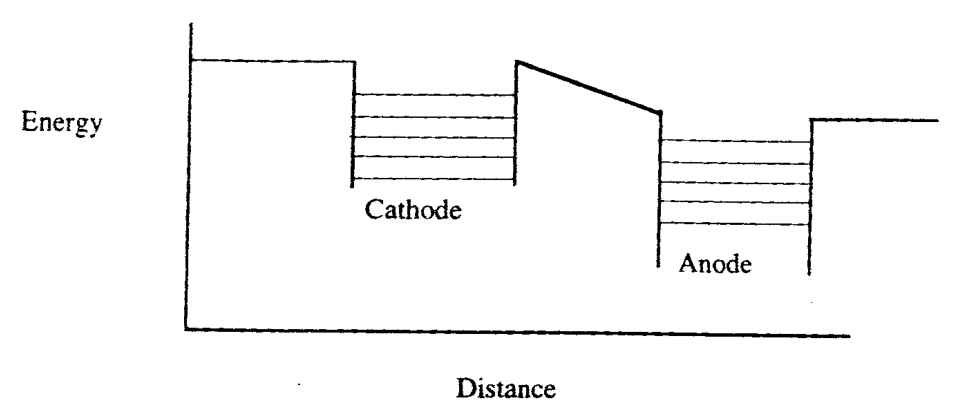
Free electrons in a metal may be thought of as being “electron gas” confined in potential or energy walls. Under normal conditions or even when a voltage is applied near the surface of the metal, these electrons cannot leave the potential walls (see fig. 19.11)
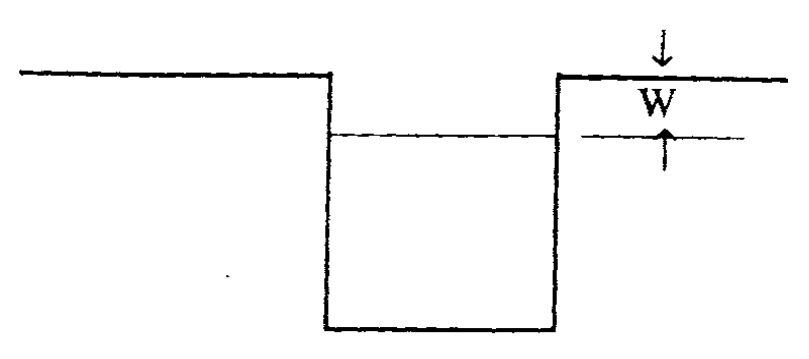
If however the metal or the electron gas is heated, the electrons have enough thermal energy (kinetic energy) to overcome the energy barrier W (W is known as “work function”). If a voltage is applied across the metal and the anode, these thermally activated electrons may reach the anode.
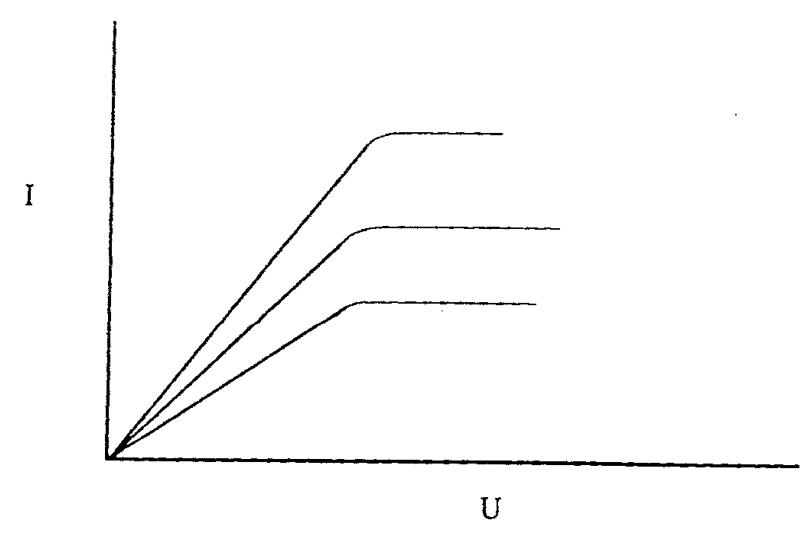
The number of electrons arriving at the anode per unit time depends on the nature of the cathode and the temperature, i.e. all electrons freed from the potential wall will reach the anode no longer increase with applied voltage (see fig. 19.11)
The saturated current corresponding to the number of thermally activated electrons freed from the metal surface per unit time obeys what is generally known as Richardson´s equation i.e.
where
C is a constant
T temperature of the cathode in Kelvin
k Boltzmann´s constant = J/K
Determine the value of the work function W of tungsten metal in the form of heating filament of the vacuum tube provided.
The following items of equipment are placed at the disposal of the contestants:
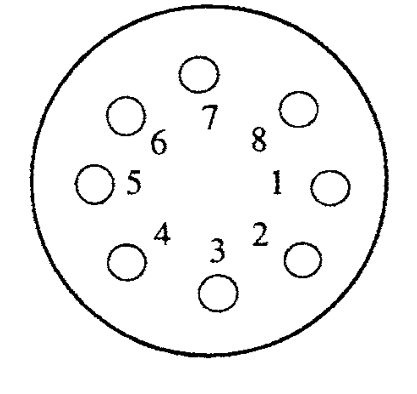
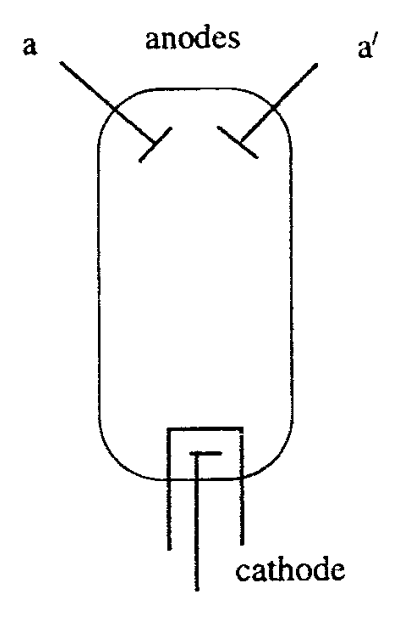
- Electron tube AZ 41 which is a high-vacuum, full-wave rectifying diode. The cathode is made from a coated tungsten filament the work function of which is to be ascertained. According to the manual prepared by its manufacturer, no more than 4 V should be used when applying heating current to the cathode. Since the tube has two anodes, it is most desirable to have them connected for all measurements. The diagram in fig. 19.14 is a guide to identifying the anodes and the cathode.
- multimeter 1 unit, internal resistance for voltage measurement: 10 MΩ
- battery 1,5 V (together with a spare)
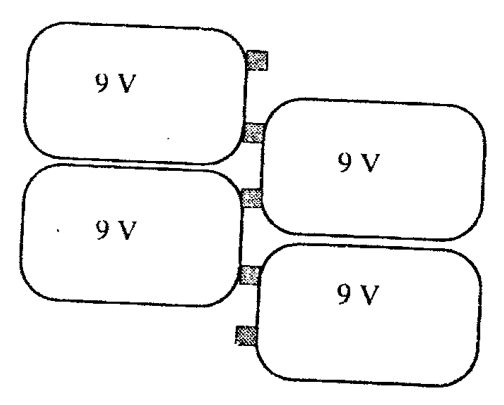
- battery 9 V; four units can be connected in series as shown in fig. 19.15
- connectors
- resistors; each of which has specifications as follows:
- 1000 Ω ± 2% (brown, black, black, brown, brown, red)
- 100 Ω ± 2% (brown, black, black, black, brown, red)
- 47,5 Ω ± 1% (yellow, violet, green, gold, brown)
- resistors; 4 units, each of which has the resistance of about 1 Ω and coded
- connecting wires
- screw driver
- graph paper (1 sheet)
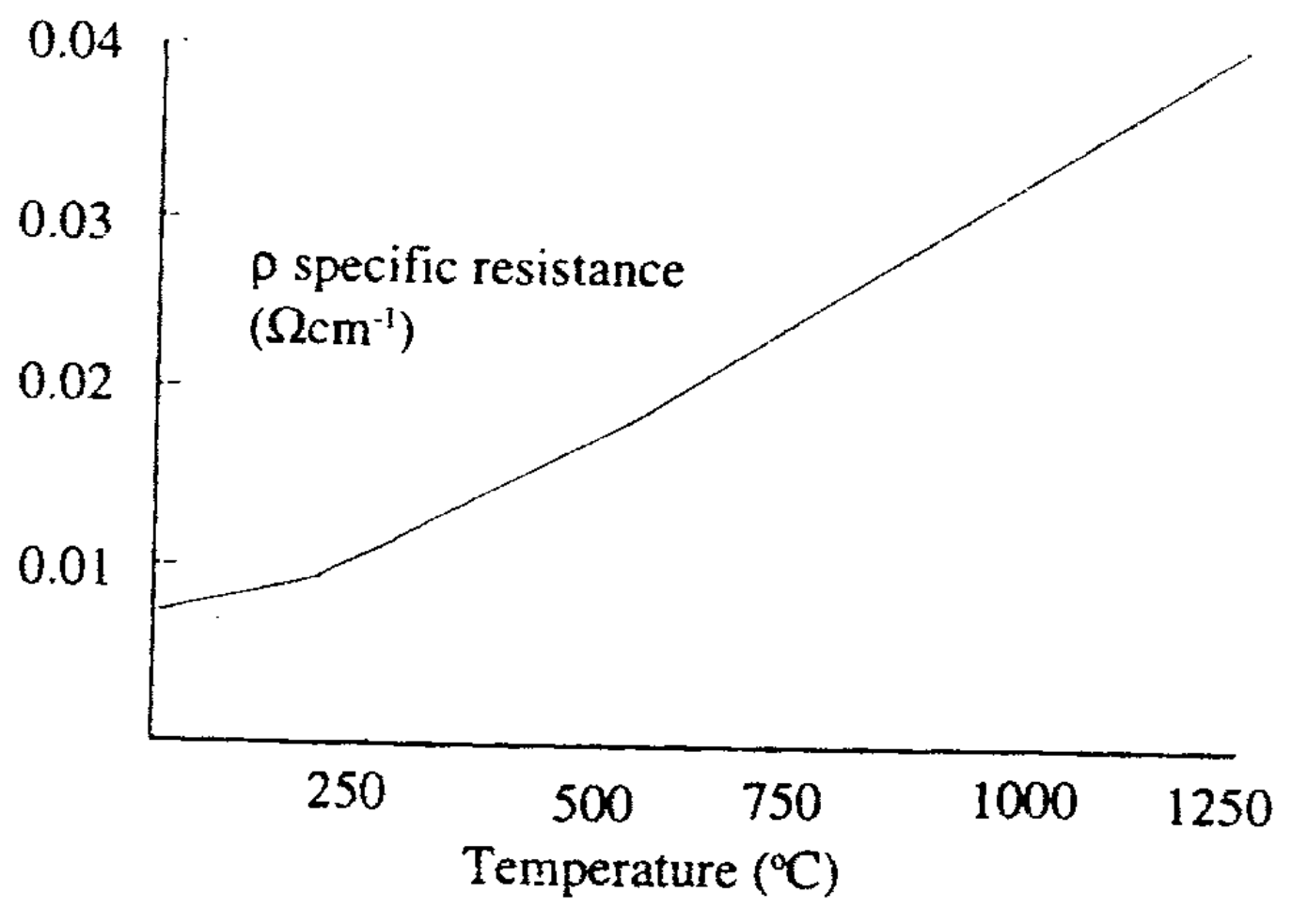
- graph of specific resistance of tungsten as a function of temperature; 1 sheet
Solve the following problems:
2.1 Determine the resistance of 4 numerically-coded resistors. Under no circumstances must the multimeter be used as an ohmmeter.
2.2 Determine the saturated current for 4 different values of cathode temperatures, using 1,5 V battery to heat the cathode filament. A constant value of voltage between 35 V – 40 V between the anode and the cathode is sufficient to produce a saturated current. Obtain this value of voltage by connecting the four 9 V batteries in series. Describe how the different values of temperature are determined.
2.3 Determine the value of W. Explain the procedures used.
Решение
2.1
Connect the circuit as shown in fig. 19.17
.... resistance to be determined
R ...... known value of resistance
Measure potential difference across and R. Chose the value of R which gives comparable value of potential difference across .
In this particular case R = 47,5 Ω
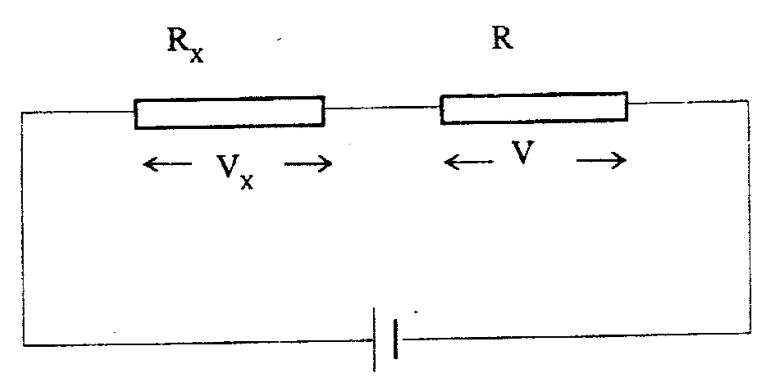
where and V are values of potential differences across and R respectively.
can be calculated from the above equation.
(The error in depends on the errors of and ).
2.2
Connect the circuit as shown in fig. 19.18
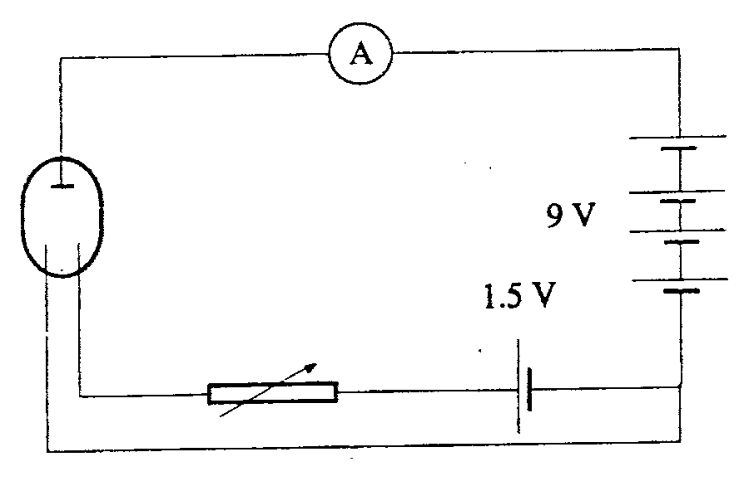
- Begin the experiment by measuring the resistance of the tungsten cathode when there is no heating current
- Add resistor R = 1000 Ω into the cathode circuit, determine resistance of the tungsten cathode, calculate the resistance of the current-carrying cathode.
- Repeat the experiment, using the resistor R = 100 Ω in the cathode circuit, determine resistance of tungsten cathode with heating current in the circuit.
- Repeat the experiment, using the resistor R = 47,5 Ω in the cathode circuit, determine resistance of tungsten cathode with heating current in the circuit.
- Plot a graph of , and as a function of temperature, put the value of to coincide with room temperature i.e. 18°C approximately and draw the remaining part of the graph parallel to the graph of specific resistance as a function of temperature provided in the problem. From the graph, read values of the temperature of the cathode , and in Kelvin.
From the equation
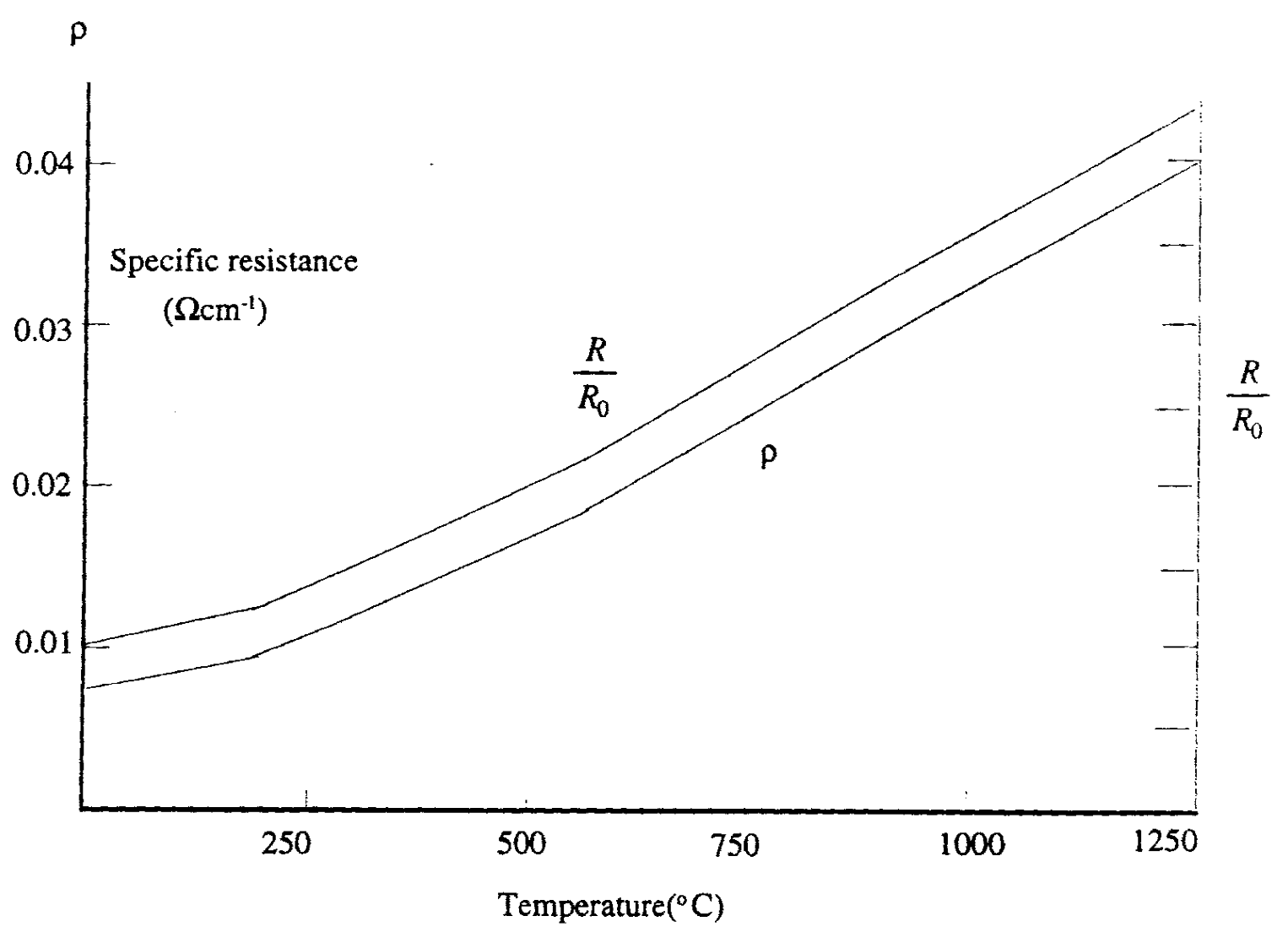
we get
Plot a graph of against .
The curve is linear. Determine the slope m from this graph.
Work function W can be calculated using known values of m and k (given in the problem).
Error in W depends on the error of T which in turn depends on the error of measured R.
Оригинал в Архива: ipho88.pdf