RMPh 2011, Експеримент — Задача 2
Romanian Master of Mathematics and Sciences 2011 Physics Section · 10 т.
Условие
Unfortunately, there is a major problem with this manner of recording the data of a voyage: it only works within the proper reference frame, and it generally requires laborious transformations in order to be used by another observer. So now there is a very ingenious alternative way of charting a journey, devised at the dawn of the 21-st century by the American professor Nathaniel David Mermin. It is most simple, since it requires the use of only two triangles and a compass, and it allows all observers to work on the same document.
All space navigators need now to get familiar with this method and learn how to use it, especially new commanders such as you. It relies on only two graphical concepts.
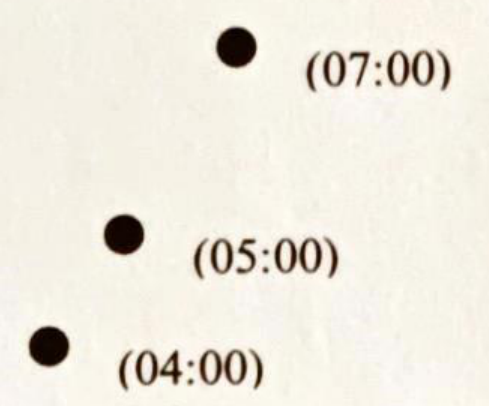
The first concept is the “equiloc”. It means events occurring in the same place at different moments of time. Any such events determine a straight line, as in the example below.
The other concept is the “equitemp”. It means events occurring at the same time in different places. Any such events determine a straight line, as in the example below.
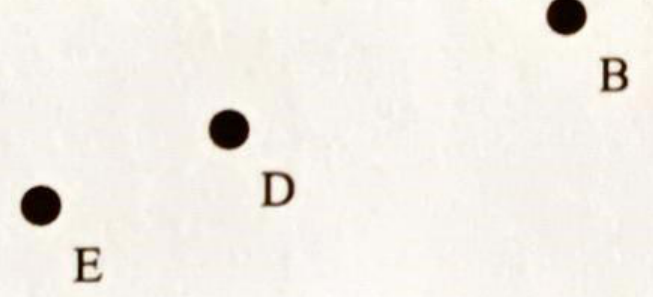
For a given observer, all equilocs have the same slope, and all equitemps have the same slope, smaller than that of the equilocs. Also, please assume that the distances between points on an equiloc and the distances between points on an equitemp are correlated by the speed of light (e.g., two events 1 year apart on an equiloc are at the same distance as two events 1 light-year apart on an equitemp).
In what follows you are required to use your triangles and compass in order to draw events determining different equilocs and equitemps. In the end you will hopefully get a grasp on how to deal with these concepts in different reference frames using the same drawing.
Please look at the next page. It is your answer sheet for the points g to j, so please do not draw on it until you are quite sure of the answers. Use instead the scratch sheets having the same drawing, and come back to this one when you feel experienced enough.
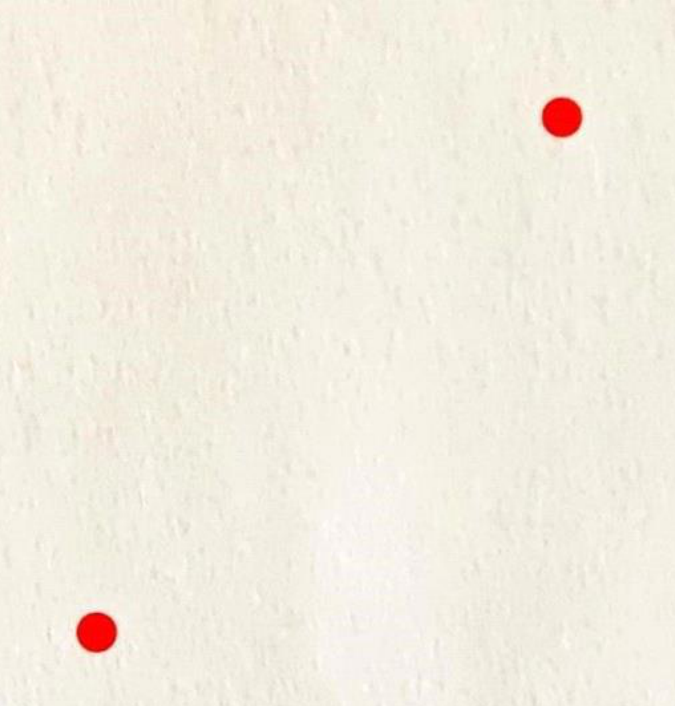
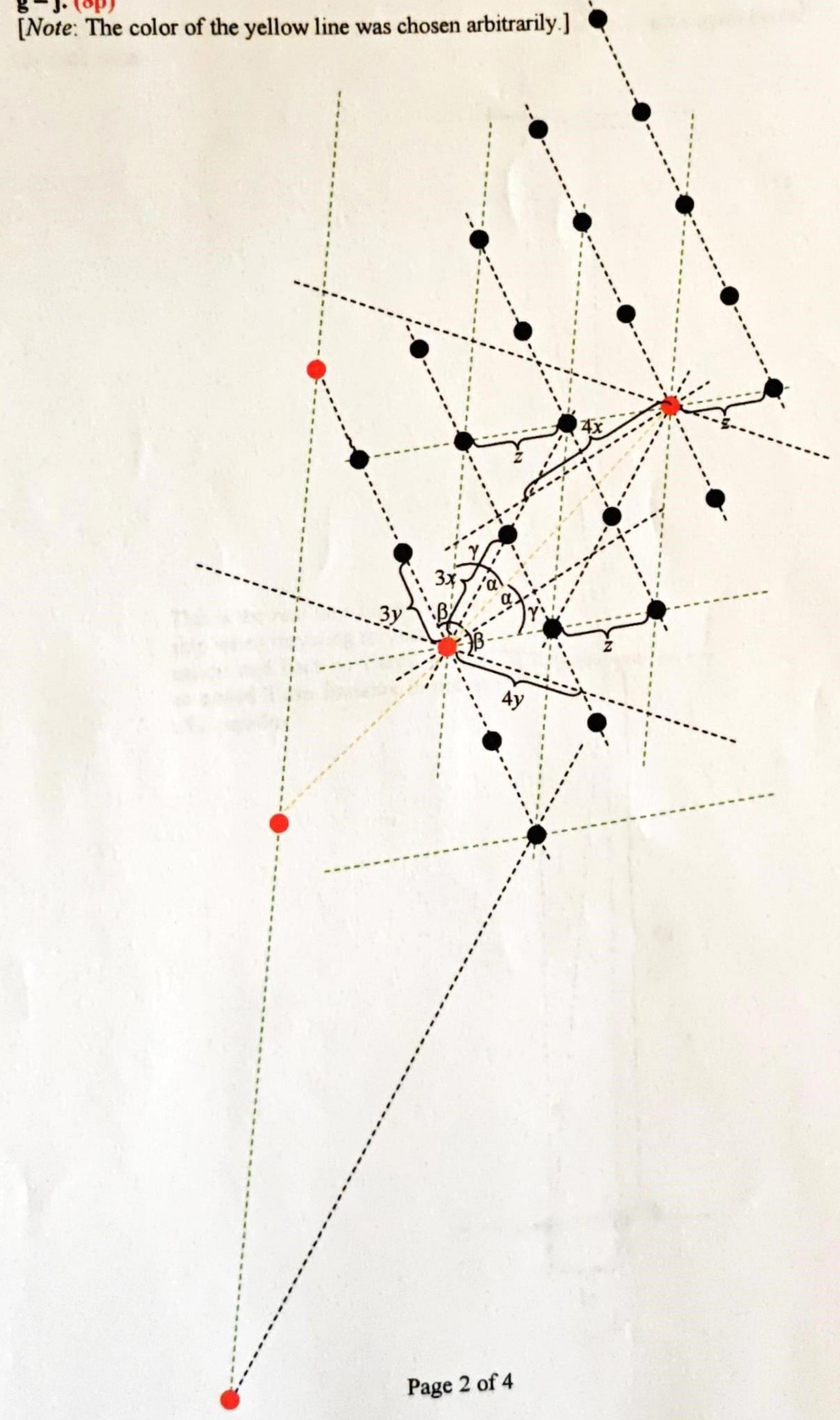
g. You are given in red the two undetermined events in the initial table, and you are required to fill in the sketch with all the 23 other points, using your pencil.
h. As mentioned above, the diagram is able to serve all observers. Please point down on it the directions of the equilocs and of the equitemps for the returning convoy, and observe that its crew experiences exactly the same phenomena as yours.
i. Now, still on the same diagram, draw in green the directions of the equilocs and of the equitemps with respect to the reference frame of the Earth, and show that from that point of view both convoys look absolutely alike.
j. Suggest on the diagram a possible origin of the undetermined phenomenon. Also pin down in red the departure of your convoy and the arrival of the other one.
At the bottom of this page you can see the Earth (E) and your Destination (D). The so called “Twin Paradox” asserts that if you make your trip to D and back to E, then when you will return the persons that you left back on Earth having the same age as you, will now be older than you and not the other way around.
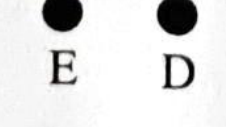
k. By drawing your equilocs and equitemps and the Earth’s equilocs and equitemps, show that this is not at all a paradox, this is the pure reality. (Again, practice first on your scratch sheets and return to this one for your definitive answer.) [2 т.]
Решение
g – j. (8p)
[Note: The color of the yellow line was chosen arbitrarily.]
k. (2p)
The equilocs and the equitemps in the reference frame of the Earth are perpendicular to each other.
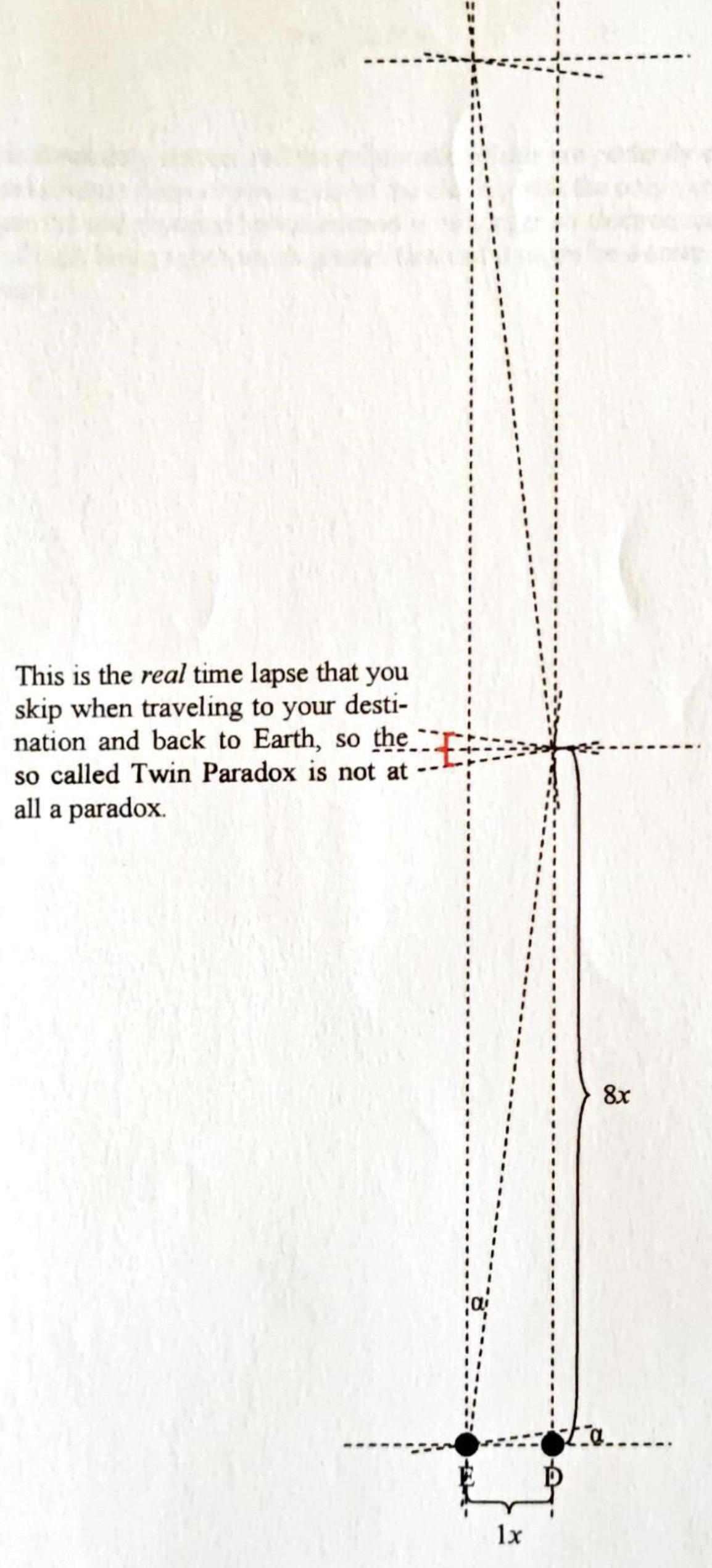
This is the real time lapse that you skip when traveling to your destination and back to Earth, so the so called Twin Paradox is not at all a paradox.
Оригинал в Архива: exp.pdf · официални решения: exp_sol.pdf