BPO 2024, Теория — Задача 3
BPO6 Problems 20-24 June 2024. Montenegro · 20 юни 2024 г. · 25 т.
Условие
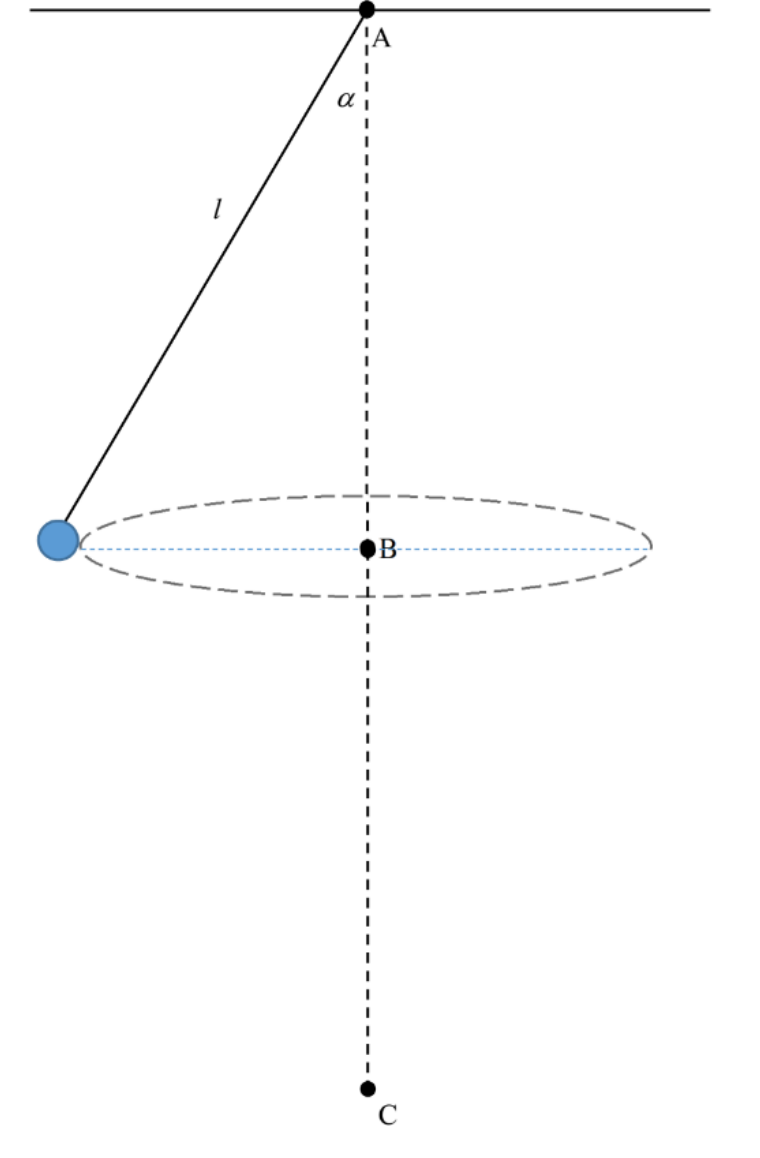
A point-like ball of mass is charged with an amount of positive charge . It is suspended by a non-conducting thread of length . The mass of the thread is negligible. The ball rotates around a vertical axis in a circular path, the thread making an angle with the vertical axis, as shown in figure.
An additional positive point-like charge can be placed on the vertical axis in three different positions. In the figure those positions are marked with the letters A, B and C. The distance AB is equal with the distance BC.
The friction forces in the system can be neglected. The gravitational acceleration in the system is .
A. When the additional charge is at point A:
a) (1 point) Draw the free body diagram for the rotating ball.
b) (2 points) Using the diagram write the equations of motion for the ball.
c) (2 points) Derive the expression and calculate the numerical value for the tension force in the thread.
d) (2 points) Assuming that the circular motion is uniform, derive the formula for the speed of the ball.
e) (2 points) Derive the expression and calculate the period of rotation of the ball. [9 т.]
B. Solve the tasks a, b, c, d and e when the charge is at point B. [8 т.]
C. Solve the tasks a, b, c, d and e when the charge is at point C. [8 т.]
Отговори
- A. Ft = mg/cosα + k qQ/l² = 11.3 mN; T = 2π·sqrt(l cosα/g) = 1.322 s
- B. Ft = mg/cosα = 11.32 mN; T = 1.3205 s
- C. Ft = mg/cosα − k qQ/l² = 11.328 mN; T = 1.3201 s
Решение
A ball of mass is charged with an amount of positive charge . It is suspended by a non – conducting thread of length . The mass of the thread is negligible. The thread makes an angle with the vertical axis, as shown in figure.
An additional positive charge can be placed on the vertical axis in three different positions. In the figure those positions are marked with letters A, B and C. The distance AB is equal to BC. The ball rotates around a vertical axis in a circular path. The friction forces in the system can be neglected. The gravitational acceleration in the system is . Constant .
A. When the additional charge is at point A:
1. Draw the free body diagram for the rotating ball. (1 point)
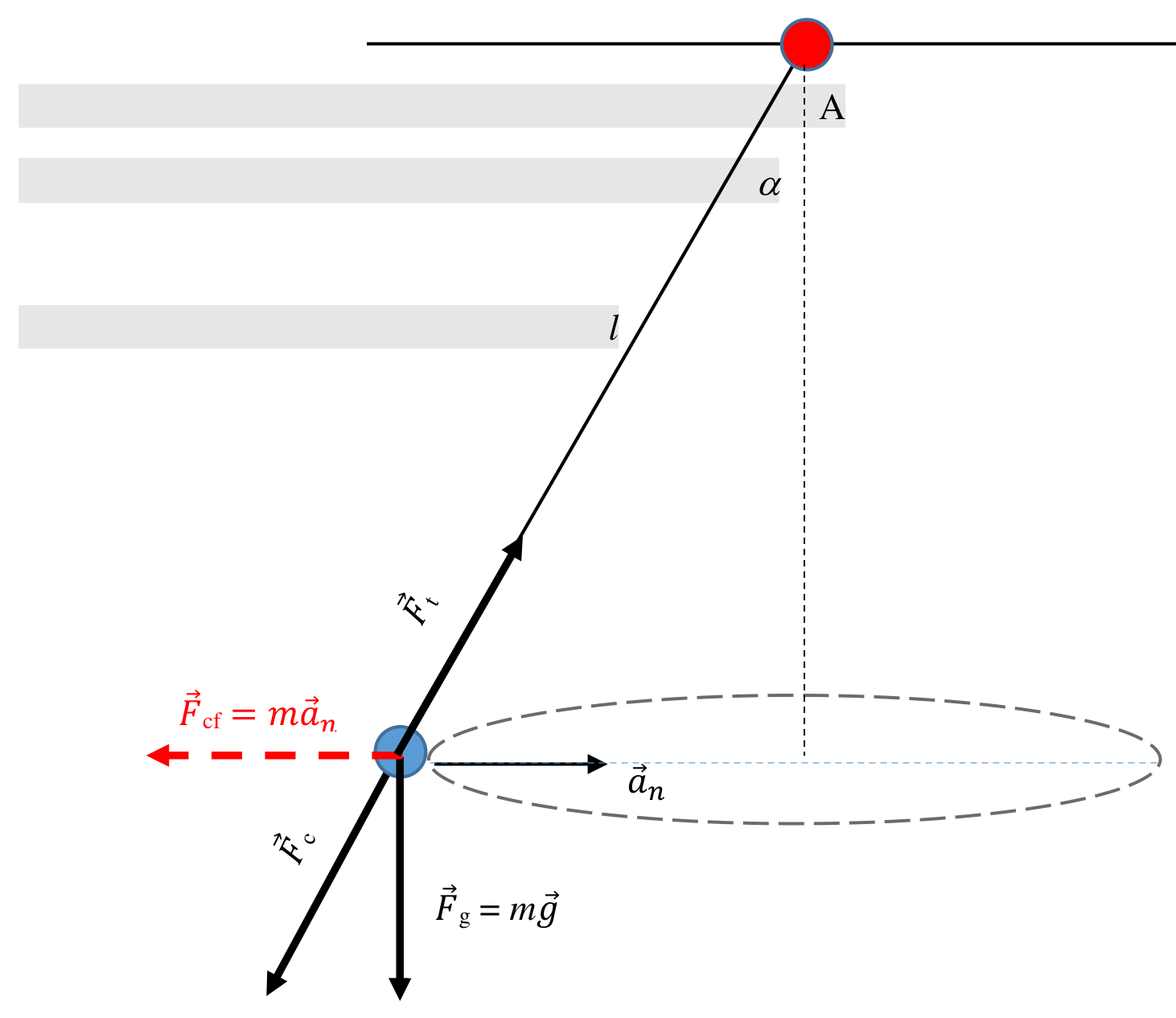
Note:
Since centrifugal force is a fictitious force acting on a ball, it can be omitted from the free body diagram. In that case the marking scheme is the same, i.e. the maximal number of points that can be given without centrifugal force in the diagram is the same.
2. Using the diagram write the equations of motion of the ball. (2 points)
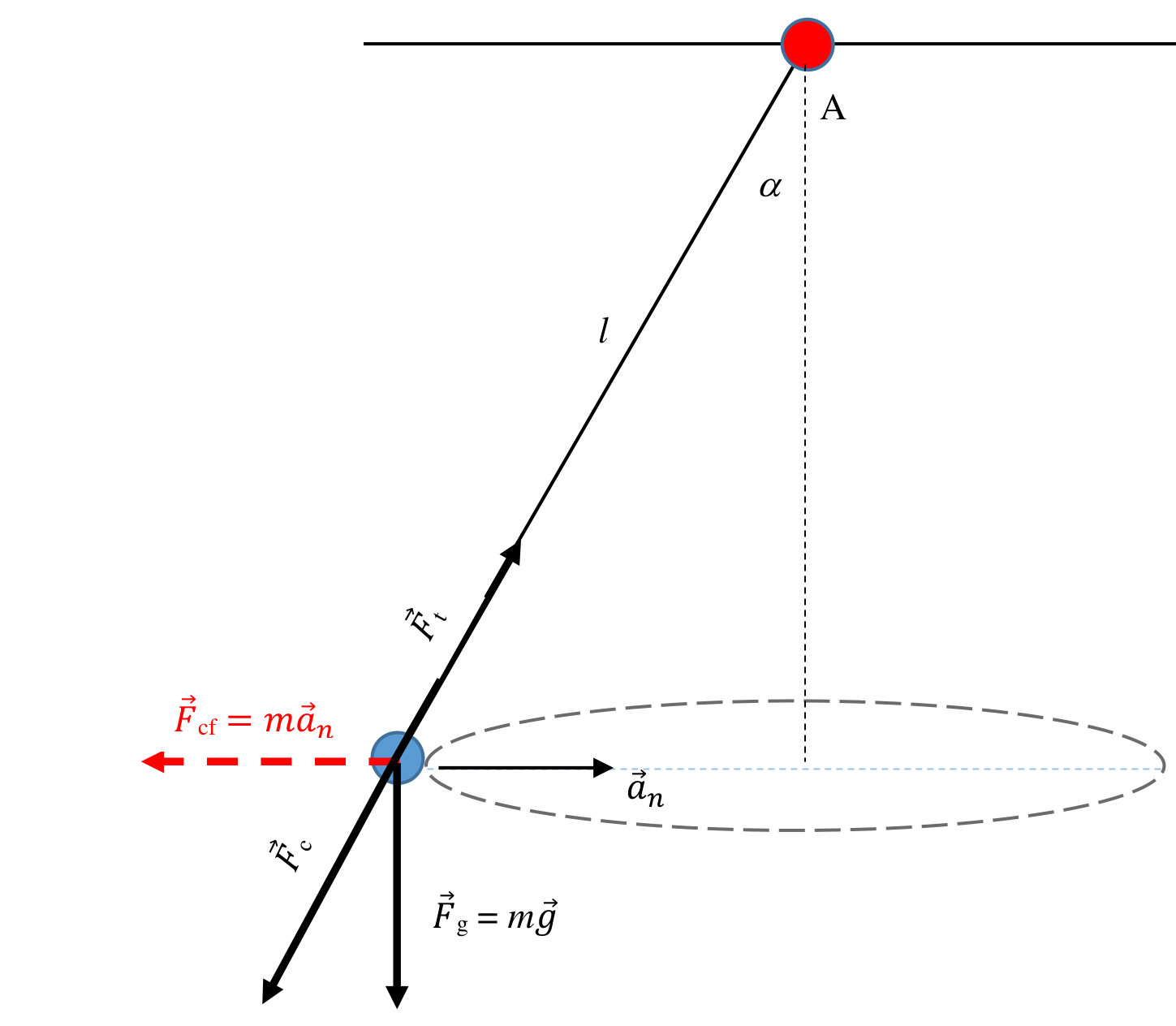
The charge is at rest in its own reference frame. Therefore (0.5 points):
In this case the centrifugal force must be included. By decomposing the vectors along horizontal and perpendicular axes (0.5 points), we get the equations of motion of the ball: (1 point)
3. Determine the tension force in the thread. (2 points)
From the equation above, it follows that
4. Assuming that the circular motion is uniform, derive the formula for the linear speed of the ball. (2 points)
Using the equation (1 point)
it can be obtained (1 point)
5. Determine the period of rotation of the ball. (2 points)
The distance travelled by the ball during one period is equal to the circumference of the circle . (1 point)
Therefore, the period of rotation is (1 point)
B. Solve the problems 1 – 5 when the charge is at point B.
1. Draw the free body diagram for the rotating ball. (1 point)
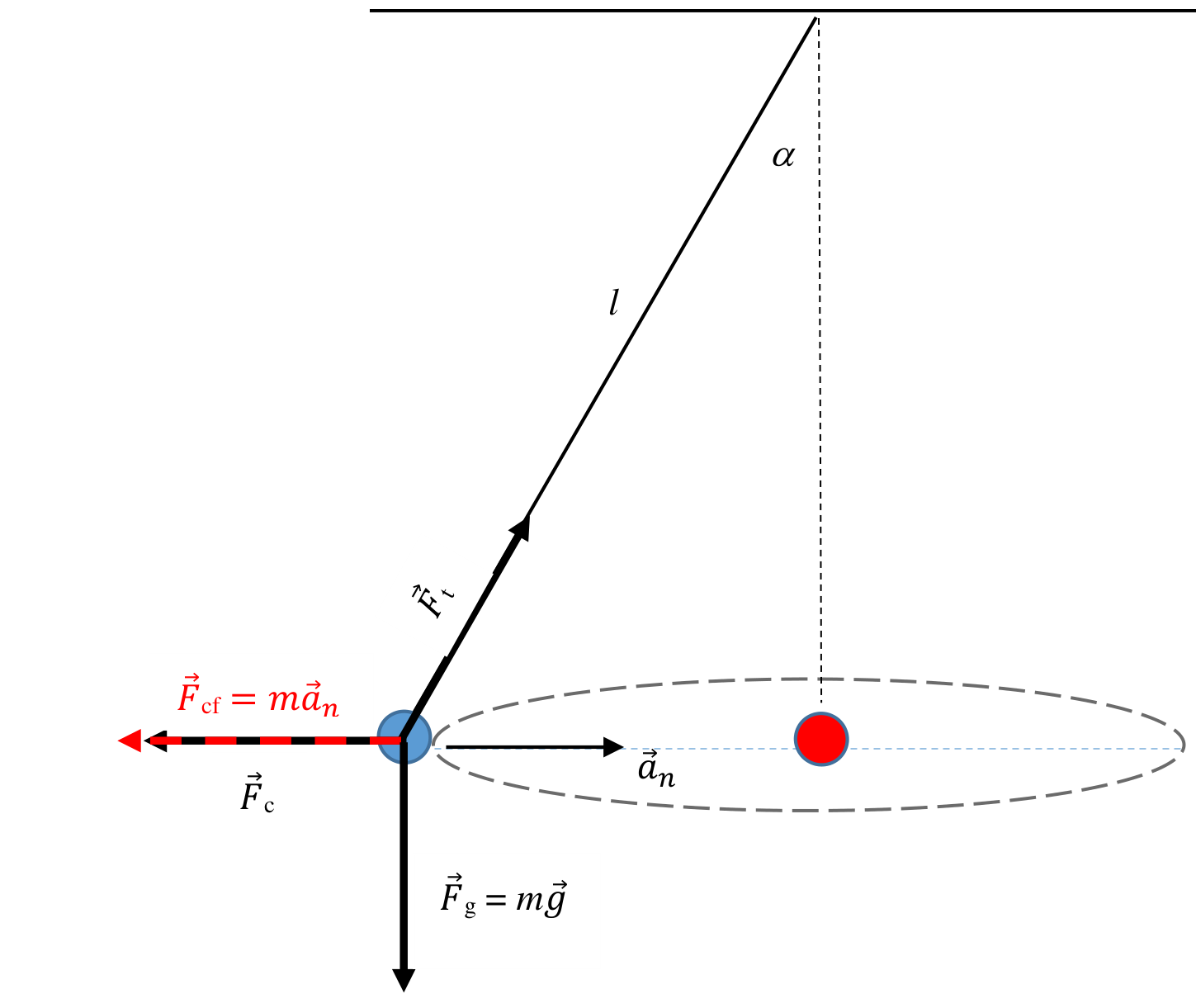
Note:
Since centrifugal force is a fictitious force acting on a ball, it can be omitted from the free body diagram. In that case the marking scheme is the same, i.e. the maximal number of points that can be given without centrifugal force in the diagram is the same.
2. Using the diagram write the equations of motion of the ball. (2 points)
The charge is at rest in its own reference frame. Therefore (0.5 points):
In this case the centrifugal force must be included. By decomposing the vectors along horizontal and perpendicular axes (0.5 points), we get the equations of motion of the ball: (1 point)
3. Determine the tension force in the thread. (1 point)
From the equation above, it follows that
4. Assuming that the circular motion is uniform, derive the formula for the linear speed of the ball. (2 points)
Using the equation (1 point)
it can be obtained (1 point)
5. Determine the period of rotation of the ball. (2 points)
The distance travelled by the ball during one period is equal to the circumference of the circle . (1 point)
Therefore, the period of rotation is (1 point)
C. Solve the problems 1 - 5 when the charge is at point C.
1. Draw the free body diagram for the rotating ball. (1 point)
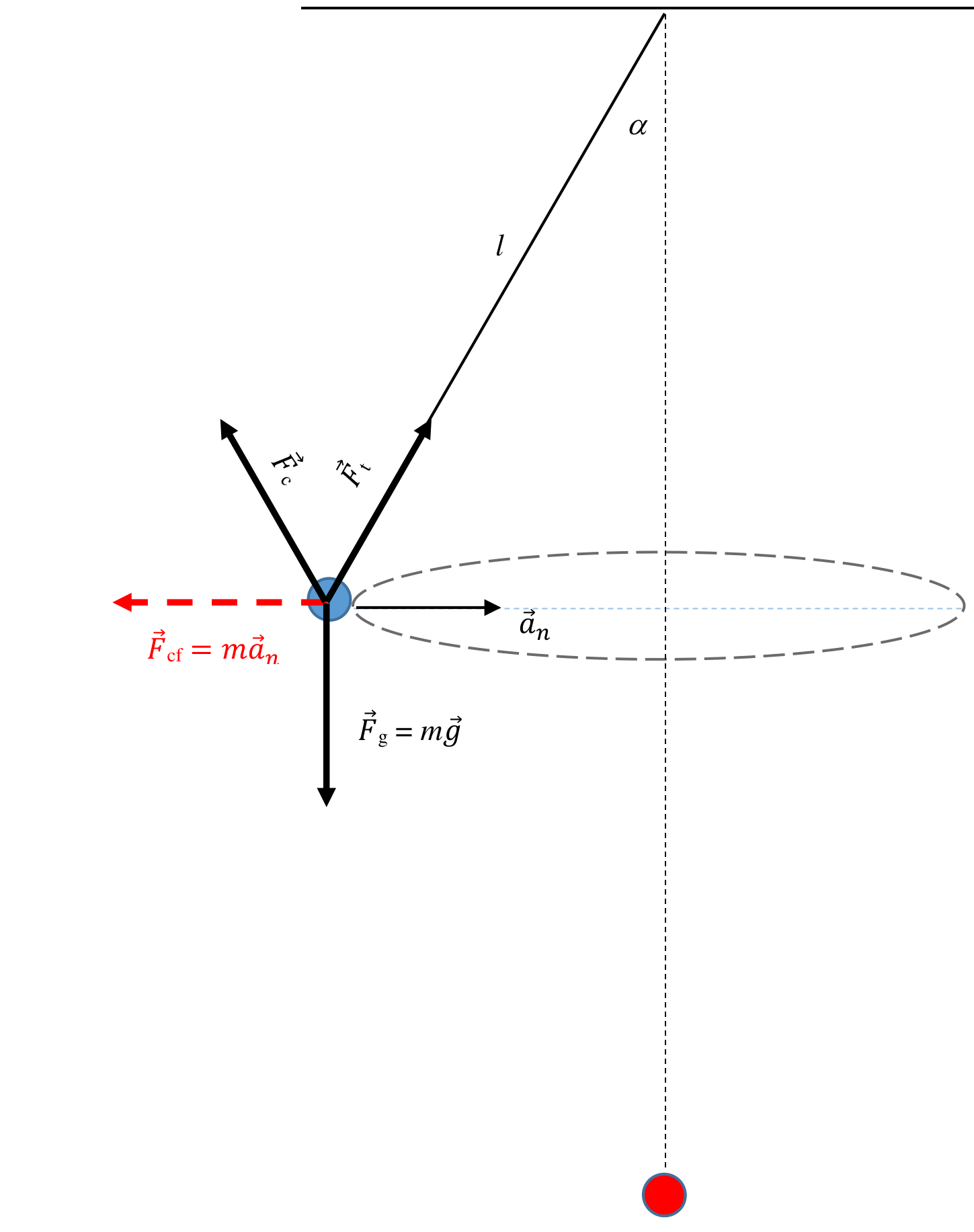
Note:
Since centrifugal force is a fictitious force acting on a ball, it can be omitted from the free body diagram. In that case the marking scheme is the same, i.e. the maximal number of points that can be given without centrifugal force in the diagram is the same.
2. Using the diagram write the equations of motion of the ball. (2 points)
The charge is at rest in its own reference frame. Therefore (0.5 points):
In this case the centrifugal force must be included. By decomposing the vectors along horizontal and perpendicular axes (0.5 points), we get the equations of motion of the ball: (1 point)
3. Determine the tension force in the thread. (1 point)
From the equation above, it follows that
4. Assuming that the circular motion is uniform, derive the formula for the linear speed of the ball. (2 points)
Using the equation (1 point)
it can be obtained (1 point)
5. Determine the period of rotation of the ball. (2 points)
The distance travelled by the ball during one period is equal to the circumference of the circle . (1 point)
Therefore, the period of rotation is (1 point)
Оригинал в Архива: problems.pdf · официални решения: solutions.pdf