IAO 2011, Практически тур, Група α — Задача 6. Saturn 2010
XVI International Astronomy Olympiad. Round Prac. Group α. Practical round. Problems to solve · 22 септември 2011 г.
Внимание: Бележка към темата
The p7 grading allocations printed in the shared key sum to 80%; the remaining 20% is not specified. The key also prints an unparenthesized flux-ratio expression; the source expression and stated radius ratio are both retained. The December 23 question photograph says LCM 237°, while the p6 solution table uses 287°. Both values are preserved with an explicit note.
Условие
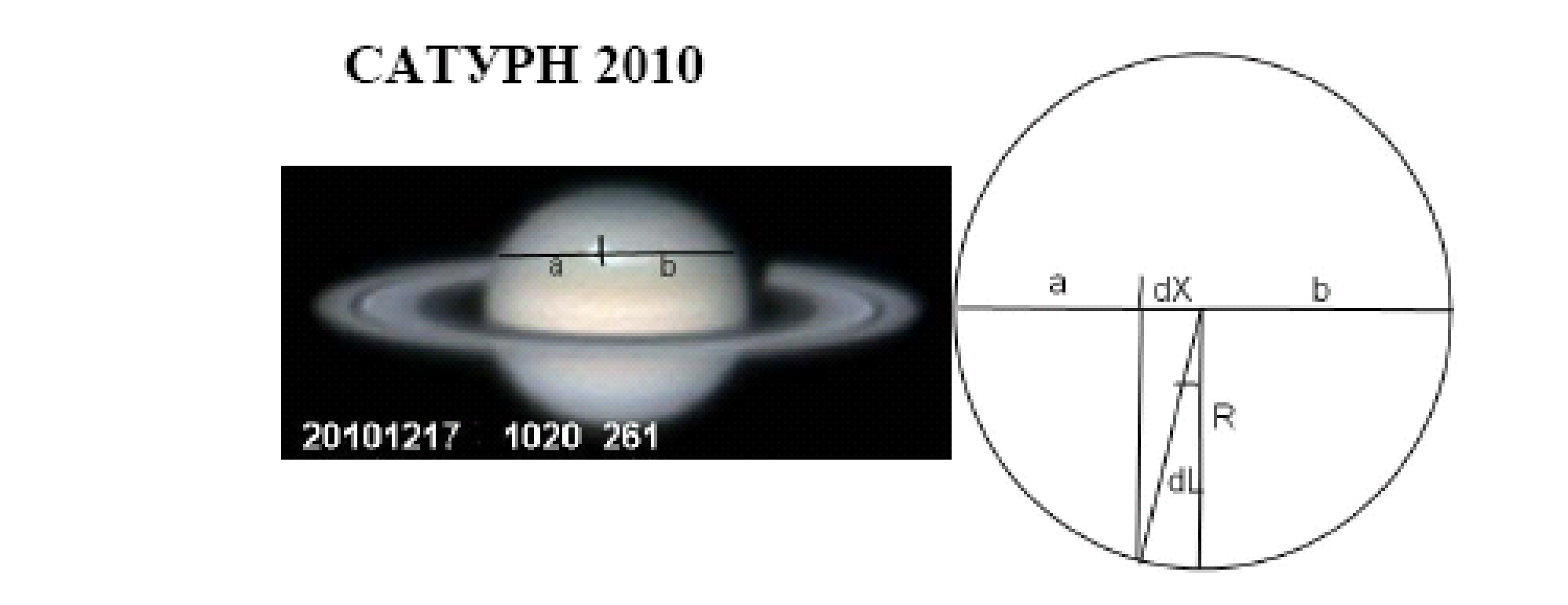
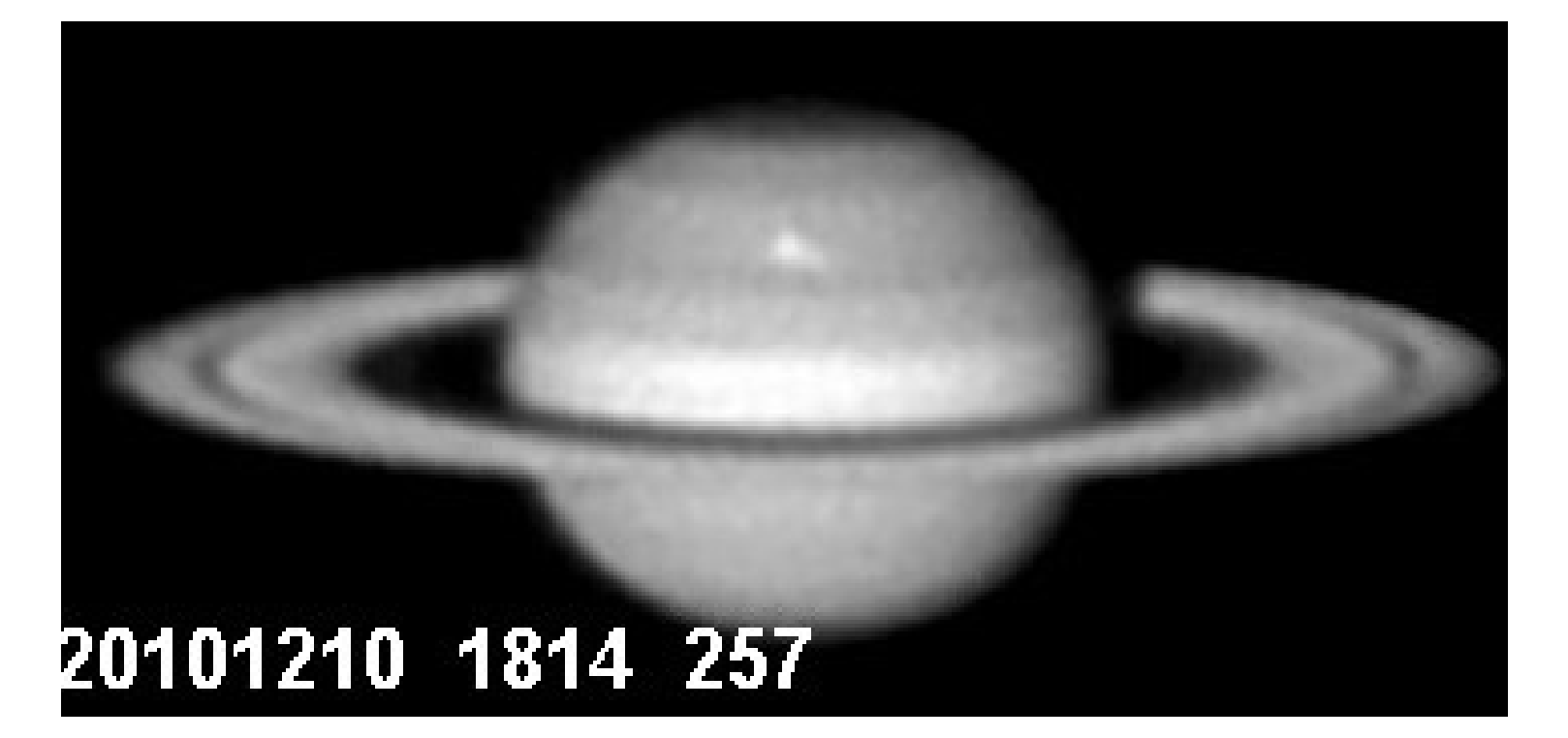
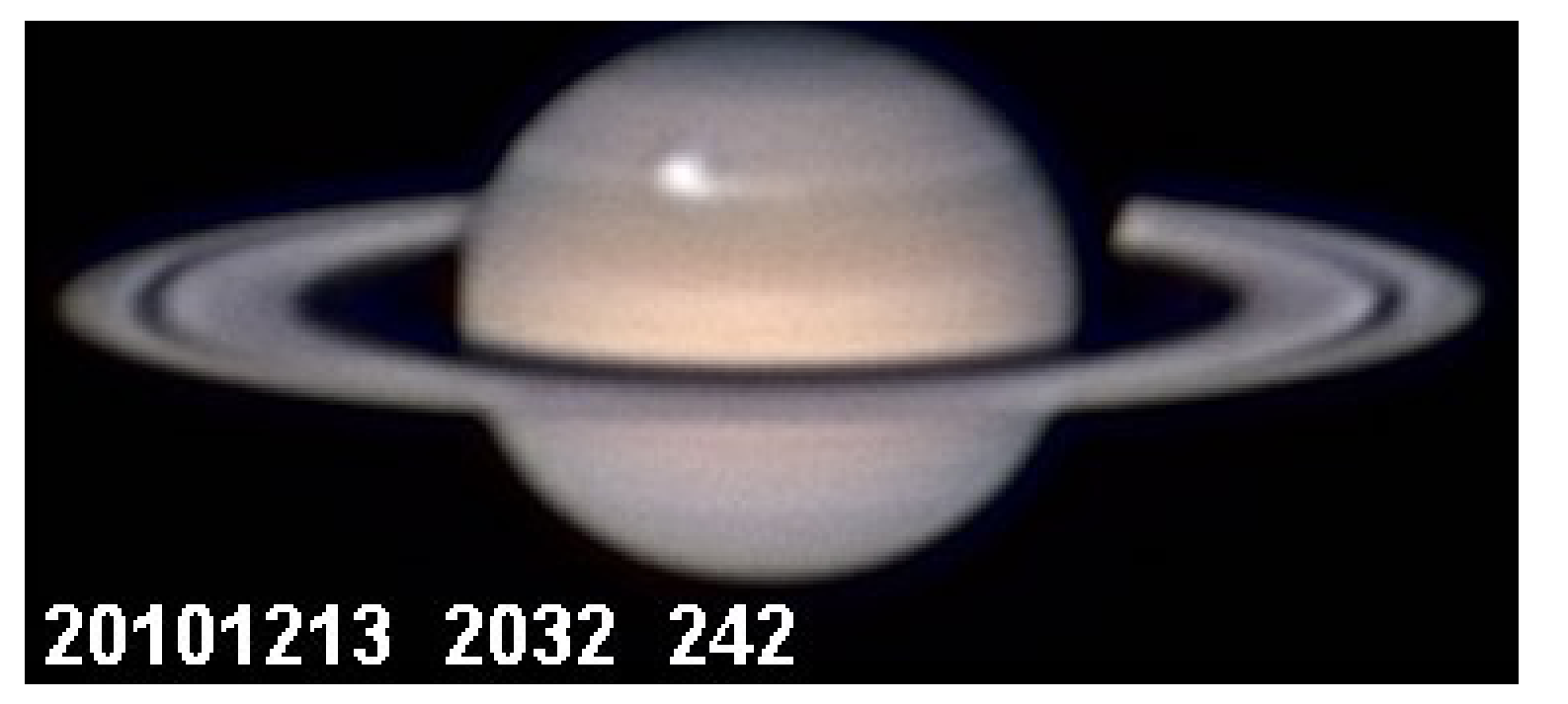
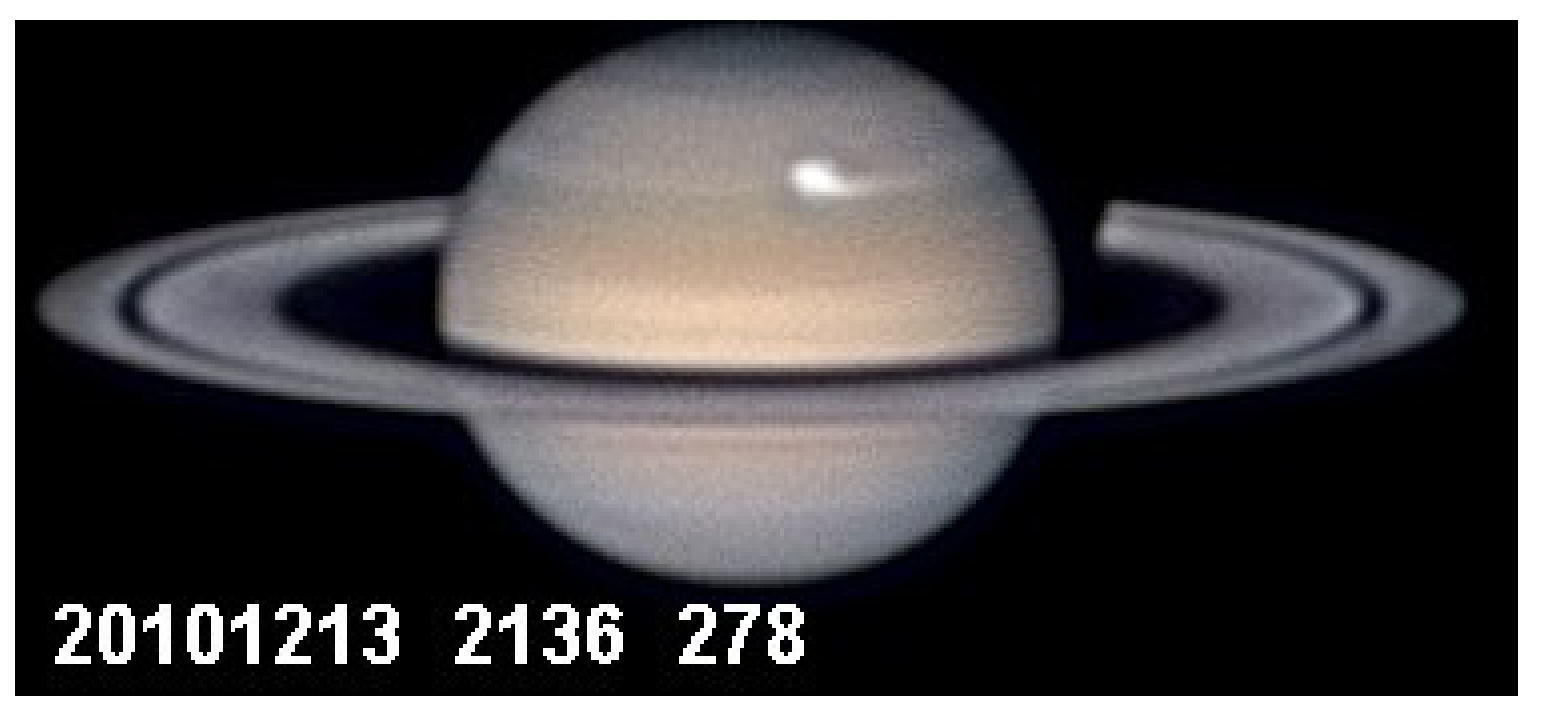
You are provided with a series of Saturn images. Find the rotational period for Saturn, and the velocity and the direction of the movement of unique formation in the atmosphere of Saturn – Great Northern Disturbance (GND), which appeared on December 8, 2010.
6.1. Use measurements of two images on Saturn on 13 December 2010 to determine the rotational period T for Saturn from the angular change of the GND position during the time interval between two images.
6.2. Plot from all measurements of the GND core a graph showing how the core longitude L depends on time t. The time should be expressed in hours and parts of hours. Set the time of the first image as zero time (). The inclination of the graph must show the direction and the angular velocity of GND.
6.3. Determine the value of radius R=(a+b)/2 at the GND latitude in kilometers and determine the linear velocity of the GMD core latitude in kilometers using the graph that shows L vs t.
You may neglect the tilt of the equator to the line of sight (the direction Earth-Saturn). In the images north is up. Saturn’s equatorial radius km. The planet is rotating counterclockwise if you look from the north pole, or from left to right in the images. The longitude of the central meridian of the planet increases following the planet’s rotation. It means that L increases from right to left in the images.
Data on the images: date (2010, December, day), time UT (h, m), and LCM, the longitude of the central meridian (in degrees) in system of coordinates of planet.
On the above drawing you can see the scheme (a view from the North), R is the radius on the GND latitude. Evidently .
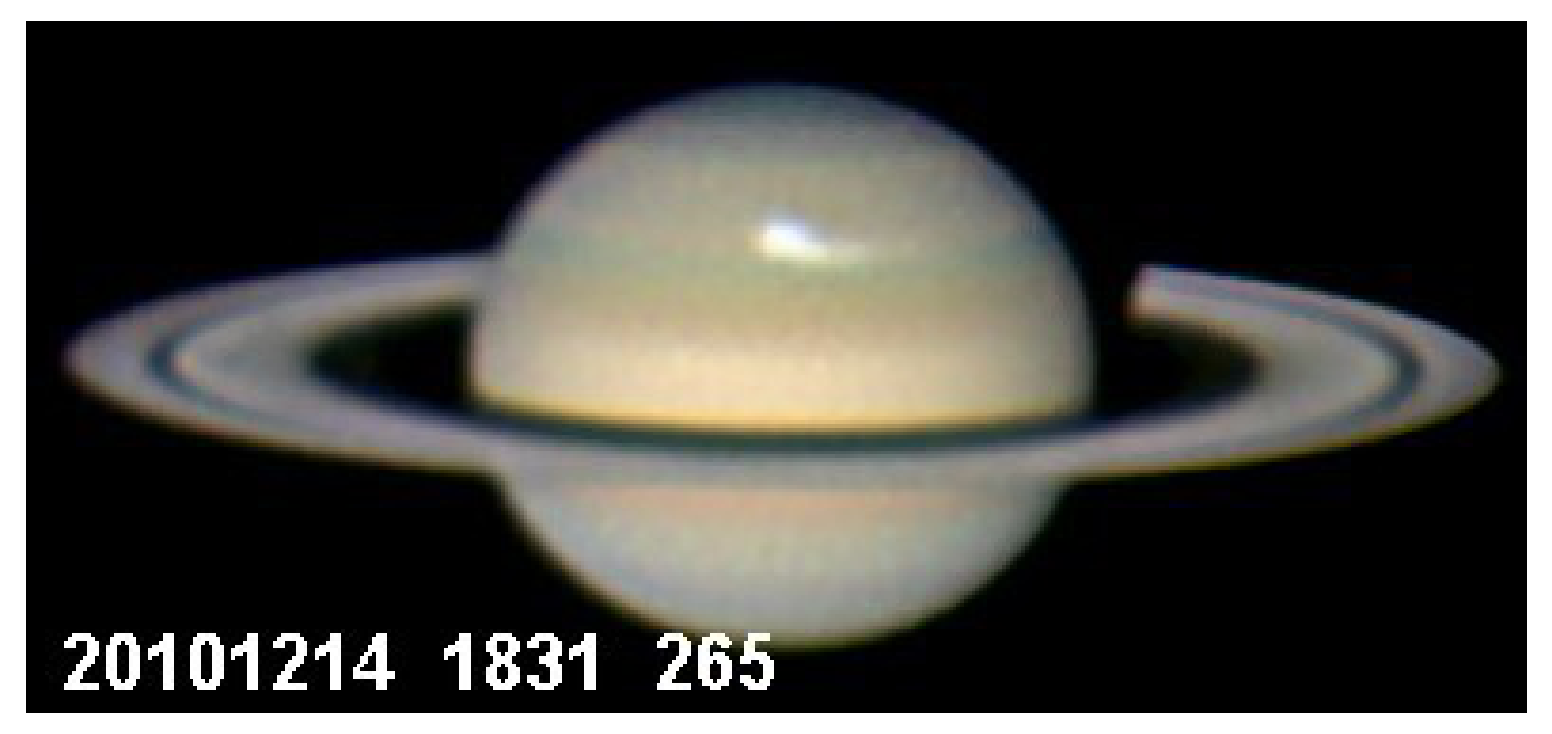
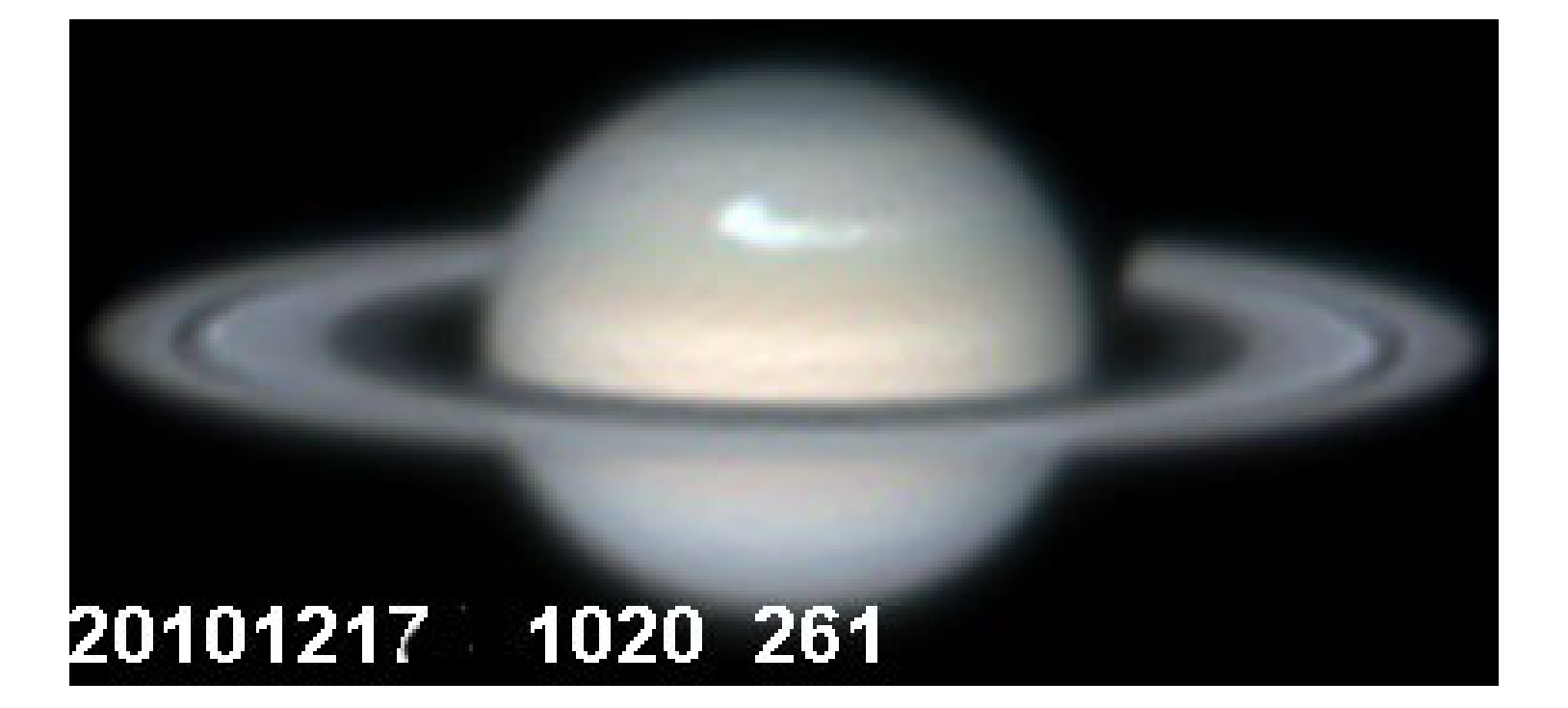
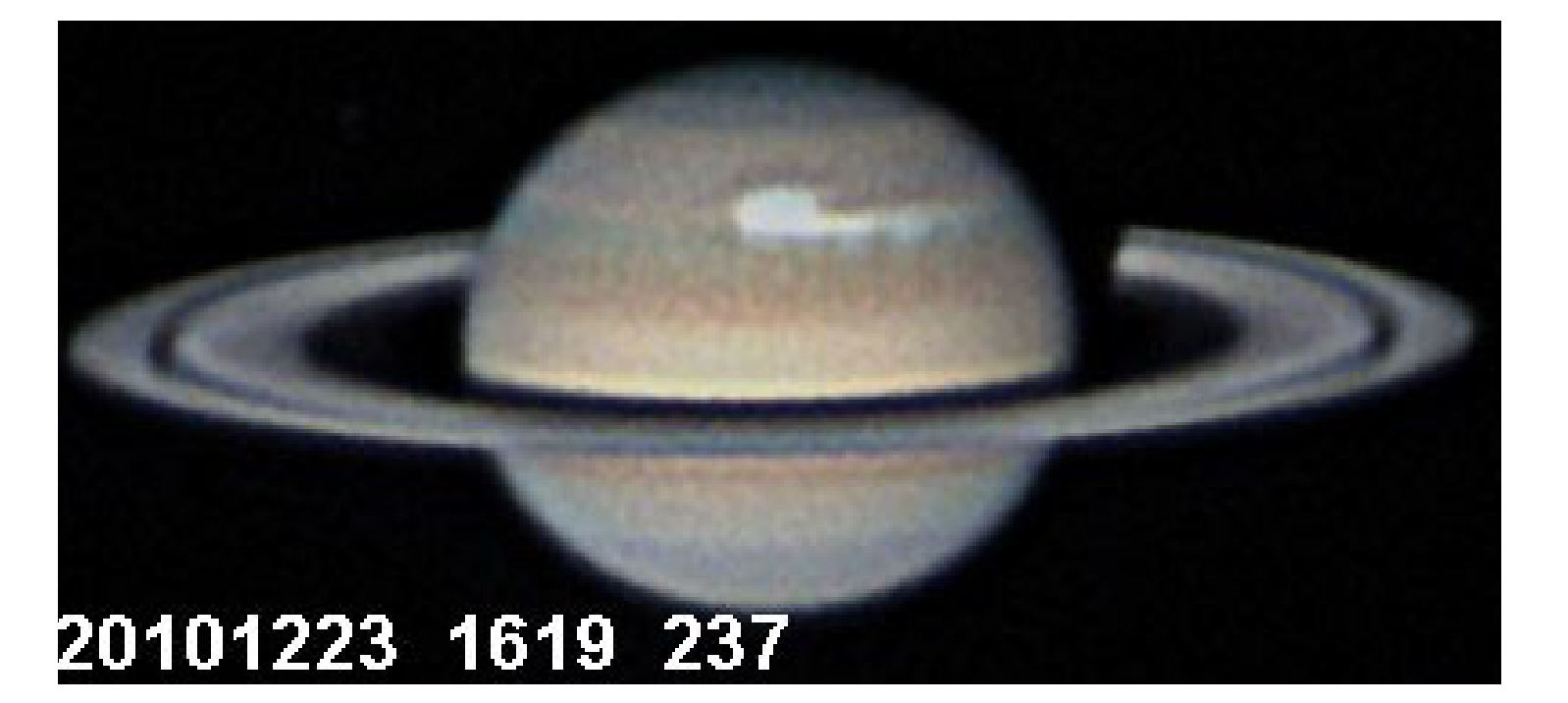
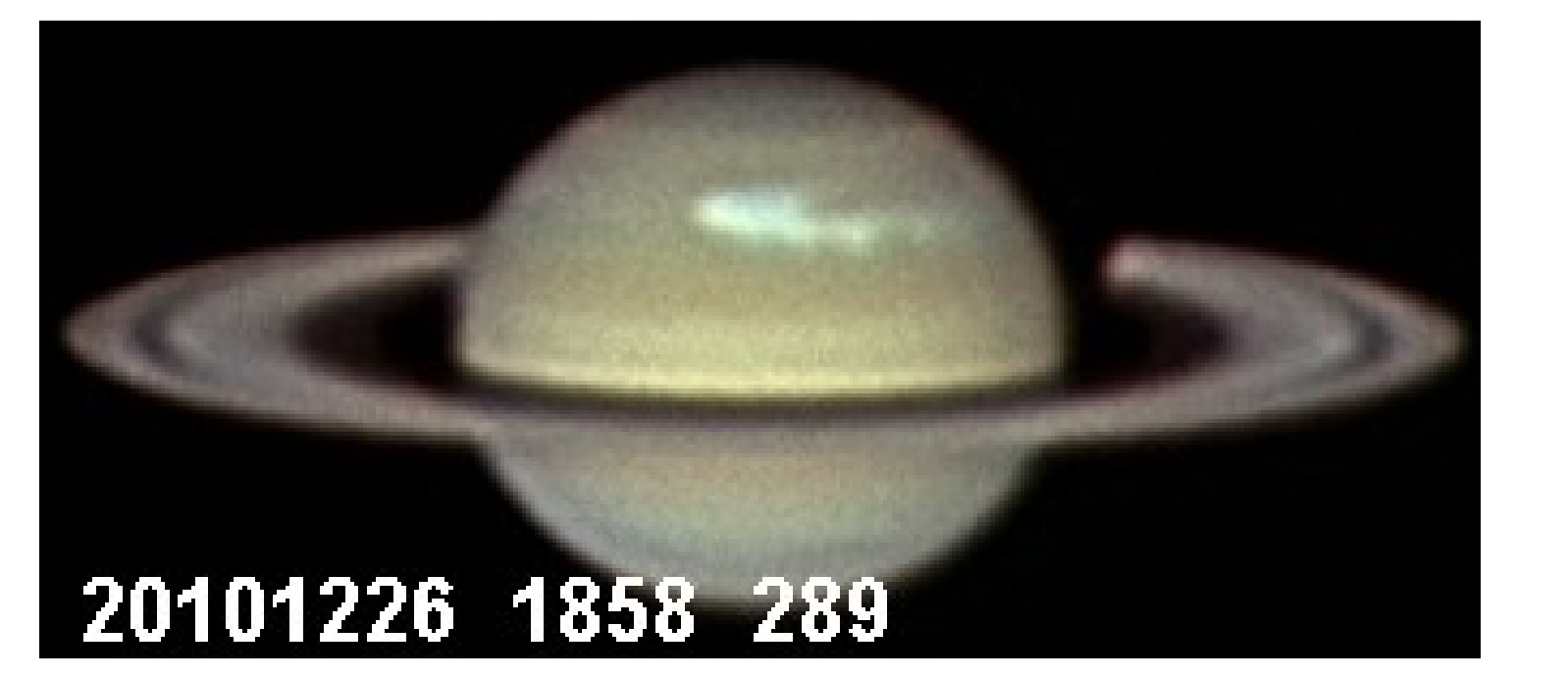
Отговори
- 6.1. 12.6 hours
- 6.2. GND longitude increases: drift opposite to the planet’s rotation (see the supplied graph).
- 6.3. Mean radius 53760 km; drift 70.7 km/h, or 75.6 km/h from the fitted line, opposite to the planet’s rotation.
Решение
Задание 1 и пояснения
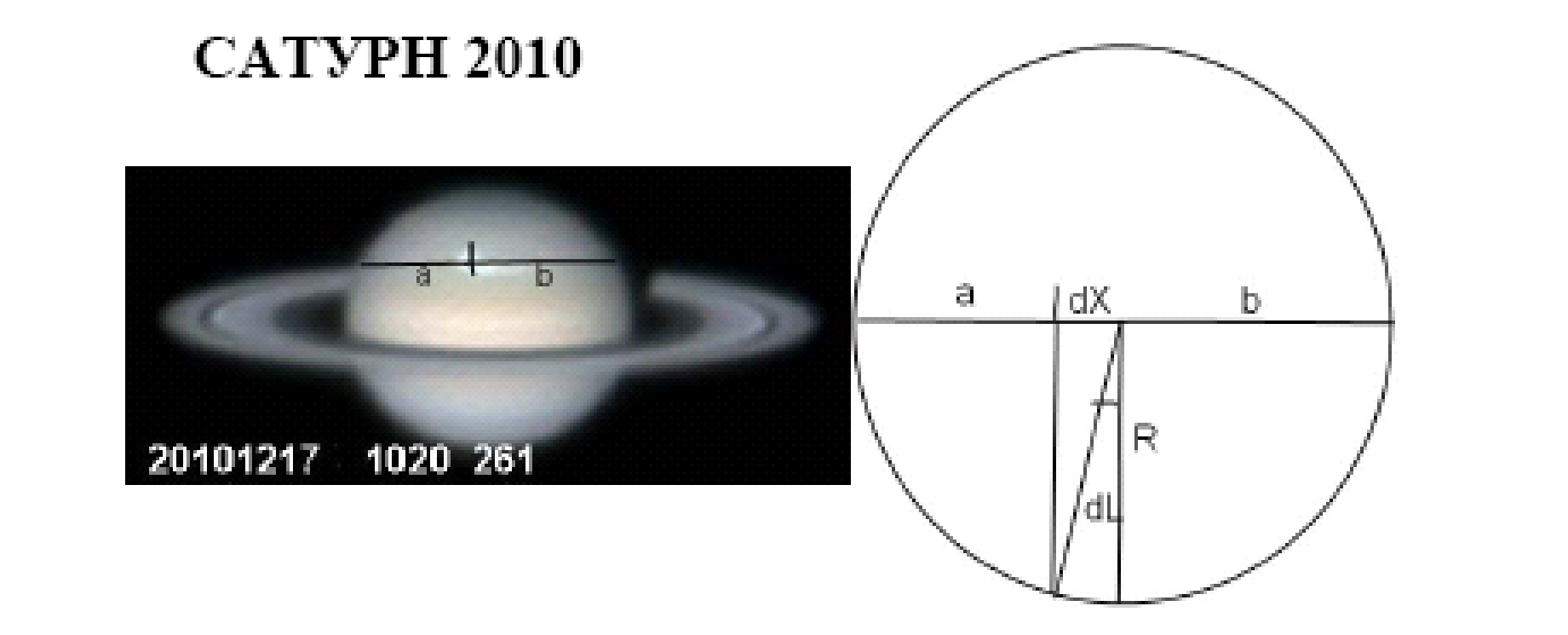
Задание 1. По серии изображений определить период вращения Сатурна, а также скорость и направление дрейфа уникального образования в атмосфере Сатурна – Большого Северного Возмущения (БСВ), возникшего 8 декабря 2010 года.
- По двум изображениям Сатурна за 13 декабря определить период вращения планеты T по угловому перемещению БСВ за интервал времени между снимками.
- По всем результатам измерений построить график зависимости долготы L ядра БСВ от времени t. Время можно взять в часах и долях часа. За 0 часов 0 минут взять дату первого снимка. Наклон графика покажет, в каком направлении и с какой угловой скоростью смещается БСВ.
- Определить величину радиуса R=(a +b)/2 на широте БСВ в километрах, определить линейную скорость течения на широте ядра БСВ, воспользовавшись графиком зависимости L от t.
ПОЯСНЕНИЯ: Наклоном экватора к лучу зрения (направление Земля-Сатурн) можно пренебречь. На снимках север вверху. Экваториальный радиус Сатурна км. Планета вращается против часовой стрелки, если смотреть с северного полюса или слева направо на рисунке. При вращении планеты долгота центрального меридиана увеличивается, это значит, что на рисунках долгота L возрастает справа налево.
Подписи содержат: Дата (2010 декабрь число) Время UT (час мин). Долгота центрального меридиана дана в системе вращения планеты LCM (градусы).
На рисунке справа вверху дана геометрия: сечение вид сверху (с севера), где радиус R соответствует радиусу на широте БСВ. Очевидно, что .
Исходные данные и вычисления
Исходные данные и измерения.
| N снимка | UT(день час:мин) | L(градус) | R (мм) | R(мм) | dX(мм) |
|---|---|---|---|---|---|
| 1 | 18:14 | 257 | 30 | 26.5 | +1.5 |
| 2 | 20:32 | 242 | 31.5 | 28.5 | +8.5 |
| 3 | 21:36 | 278 | 32 | 28.5 | -6.5 |
| 4 | 18:31 | 265 | 28 | 25 | 0 |
| 5 | 10:20 | 261 | 27.5 | 24.5 | +3 |
| 6 | 16:19 | 287 | 27.5 | 24.5 | -1 |
| 7 | 18:58 | 289 | 27.5 | 24.5 | 0 |
Вычисления.
Из геометрии следует, что угловое смещение dL = arcsin (dX/R).
| N снимка | UT(день час:мин) | t(час) | dL(град) | L(град) | R/R | R=(R/R) 60266 км |
|---|---|---|---|---|---|---|
| 1 | 18:14 | 0 | +3.24 | 260.24 | 0.883 | 53235 |
| 2 | 20:32 | 74.30 | +17.35 | 259.35 | 0.905 | 54526 |
| 3 | 21:36 | 75.37 | -13.18 | 264.82 | 0.891 | 53674 |
| 4 | 18:31 | 96.28 | 0 | 265 | 0.893 | 53809 |
| 5 | 10:20 | 160.10 | +7.03 | 268.03 | 0.891 | 53692 |
| 6 | 16:19 | 310.08 | -2.34 | 284.66 | 0.891 | 53692 |
| 7 | 18:58 | 384.73 | 0 | 289 | 0.891 | 53692 |
1. Период вращения планеты по данным за 13 декабря
Из 2-й таблицы видно, что БСВ вращается не синхронно с планетой (долготы во 2-й и 3-й строке не совпали), поэтому определение периода вращения планеты по этой детали будет приблизительным.
.
Период вращения часа.
В этом промежутке времени БСВ двигалась медленнее планеты.
2. График зависимости долготы БСВ
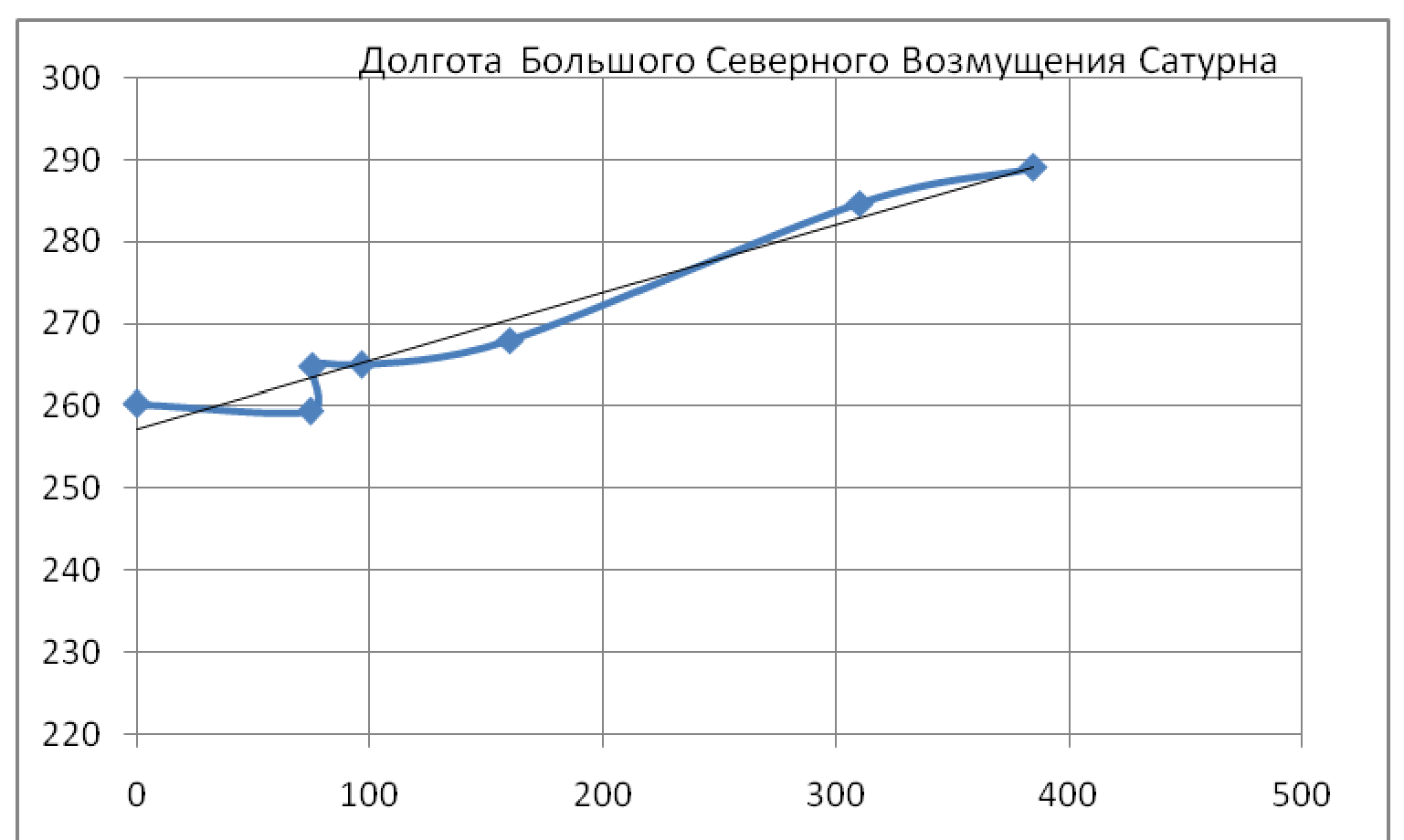
График зависимости долготы БСВ (в градусах) от времени в часах.
3. Радиус и линейная скорость
Радиус ( км) на широте БСВ в километрах, полученный по всем измерениям, приведен в последнем столбце 2-й таблицы. Средний радиус по всем семи измерениям: R = 53760км. Максимальные отклонения от среднего -525км и +766км.
График показывает, что пятно смещается в сторону увеличения долгот, то есть в сторону, противоположную вращению планеты. По графику видно, что смещение пятна по долготам можно представить линейной зависимостью. Средняя скорость течения на широте ядра:
км/час в сторону, противоположную вращению планеты.
Можно дать результат чуть точнее. На графике прямая линия, построенная по измерениям в момент времени t=0 соответствует долготе L около . Правый конец прямой пересекает точку измерения. В результате средняя скорость течения будет немного больше:
км/час.
Source note
The December 23 photograph is labelled LCM 237°, while the supplied solution measurement table prints 287° and calculates with that value. Both source values are preserved.
Оригинал в Архива: alphapract.pdf · официални решения: alpha6sol.doc · допълнителни данни: alphabeta7sol.doc