iGeo 2013, Писмен тест — Задача 28. Section F: World Development — Question 2
10th International Geography Olympiad — Kyoto, Japan — 30 July – 5 August 2013 — Written Response Test — Question and Answer Booklet · 30 юли 2013 г. · 5 т.
Корица
Do NOT open the Booklet before instructed to do so by a supervisor.
Name: … Team: …
Student number: …
Instructions for the Students
- Fill in your name, team and iGeo student number on the front page of this Question and Answer Booklet.
- Fill in your iGeo student number in the boxes on top of the pages in this Booklet.
- This test consists of 6 Sections.
- The maximum total mark is 90. The mark for each question is given at the beginning of the question.
There are a maximum of 15 marks for each Section. - Answer all questions in the spaces provided in this Booklet.
- Check the backs of pages as questions are printed on both sides of a page.
- Give only the required number of answers (reasons, examples, etc.). For instance, if the question asks for 2 reasons and you give more than 2, only the first 2 reasons will be marked.
- You must use the Diercke International Atlas during the test where referred to in the questions and at your convenience.
- The Resource Booklet contains Sources referred to in the questions.
- You may use a calculator during the test.
- Time: 180 minutes for students not educated in English, 150 minutes for students educated in English.
- Students not educated in English are allowed to use bilingual dictionaries during the test.
Good luck!
Instructions for the Markers
- Check if the iGeo Student Numbers are on each sheet before dividing up the paper.
- This test consists of 6 Sections.
- One whole Section per marker and double-checker.
- Check whether the answer continues outside designated area. No credits will be given to answers in the Resource Booklet.
- The maximum total mark is 90. The mark for each question is given at the beginning of the question.
There are a maximum of 15 marks for each Section. - Get the hang of the full range of answers by reading through a few papers with your co-marker before you start your marking.
- These answers are not exhaustive. Credit any relevant answer.
- Mark only the required number of answers (reasons, examples, etc.). For instance, if the question asks for 2 reasons and there is more than 2, only the first 2 reasons will be marked.
- Put your mark next to the question number in the column on the left – it eases the work of the person who has to put the numbers into MS Excel. Total the marks by the title of the Section.
- Usually whole marks with only these exceptions: A1, B1, C3, E6.
- The Moderators (Sue and Anu) will sample the marking of all teams.
Условие
Complete the table below to make a ranking of development based on the 6 different indices for the 16 selected countries. Each of the indices has been ranked using the 5 divisions of the key shown below the maps. The rankings for Life expectancy, Infant mortality, Food supply, Availability of drinking water and Gender-related illiteracy have been completed for you.
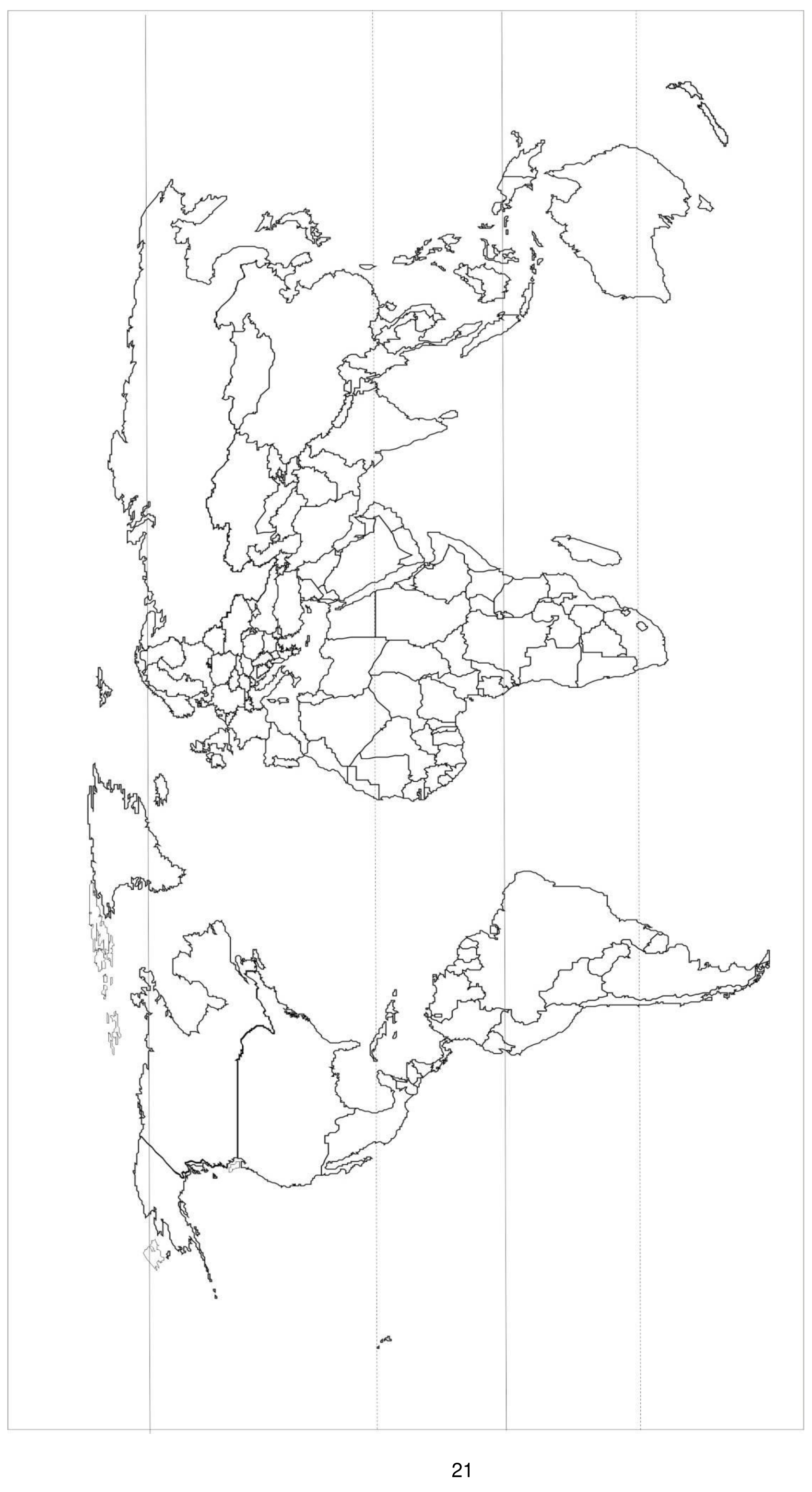
a) Complete the ranking for Literacy using the key to the Atlas page 193 map 4 “Literacy”.
b) Sum the ranks for each country.
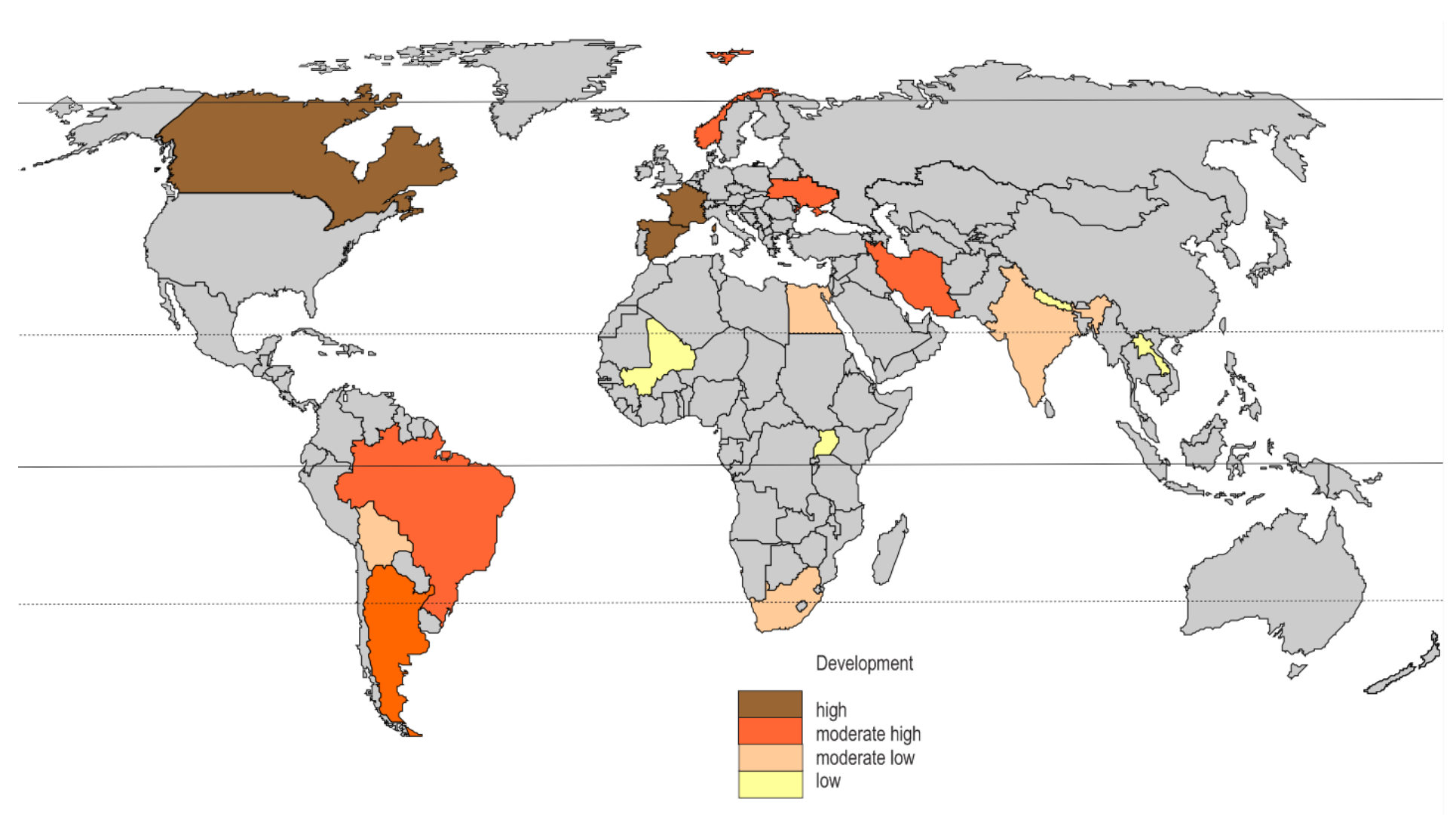
c) Using the sum of rankings column create 4 categories of development and use this to complete the map to show the variation in stages of development of the 16 countries.
| Life expectancy | Infant mortality | Food supply | Availability of drinking water | Literacy | Gender-related illiteracy | Sum of rankings | Categories of development (map key) | |
|---|---|---|---|---|---|---|---|---|
| Argentina | 4 | 3 | 5 | 5 | 2 | |||
| Bolivia | 3 | 2 | 3 | 3 | 1 | |||
| Brazil | 4 | 3 | 4 | 3 | 3 | |||
| Canada | 5 | 4 | 5 | 5 | 3 | |||
| Egypt | 4 | 3 | 5 | 4 | 1 | |||
| France | 5 | 4 | 5 | 5 | 3 | |||
| India | 3 | 2 | 3 | 3 | 3 | |||
| Iran | 4 | 3 | 5 | 4 | 1 | |||
| Laos | 3 | 2 | 3 | 2 | 1 | |||
| Mali | 2 | 1 | 2 | 1 | 1 | |||
| Nepal | 3 | 2 | 3 | 3 | 1 | |||
| Norway | 4 | 4 | 5 | 5 | 2 | |||
| Uganda | 1 | 2 | 2 | 4 | 1 | |||
| Ukraine | 3 | 3 | 5 | 5 | 3 | |||
| South Africa | 2 | 2 | 5 | 3 | 1 | |||
| Spain | 5 | 4 | 5 | 5 | 3 |
Решение
Answer: 5 marks:
1 mark for getting Literacy ranking correct,
1 mark for sum of rankings,
1 mark for the categories of development (making the 4 categories systematically),
1 mark for correct shading of countries,
1 mark for a map title and key.
The map produced must be a choropleth map. The students can use shading using only one colour or several colours as long as there is a gradation that means the countries in the lowest category have the lightest shading and the countries in the highest category have the darkest shading.
| Life expectancy | Infant mortality | Food supply | Availability of drinking water | Literacy | Gender-related illiteracy | Sum of rankings | Categories of development (map key) | |
|---|---|---|---|---|---|---|---|---|
| Argentina | 4 | 3 | 5 | 5 | 5 | 2 | 24 | 3 |
| Brazil | 4 | 3 | 4 | 3 | 3 | 3 | 20 | 3 |
| Bolivia | 3 | 2 | 3 | 3 | 3 | 1 | 15 | 2 |
| Canada | 5 | 4 | 5 | 5 | 5 | 3 | 27 | 4 |
| South Africa | 2 | 2 | 5 | 3 | 3 | 1 | 16 | 2 |
| Mali | 2 | 1 | 2 | 1 | 1 | 1 | 8 | 1 |
| Egypt | 4 | 3 | 5 | 4 | 2 | 1 | 19 | 2 |
| Uganda | 1 | 2 | 2 | 4 | 2 | 1 | 12 | 1 |
| France | 5 | 4 | 5 | 5 | 5 | 3 | 27 | 4 |
| Spain | 5 | 4 | 5 | 5 | 5 | 3 | 27 | 4 |
| Ukraine | 3 | 3 | 5 | 5 | 5 | 3 | 24 | 3 |
| Norway | 4 | 4 | 5 | 5 | 5 | 2 | 25 | 4 |
| India | 3 | 2 | 3 | 3 | 2 | 3 | 16 | 2 |
| Iran | 4 | 3 | 5 | 4 | 3 | 1 | 20 | 3 |
| Nepal | 3 | 2 | 3 | 3 | 2 | 1 | 14 | 1 |
| Laos | 3 | 2 | 3 | 2 | 2 | 1 | 13 | 1 |
| Life expectancy | Infant mortality | Food supply | Availability of drinking water | Literacy | Gender-related illiteracy | Sum of rankings | Categories of development (map key) | |
|---|---|---|---|---|---|---|---|---|
| Mali | 2 | 1 | 2 | 1 | 1 | 1 | 8 | 1 |
| Uganda | 1 | 2 | 2 | 4 | 2 | 1 | 12 | 1 |
| Laos | 3 | 2 | 3 | 2 | 2 | 1 | 13 | 1 |
| Nepal | 3 | 2 | 3 | 3 | 2 | 1 | 14 | 1 |
| Bolivia | 3 | 2 | 3 | 3 | 3 | 1 | 15 | 2 |
| India | 3 | 2 | 3 | 3 | 2 | 3 | 16 | 2 |
| South Africa | 2 | 2 | 5 | 3 | 3 | 1 | 16 | 2 |
| Egypt | 4 | 3 | 5 | 4 | 2 | 1 | 19 | 2 |
| Brazil | 4 | 3 | 4 | 3 | 3 | 3 | 20 | 3 |
| Iran | 4 | 3 | 5 | 4 | 3 | 1 | 20 | 3 |
| Argentina | 4 | 3 | 5 | 5 | 5 | 2 | 24 | 3 |
| Ukraine | 3 | 3 | 5 | 5 | 5 | 3 | 24 | 3 |
| Norway | 4 | 4 | 5 | 5 | 5 | 2 | 25 | 4 |
| Canada | 5 | 4 | 5 | 5 | 5 | 3 | 27 | 4 |
| France | 5 | 4 | 5 | 5 | 5 | 3 | 27 | 4 |
| Spain | 5 | 4 | 5 | 5 | 5 | 3 | 27 | 4 |
Оригинал в Архива: 2013KyotoWRTQuestionAndAnswerBooklet.pdf · официални решения: 2013KyotoWRTMarkingScheme.docx