iGeo 2015, Теренна работа — Задача 3. Task 2.3. Sustainable development and Staritsa
12th International Geography Olympiad. FIELDWORK EXERCISE 2. Staritsa and sustainable settlement systems (Tasks 2.1 - 2.3). Tver 2015 · 10 т.
Указания
All tasks must be completed individually, using the answer templates provided.
The Resource Book provides important supporting materials.
Time management:
- You may have ten minutes to read the paper and Resource Book. No writing in this time.
- Students with English as the language of instruction then have two hours to complete the test.
- All other students have two hours and 20 minutes.
Write your answers in pen.
You may use coloured pencils/pens for map work or diagrams.
You may refer to material in the Resource Book in your answers, and you may use material included in earlier answers you have provided.
Условие
Task 2.3. Sustainable development and Staritsa (maximum 10 marks)
In the four panels provided, create a written plan for the sustainable development of Staritsa for the next 20 years. Your plan should be based on (a) reading the material in the Resource Book and (b) writing up to 125 words in response to each of the four tasks described below.
(a) Using the sustainable development model given in the Resource Book (page 3), provide a name for your sustainable development initiative. In the text box, identify and explain one economic, one environmental and one social issue that influences your named plan for the development of Staritsa. Some examples of environmental, social and economic issues are given in the Resource Book, and you may use these to create your own plan for tourism, housing, natural resource use, industrial or retailing development (for example).
Name of your sustainable development plan for Staritsa: ______
(b) Comment on the geography of your plan. Describe the spatial scale (e.g. regional: within 10km of Staritsa, settlement wide or local) and location of the sustainable development options you have in mind. Are there site-specific requirements (e.g. sites of tourism development)? For a food market, for example, some producers travel from sites of production far beyond the settlement to the centrally located market, but most of the consumers are local. You may use the Staritsa map supplied to locate your development options if you wish.
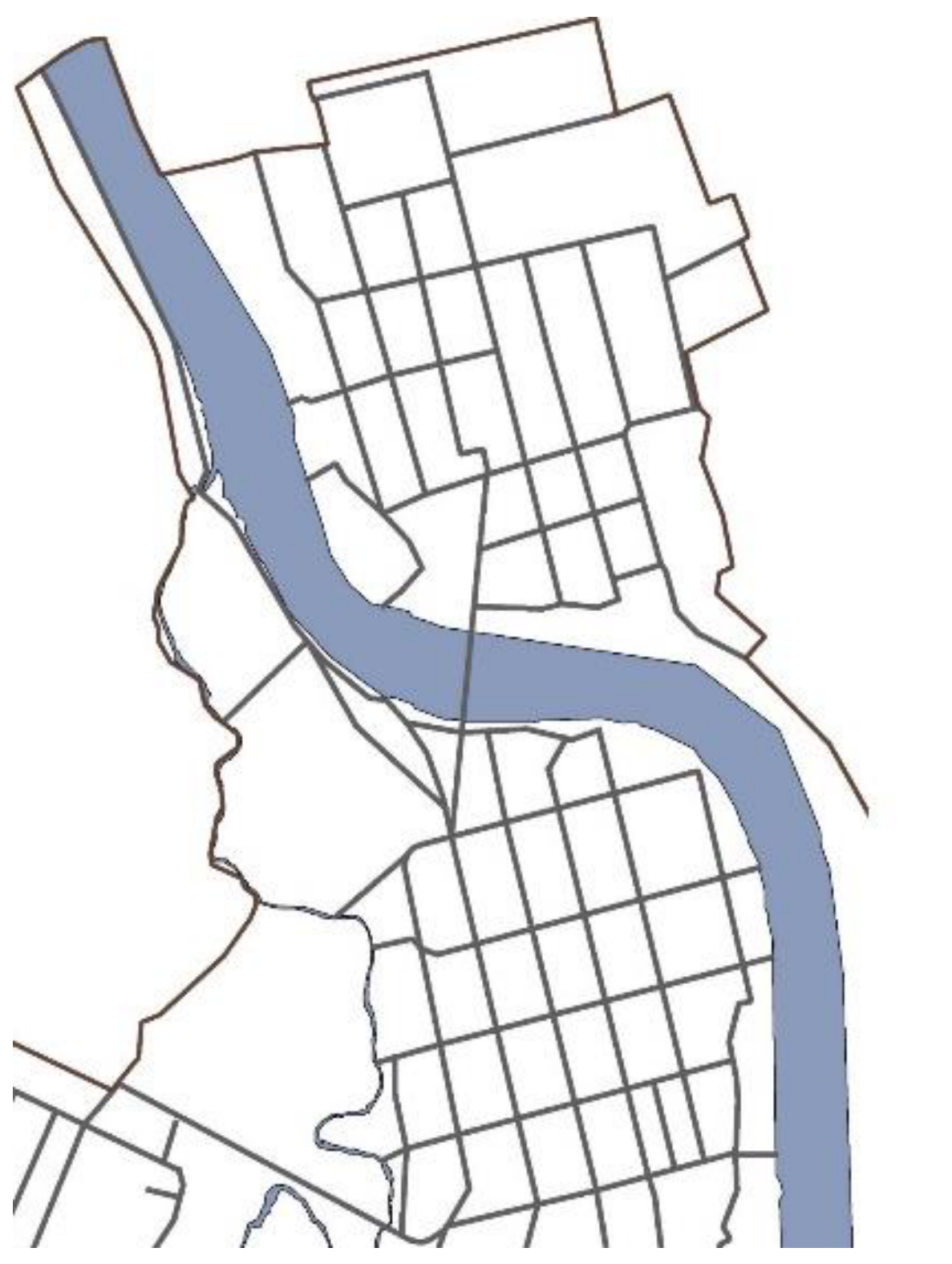
(c) Implementing your sustainable development plan for Staritsa will require you to identify the government (local, regional and state), companies, families, interest groups and individuals who will be involved in the sustainable development activities. For your named sustainable development initiative, who do you think would take the initiative, and what other parties would be involved? Describe those who you think would benefit most.
(d) A single development initiative may not be enough to secure the future of Staritsa, and the benefits may be limited to just one area of the settlement or sector (economic, environmental or social). Describe two examples of complementary initiatives to your plan that would have benefits in other areas of the settlement and in other sustainable development sectors.
Complementary initiative 1.
Complementary initiative 2.
Решение
FWE2/3 (marked out of 10)
Marking jury: Louise Richards and Tricia Seow, Annie Pui Kwan So and Annie Timmermans
For the text question, some model texts were provided, and a marking scheme was proposed. On reading the submissions the student answers did not align with the answers. The marking panel resolved the issue by modifying the marking schedule to allow good answers to score well, and to give some credit to those who picked up on field evidence and the responses to earlier questions. FWE2.3(a and b) were each worth 3 and FWE2.3(c and d) were worth 2.
- For FWE2.3(a) there was one mark for identifying each (economic, social and environmental) issue clearly described and relevant to Staritsa.
- In FWE2.3(b) text was required, and the map could be used to locate initiatives. Each initiative had to have a scale and location reported. Site features were also important, and the example of the food market should have provided a lead to this. Non-specific terms like “rejuvenation” attached to an area got modest credit.
- One mark was awarded in FWE2.3(c) for each of two identified stakeholders where they could be described as potentially active in strategies for Staritsa. In terms of beneficiaries, local people would score .5 and “farmers in the region who would …” scored 1.
- For FWE2.3(d), marks were awarded for complementary initiatives that were relevant to Staritsa and related to the identified strategy in FWE2.3(a and b). Half marks were also awarded
Comments: Some students did not appreciate that sustainable development accepts the history/heritage of the area and visualises what may be in the context of what is. Some answers that started with the idea of a clean sheet/site idea were ‘disconnected’ with previous observations, mapping and analysis. They did not score well. On the other hand, there were some perceptive and well written answers that scored well.
Statistics
Min 0.0 Max 9.0 Mean 3.94 Std 1.98
Оригинал в Архива: 2015FWE2task.pdf · официални решения: 2015FWEMarking.pdf