IOM 2016, Теория — Задача 5. Sugars
1st Olympiad of Metropolises — Chemistry, Theoretical Problems, Official English version · 7 септември 2016 г.
Original cover
Country: ______
Name: ______
1st Olympiad of Metropolises
Chemistry
Theoretical Problems
7 September 2016
Moscow, Russia
Chemistry. Theoretical problems. Official English version
Указания
- Begin only when the START command is given. You have 4.5 hours to work on the problems.
- Use only the pen and calculator provided.
- All results must be written in the appropriate boxes within the text. Anything written elsewhere will not be graded. Use the reverse of the problem pages if you need scratch paper.
- Write relevant calculations in the appropriate boxes when necessary. If you provide only correct end results for complicated questions, you will receive no score.
- Raise your hand if you have any questions concerning the text of the problems.
- Raise your hand if you need a restroom break.
- The official English version of this examination is available on request only for clarification.
Original key cover
1st Olympiad of Metropolises
Chemistry
Theoretical Problems with solutions
7 September 2016
Moscow, Russia
Chemistry. Theoretical problems with solutions. Official English version
Условие
Problem 5. Sugars (12 marks)
| Question | 1 | 2 | 3 | 4 | 5 | 6 | 7 | 8 | 9 | Total |
|---|---|---|---|---|---|---|---|---|---|---|
| Points | 1 | 2 | 4 | 1 | 3 | 3 | 4 | 2 | 5 | 25 |
Glucose is the most common monosaccharide on Earth. Glucose was among the first sugars with postulated molecular formula (). This fact was behind the proposition to refer all sugars to as carbohydrates, or «carbon hydrates», with the general formula of . Many monosaccharides and their derivatives were further found to have different molecular formulae, still very often such compounds are also classified as carbohydrates.
Equimolar mixture of -glucose derivatives A, B, C, and D, as well as each of pair-wise equimolar mixtures A-B and C-D have the content of on a per-mole basis. However, none of the individual compounds A-D is described by the formula of . The number of carbon atoms remains unchanged upon -glucose transformation into each of A-D.
1 Determine the value of in the four-compound mixture.
______ [1 т.]
A is formed from -glucose as a result of its interaction with the Tollens reagent. The latter is prepared by adding aqueous ammonia to a solution containing silver nitrate and sodium hydroxide. Finally, the medium is acidified once the reaction is completed.
2 Write down the reaction equations of the Tollens reagent formation.
Answer: ______ [2 т.]
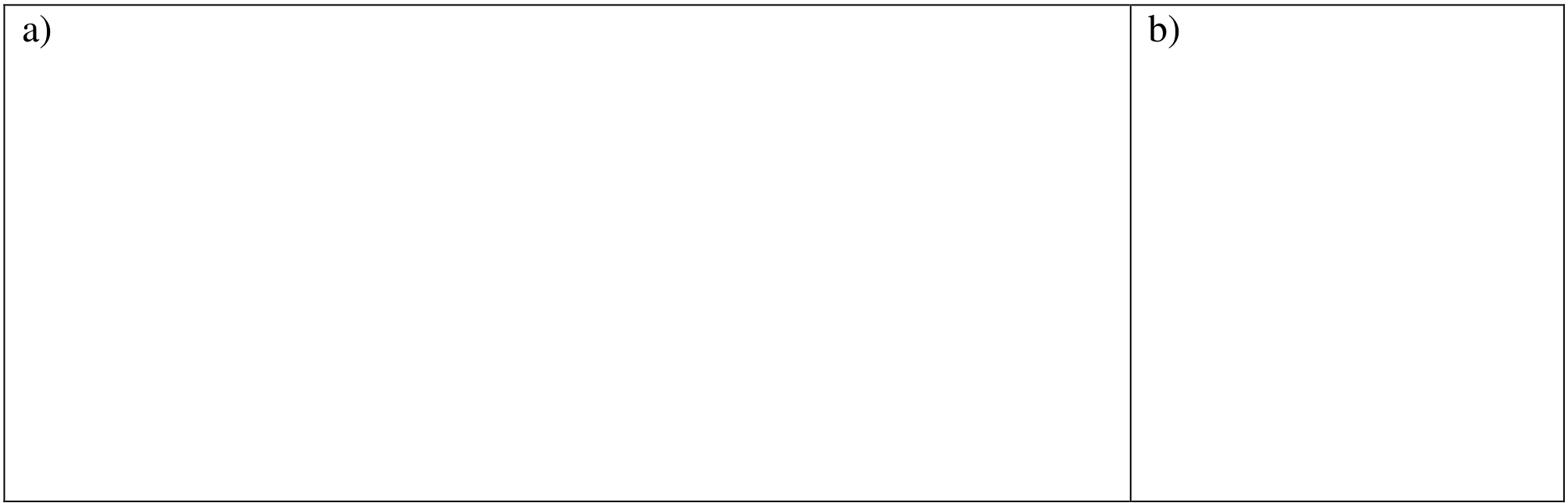
3 a) Write down the reaction of the Tollens reagent interaction with -glucose in the molecular form. b) Draw A in Fischer projection.
[4 т.]
4 Write down the molecular formula of B.
Answer: ______ [1 т.]
B completely blocks the vitally important process of glycolysis at the stage of -glucoso-6-phosphate isomerization into -fructose-6-phosphate.
5 Draw B in Fischer projection.
Answer: ______ [3 т.]
The absolute configuration of the asymmetric carbon atom used for assigning to the - or -series remains unchanged in both C and D as compared to that in the starting -glucose.
6 Propose the molecular formulae of C and D.
| C | D |
|---|---|
[3 т.]
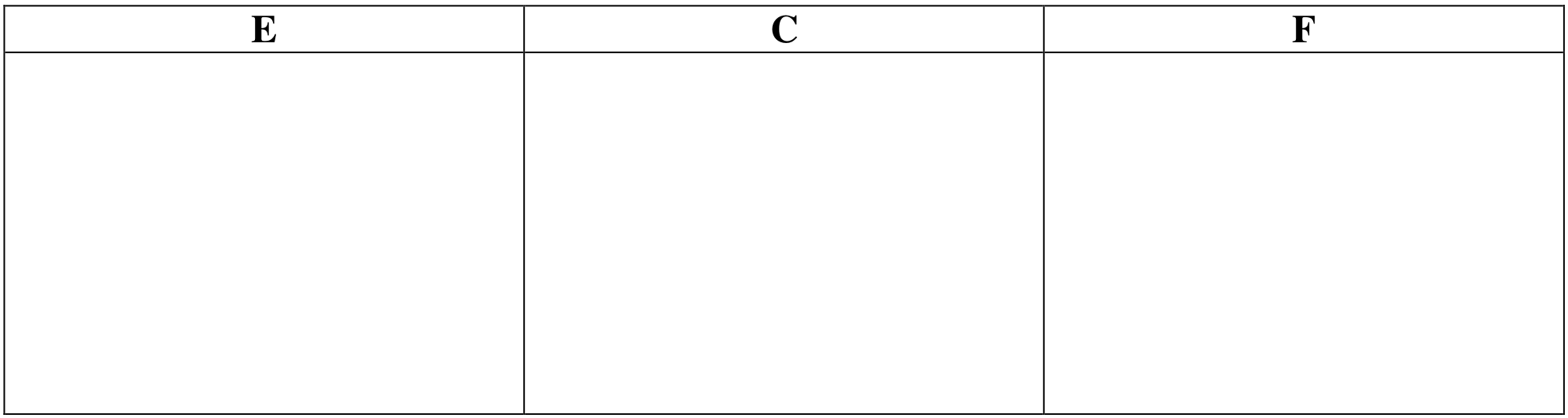
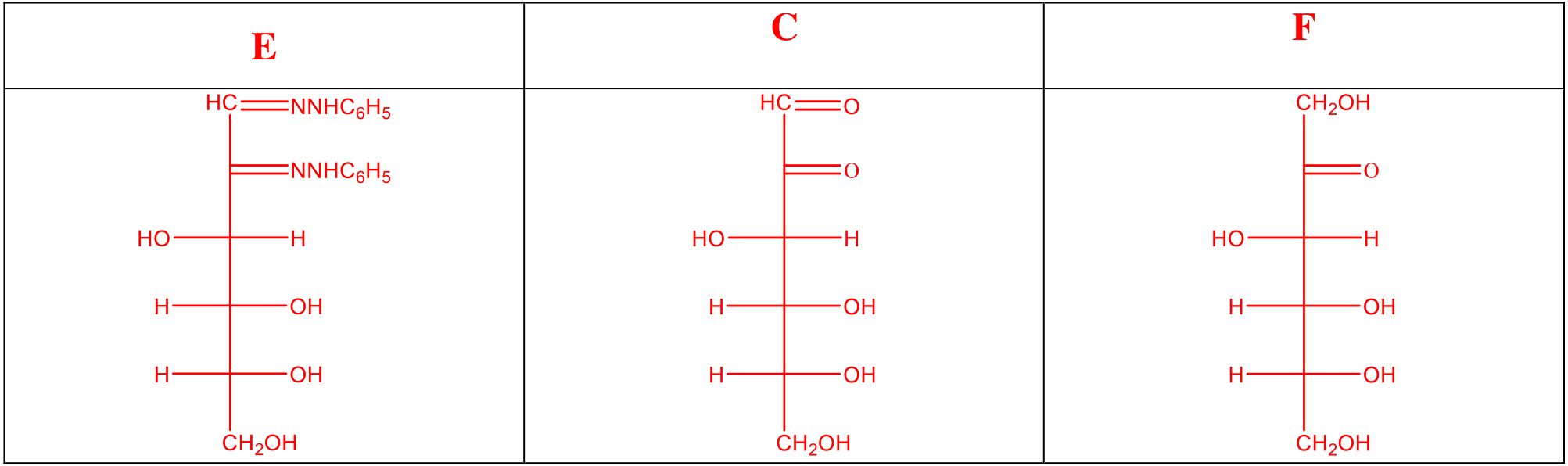
C is formed as a result -glucose interaction with phenylhydrazine according to the following scheme (F is a glucose isomer):

7 Draw E, C, and F in Fischer projection.
[4 т.]
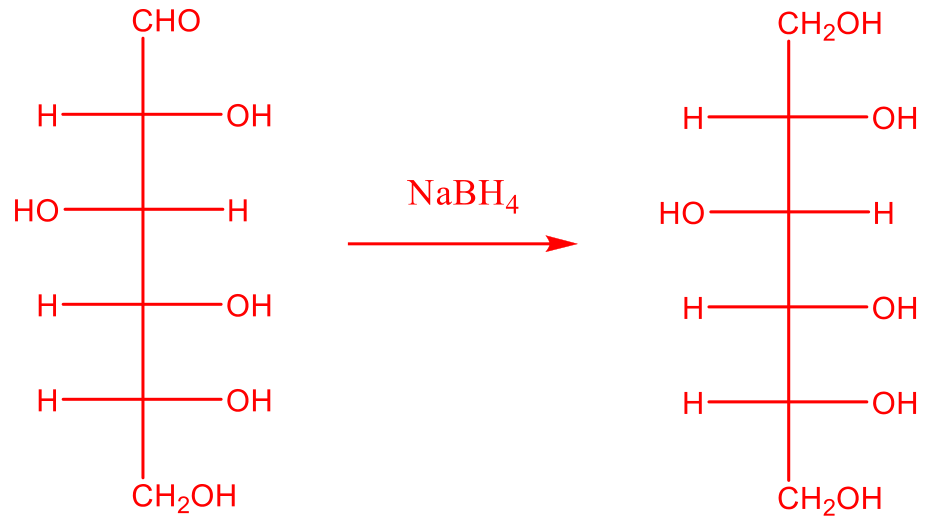
8 Write down the reaction of D formation from -glucose. Draw D in Fischer projection.
Answer: ______ [2 т.]
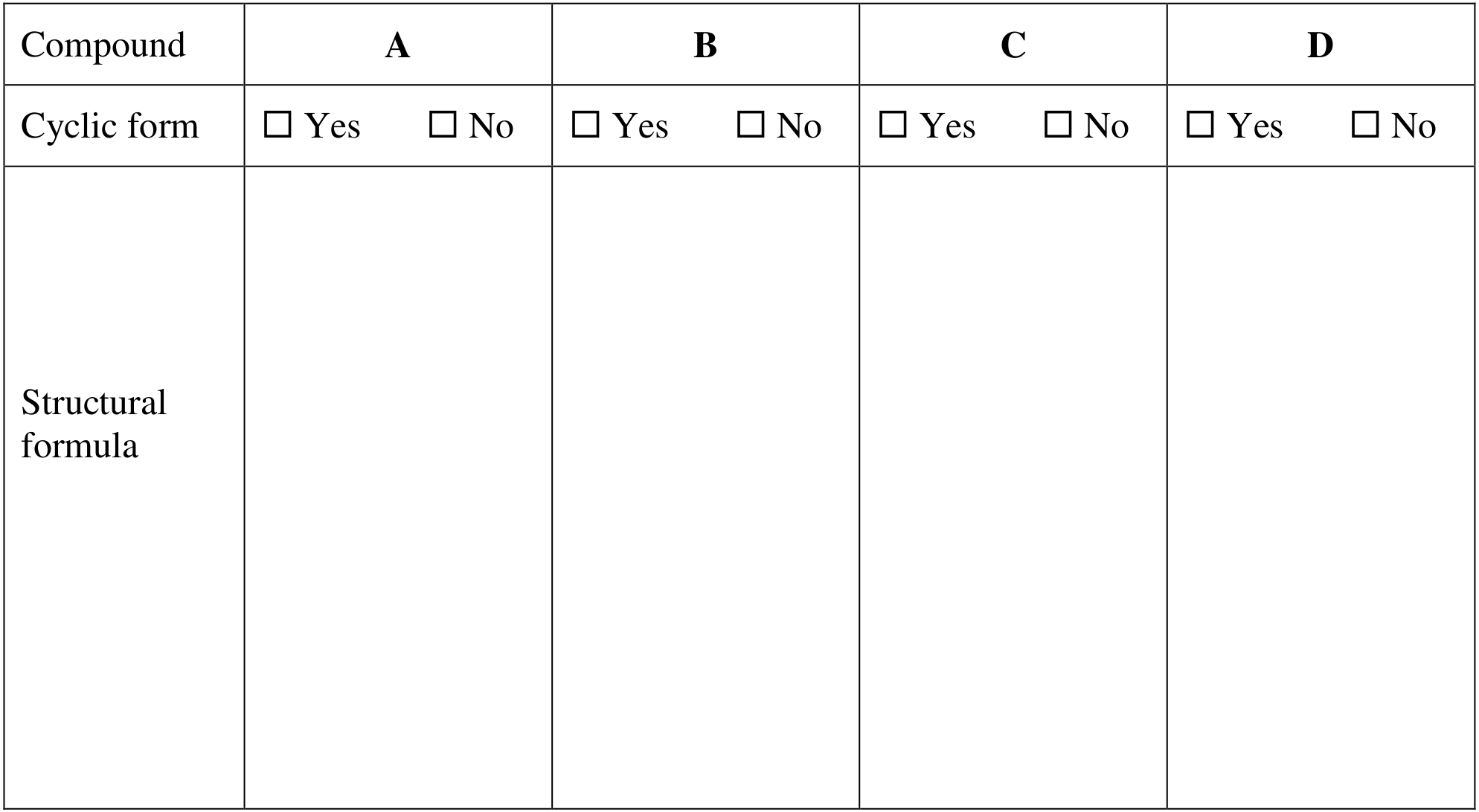
9 Which of the compounds A-D can exist in a cyclic form (tick the correct answers)? Draw the appropriate structural formulae.
[5 т.]
Решение
Detailed solution and grading scheme
1 Since the four-component mixture is composed of compounds A-D, which are obtained from -glucose with retention of the number of carbon atoms, .
2 1 point for each of the reactions of the Tollens reagent preparation or 2 points for the generalized reaction (2 points in total).
or
3 2 points for the reaction (1 point if unbalanced), 2 points for A (1 point in case of correct formula and mistake(s) in Fischer projection), 4 points in total.
a)
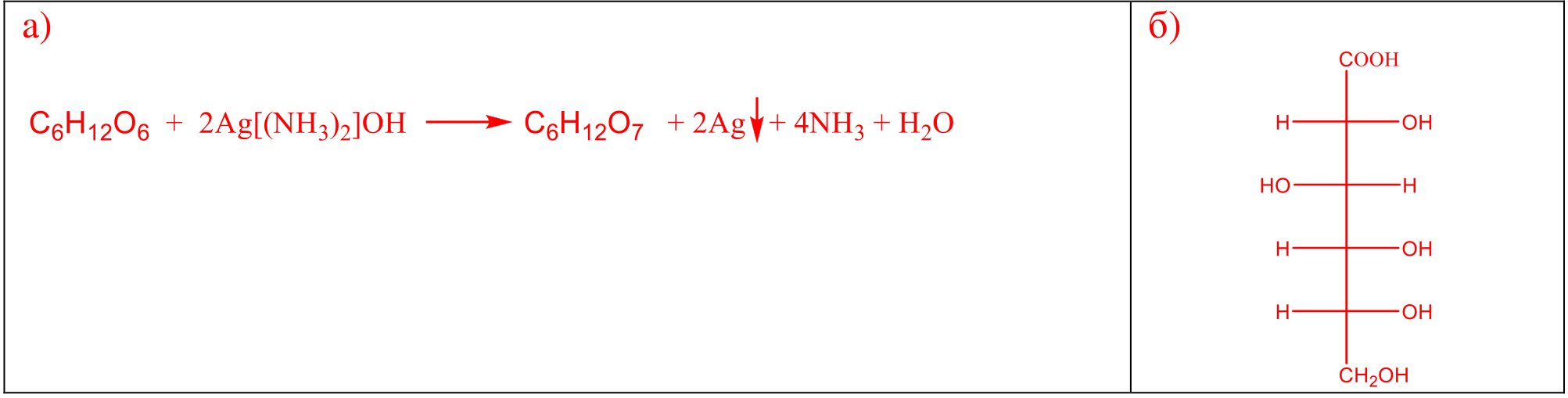
4 The molecular formula of A is . Thus, that of B is (1 point).
5 B contains by 1 oxygen atom less than -glucose, thus being deoxy--glucose. -glucose can be prevented from isomerization into -fructose only if it lacks the OH-group in the second position. Thus, B is 2′-deoxy--glucose (3 points in total, 2 points in case of no OH-group in the second position and mistake(s) in Fischer projection, 1 point in case of no OH-group in the second position and mistakes in the -glucose formula).
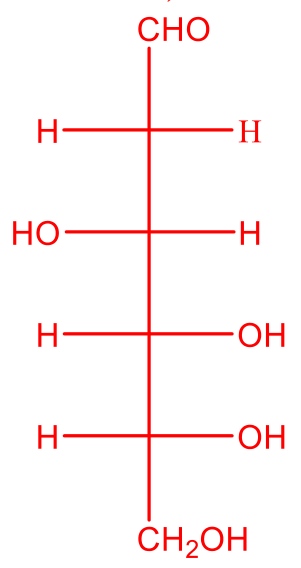
6 One can suppose even higher number of oxygen atoms in either C or D, let us say, eight. Taking into account chemical properties of monosaccharides, this would correspond to a dicarboxylic -glucaric acid (with carboxyl groups at the and positions). Still, the absolute configuration of the carbon atom in -glucaric acid is different from that in -glucose. Thus, C and D differ from -glucose by the number of hydrogen atoms. Two-electron redox reactions are most typical of this class of compounds. Then one can suppose that the molecular formulae of C and D (without precise assigning) are written as and . This supposition needs to be further checked when answering the subsequent questions (1.5 point for each formula, 3 points in total).
7 E is -glucozazone, C is -glucozone, and F is -fructose (1.5 point for each of E and C, 2 points for F, 4 points in total)
8 Other suitable reducing agents accepted (2 points in total, 1.5 point for the correct product and invalid reducing agent, 1 point for the correct reaction and mistake(s) in the Fischer projection, 1 point for the correct reducing agent and wrong product).
9 0.5 point for each correct choice, 1 point for the formula of each of A, B, and C (5 points in total).
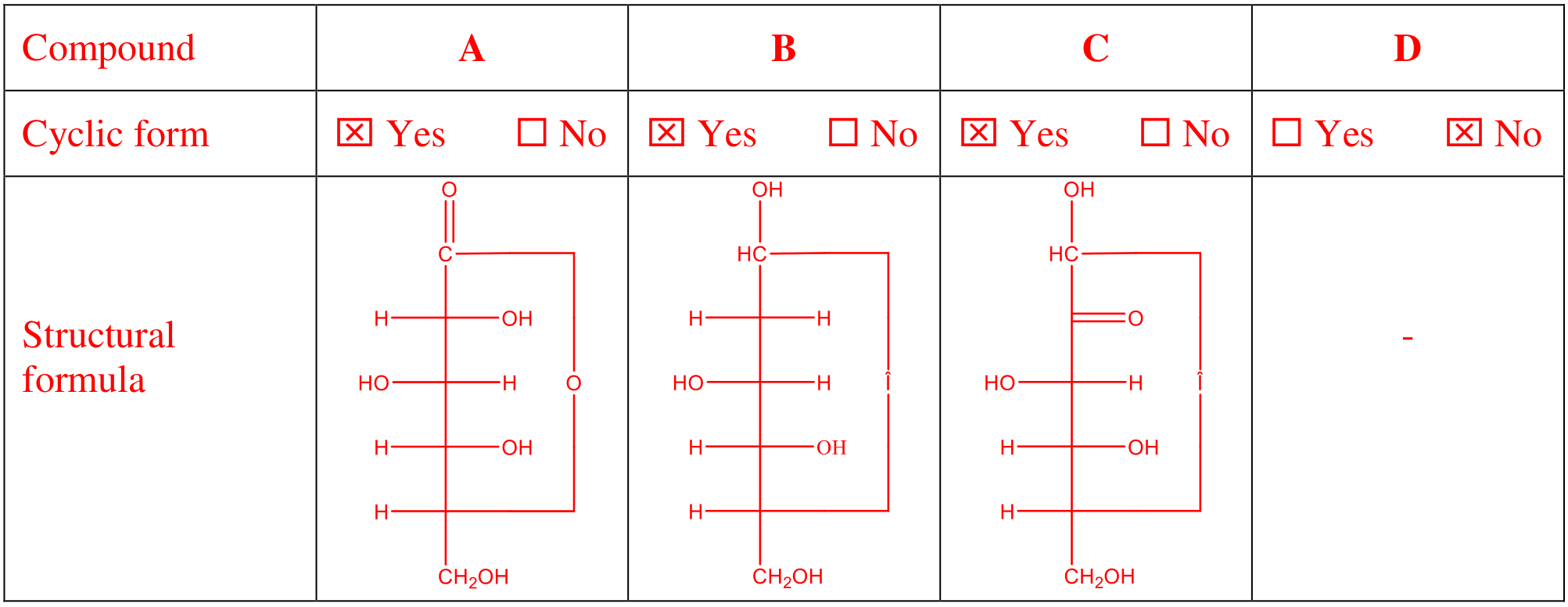
Cyclic form: A Yes; B Yes; C Yes; D No.
Бележка от източника
The five native whole theoretical problems and all available official keys are retained. Each original problem heading says 12 marks, while its printed score grid totals 20, 24, 30, 59 or 25; these source contradictions remain visible. In Problem 2 the grid gives 3/6 points for requests 4/5, while the actual key gives 2/4. Problem 3 gives M/N 3/3 points in the answer table and 4/2 in the detailed rubric. Problem 5 request 7 prints 1.5, 1.5 and 2 points but states 4 points in total. Native spelling, formulas, a missing radical dot in one blank answer equation, a missing slash in d[CC]dt, and the missing [M] factor in the printed CC-rate result are preserved without scientific correction. Empty calculation workspaces are represented by their printed response labels and blank fields; molecular answer grids, cyclic-form checkbox tables and scientific axes retain exact original crops. Source question page 10 contains only continuing answer cells; solution pages 18–20 contain the blank repeated Sugars assignment, followed by its detailed key on 21–22.
Оригинал в Архива: Problems.pdf · официални решения: Solutions.pdf