IOM 2017, Теория — Задача 1. Golden domes
2nd Olympiad of Metropolises — Chemistry, Theoretical Problems, Official English version · 6 септември 2017 г.
Original cover
Country ______
Name ______
2nd Olympiad of Metropolises
Chemistry
Theoretical Problems
6 September 2017
Moscow, Russia
Chemistry. Theoretical problems. Official English version
Указания
- Begin only when the START command is given. You have 4.5 hours to work on the problems.
- Use only the pen and calculator provided.
- All results must be written in the appropriate boxes within the text. Anything written elsewhere will not be graded. Use the reverse of the problem pages if you need scratch paper.
- Write relevant calculations in the appropriate boxes when necessary. If you provide only correct end results for complicated questions, you will receive no score.
- Raise your hand if you have any questions concerning the text of the problems.
- Raise your hand if you need a restroom break.
- The official English version of this examination is available on request only for clarification.
Original key cover
2nd Olympiad of Metropolises
Chemistry
Theoretical Problems
with solutions
6 September 2017
Moscow,Russia
Chemistry. Theoretical problems with solutions. Official English version
Условие
Constants
| Constants | Value |
|---|---|
| Avogadro constant: | |
| Gas constant: | |
| Zero of the Celsius scale: | |
| Faraday constant |
Consider all gases ideal throughout the exam.
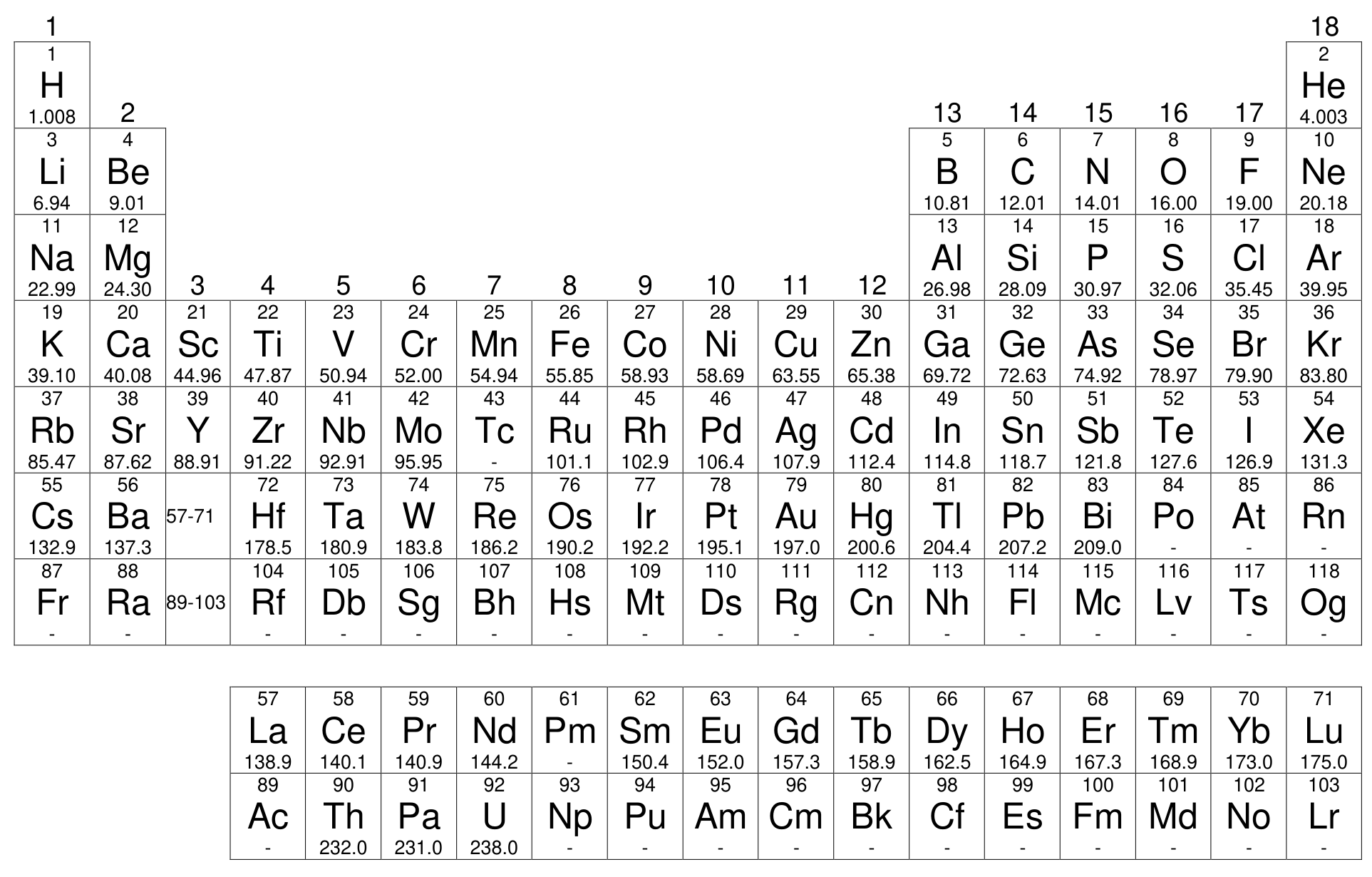
Periodic table with relative atomic masses
Problem 1. Golden domes (10 marks)
| Question | 1 | 2 | 3 | 4 | Total |
|---|---|---|---|---|---|
| Points | 7 | 9 | 2 | 2 | 20 |
| Result |
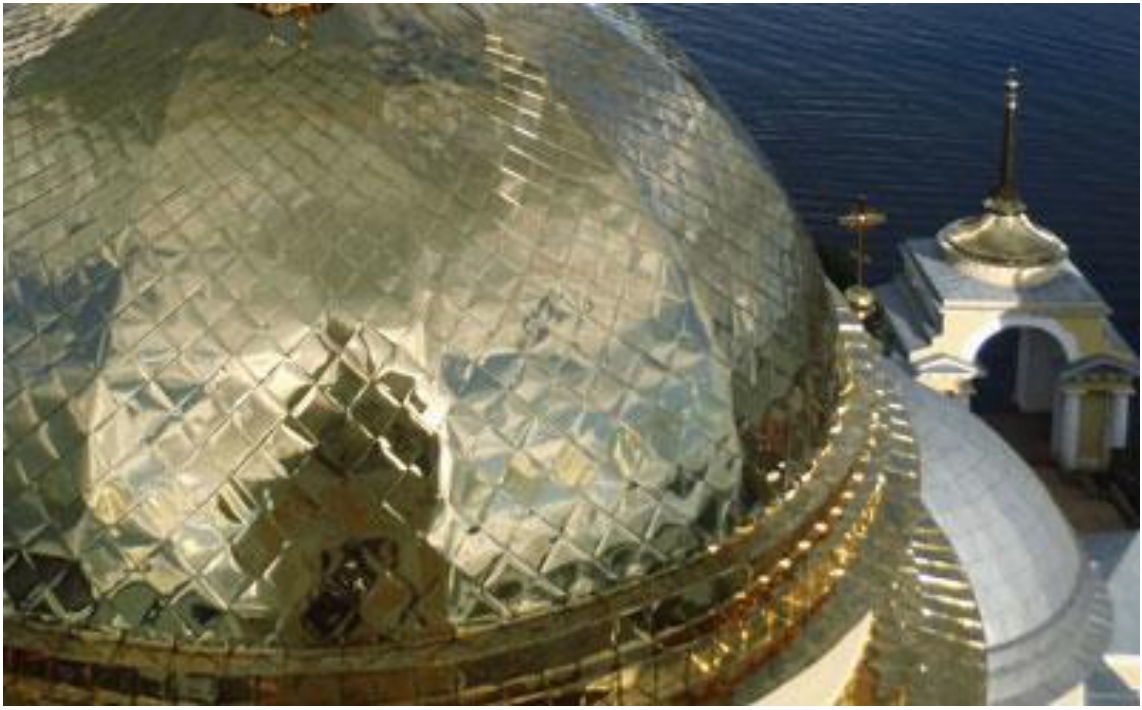
The white substance X₁ can be obtained by burning of powdered metal X in oxygen (reaction 1). The treatment of a mixture of X₁ and carbon with chlorine gives a colorless liquid X₂ containing 25.24 wt.% of element X (reaction 2). The vapor of X₂ reacts with ammonia at giving a brown powder X₃, containing from 77.37 to 85.07 wt.% of X (reaction 3). The compound X₃ is responsible for golden color of domes of several Moscow churches and cathedrals.
The compound X₃ can be synthesized directly from X or X₁ (reactions 4 and 5).
1 Name the element X and determine the formulas of X₁–X₃. For X₃ give the range of compositions. In calculations, use the exact values of molecular masses from the Periodic table.
Calculations
X – ______
X₁ – ______
X₂ – ______
X₃ – ______ [7 т.]
2 Write the balanced equations of reactions 1-5.
Reaction 1: ______
Reaction 2: ______
Reaction 3: ______
Reaction 4: ______
Reaction 5: ______ [9 т.]
3 The crystal structure of ideal X₃ has the same type as that of a binary compound containing 39.3 wt.% of some other metal. Determine this type.
Structural type – ______ [2 т.]
4 Name the coordination polyhedra of cation and anion in the structure of X₃.
Coordination polyhedron of:
cation – ______
anion – ______ [2 т.]
Решение
Solutions
1 Calculations
is an oxide, hence is a chloride of metal X. Denote chloride as , then
At , we get , X – titanium. X₁ is titanium dioxide, TiO₂.
Reaction between titanium chloride and ammonia gives titanium nitride – the substance with a non-stoichiometric composition. Let us determine the range of its compositions:
X – titanium, Ti — 1 points
X₁ – TiO₂ — 1.5 points
X₂ – TiCl₄ — 1.5 points
X₃ – TiN₀.₆–TiN₁.₀ — 3 points [7 т.]
2 Reaction 1: — 1 point
Reaction 2: — 2 points
Reaction 3: — 2 points
Reaction 4: — 2 points
Reaction 5: — 2 points [9 т.]
3 Structural type – sodium chloride, NaCl (39.3% of Na) — 2 points [2 т.]
4 Coordination polyhedron of:
cation – octahedron — 1 point
anion – octahedron — 1 point [2 т.]
Бележка от източника
Native source has six whole tasks and 34 scored flat request labels; catalogue 30 parts is provisional. Each native heading says 10 marks while grids total 20,16,20,30,88,20. Original key 2 repeats trialkylbenzene for both 65% and 35%. Original Stickland scheme prints Pi=HPO3(2−). Copper key 5 gives 0.0025 M then uses 0.025 in ion-product expressions. Thermal key 2/4 prints 20/607.74=0.0987 mol for lithium silicide; its product heating uses 27/61/83 while supplied heat-capacity table gives 25/68/74 forFe/FeO/KCl. Original expressions/results/marking values remain literal. Scientific molecular drawings, stereochemistry, reaction schemes, photos, periodic table and blank molecular response grids are original exact crops. Plain calculation rectangles preserve printed labels and blank fields. Full original official keys and detailed uncredited comments retained; no author name inferred. The native key comment for problem 4 request 6 prints Mowing backwards; that spelling is retained.
Оригинал в Архива: Problems.pdf · официални решения: Solutions.pdf