IOM 2018, Теория — Задача 4. Synthesis of vitamin C
3rd Olympiad of Metropolises — Chemistry, Theoretical Problems, Official English version · 5 септември 2018 г.
Original cover
Country ______
Participant code ______
3rd Olympiad of Metropolises
Chemistry
Theoretical Problems
September 5, 2018
Moscow, Russia
Chemistry. Theoretical problems. Official English version
Указания
- Begin only when the START command is given. You have 4 hours to work on the problems.
- Use only the pen and calculator provided.
- All results must be written in the appropriate boxes within the text. Anything written elsewhere will not be graded. Use the reverse of the problem pages if you need scratch paper.
- Write relevant calculations in the appropriate boxes when necessary. If you provide only correct end results for complicated questions, you will receive no score.
- Raise your hand if you have any questions concerning the text of the problems.
- Raise your hand if you need a restroom break.
- The official English version of this examination is available on request only for clarification.
Recommendations
- Read the text carefully. Try to understand properly: a) what is given to you, b) what is required from you.
- All the problems contain questions of various complexity including very simple ones. Try to answer as many questions as you can. Try to leave as few empty spaces in the answer sheets as you can.
- In the calculations, use the atomic masses from the Periodic table given to you.
Good luck!
Original key cover
3rd Olympiad of Metropolises
Chemistry
Theoretical Problems
Answers, solutions, and grading scheme
September5,2018
Moscow,Russia
Chemistry. Theoretical problems. Official English version
Условие
Problem 4. Synthesis of vitamin C (12 marks)
| Question | 1 | 2 | 3 | 4 | 5 | 6 | Total |
|---|---|---|---|---|---|---|---|
| Points | 14 | 4 | 2 | 16 | 8 | 6 | 50 |
| Result |
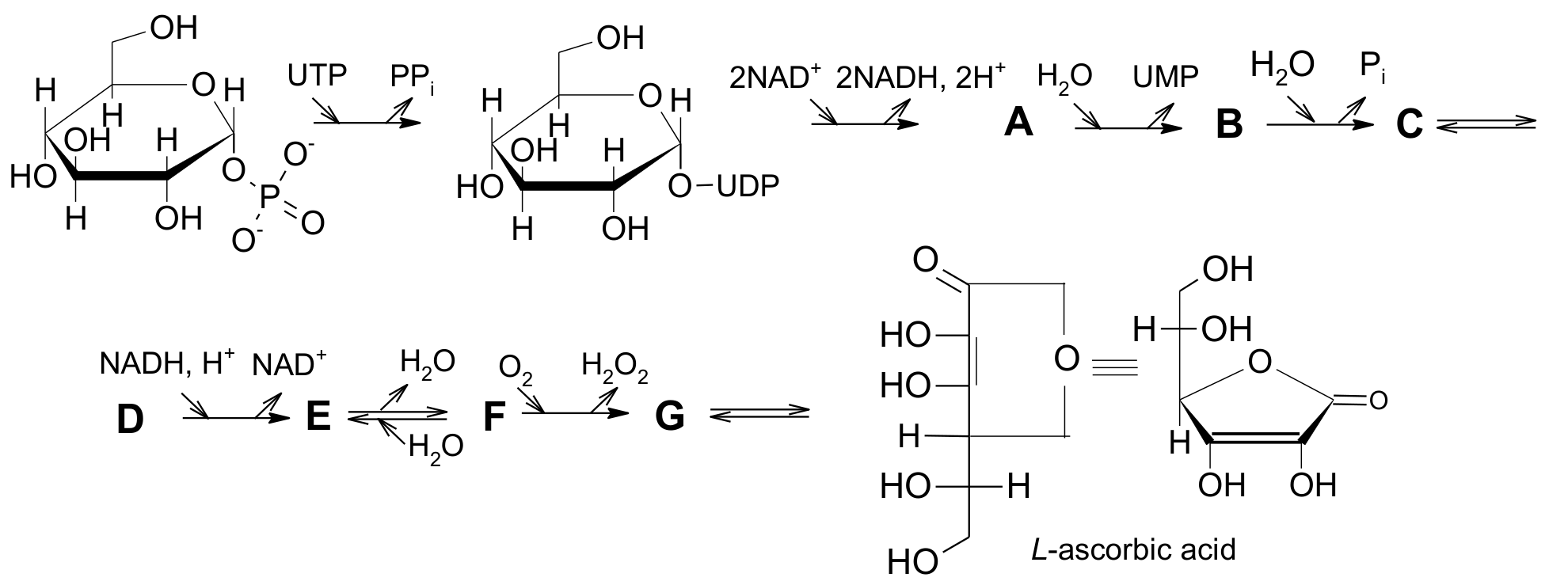
The problem of healthy eating is extremely important in modern metropolises, since many inhabitants of big cities regularly eat deeply processed food and semi-finished products lacking essential nutrients. Vitamin C, or L-ascorbic acid (see the formula at the end of the first reaction scheme), is one of these. Man cannot synthesize this substance and must get it with food. In this task, we will consider different pathways of L-ascorbic acid synthesis.
Biosynthesis of vitamin C typically starts with D-glucose or its mono-phosphorylated derivatives. Transition from D- to L- sugar family achieved in different ways is one of the key steps towards the target product.
An important pathway affording vitamin C typical of most animals and plants is shown in the hereunder scheme (UMP, UDP and UTP are uridinemono-, di-, and triphosphate, and are inorganic phosphate and pyrophosphate, and NADH are oxidized and reduced forms of co-enzyme nicotinamide adenine dinucleotide, respectively):
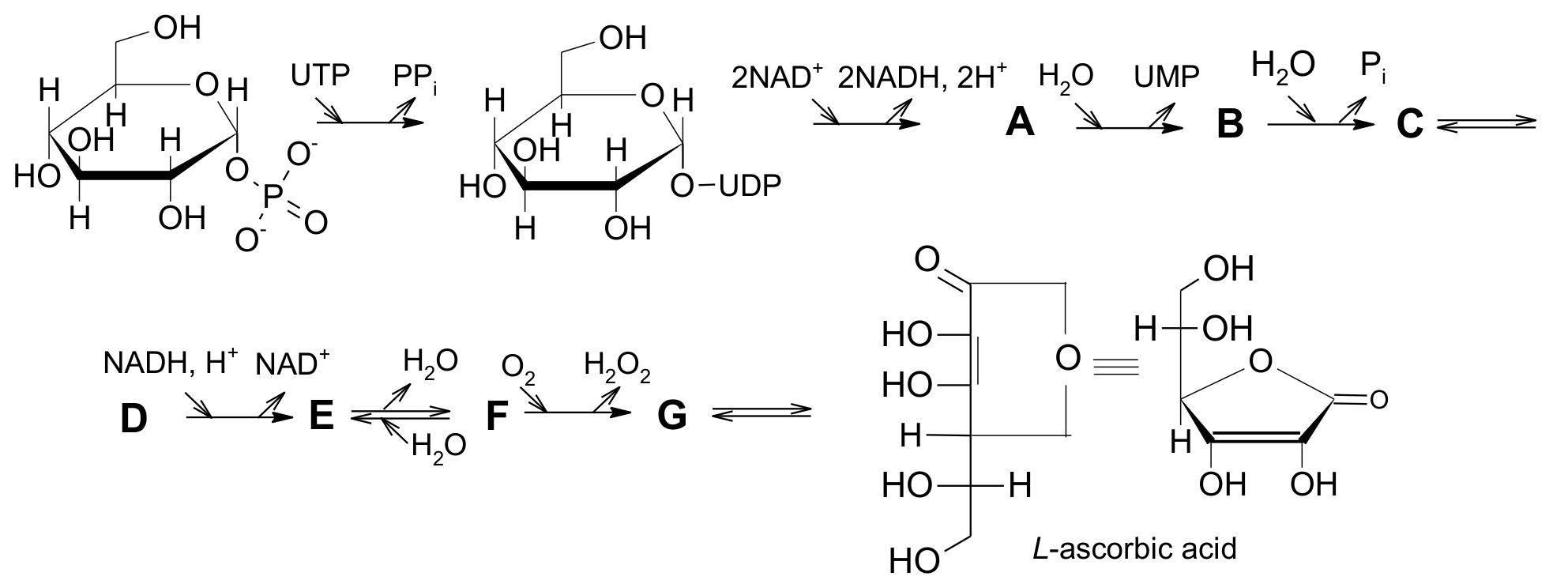
1 Draw the Fischer projections of A–C and the Haworth projections of D–G. Note that all steps at the scheme are reaction equations; C and D have the same molecular formula; F, G, and vitamin C contain the same number of oxygen atoms; all the stages but the last (which is tautomerization) are enzymatically catalyzed.
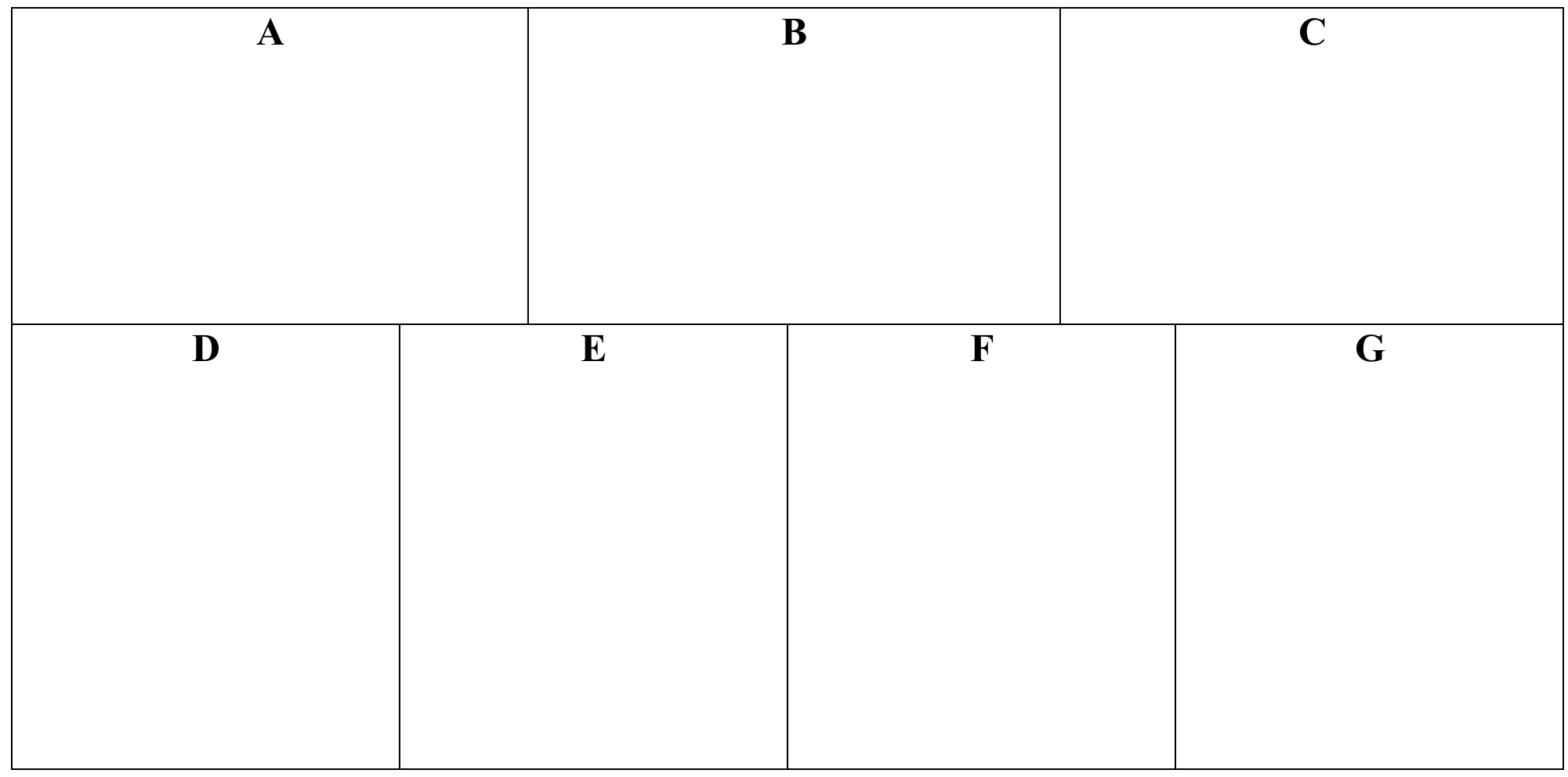
[14 т.]
Notes about Fischer projections.
A. By definition, the most oxidized group is written atop a projection.
B. If a chemical reaction results in a product with the most oxidized group on the bottom, whereas the rest oxygen-containing groups are hydroxyl ones, the projection must be rotated by in the projective plane.
2 Suppose D-glucose-6-phosphate (A) or D-glucose (B) is used as the starting substance instead of D-glucose-1-phosphate. Draw the product(s) expected as a result of reaction(s) of each starting substance with in systems containing all enzymes needed for corresponding redox reaction(s).
| A) | B) |
|---|---|
| ______ | ______ |
[4 т.]
3 What would be the product of UDP-D-glucose transformation, if one (instead of two) equivalent enters into the reaction?
______ [2 т.]
Vitamin C is industrially produced via Reichstein-Grussner process (see the hereunder scheme) with D- to L-sugar family transition occurring at one of the initial stages. The starting D-glucose is first catalytically reduced to the hexabasic alcohol D-glucitol (K), which can be also considered as L-sorbitol (L) due to specific features of its structure. The next step catalyzed by bacteria Acetobacter suboxydans results in L-sorbitol oxidation to L-sorbose (M), which turns out to be a ketose. A chain of subsequent chemical transformations affords L-ascorbic acid.
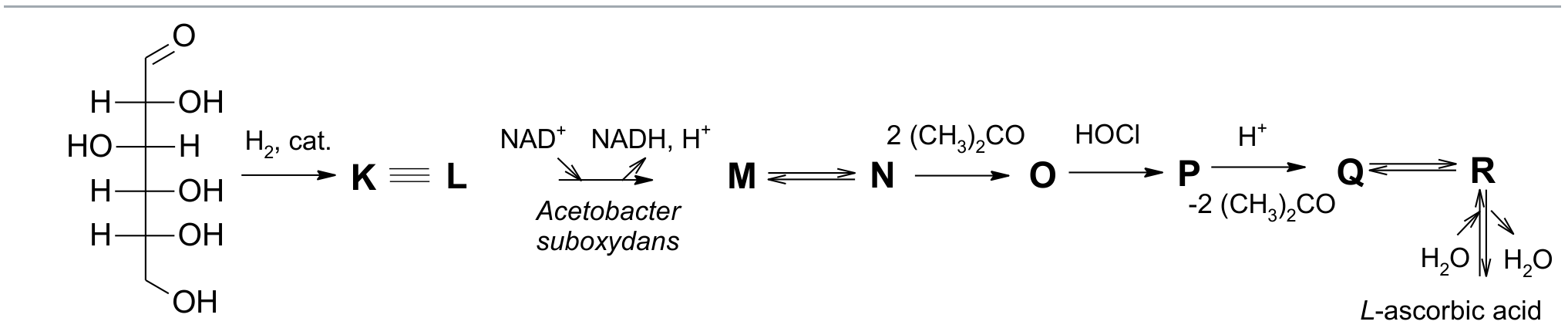
4 Draw the Fischer projections of K–M, Q, R and the Haworth projections of N, O, P.
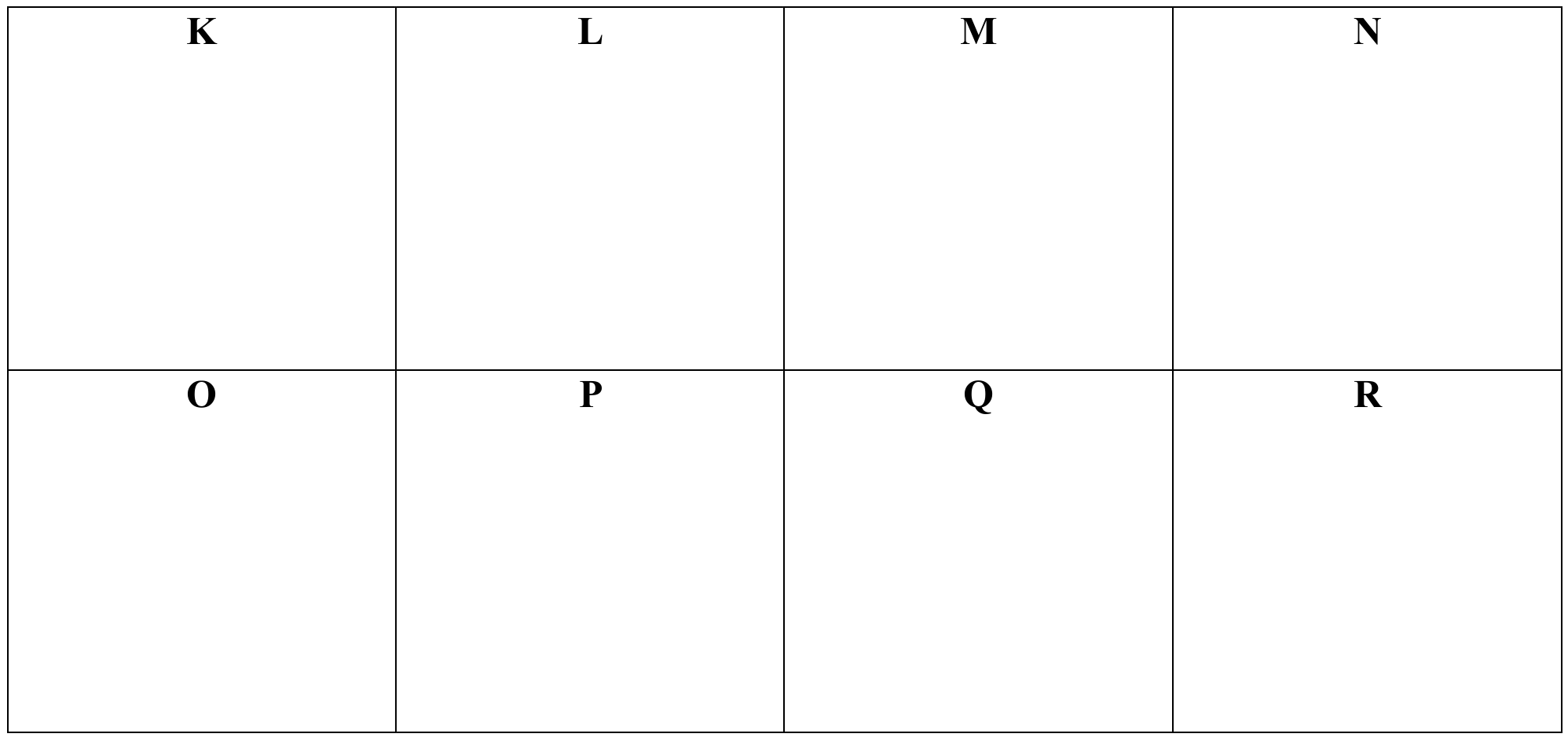
[16 т.]
The described above synthesis is not cost-effective, thus researches do not give up trying to develop a more efficient biotechnological process of L-ascorbic acid production. It was found that L-sorbosone, an L-sorbose derivative containing two carbonyl groups (at the and positions), is the key intermediate in the pathway leading to vitamin C if bacteria Ketogulonicigenium vulgare is used.
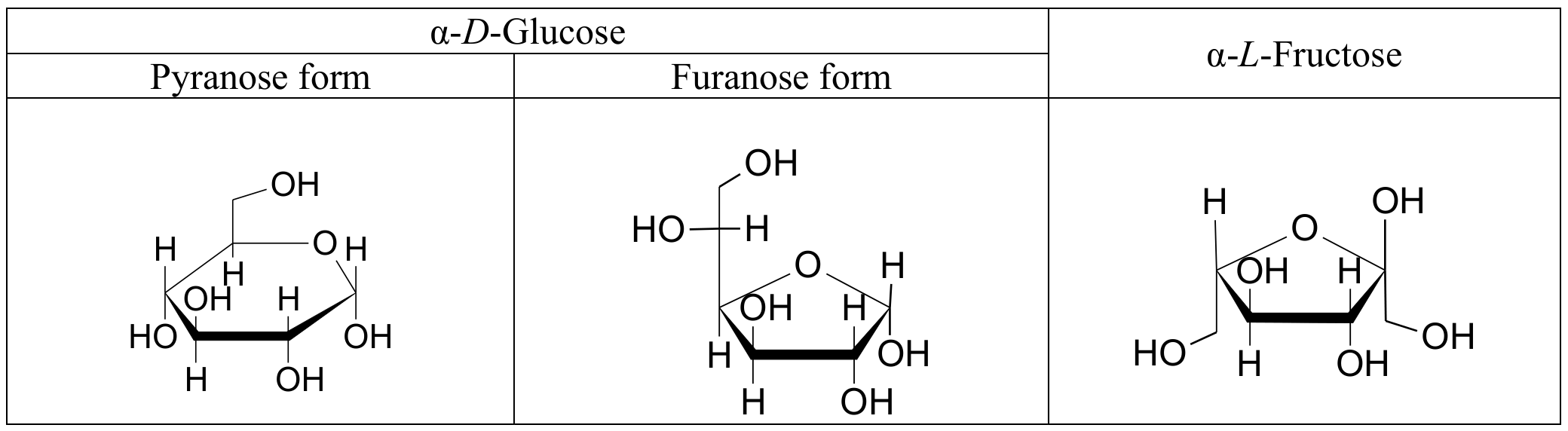
5 Draw all possible pyranose and furanose forms of L-sorbosone. Hint: the Haworth projections of pyranose and furanose forms of D-glucose are given at the end of the task.
| Pyranose form(s) | Furanose form(s) |
|---|---|
| ______ | ______ |
[8 т.]
6 Suggest a synthetic scheme leading from L-sorbosone to L-ascorbic acid if it is known that one of the forms from question 5 is the pathway intermediate. Note that the latter is transformed into the target product in two steps, the enzymatic one being followed by the spontaneous one.
______ [6 т.]
Note. If you failed to deduce the L-sorbose formula in question 4, use the L-fructose one (given hereunder) to answer the questions 5 and 6.
Reference information. Haworth projections of cyclic forms of -D-glucose and -L-fructose.
Решение
Official answers and grading scheme
1
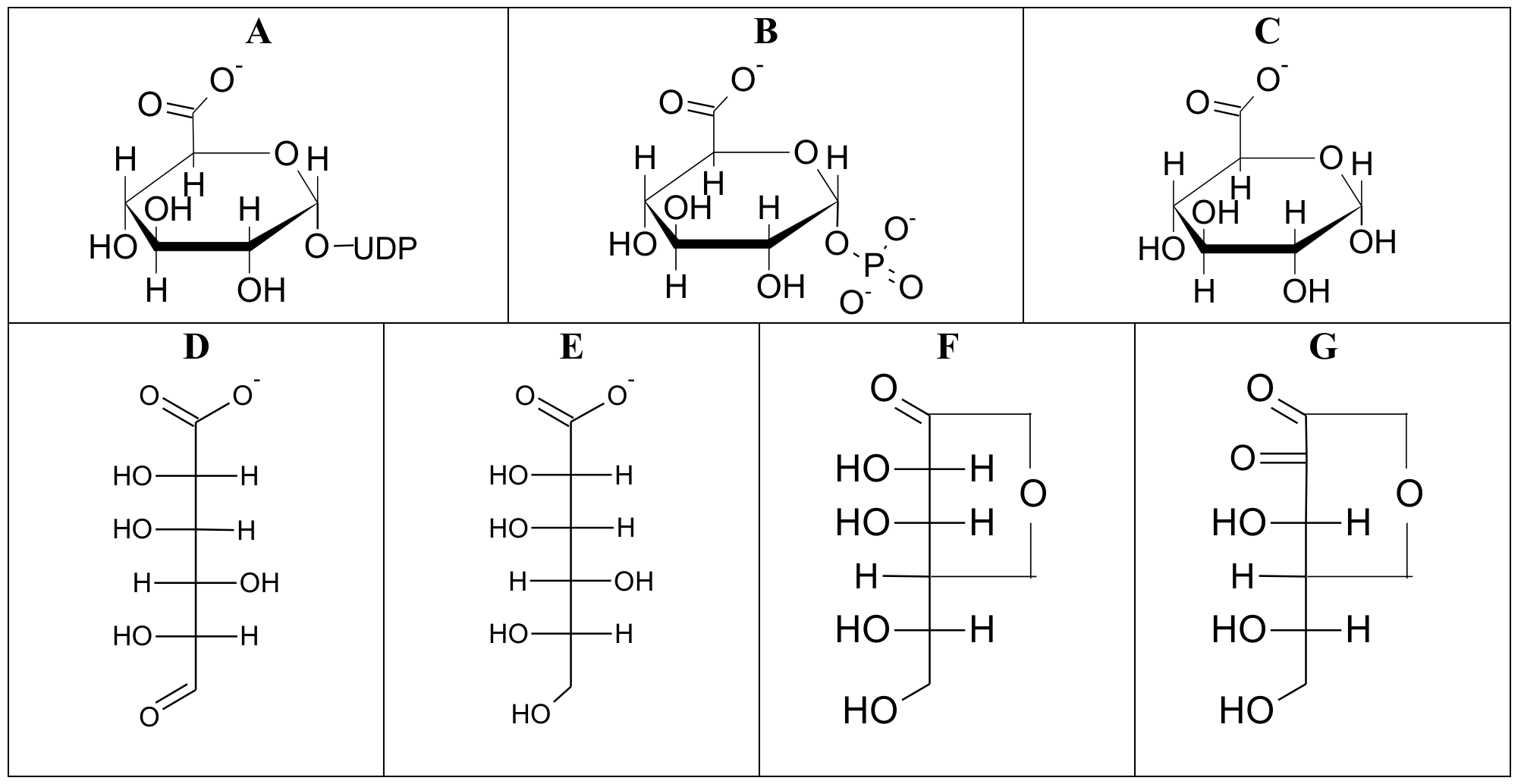
2 pts for each structure. [14 т.]
2
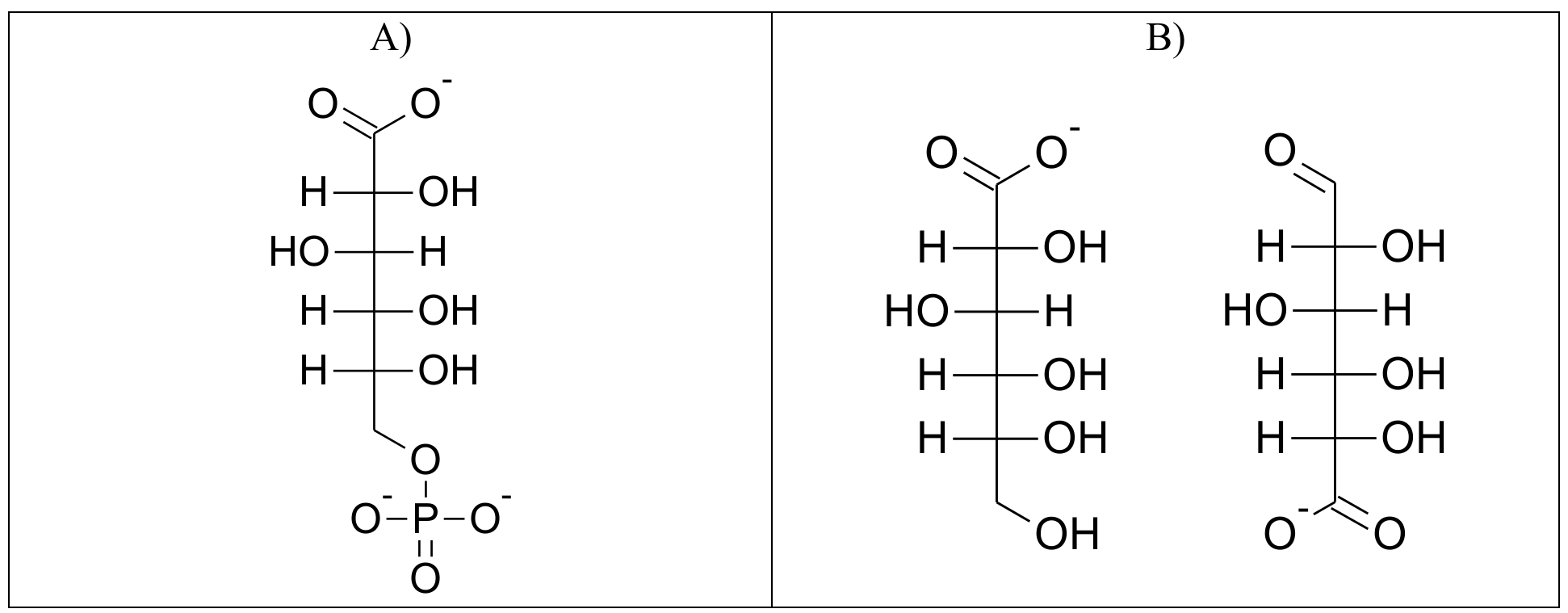
2 pts for each structure. [4 т.]
3
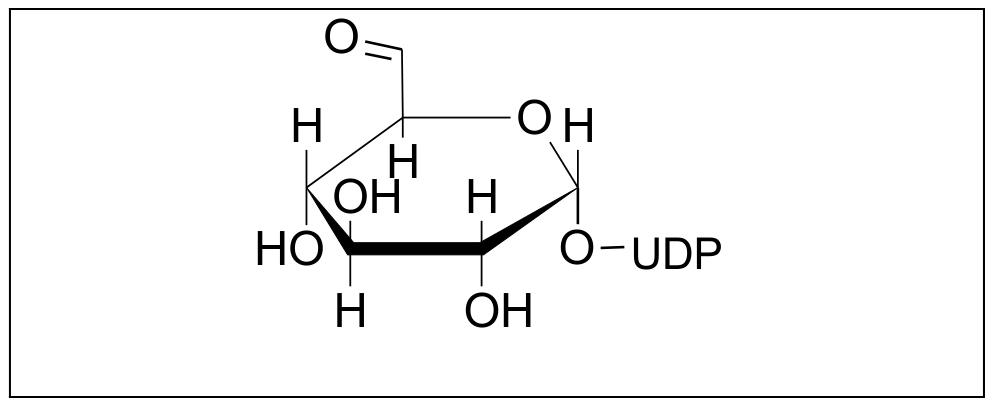
[2 т.]
4
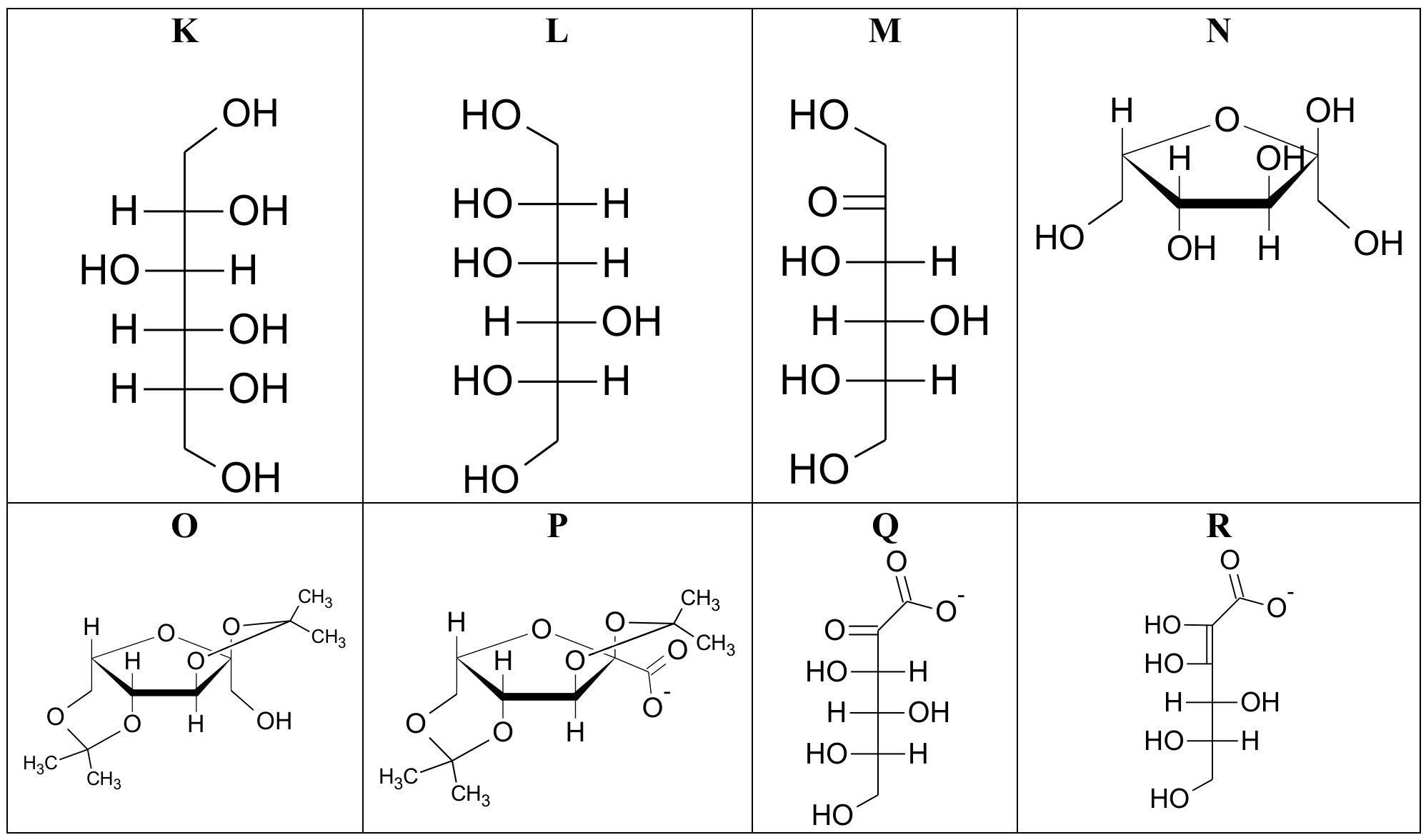
2 pts for each structure. [16 т.]
5
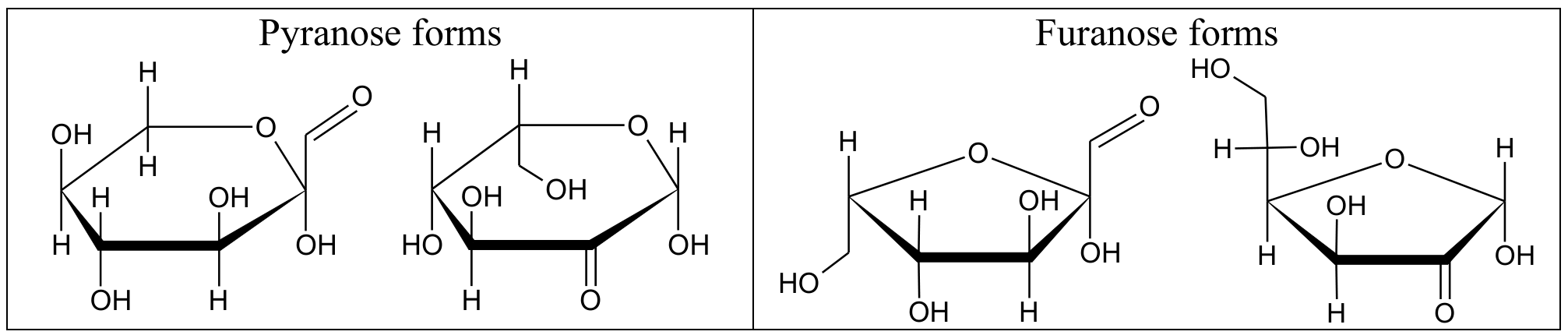
The same forms in the Fischer projections
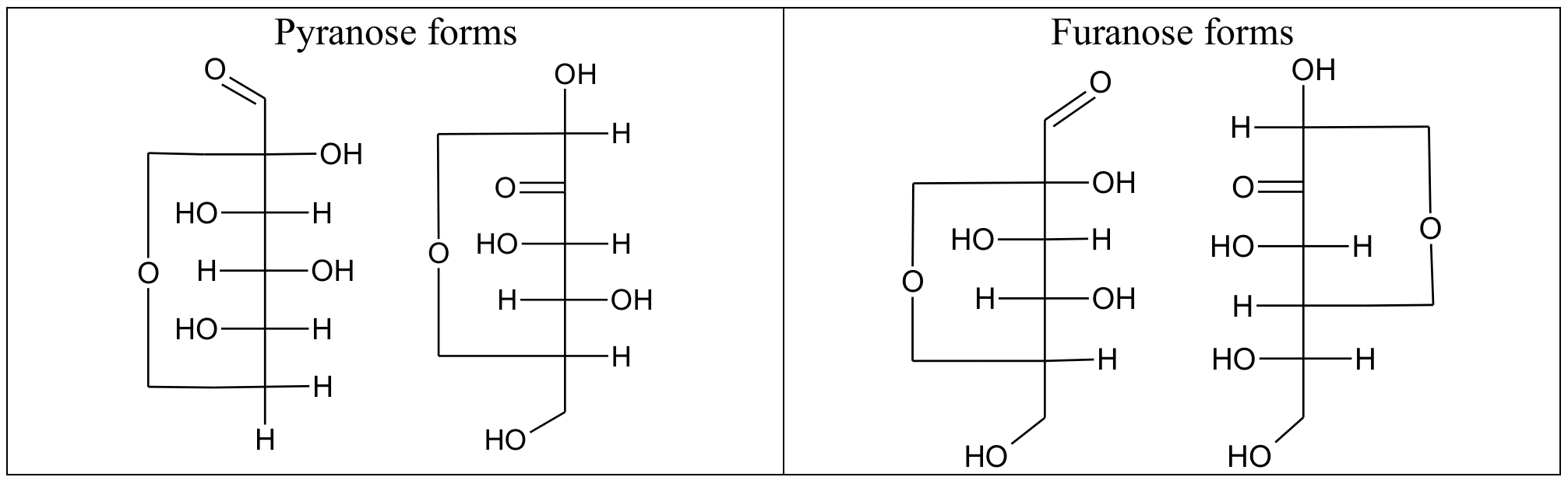
2 pts for each correct form in any projection. [8 т.]
6
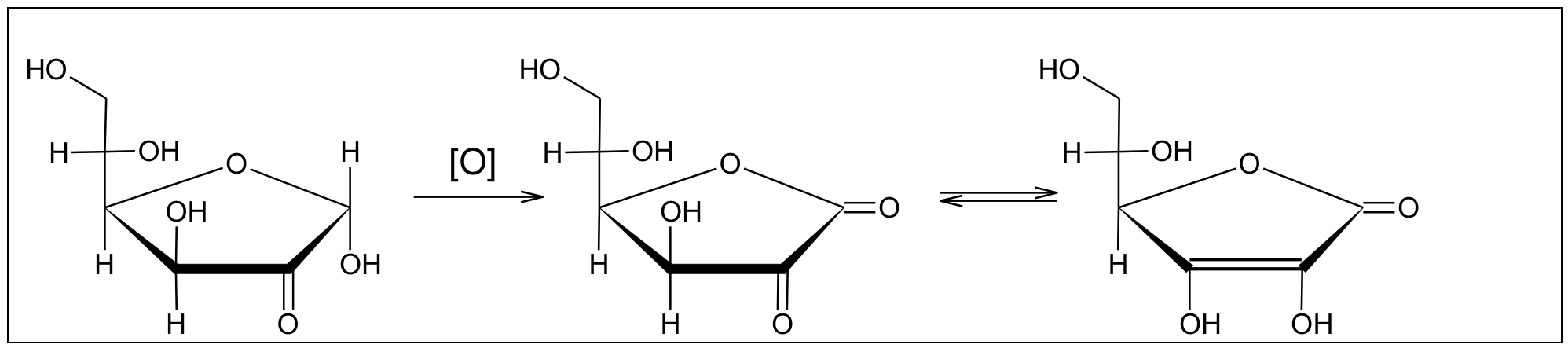
6 pts for the correct scheme. [6 т.]
Бележка от източника
Each native problem heading says 12 marks, while its printed score grid totals 65, 30, 18, 50 or 30. Problem1 request3 is 10 points in the grid but5 in the key; its printed permanganate equation and sodium-containing answer to request2 remain literal. Problem3 first Claus-stage equation prints2H2O. Problem4 requests Fischer projections A–C and Haworth D–G, while its key shows the opposite projection types; request2 awards2points for each of three structures despite its4-point grid. Problem5 methane price is0.75/kg in the repeated key request and calculations. These original inconsistencies are retained. Molecular drawings, reaction schemes, reference tables and answer grids reproduce the native originals. Empty calculation spaces retain their printed labels and blank response fields.
Оригинал в Архива: Problems.pdf · официални решения: Solutions.pdf