IPhO 2026, Теория — Задача 2. Cooking with sunlight?
Theoretical Exam -- English (Official) · 10 т.
Условие
The redistribution of luminous flux into regions of high and low intensity due to reflection or refraction can lead to the formation of caustics: curves formed by the intersection of infinitesimally close light rays. As an example, Figure 2a shows the caustic formed by rays incident paraxially on a half-cylindrical mirror. Figure 2b shows a photograph of the caustic formed by the reflection of light on the bottom part of a coffee cup. The brightest and central point of the caustic is called the cusp; at this point, the light intensity is maximal.
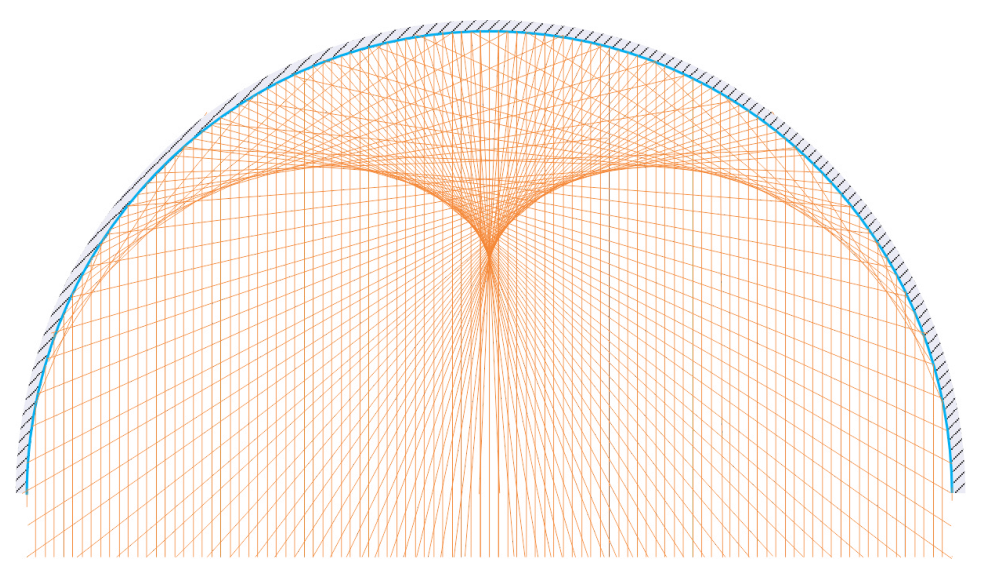
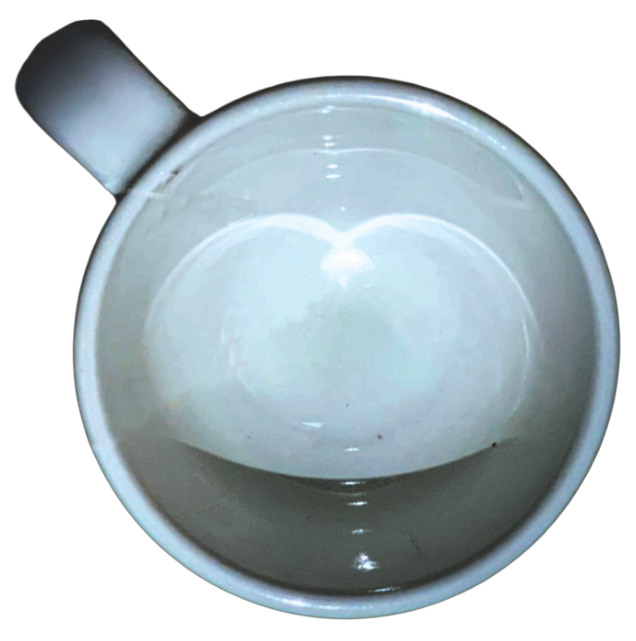
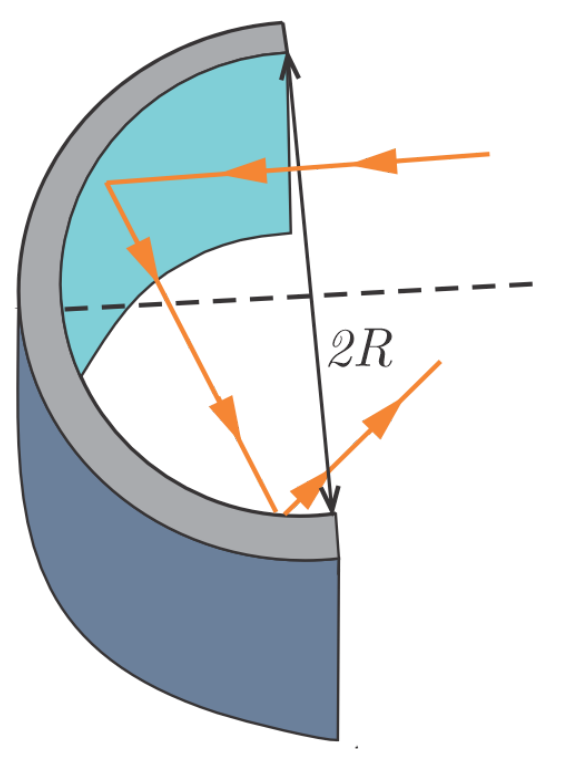
Caustics have a variety of applications in science, ranging from high-precision optics and quantum optics to astrophysics. In this question, you will study the caustic formation by light reflection on a half-cylinder mirror of radius , as shown in figure 2c. You will also investigate other aspects of this mirror, such as its application in solar cookers.
Throughout the problem, assume that the incident rays come from a distant external light source and are parallel to the mirror's optical axis. By symmetry, it is sufficient to study reflection in one plane. Figure 2d shows such a plane, the mirror, and the coordinate system used throughout the problem.
T2-A [1.5 pts]. Multiple reflections
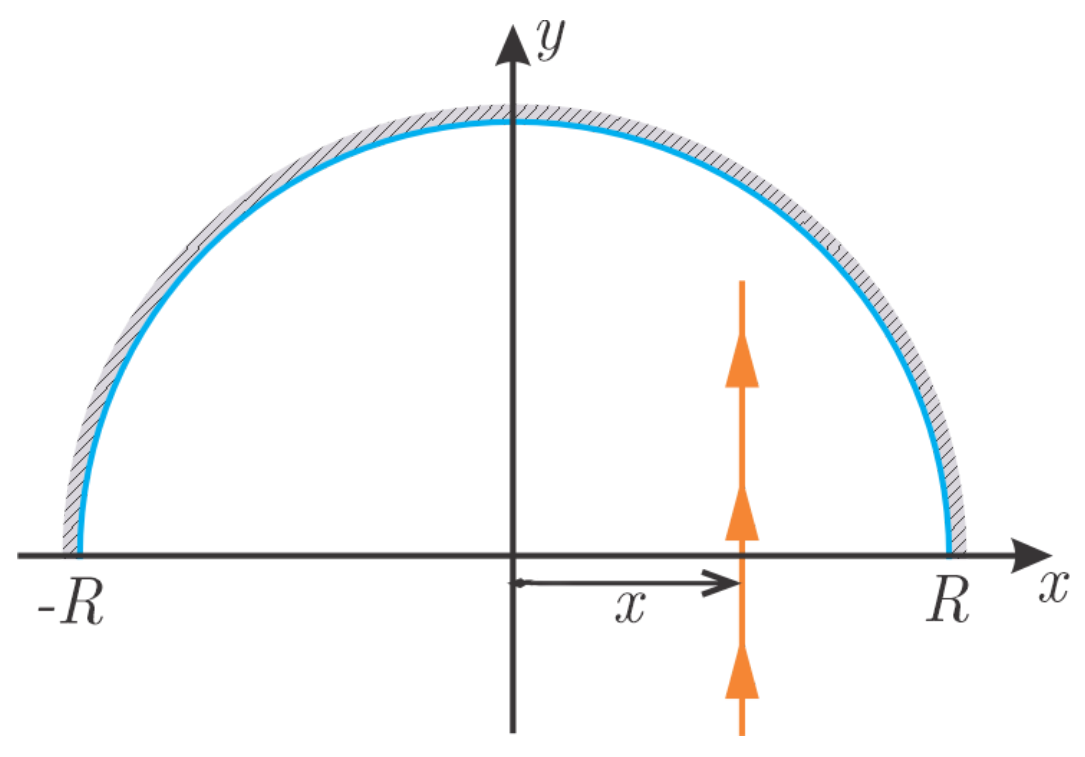
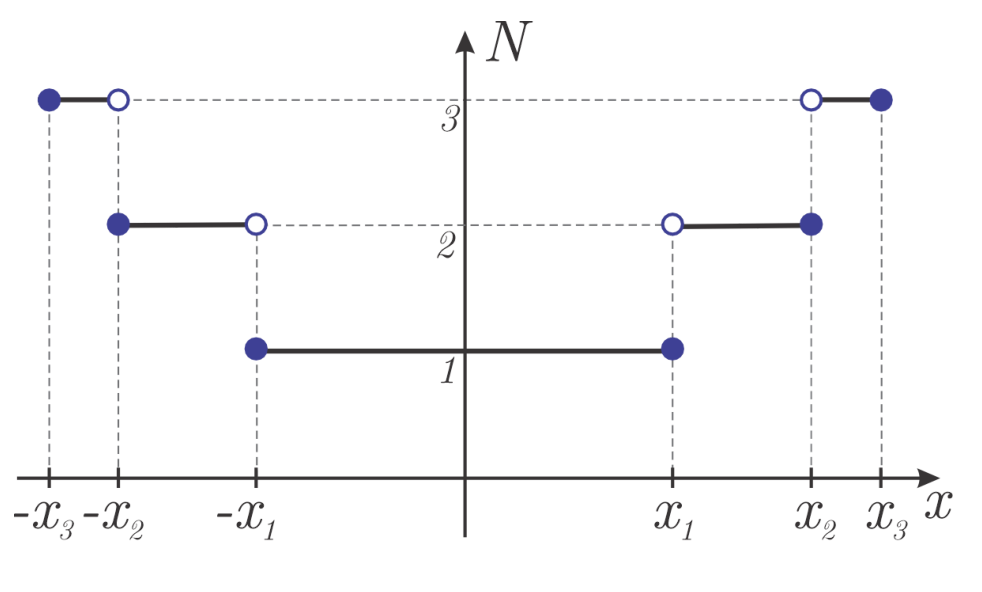
Figure 2e shows the relationship between the -coordinate of an incident ray and the number of reflections it undergoes, up to . As varies over the interval , the variable varies over all natural numbers greater than or equal to 1. The maximum distance from the optical axis that allows an incident ray to be reflected by the mirror at most times is denoted .
T2-A1 Find the general expression for in the infinite sequence that limits the coordinates of the rays with at most reflections. Express your answer in terms of and . [1,5 т.]
T2-B [4.0 pts]. Solar Cooker
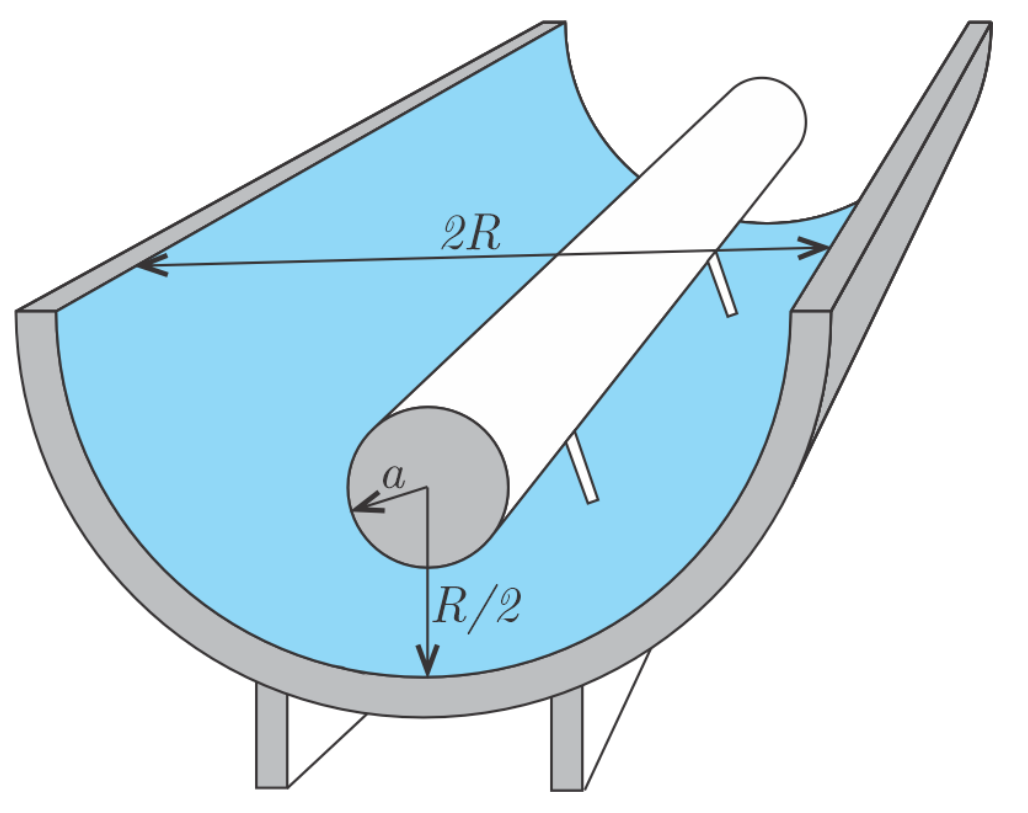
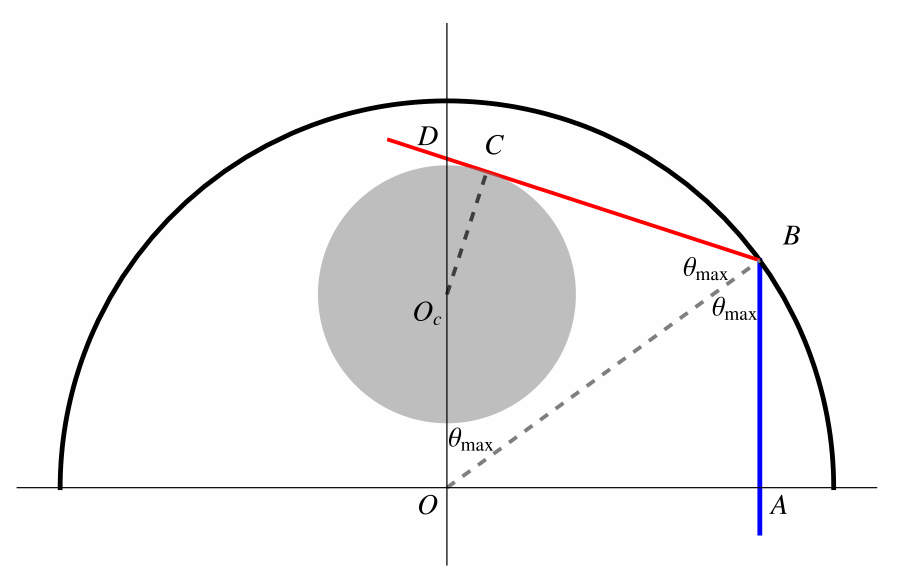
Consider a system consisting of a half-hollow-cylinder mirror and a cylindrical container. The cylinder is fully absorbing: any ray of light hitting it will be absorbed. The mirror radius is . The container radius . The axes of the mirror and the container are parallel. The center of the container is from the mirror on the system's symmetry plane, as shown in figure 2f. The mirror harnesses solar radiation to heat food inside the container. Assume that the sunlight is of constant and uniform intensity (power per unit area), and that the light rays are parallel to the optical axis of the mirror. Furthermore, assume that is such that any ray that is absorbed by the cylinder reflects from the mirror at most once. Let be the maximum angle of incidence on the mirror (measured with respect to the normal drawn at the point of incidence) of any reflected ray striking the container.
T2-B1 The container radius is . Write and in terms of . [2 т.]
If you do not find and , use the expression given for the rest of the problem.
T2-B2 Let be the power that would be received by the cylinder if the mirror was not present. Write , the ratio of the actual received power to , in terms of . [1,5 т.]
T2-B3 If m, write the value of such that . Give your answer in cm. [0,5 т.]
T2-C [4.5 pts]. Caustics and Cusp
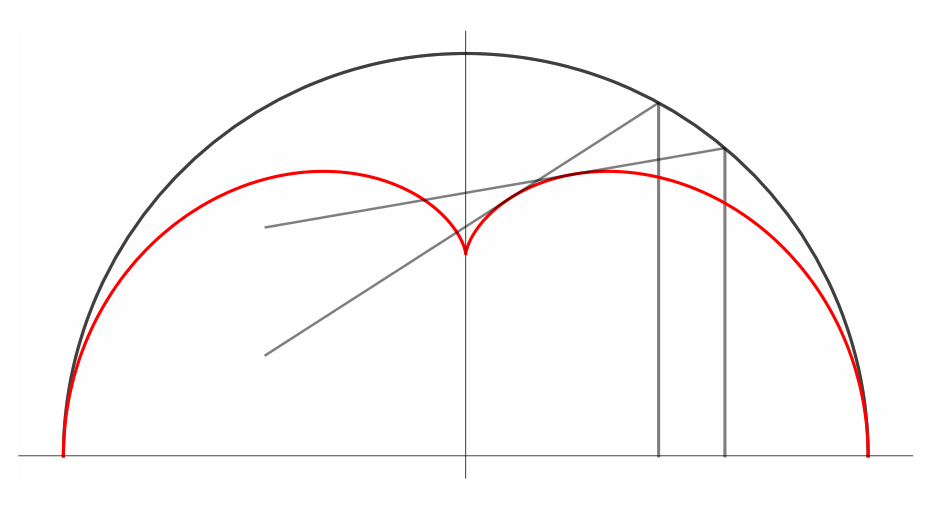
T2-C1 Consider a ray that strikes the mirror at an angle , as shown in Figure 2g. Upon reflection, the equation corresponding to this ray in the coordinate system defined in Figure 2g. is . Write and in terms of and
Hint: the expected form of and , with numerical constants. [0,5 т.]
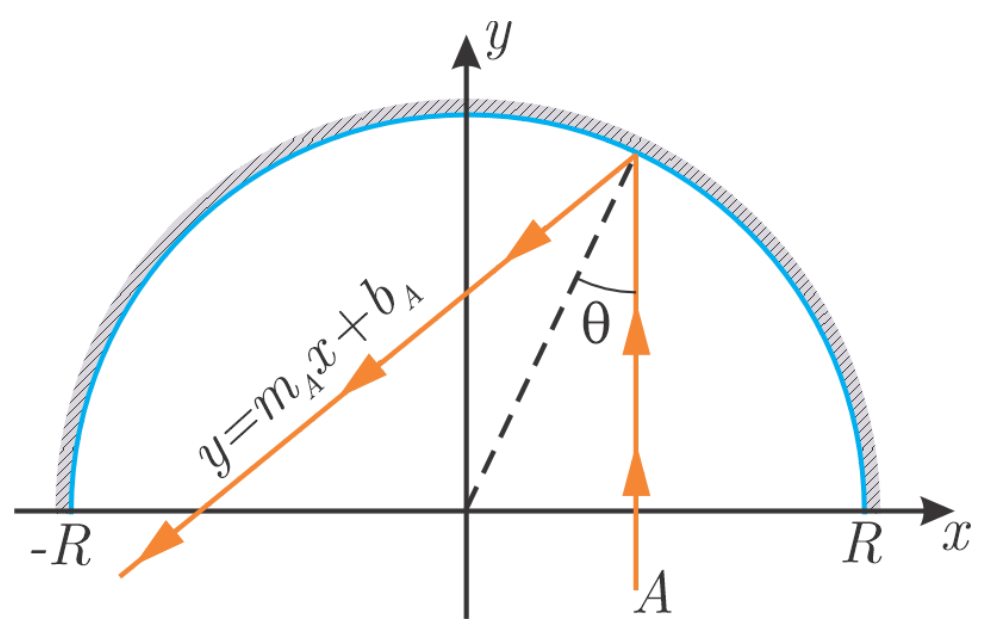
T2-C2 Now consider a ray , parallel to , that strikes the surface at an angle , with . Upon reflection, the equation corresponding to this ray is . Write and in terms of , , and , approximating to first order in . [2 т.]
T2-C3 Find the coordinates of the point of intersection between the reflected rays of and . Write your answer in terms of and . [1 т.]
T2-C4 For , we have . Write and in terms of and find the values of the integers and (equivalently, give the rational number ). [1 т.]
Отговори
- T2-A1
- T2-B1
- T2-B2
- T2-B3 12 cm
- T2-C1
- T2-C2
- T2-C3
- T2-C4
Решение
PART A [1.5 pts]. Multiple reflections
T2-A1 [1.5 pts]. For , finding corresponds to considering the limiting case of the ray, shown in blue in the figure below.
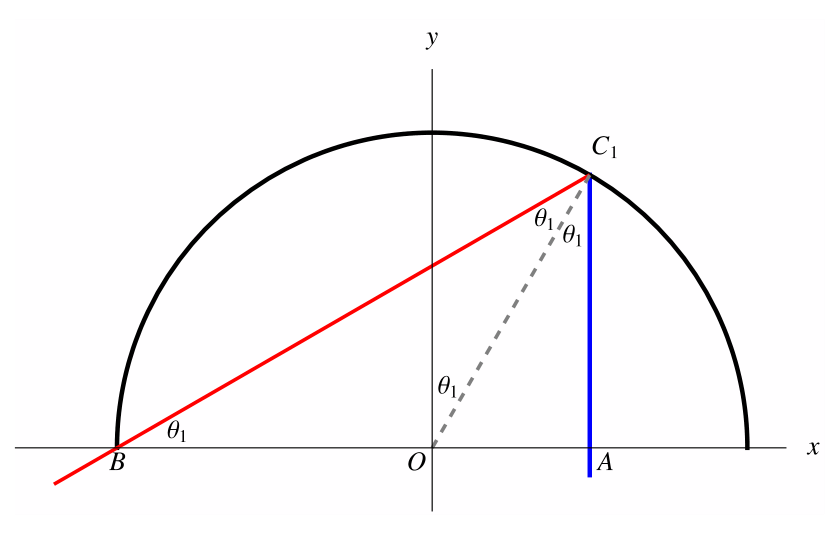
In this case, the incident ray passes through point , and the reflected ray, shown in red in the figure, passes exactly through point on the edge of the mirror.
Let be the angle formed by the radius passing through the reflection point with the vertical axis (the axis). Let be the center of the mirror.
Since the incident ray is parallel to the axis, the angle of incidence is
By the law of reflection,
Additionally, note that the triangle is isosceles, so
Finally, summing the internal angles of the triangle , we have
Correspondingly, from the triangle , we obtain
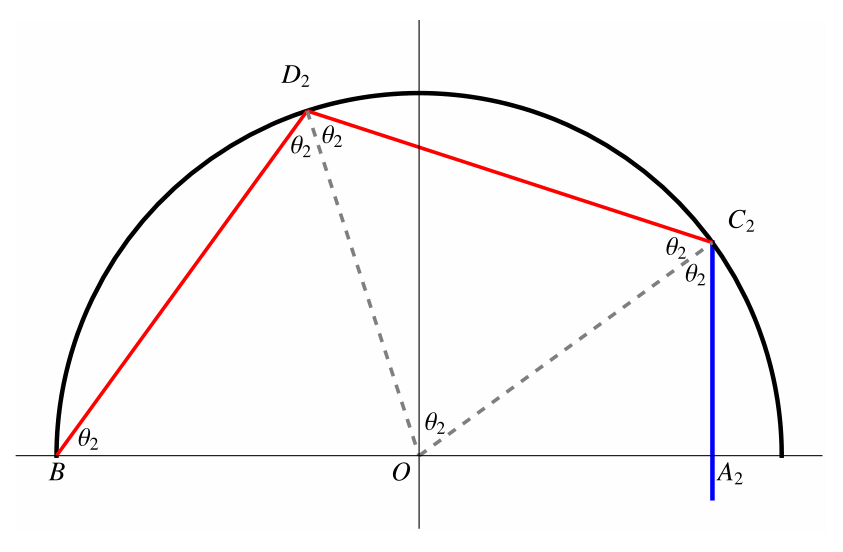
For , the limiting case for two reflections is shown in the figure below.
In analogy with the case , we let be the angle between the radius passing through the reflection point and the mirror axis. We see that the trajectory of the reflected ray determines two isosceles triangles with a common side and a base angle of . Also note that the ray's trajectory forms half of a regular pentagon. Summing over the internal angles of the two isosceles triangles and the rectangular triangle, we obtain
which simplifies to
Correspondingly,
Case n=3: For completeness, we present the limiting case for 3 reflections in the figure below.
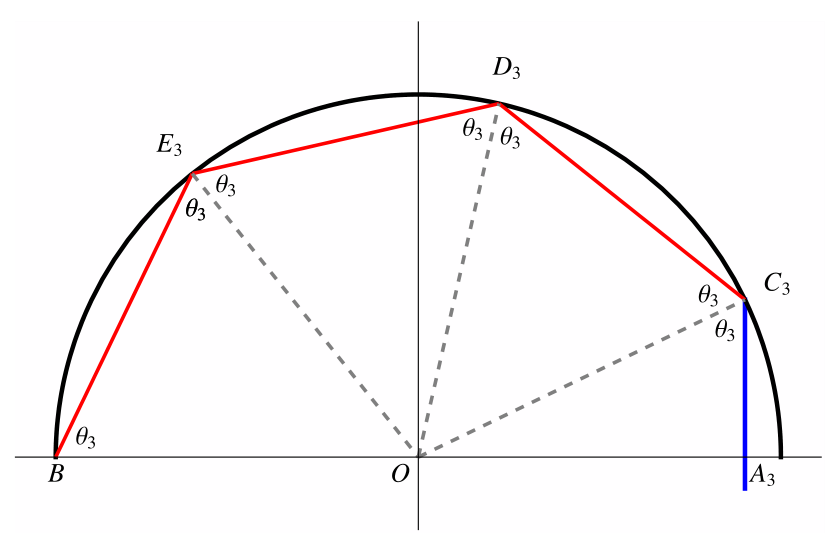
Letting be the incidence angle, we observe that the trajectory of the reflected ray determines three isosceles triangles with common sides and a base angle of . Also notice that the ray's trajectory now forms half of a regular heptagon. Summing over the internal angles of the three isosceles triangles and the rectangular triangle, we obtain
which simplifies to
Correspondingly
Generalizing the result, the limiting case for reflections corresponds to the ray with incidence angle .
The trajectory of the reflected ray determines isosceles triangles with common sides and a base angle of .
Also note that the ray's trajectory now forms half of a regular -gon. Summing over the internal angles of the isosceles triangles and the rectangular triangle determined by the incident ray, we obtain
which simplifies to
Correspondingly
T2-B [4.0 pts]. Solar Cooker
T2-B1 [2.0 pts].
The limiting case is shown in the figure below.
- is the center of the container.
- is the incidence point on the -axis
- is the reflection point
- The reflected ray is tangential to the container at the point
- The reflected ray crosses the -axis at .
As the triangle is isosceles,
The triangle is rectangle
The coefficients read
T2-B2 [1.5 pts]. Without the mirror:
where is the sunlight intensity and is the length of the cylinder.
With the mirror:
Thus
Alternative answer in terms of and : Without the mirror:
where is the sunlight intensity and is the length of the cylinder.
With the mirror:
Thus
T2-B3 [0.5 pts]. If
Finally
Alternative solution parametrized in terms of and
T2-C [4.5 pts]. Caustics and Cusp
T2-C1 [0.5 pts].
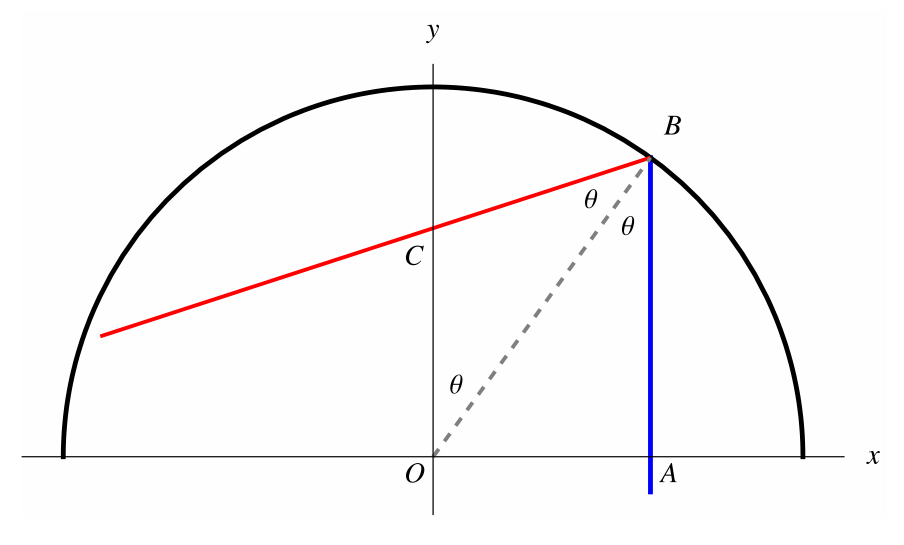
The reflected ray forms an angle with the vertical axis. Therefore, the slope of the line is
The reflected ray intersects the -axis at , , forming the isosceles triangle . from the intersection
Equivalent expressions:
T2-C2 [2.0 pts].
The slope is
Then, the first-order expansion of reads
On the other hand, the intercept is
and the first-order expansion reads
Equivalent expressions:
T2-C3 [1.0 pts].
The coordinates of the intersection point, , fulfill the following equations:
Solving:
Replacing and , we find:
Equivalent expressions:
T2-C4 [1.0 pts]. For , we use the approximations
Thus, near the cusp, the caustic is approximated as
Solving for , we get
and substitute in
Comparing with
we find
This shows that the shape of the cusp is universal and that its tip is located at .
Оригинал в Архива: T2.pdf · официални решения: theory_sol.pdf