IZhO 2014, Теория — Задача 3. Metamaterials
X International Zhautykov Olympiad/Theoretical Competition — THEORETICAL COMPETITION, January 14, 2014 · 14 януари 2014 г. · 10 т.
Please read this first:
The time available for the theoretical competition is 4 hours. There are three questions.
Use only the pen provided.
You can use your own calculator for numerical calculations. If you don’t have one, please ask for it from Olympiad organizers.
You are provided with Writing sheet and additional paper. You can use the additional paper for drafts of your solutions but these papers will not be checked. Your final solutions which will be evaluated should be on the Writing sheets. Please use as little text as possible. You should mostly use equations, numbers, figures and plots.
Use only the front side of Writing sheets. Write only inside the boxed area.
Begin each question on a separate sheet of paper.
Fill the boxes at the top of each sheet of paper with your country (Country), your student code (Student Code), the question number (Question Number), the progressive number of each sheet (Page Number), and the total number of Writing sheets used (Total Number of Pages). If you use some blank Writing sheets for notes that you do not wish to be evaluated, put a large X across the entire sheet and do not include it in your numbering.
At the end of the exam, arrange all sheets for each problem in the following order:
- Used Writing sheets in order;
- The sheets you do not wish to be evaluated
- Unused sheets and the printed question.
Place the papers inside the envelope and leave everything on your desk. You are not allowed to take any paper out of the room.
Условие
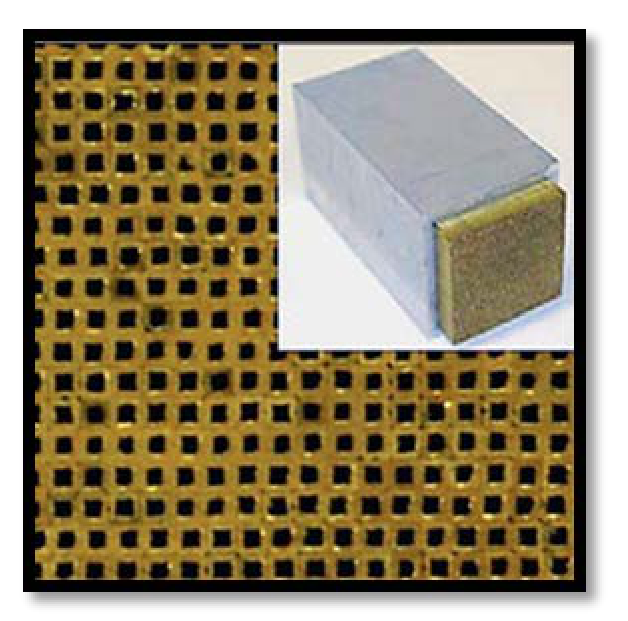
Metamaterials are composite materials whose properties are due not so much to the properties of its constituent elements but due to artificially tailored periodic structures. Metamaterials are synthesized in modern nanolaboratories by implantation different periodic structures with a variety of geometric shapes into the original natural material, which substantially modifies its physical properties. In a very rough approximation, those implants can be treated as artificially made atoms of extremely large size immersed into the original material. While synthesizing the metamaterial Ddveloper has the opportunity of varying various free parameters (structure sizes and constant or varying period between them, etc.).
In one nanolaboratory the metamaterial has been manufactured in the form of a wire of the length and radius , whose conductivity depends on the distance from its axis according to the law . Physical properties of the wire have been experimentally measured and are presented in the following table:
| PHYSICAL PROPERTY | NUMERICAL VALUE |
|---|---|
| Conductivity | |
| Heat transfer coefficient | |
| Thermal conductivity coefficient | |
| Young's modulus | |
| Linear expansion coefficient |
1. [1.0 points] Find an analytic formula for the total resistance of the wire, and calculate its numerical value.
An electric current is made to pass through the wire. It is known that the heat exchange with the environment obeys the Newton-Richman law,
where stands for the power loss per unit surface of the wire with the surface temperature , denotes the ambient temperature and is a constant, called the heat transfer coefficient.
2. [1.0 points] Find an analytic formula for the surface temperature of the wire and calculate its numerical value.
The wire temperature varies with the depth due to the phenomenon known as thermal conductivity, which is described by the Fourier law
where designates the power of the heat flow between the opposite faces of the parallelepiped with the square , is the temperature difference between the faces of the parallelepiped situated at a distance from each other, and is called the heat transfer coefficient.
3. [2.5 points] Find an analytic formula for the temperature in the center of the wire, and calculate its numerical value.
4. [0.5 points] Find an analytic formula for the change of the wire radius due to its thermal expansion and calculate its numerical value.
Attention! In all further calculations assume that the wire is infinitely long.
5. [0.5 points] Find an analytic formula for the magnetic induction inside the wire as a function of the distance from its axis.
6. [1.0 points] Find an analytic formula for the energy of the magnetic field inside the wire, and calculate its numerical value.
7. [1.0 points] The electric current causes an appearance of mechanical stress in the wire. Find an analytic formula for the pressure inside the wire as a function of the distance from its axis.
8. [1.0 points] Find an analytic formula for the mechanical stress energy of the wire, and calculate its numerical value.
9. [1.0 points] Find an analytic formula for the change of the wire radius due to its mechanical stress, and calculate its numerical value.
10. [0.5 points] Find the value of the thermal expansion coefficient such that the total change of the wire radius would be zero when an electric current was passing through it.
Help! The value of the magnetic constant is .
Отговори
1. 0.0239 Ohm
R0 = 3L/(2πβR³).
2. 297 K
Ts = T0 + 3I²/(4π²αβR⁴).
3. 299 K
Tmax = T0 + I²(αR³ + 3κR²)/(4π²αβκR⁶).
4. m
δRT = 3γ(αR + 4κ)I²/(16π²αβκR³).
5.
6. J
WB = μ0I²L/(24π).
7.
8. J
Wσ = 3μ0²I⁴L/(320Eπ³R²).
9. m
δRσ = 3μ0I²/(20π²ER).
10. K⁻¹
γ = 4μ0αβκR²/(5E(αR + 4κ)).
Решение
- Consider the conducting layer disposed radially at the interval . Its conductivity is
and, hence, the total conductivity is given by
Thus, the resistance of the wire is found as
- The amount of heat generated in the wire per unit time is determined by Joule law
In steady regime, the same amount of heat must be removed through the surface of the wire into the environment, therefore, according to the Newton-Richman law
whence
- Consider a cylinder of radius . Let us find an amount of heat generated per unit time inside that cylinder. To do this, let us find the electric field strength in the wire. According to Ohm's law, the current density is
therefore, the total current can be written as
Hence
The electric power generated in the cylinder is determined by the Joule law in differential form
It is evident that the power dissipated inside the cylinder must be taken away through the surface of the cylinder, thus,
Solving differential equation (11), using (10) together with the initial condition
the following solution is obtained in the form
Thus, the temperature in the center of the wire is
- The radius change of the wire is determined by the law of thermal expansion of solids and can be written as
- The magnetic field induction is determined by the circulation theorem, which, in this case, is written as
Using expression (9), we finally obtain
- The energy density of the magnetic field is given by
therefore, the energy of the magnetic field inside the wire
- Let us write the equilibrium condition for the wire layer of small width and length , disposed at the interval . The total Ampere force acting on this layer is written as
Hence, the pressure difference is obtained as
Taking into consideration that the pressure at the wire pressure is zero, one gets
- As a result of the mechanical pressure the mechanical stress appears in the crystal lattice whose energy density is determined by the expression
thus, the total energy of mechanical deformations is found as
- The radius change of the wire is determined by Hooke's law, which, in this case, can be written in the form
where is the relative change in radius.
Thus, the radius change due to mechanical stress is found as
- Comparing expressions (15) and (25) we obtain
Grading scheme
| № | Content | Points | |
|---|---|---|---|
| 1 | Formula (1) | 0.25 | 1.0 |
| Formula (2) | 0.25 | ||
| Formula (3) | 0.25 | ||
| Correct numerical numerical value in (3) | 0.25 | ||
| 2 | Formula (4) | 0.25 | 1,0 |
| Formula (5) | 0.25 | ||
| Formula (6) | 0.25 | ||
| Correct numerical numerical value in (6) | 0.25 | ||
| 3 | Formula (7) | 0.25 | 2.5 |
| Formula (8) | 0.25 | ||
| Formula (9) | 0.25 | ||
| Formula (10) | 0.25 | ||
| Formula (11) | 0.25 | ||
| Formula (12) | 0.25 | ||
| Formula (13) | 0.5 | ||
| Formula (14) | 0.25 | ||
| Correct numerical numerical value in (14) | 0.25 | ||
| 4 | Formula (15) | 0.25 | 0.5 |
| Correct numerical numerical value in (15) | 0.25 | ||
| 5 | Formula (16) | 0.25 | 0.5 |
| Formula (17) | 0.25 | ||
| 6 | Formula (18) | 0.5 | 1.0 |
| Formula (19) | 0.25 | ||
| Correct numerical numerical value in (19) | 0.25 | ||
| 7 | Formula (20) | 0.25 | 1.0 |
| Formula (21) | 0.25 | ||
| Formula (22) | 0.5 | ||
| 8 | Formula (23) | 0.5 | 1.0 |
| Formula (24) | 0.25 | ||
| Correct numerical numerical value in (24) | 0.25 | ||
| 9 | Formula (25) | 0.5 | 1.0 |
| Formula (26) | 0.25 | ||
| Correct numerical numerical value in (26) | 0.25 | ||
| 10 | Formula (27) | 0.25 | 0.5 |
| Correct numerical numerical value in (27) | 0.25 | ||
| Total | 10,0 |
Оригинал в Архива: IZhO-2014-Theory_eng.pdf · официални решения: IZhO-2014-Theory_eng_sol.pdf