USAPhO 1998, Четвъртфинал — Задача 4
1998 Creative Response Portion of Exam 1 · 25 т.
Указания
DO NOT OPEN THIS TEST UNTIL YOU ARE TOLD TO BEGIN
Show all work, as partial credit may be earned.
Communicate! Only that which is written can be graded.
A hand-held calculator may be used. Its memory must be cleared of data and programs. Calculators may not be shared.
Possibly useful information:
Gravitational field at Earth’s surface:
Newton’s gravitational constant:
Coulomb’s constant:
Elementary charge:
Binomial expansion: whenever
Concerning double jeopardy
Some problems require answers to be used in subsequent parts. Incorrect answers should be penalized only once. Correct reasoning should be acknowledged.
Условие
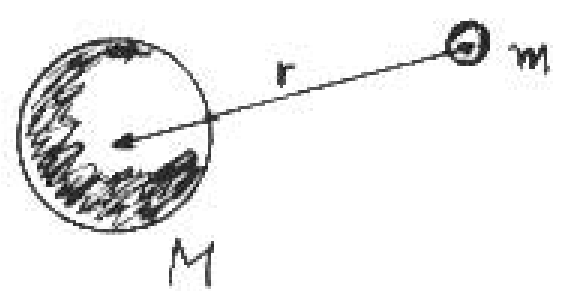
(a, 7) Use Newton’s law of gravitation to determine the constant in Kepler’s third law, , where is the period of a satellite of mass in orbit about a planet of mass , and is the radius of the satellite’s orbit (assumed circular for simplicity). Assume .
[7 т.]
(b, 6) Find the orbital radius of a geosynchronous satellite (i.e., a satellite that orbits such that it is always above the same point relative to the surface of the Earth).
Possibly useful data:
Mass of Earth:
Radius of Earth: [6 т.]
(c, 6) Consider a communications satellite in geosynchronous orbit above the mouth of the Amazon River (which is on the equator). If the radius of the satellite’s orbit decreases by 2 km, what is the change in the period (including the correct sign) of the satellite’s orbit? [6 т.]
(d, 6) For the satellite of part (c), after its orbit radius decreases by 2 km, what is the velocity, relative to an observer standing at the mouth of the Amazon, of the spot on the surface of the Earth that is directly beneath the satellite? [6 т.]
Отговори
- (a, 7)
- (b, 6) m
- (c, 6) -6.1 s
- (d, 6) 3.3 cm/s east.
Решение
(a, 7) applied to the satellite gives
(3)
where for the satellite, . (3)
Thus one obtains ,
so that . (1)
(b, 6) For geosynchronous orbit, (3)
Thus Kepler’s third law and the Earth data give . (3)
(c, 6) Let , and let , i.e., let the subscript denote the geosynchronous orbit data. With the change in orbit radius, we have and , so Kepler’s third law becomes
(1)
Use the binomial expansion to obtain
. (3)
With , it follows that . (2)
[Of these last two points, one point is for the 6.1 s; one point is for either including the minus sign or stating that the satellite’s period is shorter than before.]
(d, 6) Both the satellite and observer are revolving about the Earth’s center of mass.
Let = speed of the satellite relative to Earth’s center of mass;
Let = speed of the observer relative to Earth’s center of mass.
The quantity we seek is . Thus,
(2)
Writing and using the binomial expansion, one finds
. (2)
Numerically,
. (1)
Because the Earth rotates from west to east, and because the satellite completes one “lap” about the Earth’s C.M. in 6.1 s less than the observer, the spot moves east of the observer at the speed of 3.3 cm/s. (1)
Теми и трудност
Трудност: неоценена.
Механика · Гравитация · Орбитално движение
Предпоставки: Разширена олимпиадна подготовка
Оригинал в Архива: Quarterfinal 1998.pdf · официални решения: Quarterfinal 1998 Solutions.pdf