The best ICHO-tasks of the last years — Amsterdam workshop, October 1990 (selection from 1980–1990)
Внимание: Бележка към темата
This archive copy is the 1990 Amsterdam workshop top-twelve selection, containing eight theoretical tasks and four independent practical experiments from earlier Olympiads. 1990 identifies the workshop, not the year of every selected task. Solutions are attributed to the archive copy; no established official authorship is inferred. Practical1,2 and4 have no supplied keys. Separate report/answer forms referenced by Practical1,2 and3 are absent; Practical4 includes its blank answer sheet. Printed scientific and numerical discrepancies are retained.
Third International Workshop on the Development of the International Chemistry Olympiads (Amsterdam, October 1990)
According to the decision of the work shop of Amsterdam the delegation leaders of 8 countries made an attempt to rank the ICHO-tasks of the years 1980 ~ 1990 into the categories excellent / good / not so good / not acceptable The following pages indicate the ”top-twelve”, i.e. is the best tasks of the last years. This collection should be an aid for the ICHO-designers of the next years. Examples for tasks considered as ”not acceptable” are available for the next organisers too.
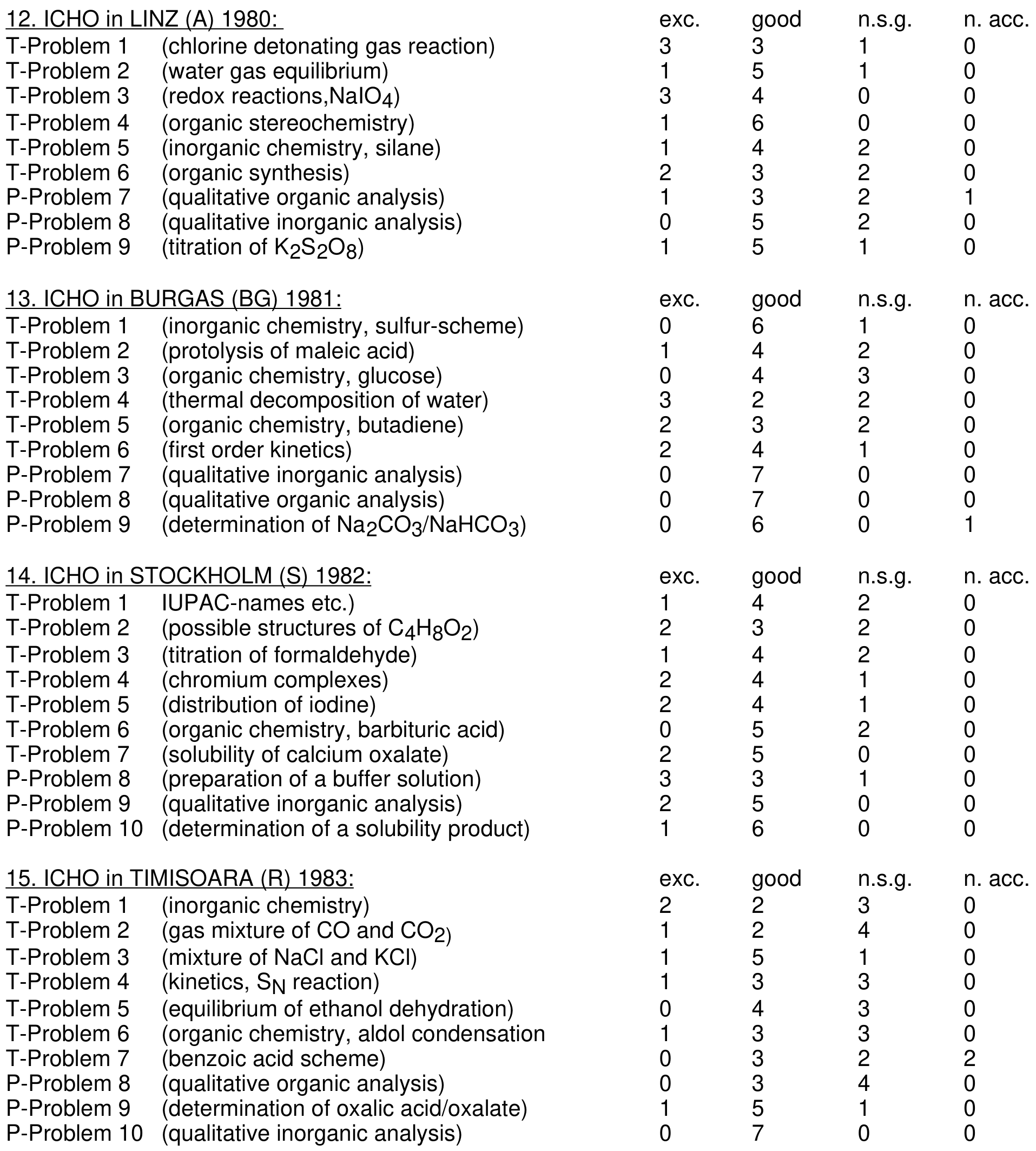
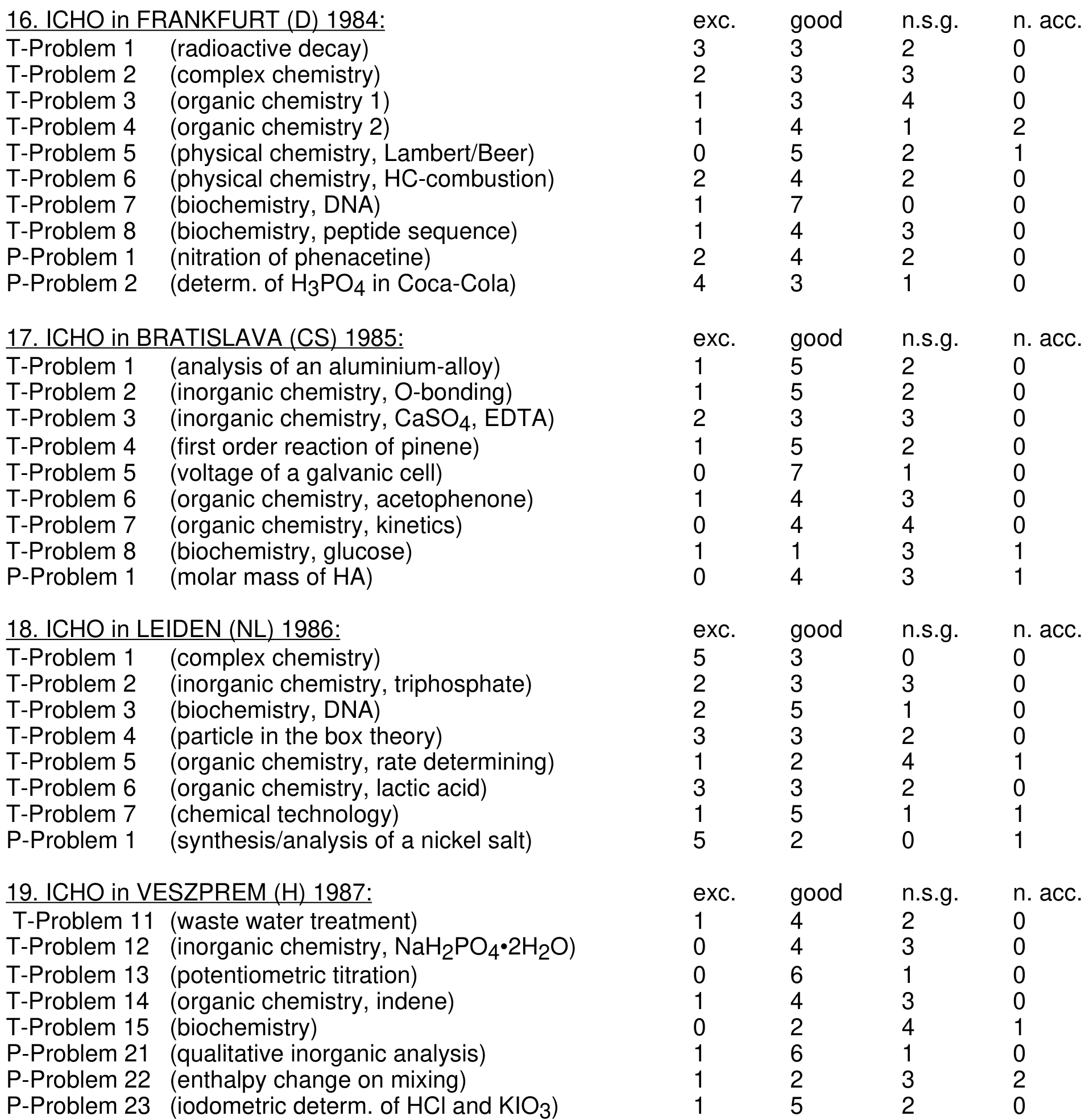
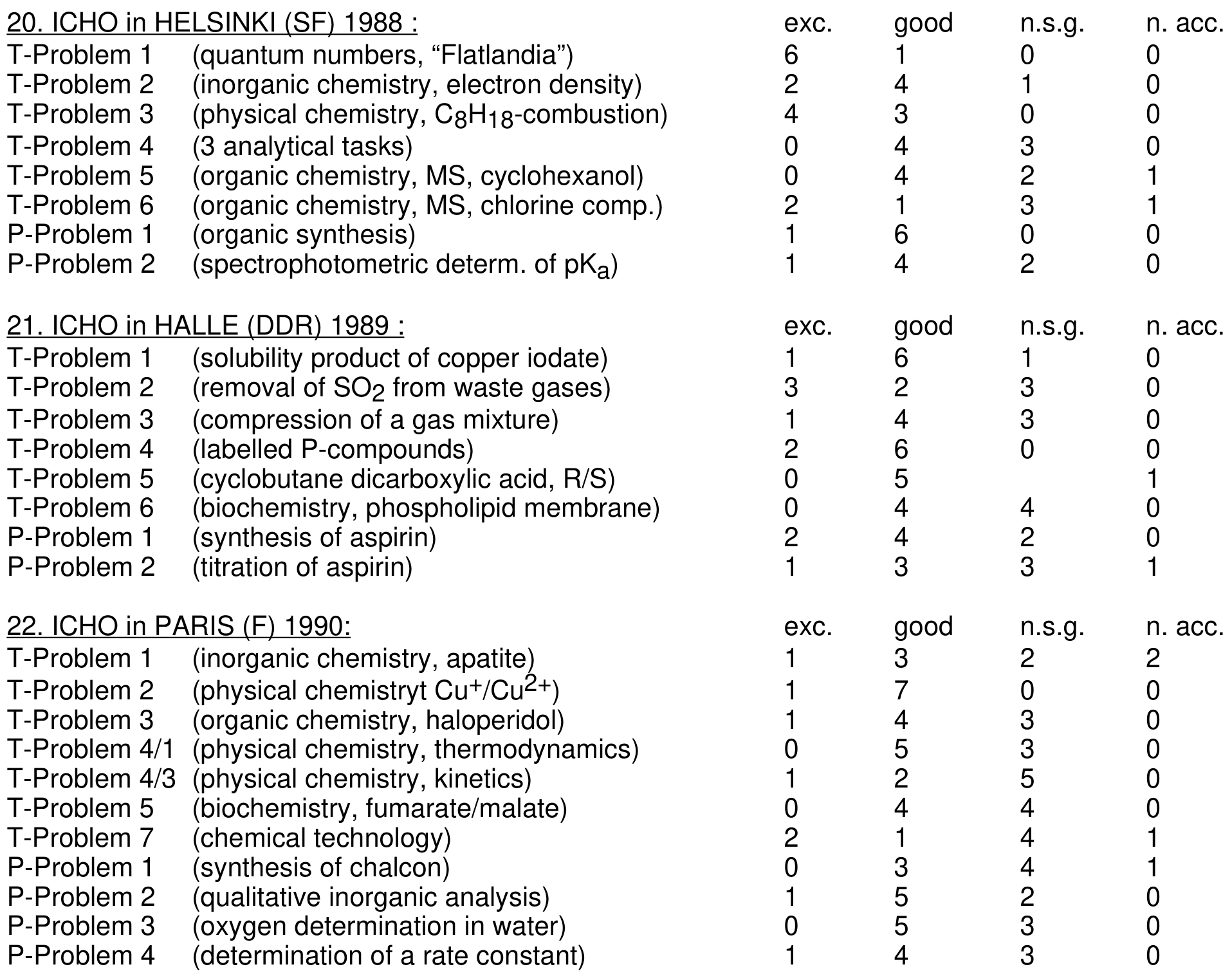
Original ranking tables (1980–1990)
The workshop’s complete native ranking tables are retained below. Ratings exc., good, n.s.g. and n.acc. are those printed by the source.
Условие
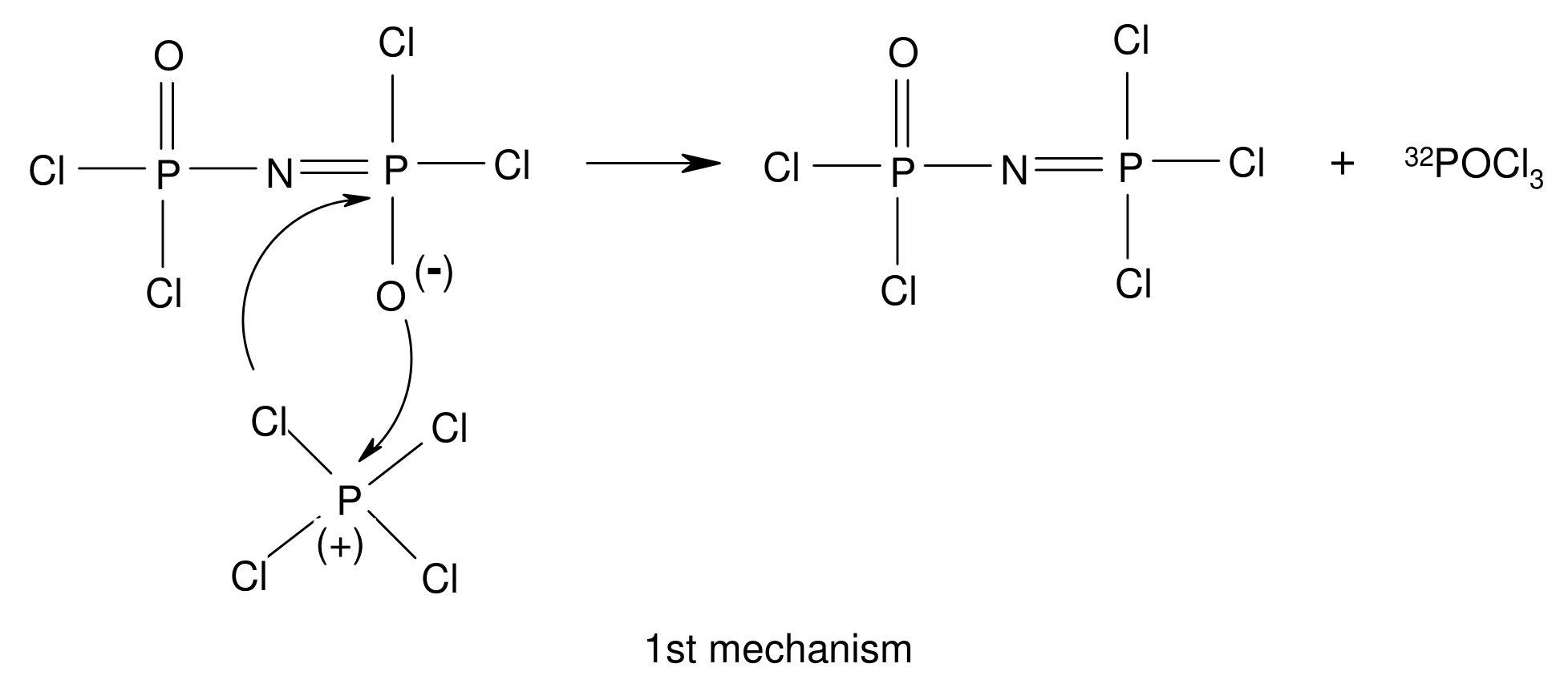
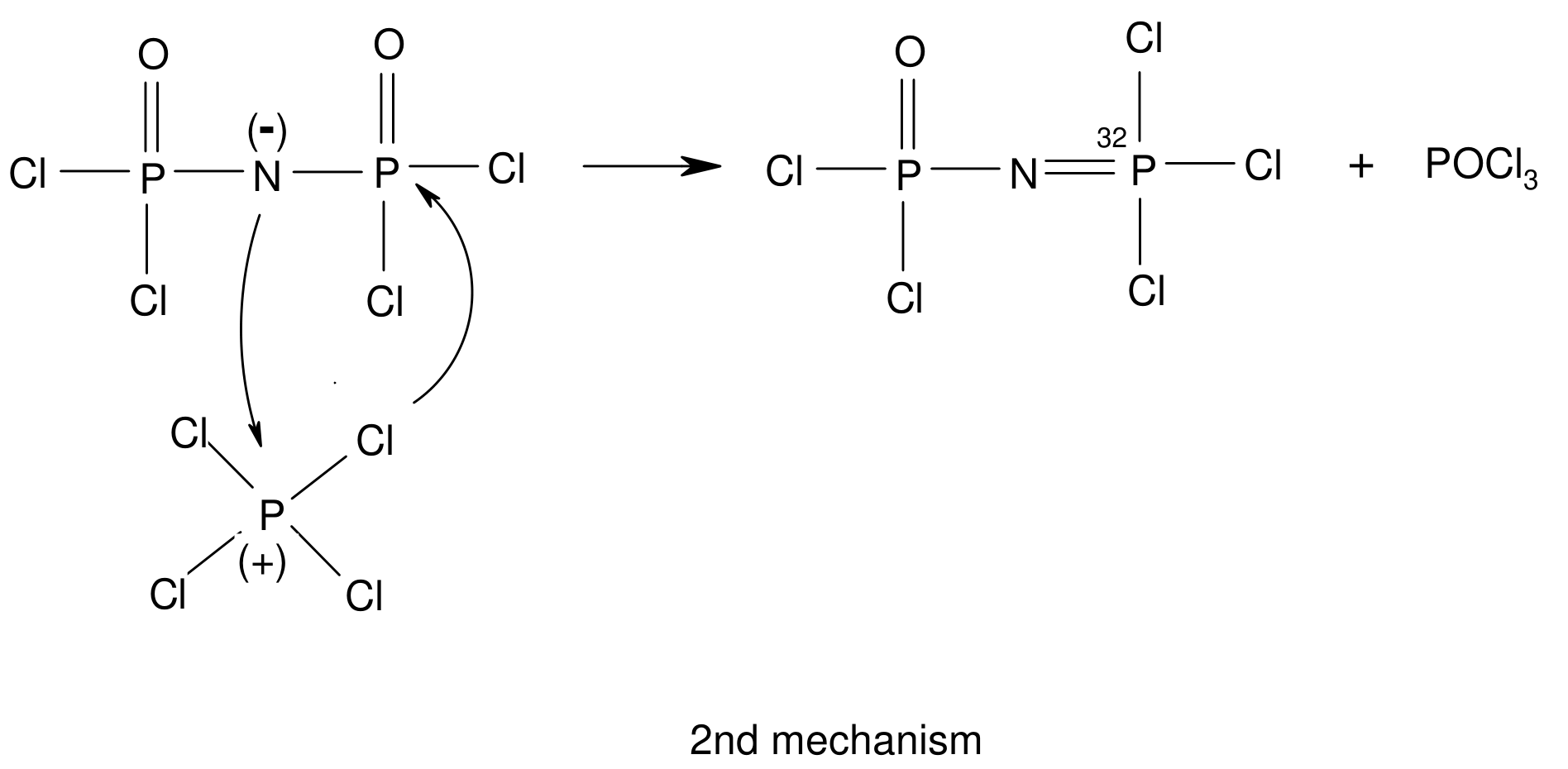
The course of chemical reactions can be followed by using labelled compounds. ³²P labelled phosphorus pentachloride (half life t1/2=14.3 days) is employed to establish reaction (1) as an electrophilic attack on a PCl4+ cation on nitrogen or on oxygen.
The reaction is carried out in tetrachloromethane and then the solvent and IV is distilled off.
Individually, samples of:
III, remaining in the distillation flask.
IV, in the distillate, and
the radio-labelled starting material, II
are hydrolysed by heating with sodium hydroxide solution. The phosphate ions formed are precipitated as ammonium magnesium phosphate. The compounds are then recrystallised and dried. Exactly weighed samples of the three precipitates are dissolved in known volumes. The radioactivity is then determined and the specific radioactivities of the phosphates are calculated (per unit mass).
1) Write the reaction equation for labelled red phosphorus forming phosphorus pentachloride.
2) Write the reaction equations for the complete hydrolysis of the compounds II and III using sodium hydroxide solution.
3) After how many days (an integer) does the radioactivity decay to 10⁻³ of the initial value?
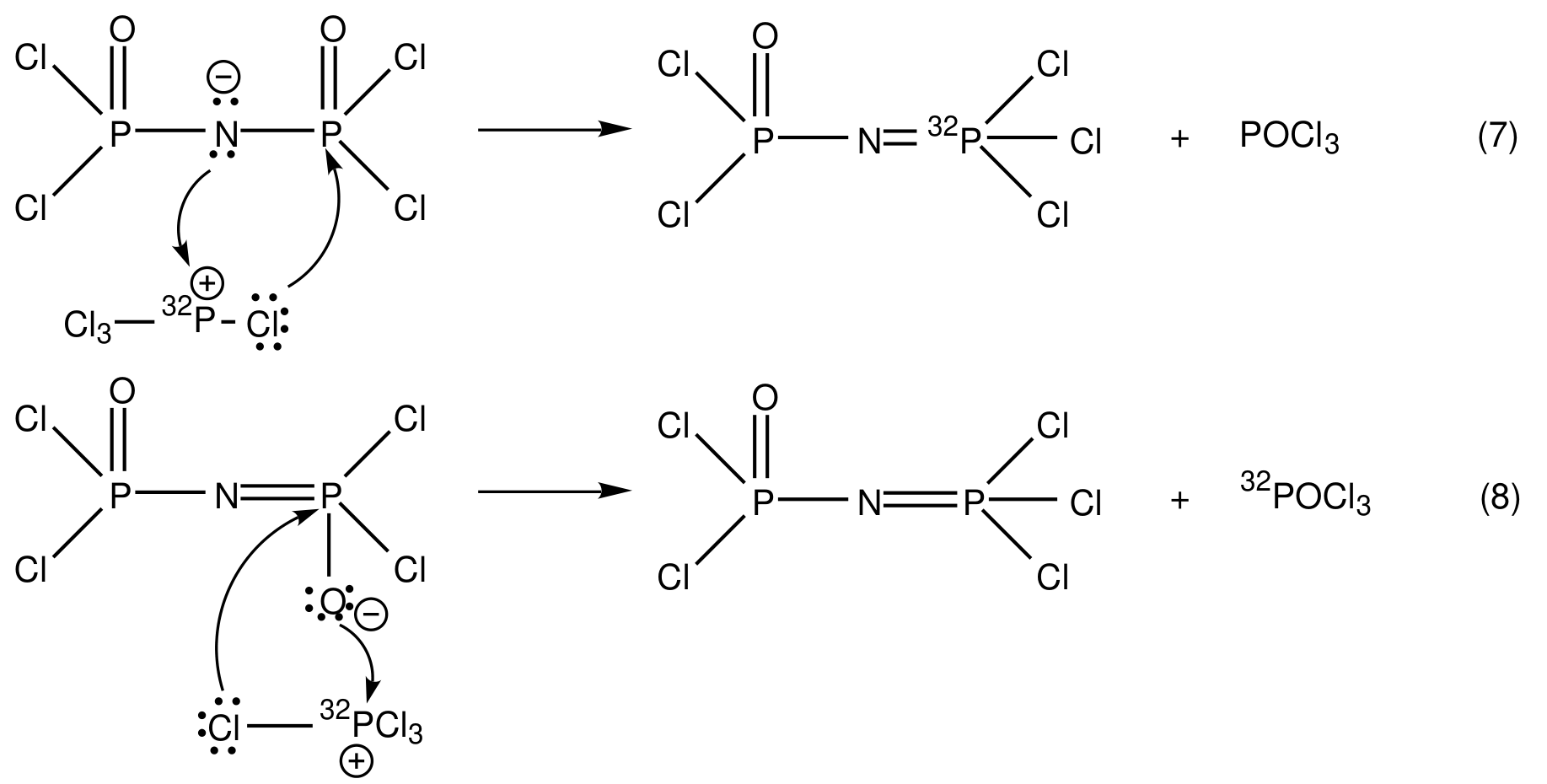
4) Write two alternative mechanisms for the reaction of labelled PCl4− with the anion of I.
5) After hydrolysis, the precipitated ammonium magnesium phosphates possess the following values of radioactivity:
II. 2380 Bq for 128 mg of Mg(NH₄)PO₄.
III. 28 Bq for 153 mg of Mg(NH₄)PO₄.
IV. 2627 Bq for 142 mg of Mg(NH₄)PO₄.
Using a calculation based on these data, what can you say about the nucleophilic centre attacked by PCl4+?
6) Given the following data,
H3PO4:pKsp of Mg(NH4)PO4pKa1=2.2,pKa2=7.2,pKa3=12.4,=12.6,
and the equilibrium concentration of NH4+=0.1moldm−3. Calculate the solubility for Mg(NH₄)PO₄ in mol dm⁻³ under idealised conditions (activity coefficient equals one) at pH equals 10.
Halle 1989 source edition — question and diagram variants
The original six workshop requests above remain unchanged. Volume 2 numbers this task Problem 4 (requests 4.1–4.6). Its setup retains the same isotope, half-life, sample activity/mass data and solubility constants. Unlike the workshop, request 4.1 omits the adjective labelled; request 4.3 does not demand an integer; request 4.5 prints PCl4− where the workshop prints PCl4+. Both setups use PCl4+ while request 4.4 prints PCl4−. The native Volume 2 drawing is retained as separate edition artwork; the complete workshop diagram is preserved above.
Anton Sirota (editor), The Competition Problems from the International Chemistry Olympiads, Volume 2, IUVENTA, 2009: Halle 1989 compiler edition. The primary source remains the Amsterdam workshop selection of October 1990.
Решение
Solution of problem No. 6:
1)
2P+5Cl2⟶2PCl5or232P+5Cl2⟶232PCl5(1)
2)
PCl5+8OH−⟶PO43−+5Cl−+4H2O(2)
3)
In the time dt dN nuclei are degradated. With λ as radio-active constant follows
dtdN=−λN(t).(4)
Solution of equation(4) gives
N(t)=N0e−λt(ielnN0N(t)=−λt).(5)
N₀ is the number of atoms present at time t=0. With half-life value
τ1/2=λln2,
from equation(5) results
lnN0N(t)=−τ1/2tln2,
t=−ln2τ1/2ln(N(t)/N0).(6)
Set in the quantities
t=ln214.3d×ln10−3=143d.
Source note: the last printed numerical substitution omits the preceding leading minus sign, while still printing 143 d.
Alternative printed key — Halle 1989 compiler edition
Anton Sirota (editor), The Competition Problems from the International Chemistry Olympiads, Volume 2, IUVENTA, 2009: Halle 1989 compiler edition. The primary source remains the Amsterdam workshop selection of October 1990. Native pages 14–16 print the following source-owned alternative key. The workshop key-1 through key-6 above is retained in full. The two POCl3 intermediate hydrolysis steps, mechanism artwork/order and exact-solution derivation are additive. Its 142.5 d result does not replace the workshop integer answer 143 d. Literal source discrepancies (decay numerator without an operator, K1K3 denominator, definition of S and unclosed parenthesis) remain disclosed.