IOM 2017, Теория — Задача 3. Clean water for the big city
2nd Olympiad of Metropolises — Chemistry, Theoretical Problems, Official English version · 6 септември 2017 г.
Original cover
Country ______
Name ______
2nd Olympiad of Metropolises
Chemistry
Theoretical Problems
6 September 2017
Moscow, Russia
Chemistry. Theoretical problems. Official English version
Указания
- Begin only when the START command is given. You have 4.5 hours to work on the problems.
- Use only the pen and calculator provided.
- All results must be written in the appropriate boxes within the text. Anything written elsewhere will not be graded. Use the reverse of the problem pages if you need scratch paper.
- Write relevant calculations in the appropriate boxes when necessary. If you provide only correct end results for complicated questions, you will receive no score.
- Raise your hand if you have any questions concerning the text of the problems.
- Raise your hand if you need a restroom break.
- The official English version of this examination is available on request only for clarification.
Original key cover
2nd Olympiad of Metropolises
Chemistry
Theoretical Problems
with solutions
6 September 2017
Moscow,Russia
Chemistry. Theoretical problems with solutions. Official English version
Условие
Problem 3. Clean water for the big city (10 marks)
| Question | 1 | 2 | 3a | 3b | 4a | 4b | 5 | 6 | Total |
|---|---|---|---|---|---|---|---|---|---|
| Points | 3 | 2 | 3 | 2 | 2 | 2 | 4 | 2 | 20 |
| Result |
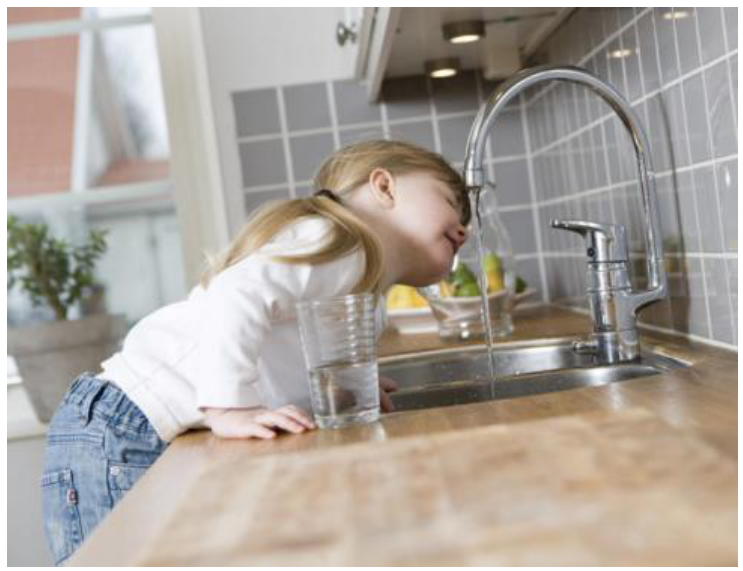
Purification of water is one of the most important problems of a big city. In Moscow, water is quite clean; one can drink cold tap water without any additional filtrations or other procedures. Such purity is achieved by the integrated use of mechanical, physico-chemical and chemical methods in the urban water purification system.
1 Chlorination is the most common method of water purification. Indicate what other methods are suitable for use in urban water treatment systems.
UV irradiation
Ozonation
Binding of heavy metal ions by concentrated ammonia solutions
Oxidation by silver and gold ions
Adsorption on carbon filters
Precipitation of heavy metal ions by hydrogen sulfide
Numbers of the correct answers: ______ [3 т.]
For many years in Moscow, pure chlorine was used for chlorination of water. Chlorine was stored as a liquid at elevated pressure. However, since 2012 urban services use another reagent – sodium hypochlorite, which is safe for humans, but effectively kills most types of microorganisms. Being dissolved in water, both chlorinating reagents form (reversibly) the same substance.
2 Give the structural formula of this substance.
______ [2 т.]
3. According to the Russian sanitary standards, pH of drinking water must be kept in the range from 6.0 to 9.0.
3a a) How many milligrams of pure sodium hypochlorite can be dissolved in 1 liter of water so that the pH value still does not exceed the limits? The acidity of hypochlorous acid: .
Calculation
______ mg [3 т.]
3b b) The optimal technological scheme of water purification involves preparation of sodium hypochlorite solutions in which the concentrations of the ionic and protonated forms are the same. What is the pH of such solutions?
Calculation
pH = ______ [2 т.]
4. Chlorine-containing oxidants used for water purification or bleaching are characterized by the content of "active chlorine" defined as the ratio of the mass of chlorine obtained by the interaction of the oxidant with hydrochloric acid to the mass of the oxidant (in %).
4a a) Can the «active chlorine content» exceed 100%? If yes, give an example. If not, explain why it is impossible.
Answer (yes, no): ______
Reaction equation or arguments: ______ [2 т.]
4b b) Solid sodium hypochlorite is not stable. For this reason, it is produced as a 15 wt.% solution. What is the percentage of «active chlorine» in such solution?
Calculation
% of “active chlorine” = ______ [2 т.]
5 The high-quality sodium hypochlorite needed for purification is obtained by electrolysis directly at the water treatment plant. What substance is used as the reagent? Write the equations of the cathode and anode processes, as well as the overall equation of electrolysis.
Reagent: ______
Cathode process: ______
Anode process: ______
Overall equation: ______ [4 т.]
6 In general, Moscow citizens spend water very moderately (partly due to the installation of water consumption meters): on average, each of the 14.2 million residents of the capital uses 141 liters of water per day. Assuming that 0.3 mg / L of "active chlorine" in water is needed for the effective purification, calculate how many tons of 15% sodium hypochlorite solution is consumed by the city every day?
Calculation:
______ t [2 т.]
Решение
Solutions
1 Numbers of the correct answers:1,2,5.
1 point for each correct answer,
−1 point for each wrong answer [3 т.]
2 — 2 points
(1 point without structure) [2 т.]
3a Calculation
— 1 point
— 1 point
At , .
— 0.5 points
— 0.5 points [3 т.]
3b Calculation
— 1 point
If , then , .
pH=7.54 — 1 point [2 т.]
4a Answer (yes, no): Yes
Reaction equation or arguments:
2 points [2 т.]
4b Calculation
— 1 point
Take100 g of the solution. , .
, — 1 point
% of “active chlorine”=14.2% [2 т.]
5 Reagent: NaCl — 1 point
Cathode process: — 1 point
Anode process: — 1 point
Overall equation:
or — 1 point [4 т.]
6 Calculation:
Total volume of water: — 0.5 points
Total mass of active chlorine: — 0.5 points
— 1 point [2 т.]
Бележка от източника
Native source has six whole tasks and 34 scored flat request labels; catalogue 30 parts is provisional. Each native heading says 10 marks while grids total 20,16,20,30,88,20. Original key 2 repeats trialkylbenzene for both 65% and 35%. Original Stickland scheme prints Pi=HPO3(2−). Copper key 5 gives 0.0025 M then uses 0.025 in ion-product expressions. Thermal key 2/4 prints 20/607.74=0.0987 mol for lithium silicide; its product heating uses 27/61/83 while supplied heat-capacity table gives 25/68/74 forFe/FeO/KCl. Original expressions/results/marking values remain literal. Scientific molecular drawings, stereochemistry, reaction schemes, photos, periodic table and blank molecular response grids are original exact crops. Plain calculation rectangles preserve printed labels and blank fields. Full original official keys and detailed uncredited comments retained; no author name inferred. The native key comment for problem 4 request 6 prints Mowing backwards; that spelling is retained.
Оригинал в Архива: Problems.pdf · официални решения: Solutions.pdf