IOM 2017, Теория — Задача 4. How do organisms obtain energy?
2nd Olympiad of Metropolises — Chemistry, Theoretical Problems, Official English version · 6 септември 2017 г.
Original cover
Country ______
Name ______
2nd Olympiad of Metropolises
Chemistry
Theoretical Problems
6 September 2017
Moscow, Russia
Chemistry. Theoretical problems. Official English version
Указания
- Begin only when the START command is given. You have 4.5 hours to work on the problems.
- Use only the pen and calculator provided.
- All results must be written in the appropriate boxes within the text. Anything written elsewhere will not be graded. Use the reverse of the problem pages if you need scratch paper.
- Write relevant calculations in the appropriate boxes when necessary. If you provide only correct end results for complicated questions, you will receive no score.
- Raise your hand if you have any questions concerning the text of the problems.
- Raise your hand if you need a restroom break.
- The official English version of this examination is available on request only for clarification.
Original key cover
2nd Olympiad of Metropolises
Chemistry
Theoretical Problems
with solutions
6 September 2017
Moscow,Russia
Chemistry. Theoretical problems with solutions. Official English version
Условие
Problem 4. How do organisms obtain energy? (10 marks)
| Question | 1 | 2 | 3 | 4 | 5 | 6 | Total |
|---|---|---|---|---|---|---|---|
| Points | 2 | 7 | 3 | 2 | 10 | 6 | 30 |
| Result |
Many living things obtain energy by oxidizing organic molecules with reduced and/or partially oxidized carbon atoms. A substance in a more reduced state provides for greater energy that can be potentially obtained from it. Some carbon containing compounds are given hereunder in an arbitrary sequence: .
1 Arrange the compounds in the increasing order (from the most reduced to the most oxidized) of the averaged oxidation degree (oxidation number) of its carbon atoms. If two or more compounds are equal in this parameter, write down the corresponding molecules one below the other.

[2 т.]
Being the initial stage of digestion of monosaccharides, glycolysis occurs under both aerobic (with oxygen) and anaerobic (without oxygen) conditions leading to one and the same product (pyruvate, the pyruvic acid anion) in both cases. Further direction of pyruvate transformation depends on particular organism and conditions. Metabolic pathways of pyruvate are extremely diverse in anaerobic bacteria. These processes referred to as fermentations allow accumulating energy in the form of ATP as a result of oxygen free oxidation of organic substrates. Apart from widely known lactic acid and alcoholic fermentations, there are other fermentation types leading to organic products with 1 to 4 carbon atoms as well as to mixtures of these products. Some fermentation pathways will be considered below.
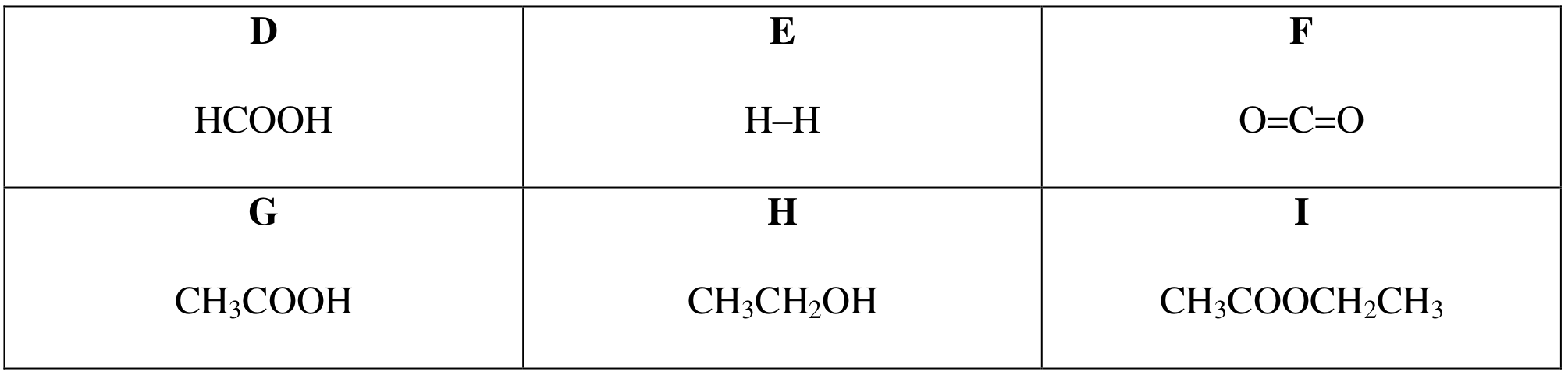
A process typical of Escherichia and Salmonella genera is shown on the hereunder scheme. It starts with the lyase (the enzyme facilitating a C–C bond cleavage) catalyzed transformation of pyruvate into acetyl-coenzyme A and the compound D. In some bacterial species, D turns out to be the final fermentation product; whereas other species degrade it to a mixture of equimolar amounts of two gases E and F (E is more than 15 times lighter than F). Acetyl-coenzyme A affords two asymmetric compounds G and H containing two carbon atoms each. Only one carbon atom in each of G and H is linked with oxygen atom(s). The averaged oxidation degree of carbon atoms in G is higher than that in H. Under definite conditions, G and H interact at 1:1 molar ratio leading to the compound I with a specific strong odor. I is free of asymmetric carbon atoms.
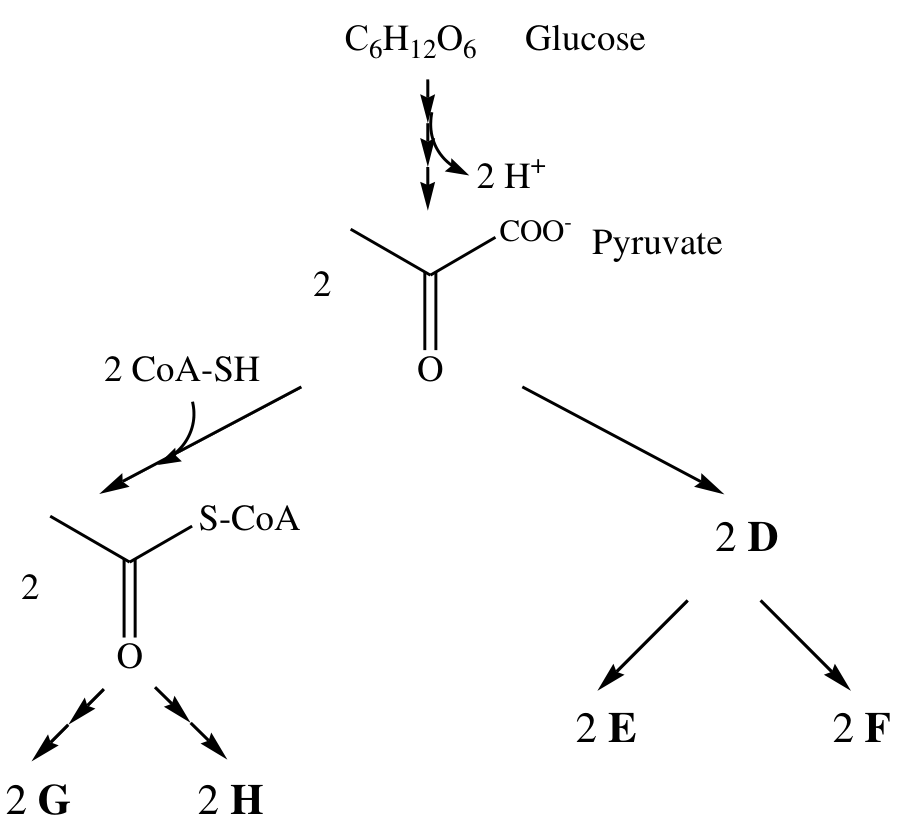
2 Draw the compounds D-I.
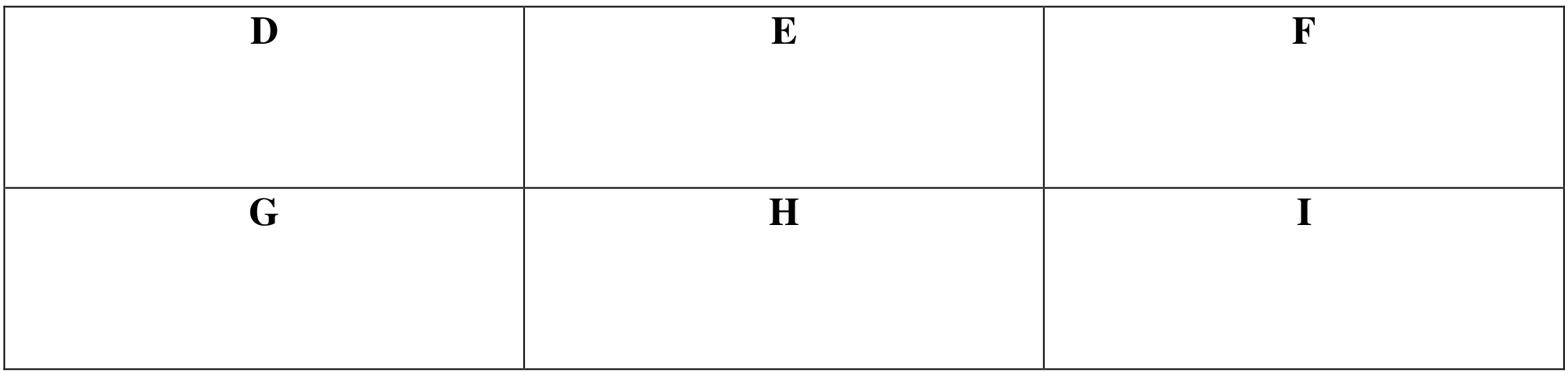
[7 т.]
Another type of fermentation is met in Clostridium genus. In this case one molecule of glucose affords a mixture of the same gases E and F (in the same ratio as in i. 2), as well as an unbranched anion J composed of 3 elements. The corresponding acid J1 contains 54.52 % by mass of C.
3 Write down the equation of glucose fermentation into E, F, and J1, occurred in Clostridium bacteria.
Calculations and work: ______
Equation: ______ [3 т.]
P, Q, and T composed of 4 carbon atoms each are formed as a result of glucose fermentation by bacteria belonging to Enterobacter genus (see the rightwards scheme).
Information about the enzymes on the scheme:
is -acetolactate synthase,
is -acetolactate decarboxylase,
and belong to same class of enzymes.
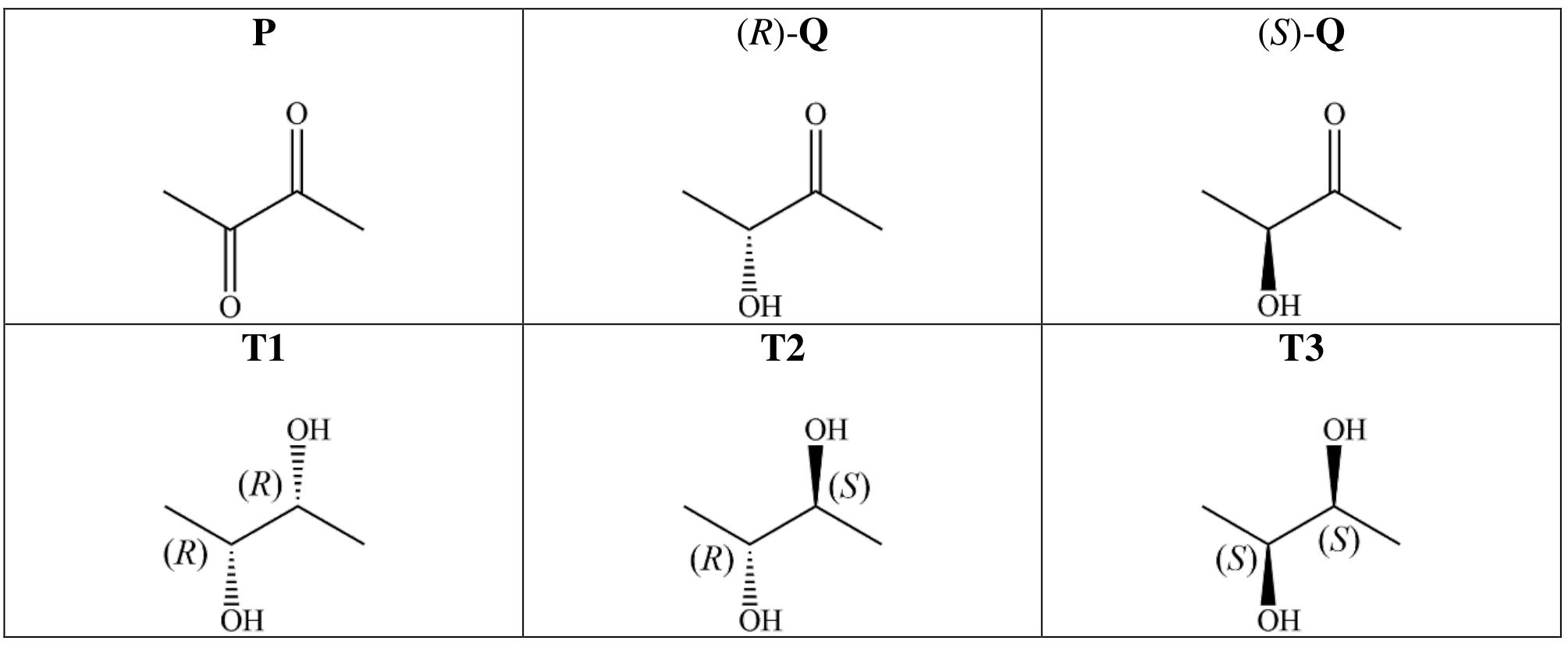
There is one peak in the NMR spectrum of P, and four peaks of different intensity in that of Q. Q contains one asymmetric center. T1-T3 are stereoisomers. Transformation of P into Q occurs in both directions in some bacteria.
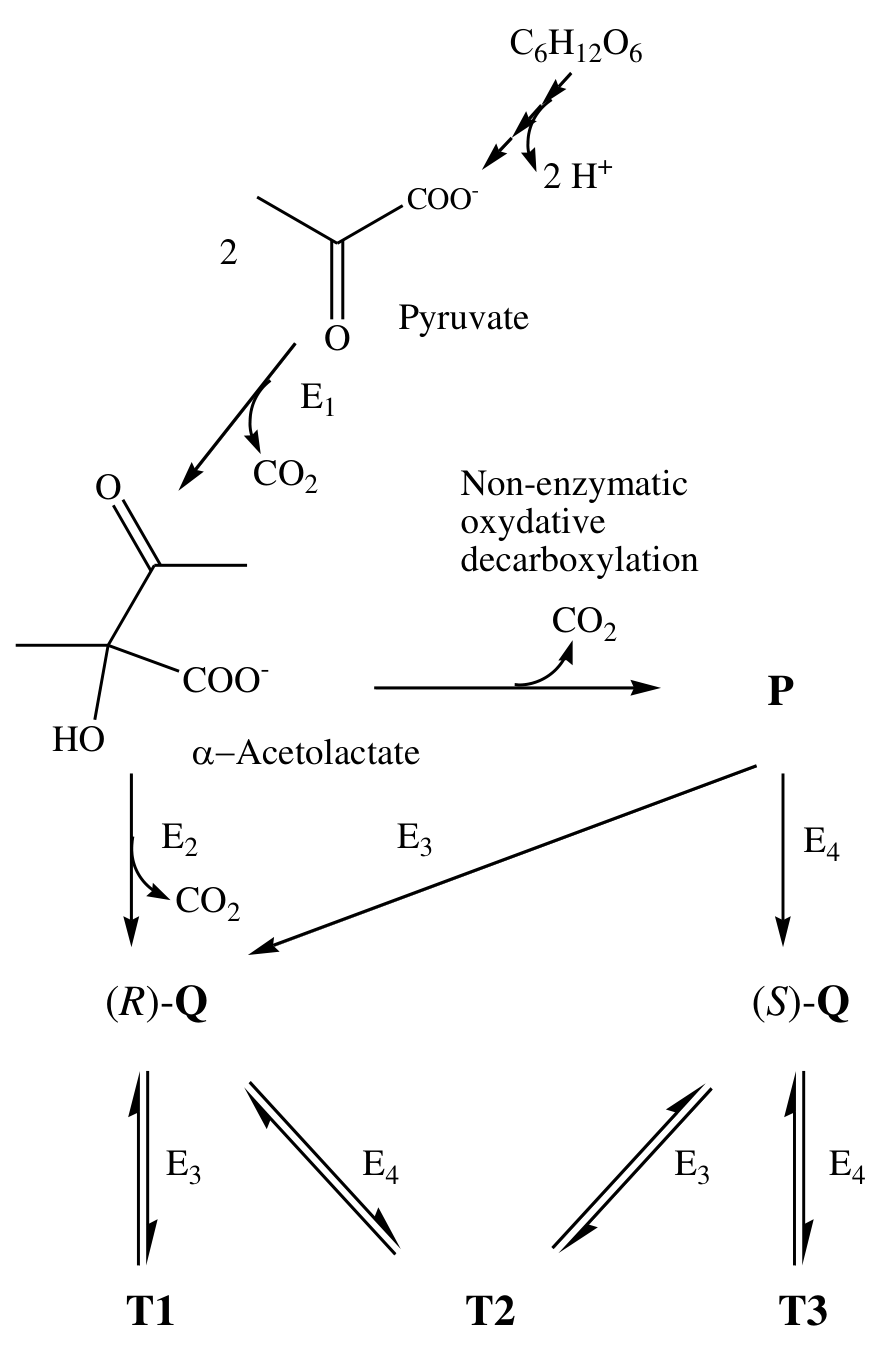
4 What class of enzymes do and belong to? Tick the appropriate box.
- ☐ Decarboxylase
- ☐ Carboxylase
- ☐ Oxidoreductase
- ☐ Lipase
- ☐ Synthase [2 т.]
5 Draw the structural formulae of P, Q, and T. Indicate the absolute configuration (writing R or S) of each stereocenter in T1-T3.
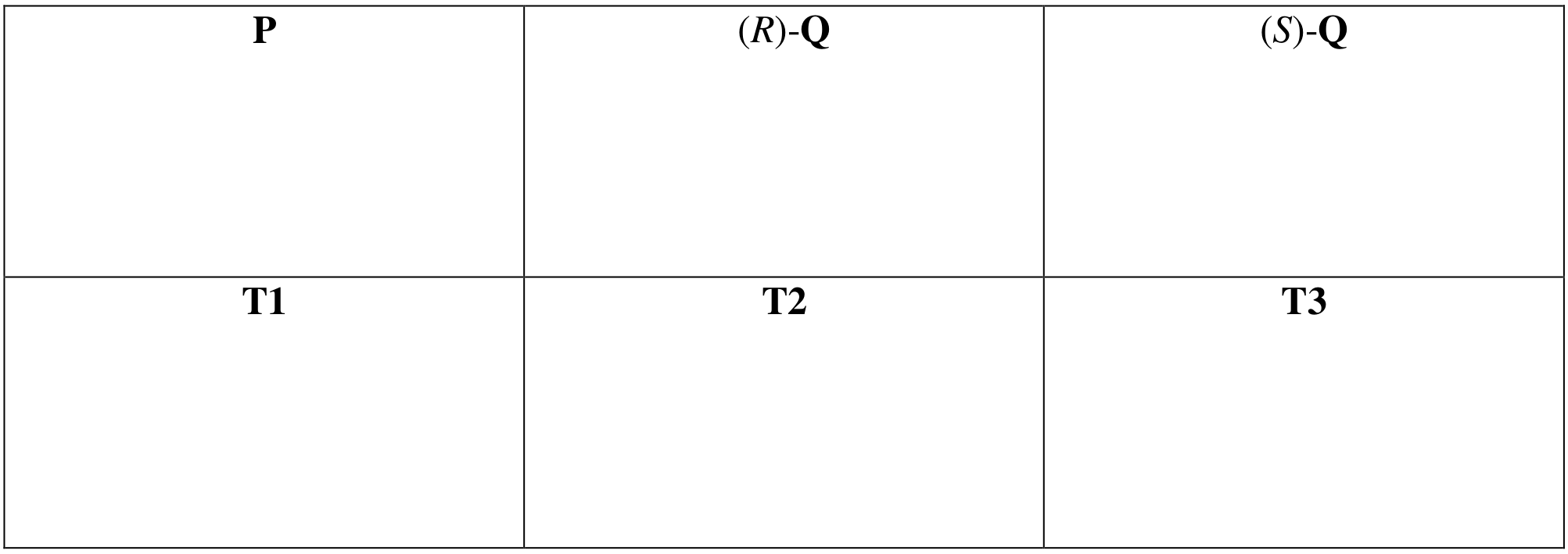
[10 т.]
Compounds other than products of carbohydrate digestion can be involved in fermentation. A redox reaction between a pair of amino acids referred to as Stickland fermentation is found in bacteria Pseudomonas. The leftwards scheme illustrates the Stickland reaction between two canonical -amino acids X and Y.
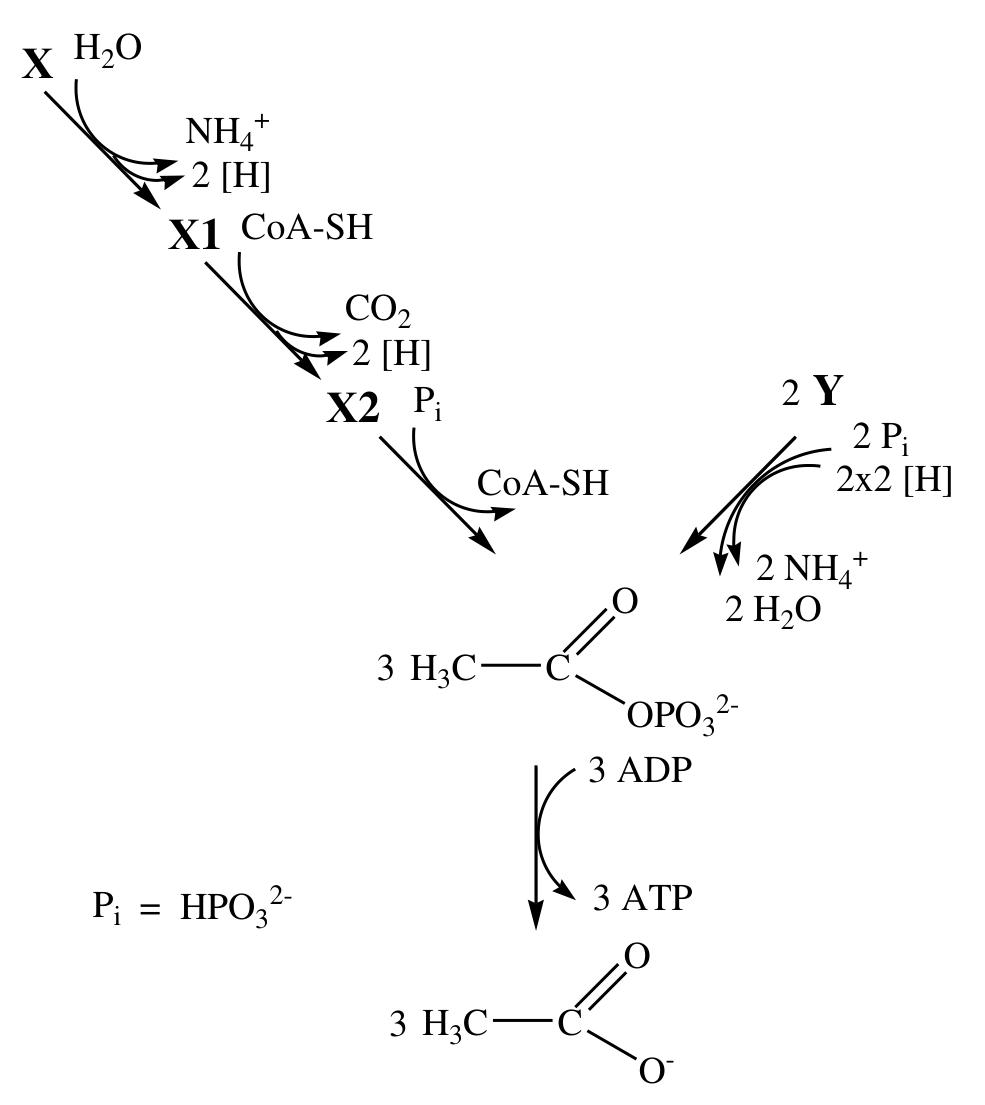
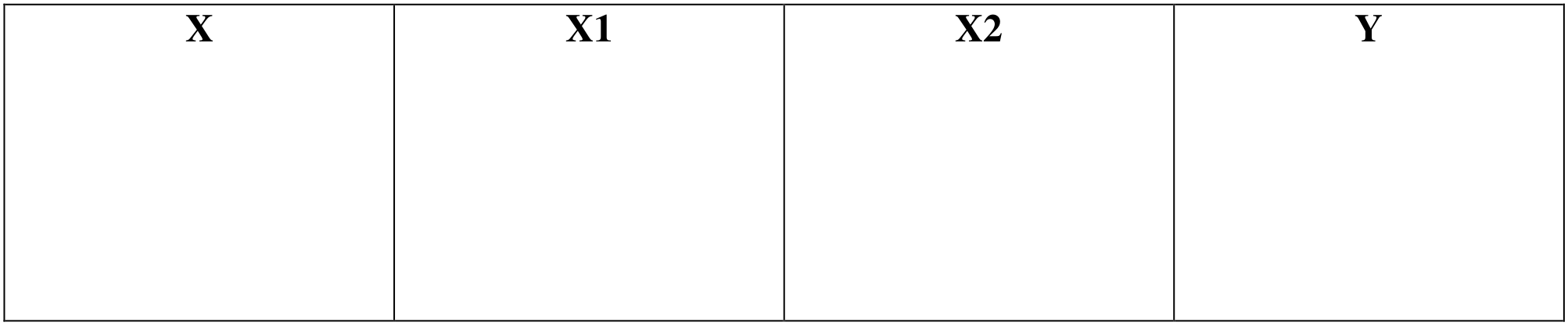
6 Draw the structural formulae of X-X2 and Y.
[6 т.]
Designations used in the text:
CoA-SH is co-enzyme A,
ADP and ATP are adenosine diphosphate and adenosine triphosphate, respectively,
is inorganic phosphate.
Решение
Solutions
1

CH₄(−4), C₂H₅OH(−2), CH₃OH(−2), CH₃CHO(−1), C₆H₁₂O₆(0), C(0), HCHO(0), CO(+2), HCOOH(+2), CO₂(+4).
Increasing of the averaged oxidation degree (oxidation number) of carbon atoms. [2 т.]
2
Comment.
Pyruvate and acetyl contain 3 and 2 carbon atoms, respectively, which strongly suggests that D is a single carbon compound. It originates from the carboxylate group of pyruvate, and cannot be carbon dioxide, since the latter cannot give two gases meeting the task conditions. Thus D (the product of lyaze reaction) is formate (or formic acid HCOOH), E is H₂, F is CO₂ (other gases like CH₄, CO, O₂ are not suitable for chemical reasons and do not meet the task conditions).
Asymmetry of G and H structures allows excluding ethylene glycol, glyoxal and oxalic acid (oxalate) from the list. Oxygen linkage to only one carbon atom in G and H makes glycol aldehyde, glycolic acid (glycolate) and glyoxylic acid (glyoxylate) impossible. Thus, ethanol, acetaldehyde and acetic acid (acetate) are left under consideration. Since G and H are different substances, I can be neither diethyl ester, nor acetic anhydride, now a product of acetaldehyde homocondensation. Acetaldehyde interaction with ethanol would lead to hemiacetal (contains an asymmetric carbon atom) or acetal (the reagents ratio of 1:2). Acetaldehyde does not interact with acetate. With due regard to the averaged oxidation degree of carbon atoms in the molecules, G is acetate (acetic acid), H is ethanol, and I is ethyl acetate. [7 т.]
3 Calculations and work
J (and J1), like glucose and pyruvate is composed of C, H, and O atoms. Calculation of the mass fraction left for H and O leads to the following variants depending on the number of C atoms:
- No O atoms possible in the case of 1 C atom;
- C₂H₄O could have been acetaldehyde and ethylene oxide, still none of these is an acid;
- C₃H₁₄O is impossible because the limit of alkyl moiety saturation exceeded;
- C₄H₂₄O is impossible because the limit of alkyl moiety saturation exceeded; C₄H₈O₂ is butyric acid (with butyrate J as its anion) with due regard to its unbranched character;
- C₅H₃₄O and C₅H₁₄O₂ are impossible because the limit of alkyl moiety saturation exceeded; C₅H₂O₃ is too unsaturated;
- J with 6 C atoms is impossible, since at least one C atom of glucose is found in CO₂;
A number of C atoms exceeding 6 is impossible due to J formation from one glucose molecule.
Equation

[3 т.]
4 ☐ Decarboxylase
☐ Carboxylase
☑ Oxidoreductase
☐ Lipase
☐ Synthase
Comment.
Since P, Q, and T have equal number of carbon atoms(4), the enzyme can be neither decarboxylase nor carboxylase (both leading to a change in the number of C atoms). Lipase is impossible because carbohydrate catabolism is being considered in this part of the task. Synthetase is an invalid option, since there are no high-energy phosphorylated compounds (e.g. ATP) involved. Finally, oxidoreductase is the only suitable option. [2 т.]
5
Comment.
The presence of only one peak in the ¹H NMR spectrum of P suggests that the molecule possesses high symmetry. Two carbonyl carbons are left in P after oxidative decarboxylation of α-acetolactate. Thus, P is diacetyl. Since its enzymatic oxidation with retention of the number of carbon atoms in Q is impossible, one of the carbonyl groups of P is reduced to hydroxyl group in Q (acetoin). Then, stereoisomers of T(2,3-butanediol) contain two hydroxyl groups each, attribution of stereoisomers(2R,3R)-,(2S,3S)- and meso form being unambiguous if stereochemistry of asymmetric centers in Q stereoisomers as well as E₃ and E₄ specificity are taken into account. [10 т.]
6
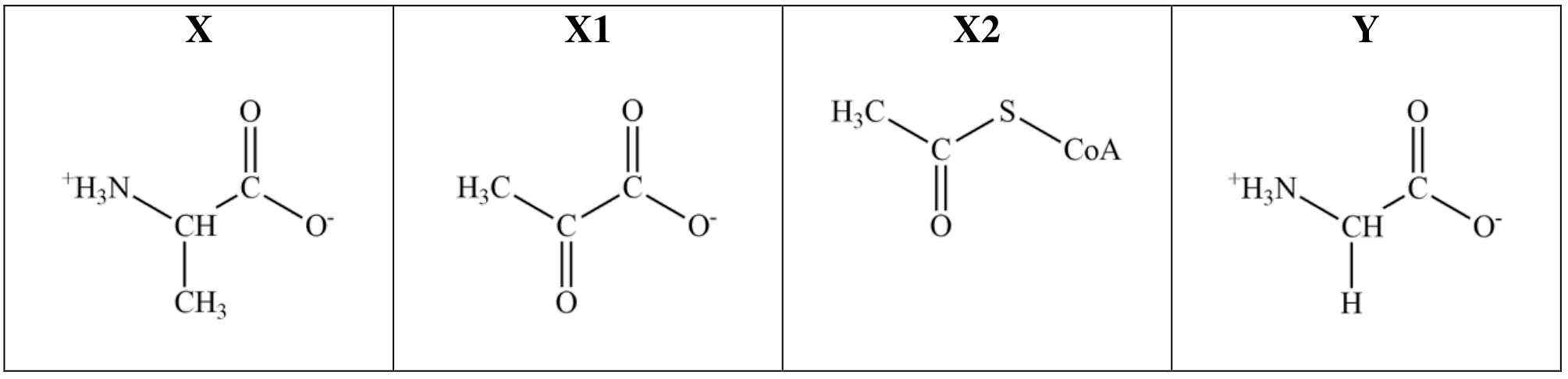
Comment.
Mowing backwards from the products to X, one concludes that X2 is acetyl coenzyme A. Then, X1 is pyruvate, since it undergoes oxidative decarboxylation, and X is alanine, which, being subjected to deamination, affords pyruvate.
There is no change in the number of carbon atoms on the way from Y to acetyl phosphate. Thus, Y is the only canonical two-carbon α-amino acid – glycine.
It is worth mentioning that alanine is oxidized in this pair of amino acids due to glycine reduction. [6 т.]
Бележка от източника
Native source has six whole tasks and 34 scored flat request labels; catalogue 30 parts is provisional. Each native heading says 10 marks while grids total 20,16,20,30,88,20. Original key 2 repeats trialkylbenzene for both 65% and 35%. Original Stickland scheme prints Pi=HPO3(2−). Copper key 5 gives 0.0025 M then uses 0.025 in ion-product expressions. Thermal key 2/4 prints 20/607.74=0.0987 mol for lithium silicide; its product heating uses 27/61/83 while supplied heat-capacity table gives 25/68/74 forFe/FeO/KCl. Original expressions/results/marking values remain literal. Scientific molecular drawings, stereochemistry, reaction schemes, photos, periodic table and blank molecular response grids are original exact crops. Plain calculation rectangles preserve printed labels and blank fields. Full original official keys and detailed uncredited comments retained; no author name inferred. The native key comment for problem 4 request 6 prints Mowing backwards; that spelling is retained.
Оригинал в Архива: Problems.pdf · официални решения: Solutions.pdf