IPhO 1986, Експеримент — Задача 1. EXPERIMENT 1.
1986 INTERNATIONAL PHYSICS OLYMPIAD
Условие
2½ hrs
APPARATUS
- Spectrometer with collimator and telescope.
- 3 syringes; one for water, one for liquid A and one for liquid B.
- A beaker of water plus two sample tubes containing liquids A and B.
4 3 retort stands with clamps. 5. 12V shielded source of white light. 6. Black card, plasticine, and black tape. 7. 2 plastic squares with holes to act as stops to be placed over the ends of the telescope, with the use of 2 elastic bands. 8. Sheets of graph paper. 9. Three dishes to collect water plus liquids A and B lost from syringes.
Please complete synopsis sheet in addition to answering this experimental problem.
INSTRUCTIONS AND INFORMATION
- Adjust collimator to produce parallel light. This may be performed by the following sequence of operations:
(a) Focus the telescope on a distant object, using adjusting knob on telescope, so that the cross hairs and object are both in focus.
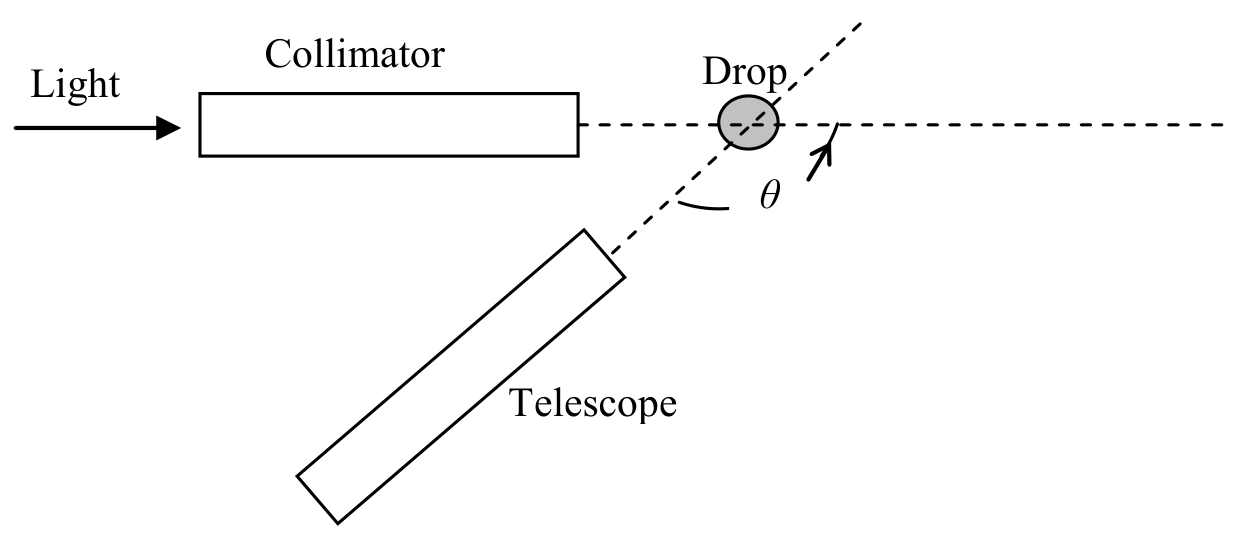
(b) Position the telescope so that it is opposite the collimator with slit illuminated so that the slit can be viewed through the telescope.
(c) Adjust the position of the collimator lens, using the adjusting knob on the collimator, so that the image of the slit is in focus on the cross hairs of the telescope's eyepiece.
(d) Lock the spectrometer table, choosing an appropriate 'zero' on the vernier scale, so that subsequent angular measurements of the telescope's position can conveniently be made.
Remove the eyepiece from telescope and place black plastic stops symmetrically over both ends of the telescope, using the elastic bands, so that the angle of view is reduced.
Open up collimator slit.
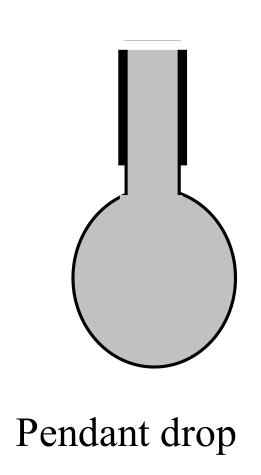
Use the syringes to suspend, vertically, a pendant drop symmetrically above the centre of the spectrometer table so that it is fully illuminated by the light from the collimator and can be viewed by telescope.
The central horizontal region of the suspended drop will produce rainbows as a result of two reflections and k (k = 1,2,...) internal reflections of the light. The first order rainbow corresponds to one internal reflection. The second order rainbow corresponds to two Internal reflections. The k'th order rainbow corresponds to k internal reflections. Each rainbow contains all the colours of the spectrum. These can be observed directly by eye and their angular positions can bed accurately measured using the telescope. Each rainbow is due to white light rays incident on the drop at a well determined angle of incidence, that is different for each rainbow.
The first order rainbow can be recognized as it has the greatest intensity and appears on the right hand* side of the drop. The second order rainbow appears with the greatest intensity on the left hand* side of the drop. These two rainbows are within an angular separation of 20° of each other for water droplets. The weak intensity fifth order rainbow can be observed on the right hand side of the drop located somewhere between the other two, 'blue', extreme ends of the first and second order rainbows.
Light reflected directly from the external surface of the drop and that refracted twice but not internally reflected, will produce bright white glare spots that will hinder observations.
The refractive indices, n, of the liquids are:
| Water | |
| Liquid A | |
| Liquid B |
In addition to the experimental report please complete the summary sheet.
Footnote: This statement is correct if the collimator is to the left of the telescope, as indicated in the diagram. If the collimator is on the righthand side of the telescope the first order rainbow will appear on the lefthand side of the drop and the second order rainbow on the righthand side of the drop.
Measurements
1) Observe, by eye, the first and second order water rainbows. Measure the angle through which the telescope has to be rotated, from the initial direction for observing the parallel light from the collimator, to observe, using a pendant water droplet, the red light at the extreme end of the visible spectrum from:
(a) the first order rainbow on the right of the drop ();
(b) the second order rainbow on the left of the drop ();
(c) the weak fifth order rainbow (), between the first and second order rainbows.
One of these angles may not be capable of measurement by the rotation of the telescope due to the mechanical constraints limiting the range of . If this is found to be the case, use a straight edge in place of the telescope to measure .
(Place the appropriate dish on the spectrometer table to catch any falling droplets.)
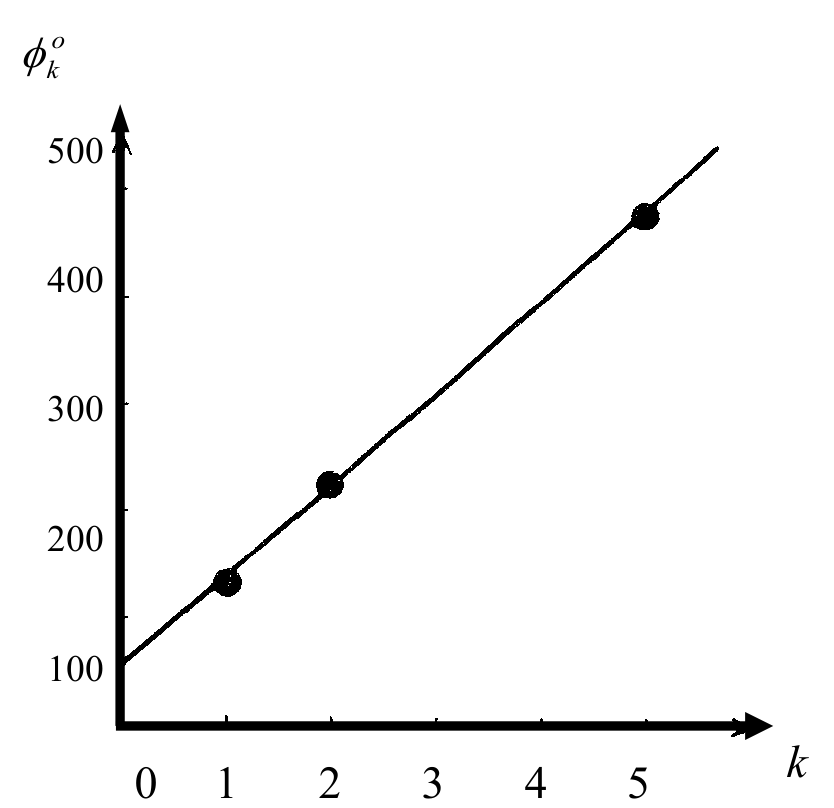
Deduce the angle of deviation, , that is the angle the incident light is rotated by the two reflections and k reflections at the drop's internal surface, for (a), (b) and (c). Plot a graph of against k.
2. Determine for the second order rainbows produced by liquids A and B using the red visible light at the extreme end of the visible spectrum. (Place respective dishes on table below to catch any falling liquid as the quantities of liquid are limited).
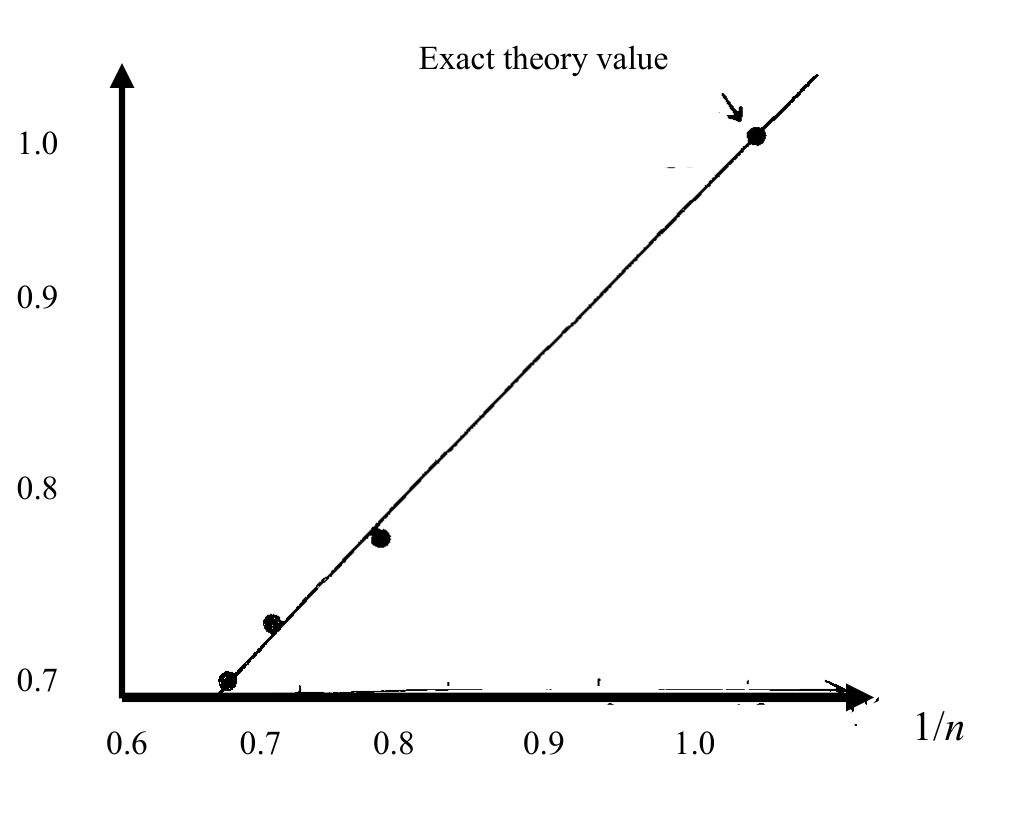
Using graph paper plot against , n being the refractive index, for all three liquids and insert the additional point for . Obtain the best straight line through these points; measure its gradient and the value of for which .
Отговори
- 1) θ1 = 129.0°, φ1 = 137.0 ±5.0°; θ2 = 129.0°, φ2 = 231.0 ±3.0°; θ5 = 126.0°, φ5 = 486.0 ±4.0°
- 2. Liquid A: φ2 = 255.0 ±3.0°; liquid B: φ2 = 270.5 ±3.0°; gradient of graph = 0.84 ±0.07; extrapolated value of φ for n = 2: 304 ±25°
Решение
SUMMARY SHEET
EXPERIMENT 1
- FOR WATER AND RED LIGHT AT EXTREME END OF SPECTRUM
k = 1 First Order Rainbow
k = 2 Second Order Rainbow
k = 5 Fifth Order Rainbow
- LIQUIDS A AND B USING SECOND ORDER RAINBOWS
For Liquid A
For Liquid B
For
Gradient of graph
Extrapolated, , , value of
Оригинал в Архива: exp.pdf · официални решения: exp_sol.pdf