IPhO 1993, Експеримент — Задача 1. The Heat of Vaporization of Nitrogen
Practical Competition — Experiment No. 1: The Heat of Vaporization of Nitrogen · 14 юли 1993 г. · 10 т.
Внимание: Бележка към темата
The archive booklet includes the complete stopwatch and multimeter instructions. The worked key gives sample measurements and prints clock/elapsed-time discrepancies and J/s for a mass-loss rate; these are preserved and identified in the solution.
Native practical competition cover and instructions
COUNTRY: ____________________
XXIV INTERNATIONAL PHYSICS OLYMPIAD
WILLIAMSBURG, VIRGINIA, U.S.A.
PRACTICAL COMPETITION — Experiment No. 1
July 14, 1993. Time available: 2.5 hours.
READ THIS FIRST! INSTRUCTIONS:
- Use only the pen provided.
- Use only the marked side of the paper.
- Write at the top of each and every page: the number of the problem; the number of the page of your report; the total number of pages in your report.
Example (for Problem 1): 1 1/4; 1 2/4; 1 3/4; 1 4/4.
Условие
The object of this experiment is to measure the heat of vaporization per unit mass () of nitrogen using two different methods. In Method #1, you will add a piece of aluminum to the sample of liquid nitrogen and measure how much liquid nitrogen evaporates as the aluminum cools. In Method #2, you will add energy in the form of heat at a known rate to the sample of liquid nitrogen and measure the rate at which the liquid nitrogen vaporizes.
The liquid nitrogen is supplied to you in the “reservoir” container. Some of it can be poured into the “sample” container, which can be placed on the mass balance. The reading of the mass balance will decrease as liquid nitrogen vaporizes. This occurs (1) because the container is not a perfect insulator, (2) because energy is being added to the liquid nitrogen in the form of heat when the aluminum cools (in Method #1), and (3) because energy is being added to the liquid nitrogen in the form of heat when current passes through a resistor placed in the liquid nitrogen (in Method #2). A multimeter, which can be used to measure voltage (), current (), and resistance (), as well as a stopwatch are supplied. Instructions for using the multimeter and stopwatch are attached.
Warnings
- Liquid nitrogen is very cold, so do not let it, or any object which has been cooled by it, touch you or your clothing in any way.
- Do not drop anything in the liquid nitrogen, and wear safety goggles at all times.
- Place the piece of aluminum in the liquid nitrogen slowly, as it will cause the liquid nitrogen to boil rapidly until equilibrium is reached. A piece of string is supplied for this purpose.
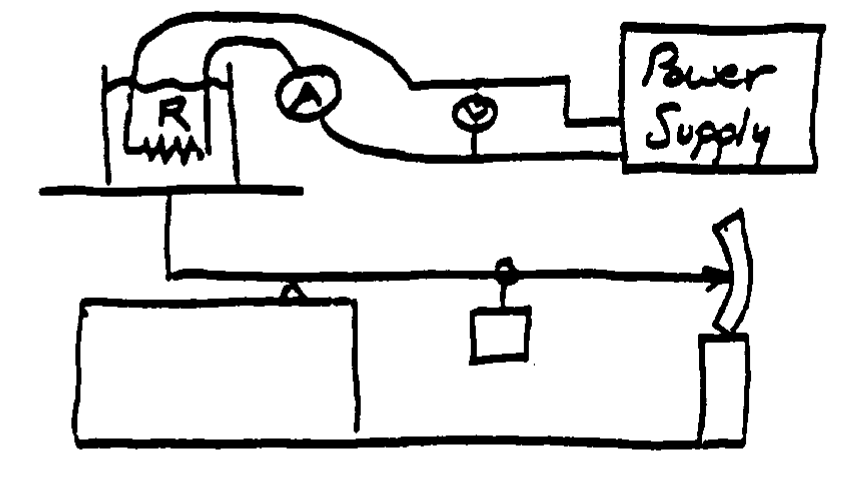
- The resistor can get very hot if it is not immersed in the liquid nitrogen. Pass current through the resistor only when it is in the container and completely immersed in liquid nitrogen.
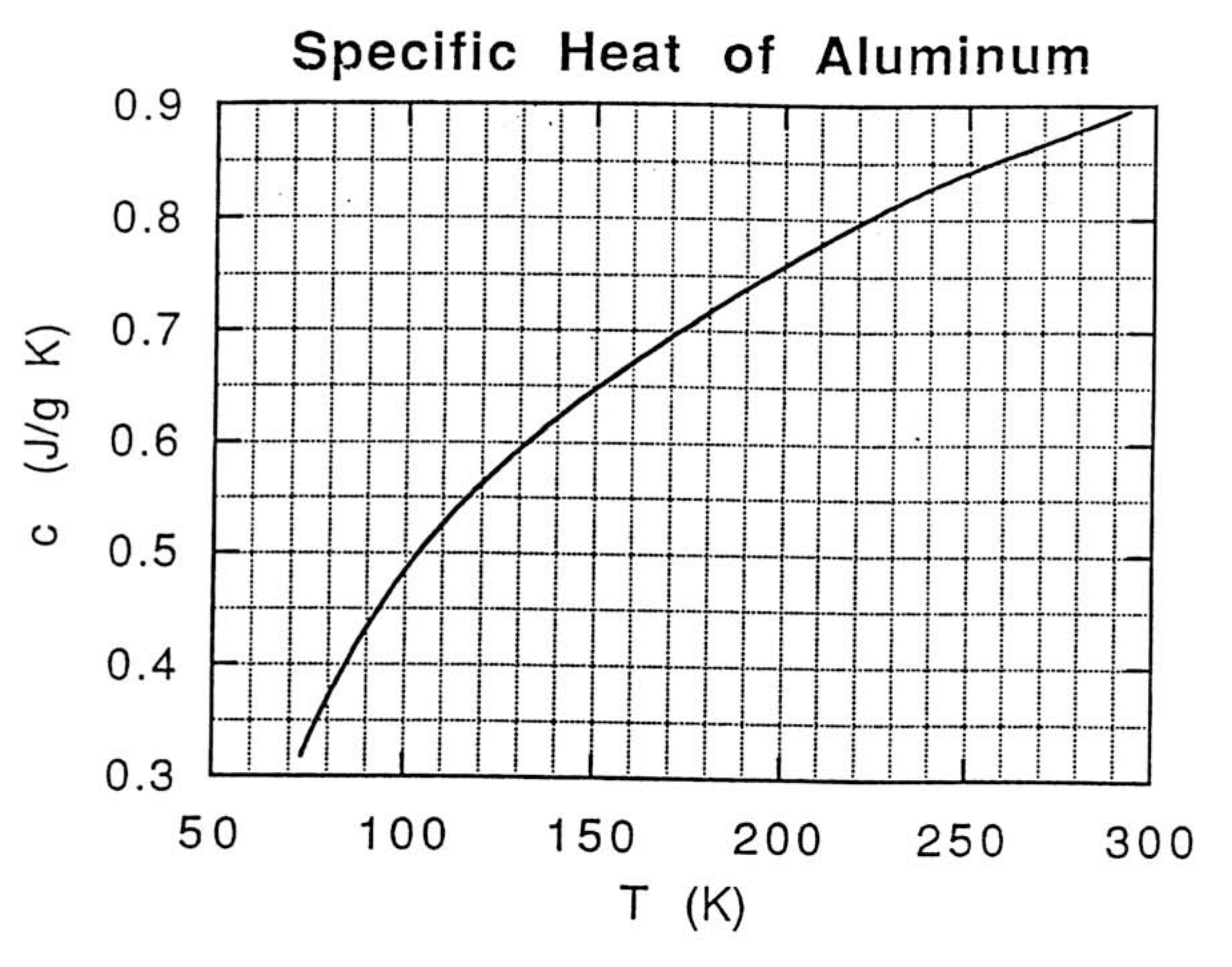
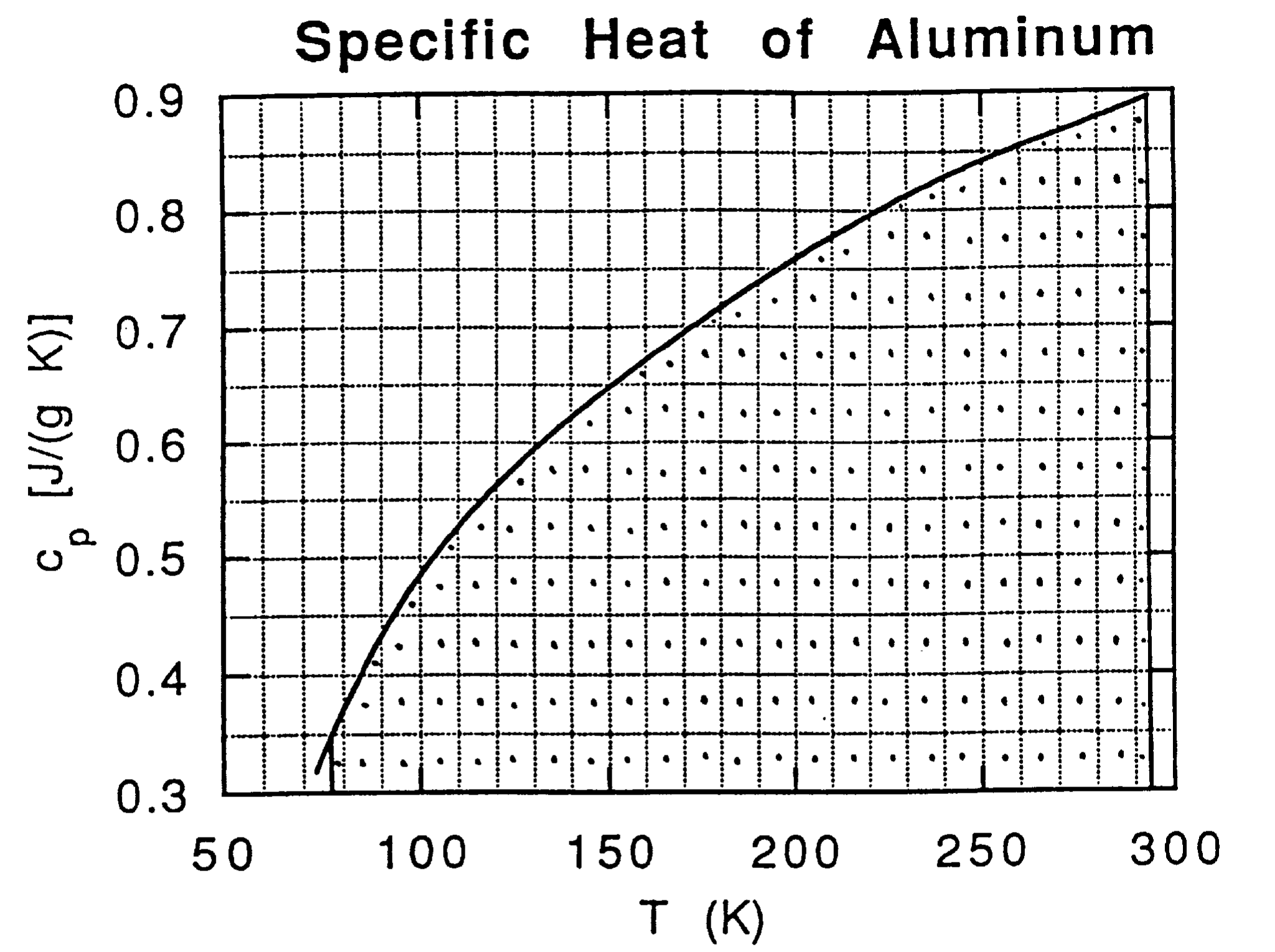
Method #1 The specific heat of aluminum () varies significantly between room temperature and the temperature at which liquid nitrogen vaporizes under atmospheric pressure (). A graph showing the variation of with temperature () is attached. Conduct an experiment to measure how much liquid nitrogen vaporizes when the aluminum block is cooled. Use this determination and the specific heat graph to determine the heat of vaporization per unit mass of nitrogen. You may assume that room temperature is . Be sure to provide a quantitative estimate of the accuracy of your heat of vaporization value. [5 т.]
Method #2 Conduct an experiment to measure the rate at which liquid nitrogen vaporizes when current is passed through the resistor placed in the liquid nitrogen. A direct current power supply is provided; use it only with the dial in the “8” position and do not disconnect the capacitor installed across its terminals. Use this result to determine the heat of vaporization per unit mass of nitrogen. Be sure to provide a quantitative estimate of the accuracy of your result. [5 т.]
Notes
- Please include sketches, schematic diagrams, properly labelled tables, numbers with the proper units, etc. so the graders can determine exactly what you did.
- Ask for assistance if any piece of equipment is not working properly.
Specific Heat of Aluminum
Digital Stopwatch
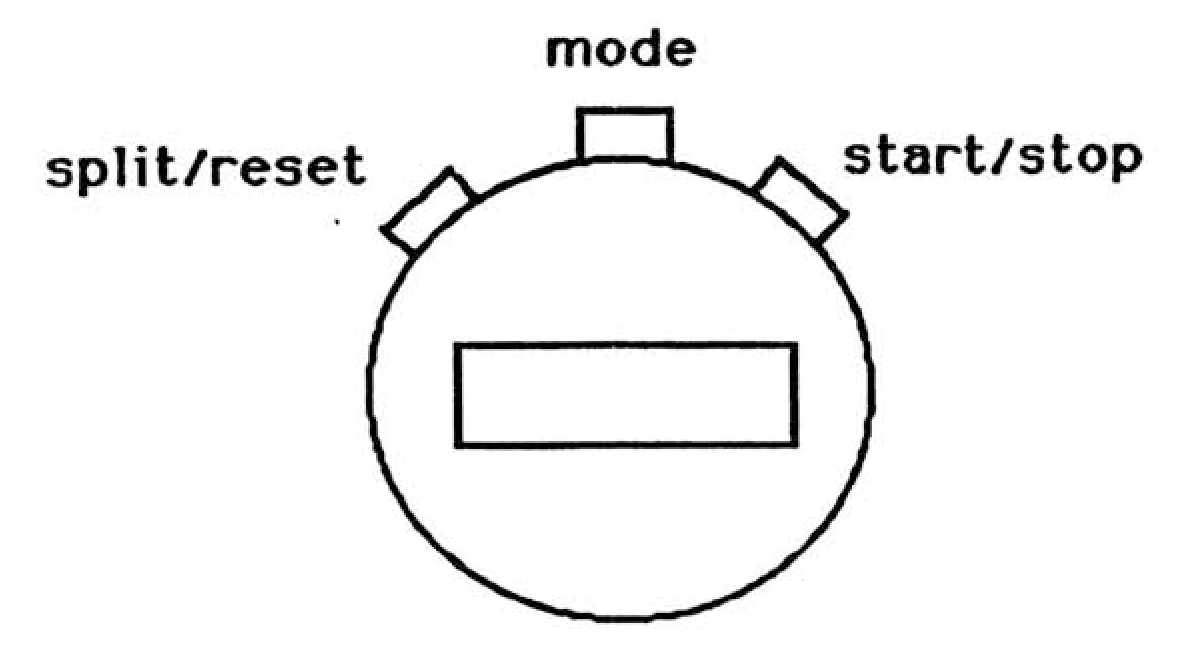
To Perform Timing Operations
- Press “Mode” until 0 00 00 appears. (You may have to press “Mode” several times to get the 0 00 00 to appear.)
To Time a Single Interval
- Press “Start/Stop” to start stopwatch.
- Press “Start/Stop” to stop stopwatch.
- Press “Split/Reset” to reset stopwatch to zero.
To Time Multiple Events Without Stopping the Stopwatch
- Press “Start/Stop” to start stopwatch.
- Press “Split/Reset” to stop the display while stopwatch keeps running.
- Press “Split/Reset” to reset display to actual time.
- Press “Start/Stop” to stop stopwatch after last event.
- Press “Split/Reset” to reset stopwatch to zero.
Multimeter
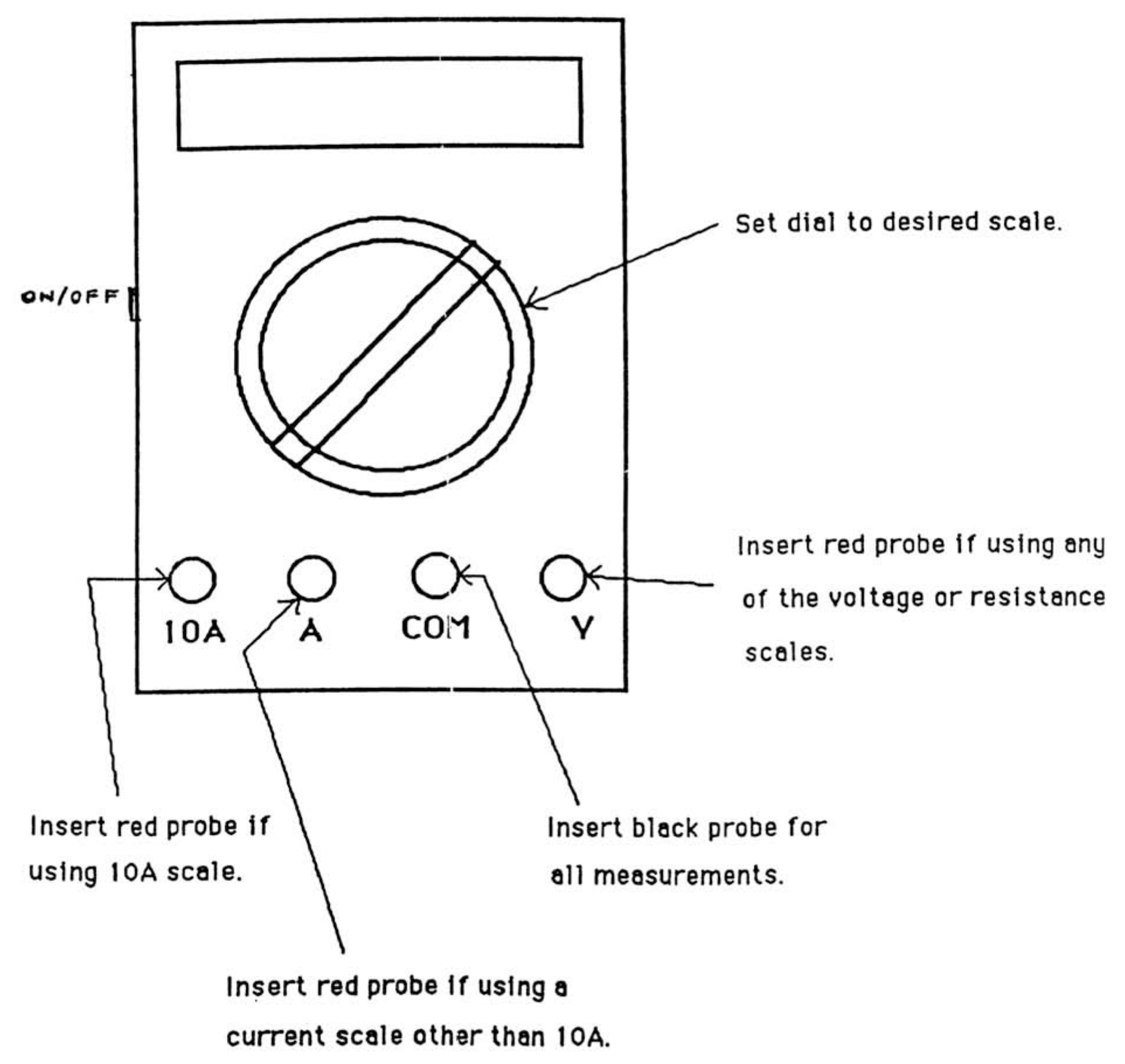
Set dial to desired scale. Insert red probe in V if using any of the voltage or resistance scales. Insert black probe in COM for all measurements. Insert red probe in 10A if using 10A scale. Insert red probe in A if using a current scale other than 10A. The original diagram also marks the ON/OFF switch.
Решение
Method #1
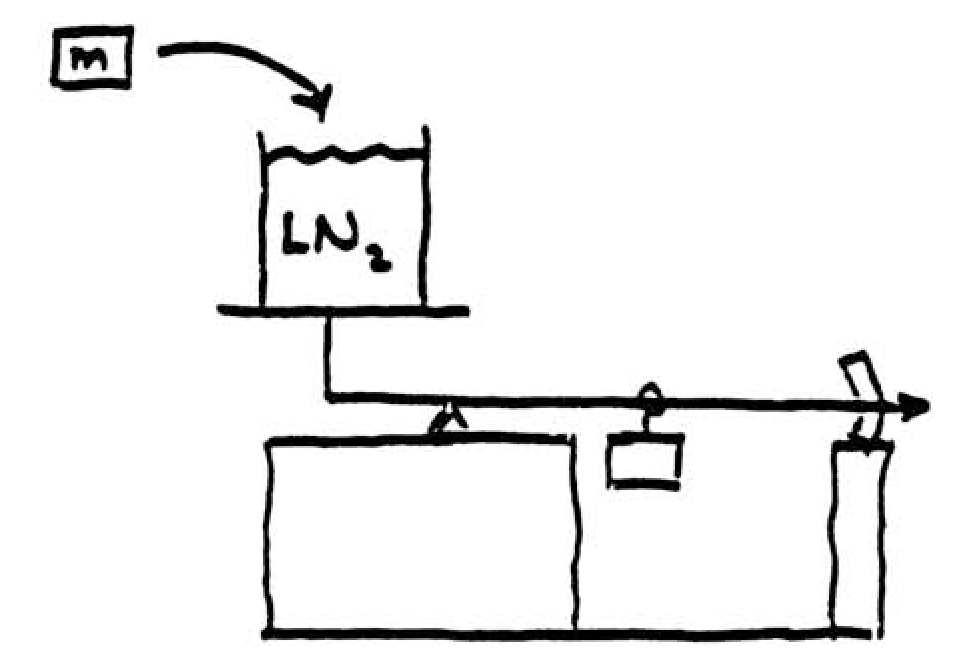
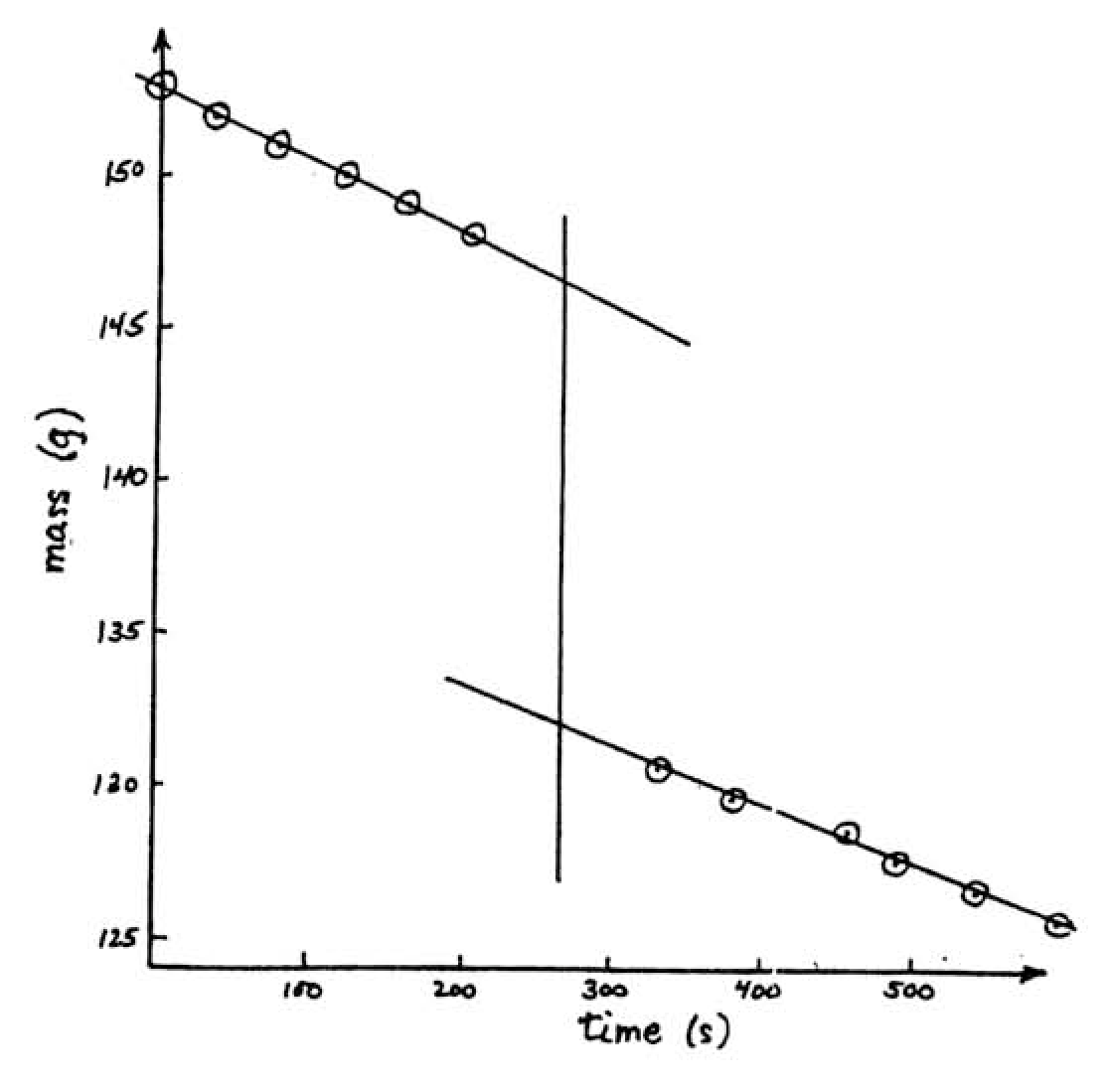
The original worked measurement table is:
| Total mass | Clock time | Time |
|---|---|---|
| 153 g | 0:00.0 | 0 |
| 152 | 0:36.8 | 36.8 |
| 151 | 1:19.1 | 79.1 |
| 150 | 2:00.7 | 120.7 |
| 149 | 2:40.5 | 160.5 |
| 148 | 3.23.1 | 203.1 |
Add Al mass
| Total mass (after subtraction of Al mass) | Clock time | Time |
|---|---|---|
| 150 (130.6) | 5:31.8 | 331.8 |
| 149 (129.6) | 6:21.6 | 381.6 |
| 148 (128.6) | 7:17.3 | 457.3 |
| 147 (127.6) | 8:08.6 | 488.6 |
| 146 (126.6) | 9:00.9 | 540.9 |
| 145 (125.6) | 9:54.6 | 594.6 |
The native row prints clock time 7:17.3 with elapsed time 457.3; both are retained as printed.
Method #2
| Power | Total mass | Clock time | Time |
|---|---|---|---|
| 156 g | 0:00.0 | 0 s | |
| 155 | 0:45.2 | 45.2 | |
| 154 | 1:31.4 | 91.4 | |
| 153 | 2:16.2 | 136.2 | |
| 152 | 2:60.0 | 180.0 | |
| 151 | 3:47.2 | 227.2 | |
| 150 | 4:13.6 | 253.6 | |
| 149 | 4:32.1 | 272.1 | |
| 148 | 4:50.1 | 290.1 | |
| 147 | 5:08.9 | 308.9 | |
| 146 | 5:27.2 | 327.2 | |
| 145 | 5:45.7 | 345.7 | |
| 144 | 6:04.1 | 364.1 | |
| 143 | 6:21.9 | 381.9 | |
| 142 | 7:02.3 | 422.3 | |
| 141 | 7:58.4 | 478.4 | |
| 140 | 8:51.2 | 531.2 | |
| 139 | 9:43.7 | 583.7 | |
| 138 | 10:34.6 | 634.6 | |
| 137 | 11:30.7 | 690.7 |
The clock entry 2:60.0 is retained as printed.
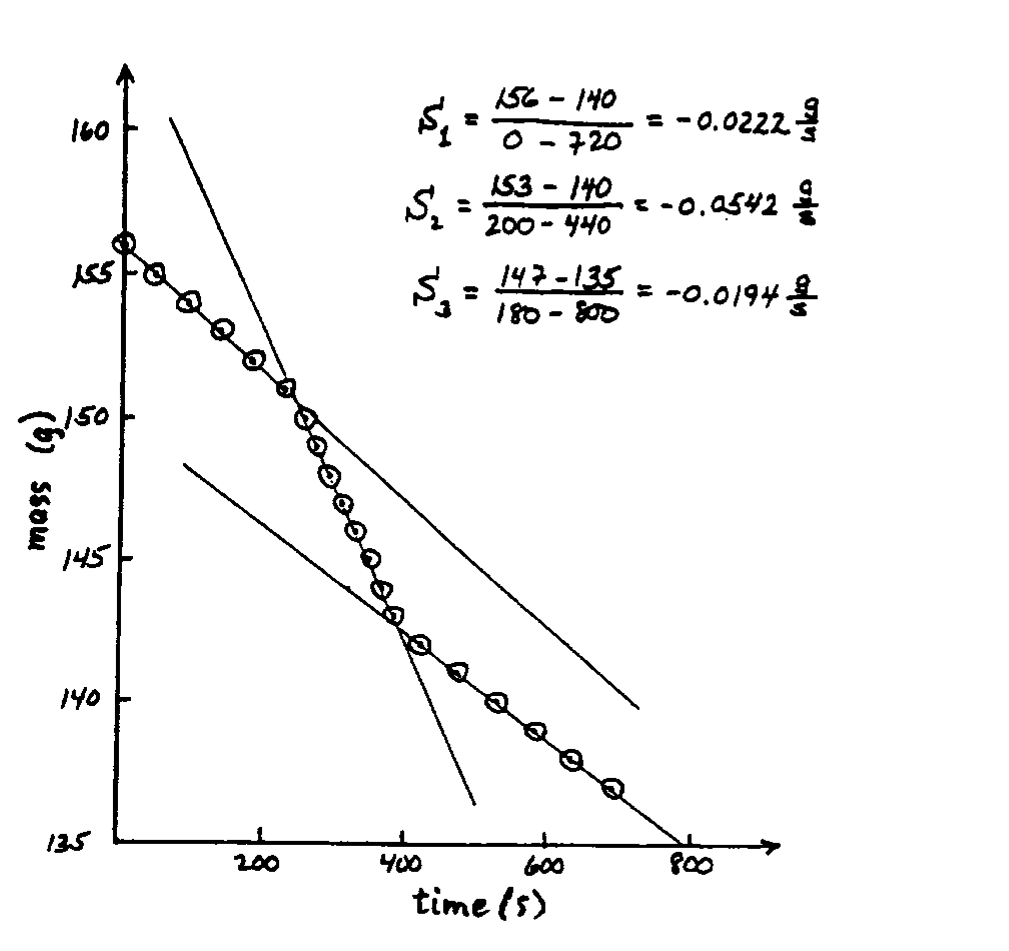
The source prints J/s for this mass-loss rate; the unit is preserved rather than silently corrected.
Experimental Problem 1: Grading Scheme
Method No. 1 (5 points maximum)
Each item receives 0.5 points:
- Uses or .
- Uses .
- Measures mass of aluminum correctly.
- Measures in some way.
- Takes into account “thermal leakage” in some way and corrects for aluminum added to container.
- Takes into account “thermal leakage” not being constant in time.
- Uses reasonable values for and or does integral in a reasonable way.
- No mistakes made in computing .
- Error estimate is reasonable for methods used.
- Value for is within bounds set by grading team using good procedures.
Method No. 2 (5 points maximum)
Each item receives 0.5 points:
- Uses .
- Uses .
- Uses .
- Measures two parameters (to get ) correctly.
- Measures in some way.
- Takes into account “thermal leakage” in some way.
- Takes into account “thermal leakage” not being constant in time.
- No mistakes made in computing .
- Error estimate is reasonable for methods used.
- Value for is within bounds set by grading team using good procedures.
Оригинал в Архива: ipho93.pdf · официални решения: ipho93.pdf