IPhO 1994, Теория — Задача 2. Superconducting Magnet
XXV International Physics Olympiad — Beijing, People’s Republic of China — Theoretical competition, July13,1994 · 13 юли 1994 г. · 10 т.
Внимание: Бележка към темата
The complete archived booklet contains three theory tasks and two experiments. Theory is shown here separately using original pages1–21. Points are taken from the native marking schemes; the round total30 is their sum. Native source errors are retained: inconsistent S/Sprime/Sdoubleprime labels, the first quark-table header beta*x/e, Fig1 L=p0/f withoutc, inconsistent rubric subtotals, signed-current/rate wording in the magnet key, Vprime_tn in collision Eq2 and missing multiplicativeV in Eq9. These are printed source defects, not silently corrected solutions. The leading 0 of the upper0.5A label in native Fig7c is already clipped in the original page; the complete available source graphic is retained.
Theoretical competition — July13,1994 — Time available:5hours
- Use only the ball pen provided.
- Your graphs should be drawn on the answer sheets attached to the problem.
- Your solutions should be written on the sheets of paper attached to the problems.
- Write at the top of the first page of each problem:
- The total number of pages in your solution to the problem
- Your name and code number
Условие
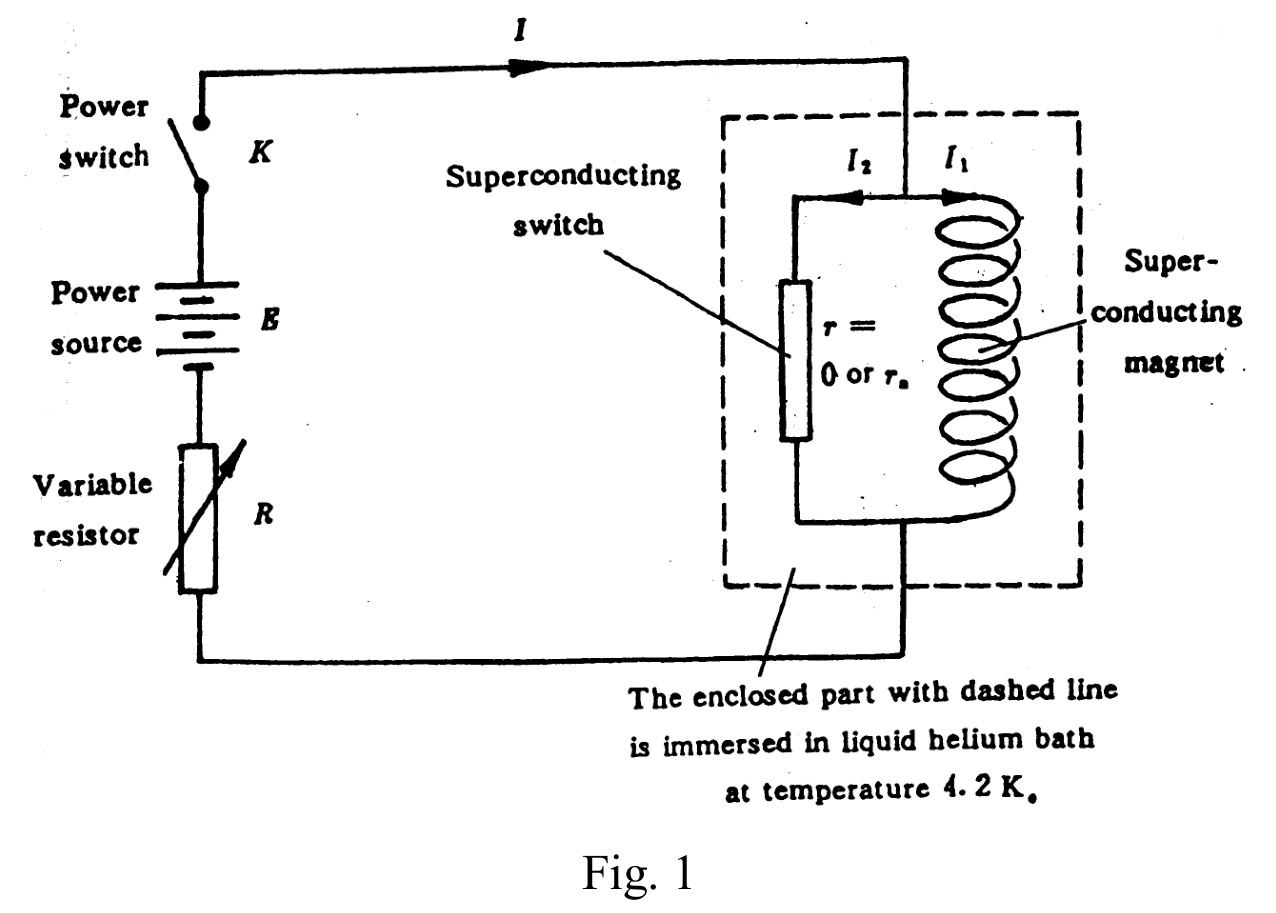
Super conducting magnets are widely used in laboratories. The most common form of super conducting magnets is a solenoid made of super conducting wire. The wonderful thing about a superconducting magnet is that it produces high magnetic fields without any energy dissipation due to Joule heating, since the electrical resistance of the superconducting wire becomes zero when the magnet is immersed in liquid helium at a temperature of . Usually, the magnet is provided with a specially designed superconducting switch, as shown in Fig. 1. The resistance of the switch can be controlled: either in the superconducting state, or in the normal state. When the persistent mode, with a current circulating through the magnet and superconducting switch indefinitely. The persistent mode allows a steady magnetic field to be maintained for long periods with the external source cut off.
The details of the superconducting switch are not given in Fig. 1. It is usually a small length of superconducting wire wrapped with a heater wire and suitably thermally insulated from the liquid helium bath. On being heated, the temperature of the superconducting wire increases and it reverts to the resistive normal state. The typical value of is a few ohms. Here we assume it to be . The inductance of a superconducting magnet depends on its size; assume it be for the magnet in Fig. 1. The total current can be changed by adjusting the resistance .
This problem will be graded by the plots only!
The arrows denote the positive direction of , and .
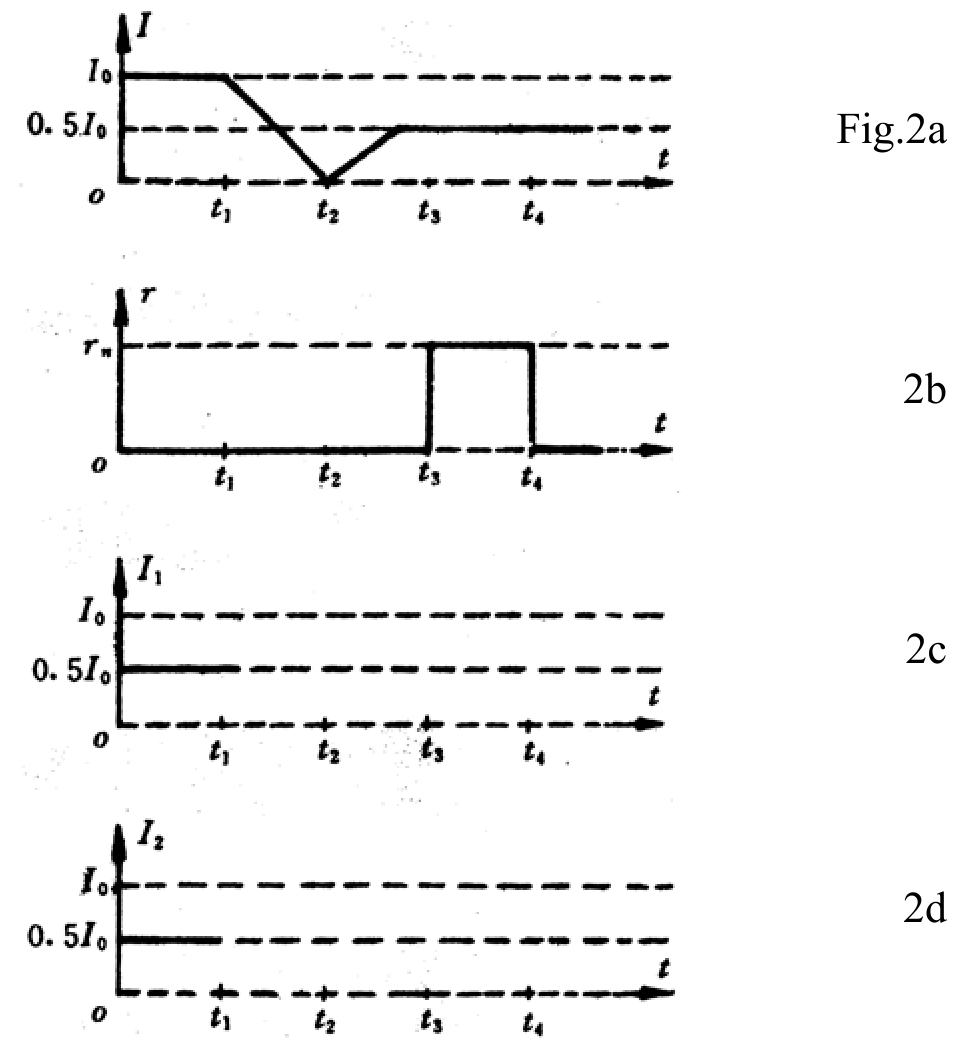
1) If the total current and the resistance of the superconducting switch are controlled to vary with time in the way shown in Figs. 2a and 2b respectively, and assuming the currents and flowing through the magnet and the switch respectively are equal at the beginning (Fig. 2c and Fig. 2d), how do they vary with time from to ? Plot your answer in Fig. 2c and Fig. 2d.
[2 т.]
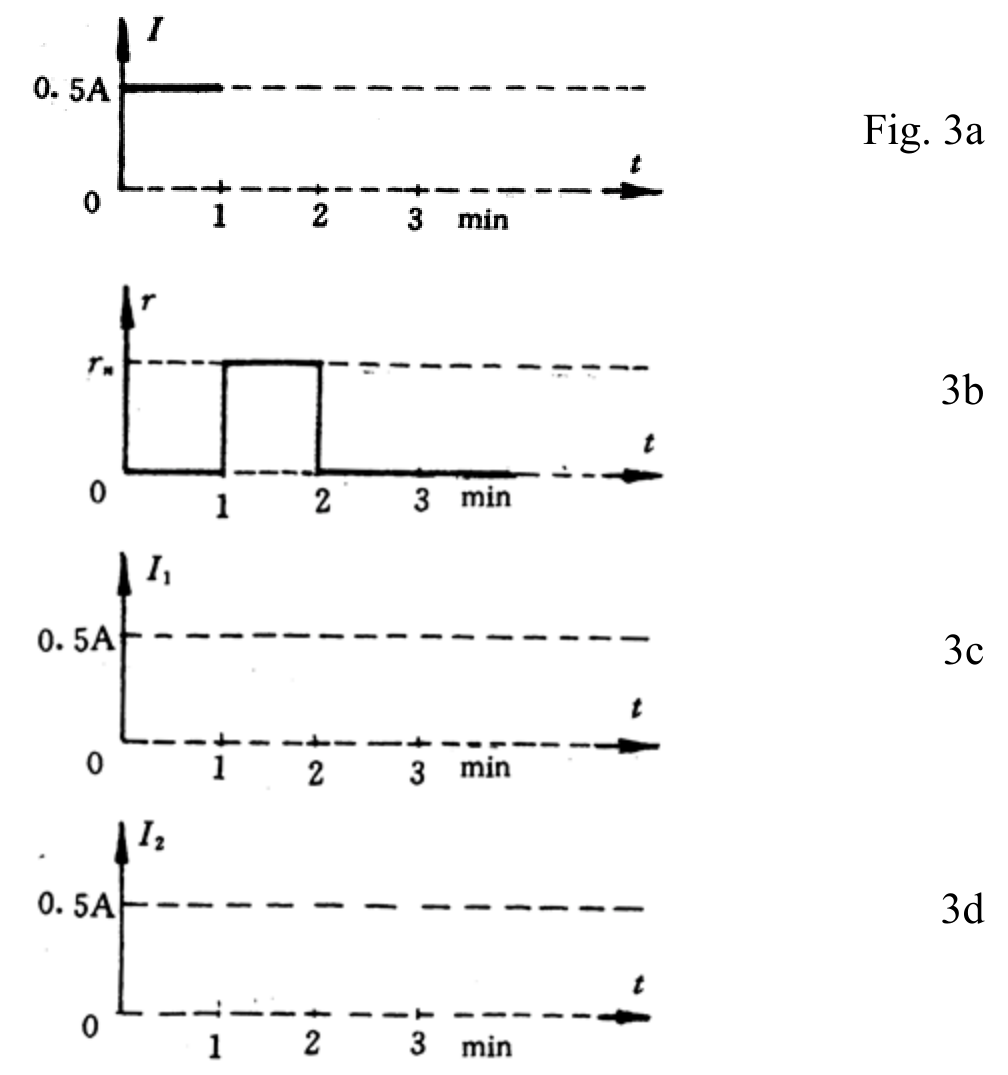
2) Suppose the power switch is turned on at time when , and , and the total current is . With kept closed, the resistance of the superconducting switch is varied in he way shown in Fig. 3b. Plot the corresponding time dependences of , and in Figs. 3a, 3c and 3d respectively.
[3 т.]
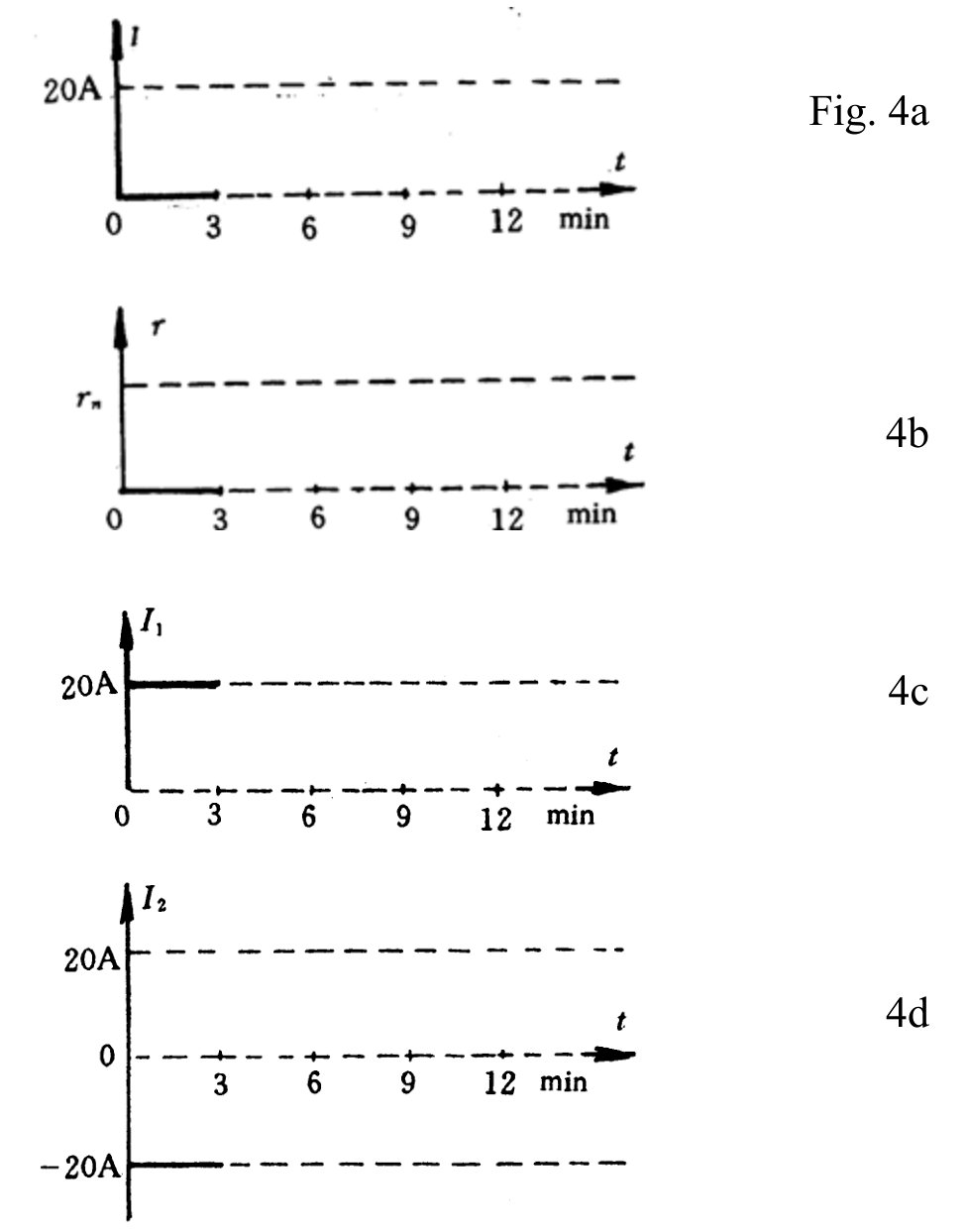
3) Only small currents, less than , are allowed to flow through the superconducting switch when it is in the normal state, with larger currents the switch will be burnt out. Suppose the superconducting magnet is operated in a persistent mode, i.e. , and (e.g. ), , as shown in Fig. 4, from to . If the experiment is to be stopped by reducting the current through the magnet to zero, how would you do it? This has to be done in several operation steps. Plot the corresponding changes of , , and in Fig. 4.
[2 т.]
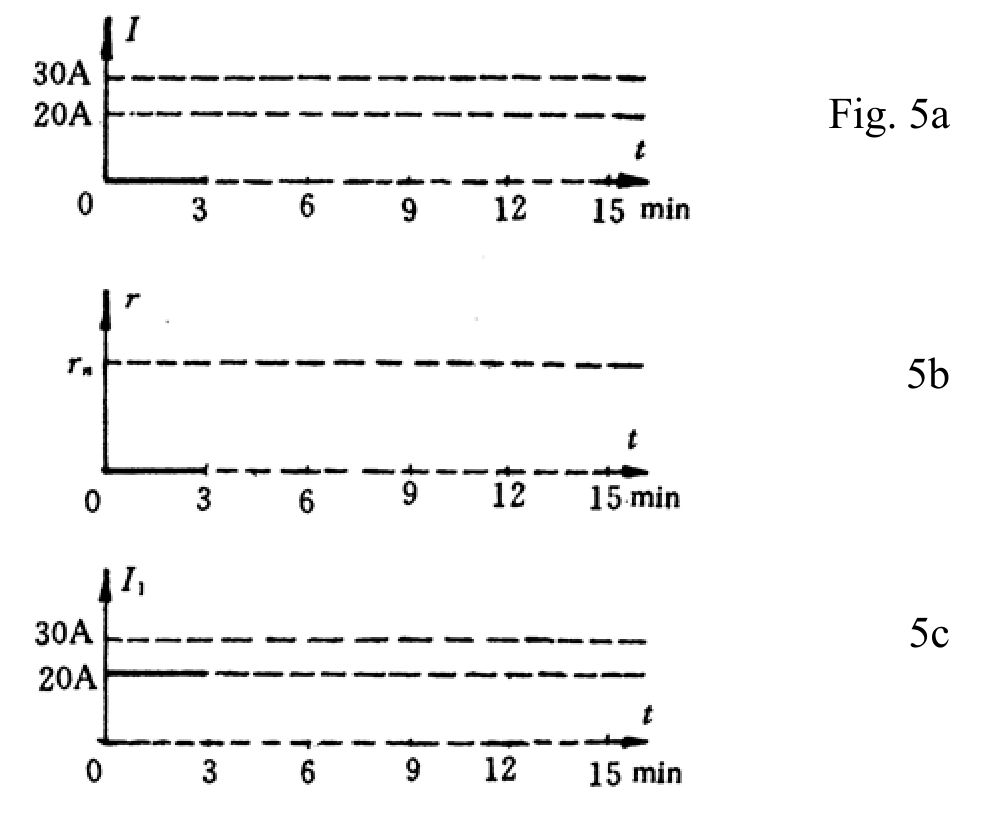
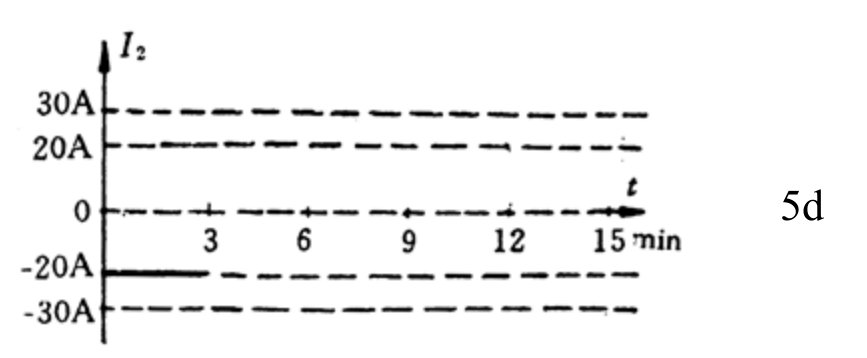
4) Suppose the magnet is operated in a persistent mode with a persistent current of ( to . See Fig. 5). How would you change it to a persistent mode with a current of 30a? plot your answer in Fig. 5.
[3 т.]
Решение
1)
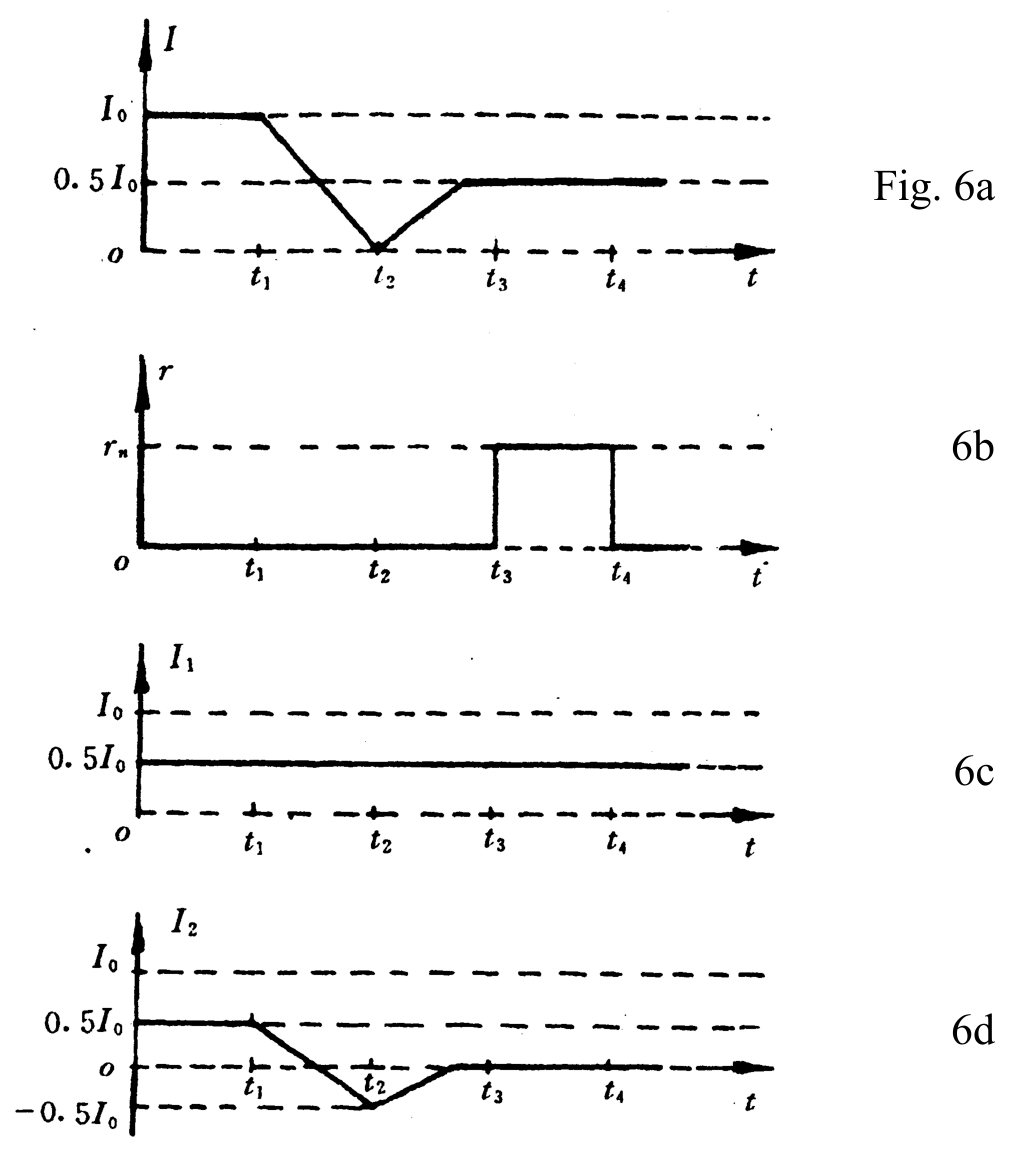
For to :
Since , the voltage across the magnet , therefore,
For to :
Since at , and is kept at after , , therefore, and will not change.
These results are shown in Fig. 6.
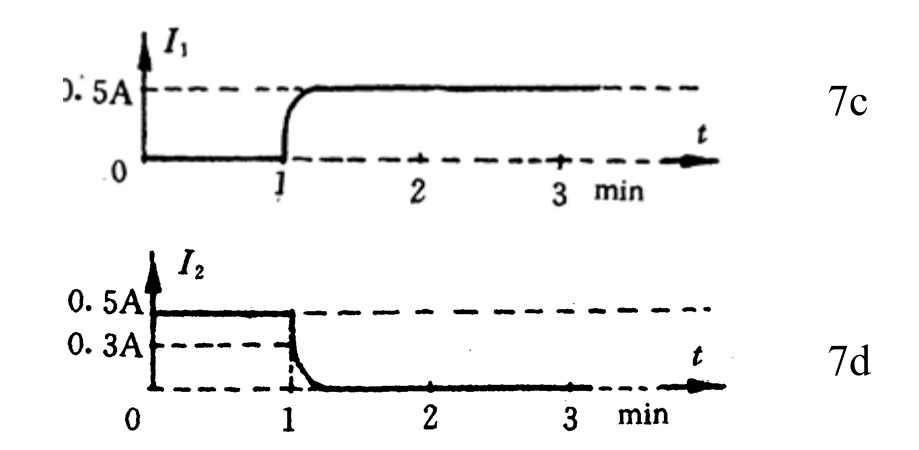
2)
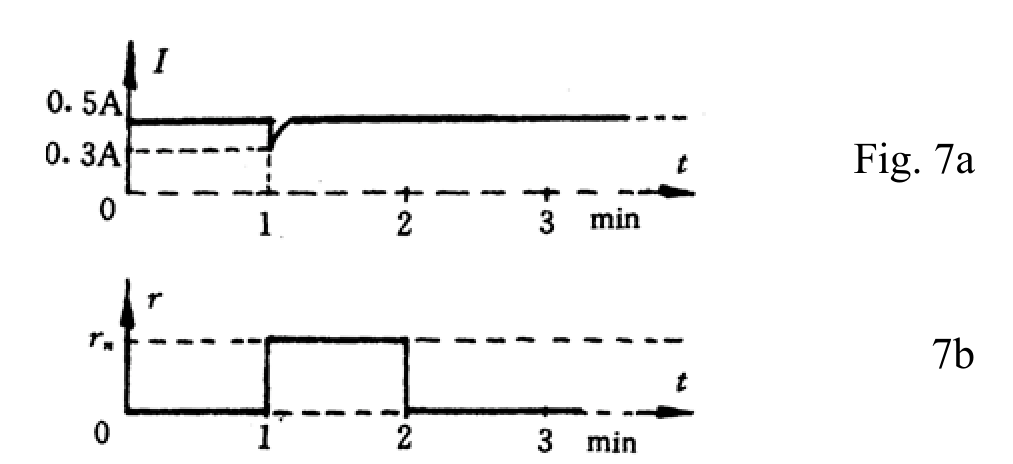
For to :
Since , ,
At , suddenly jumps from to , will drop from to instantaneously, because can not change abruptly due to the inductance of the magnet coil. For , and , will drop to .
For to :
, and gradually approach their steady values:
The time constant
When , and , .
For to :
Since , and will not change, that is
3)
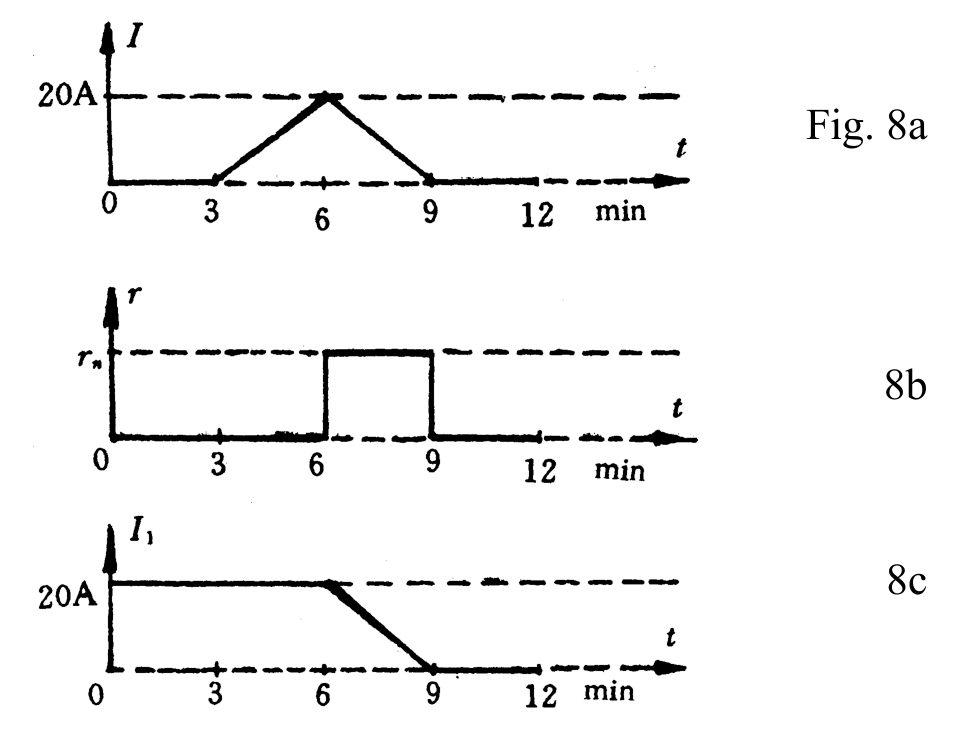
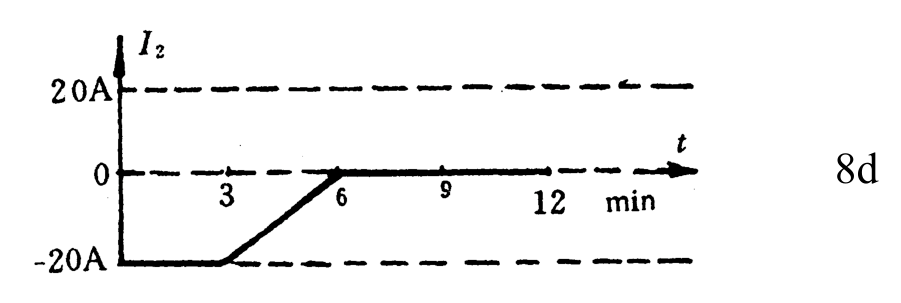
The operation steps are:
First step
Turn on power switch , and increase the total current to , i.e. equal to .
Since the superconducting switch is in the state , so that , that is, can not change and increases by , in other words, changes from to zero.
Second step
Switch from to .
Third step
Gradually reduce to zero while keeping ; since and , when , , the requirement corresponds to , that is, a drop of in . In Fig. 8 and is around this value too, so the requirement has been fulfilled.
Final step
Switch to zero when and turn off the power switch . These results are shown in Fig. 8.
4)
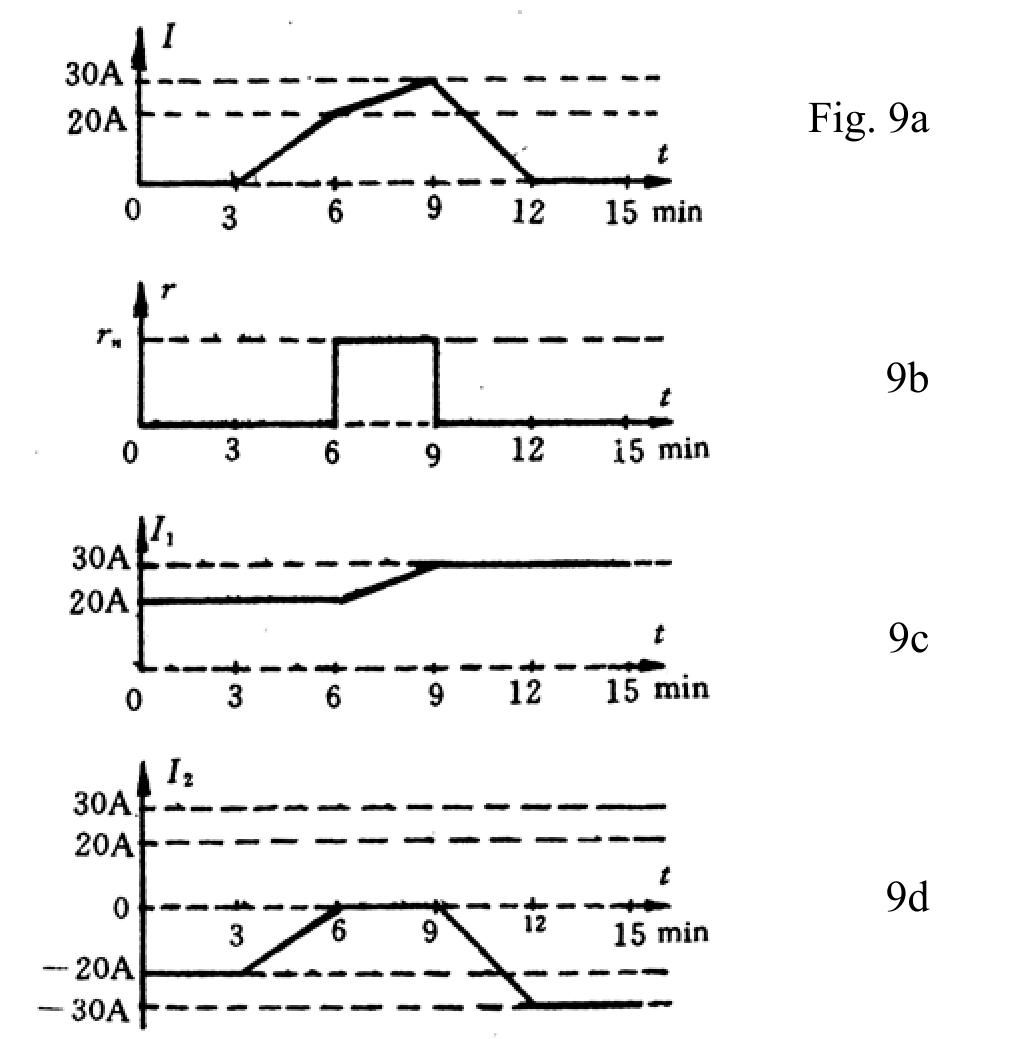
First step and second step are the same as that in part 3, resulting in .
Third step Increase by to with a rate subject to the requirement .
Fourth step Switch to zero when .
Fifth step Reduce to zero, will not change because is zero. will change to . The current flowing through the magnet is thus closed by the superconducting switch.
Final step Turn off the power switch . The magnet is operating in the persistent mode.
These results are shown in Fig. 9.
Grading Scheme
Part 1 — 2 points:
0.5 point for each of , from to and , from to .
Part 2 — 3 points:
0.3 point for each of , from to , , , at , and , , from to ;
0.2 point for each of , , and from to .
Part 3 — 2 points:
0.25 point for each section in Fig. 8 from to , 8 sections in total.
Part 4 — 3 points:
0.25 point for each section in Fig. 9 from to , 12 sections in total.
Оригинал в Архива: ipho94.pdf · решение от архива: ipho94.pdf